Linking Alzheimer’s Disease and Type II Diabetes
The Link
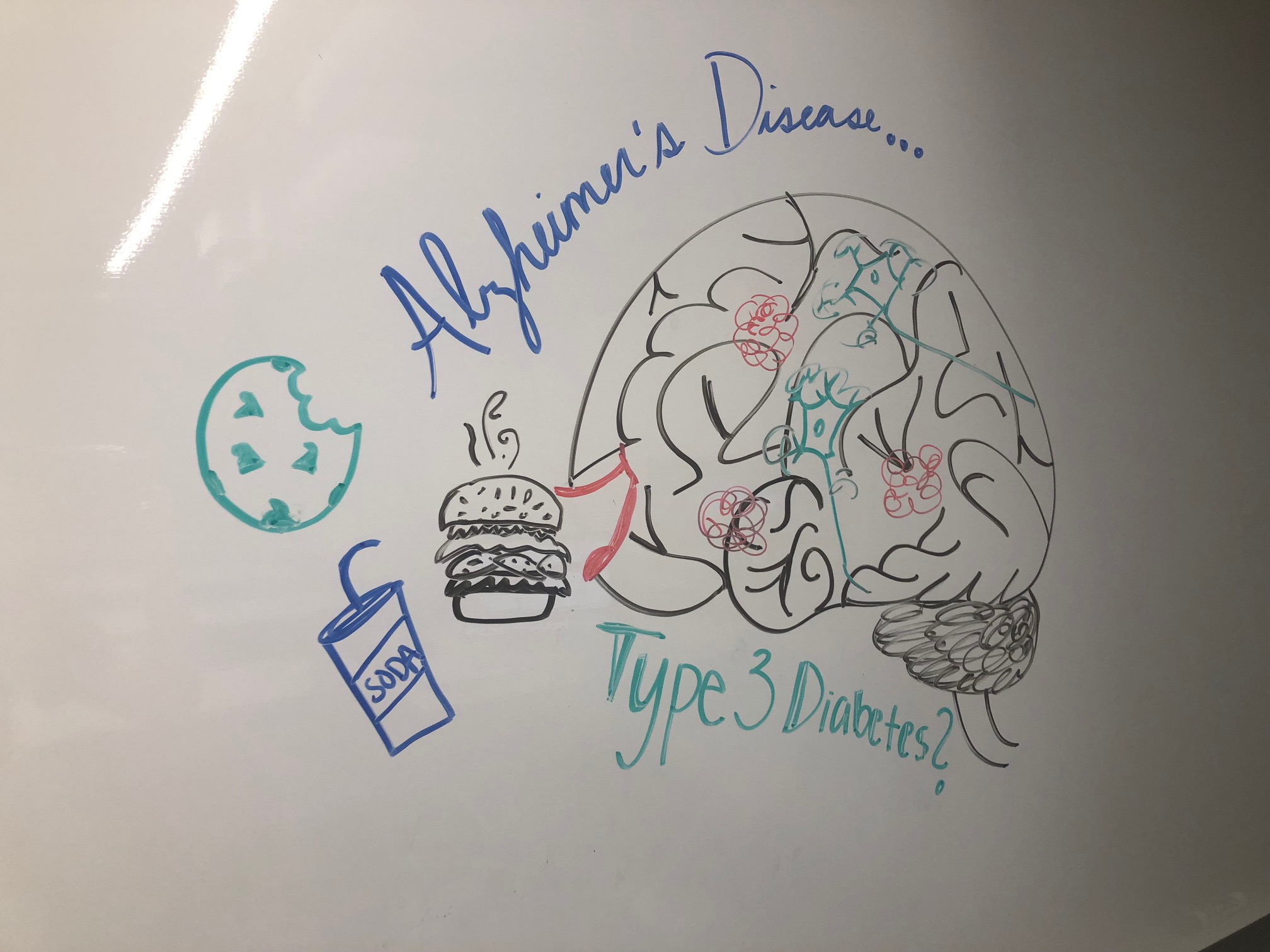
When picturing an individual suffering from Alzheimer’s disease (AD) and one suffering from Type II Diabetes (T2D), these pictures look greatly different. However, zooming in past the physical symptoms and appearances, we can look closely at the specific ways these disorders work. Tied together by the mechanisms of neuroinflammation, insulin resistance, and ganglioside function, AD and T2D are more similar than we might imagine.
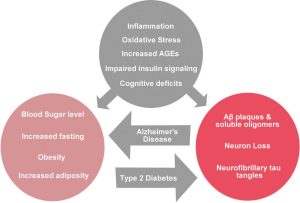
Image 1: The biological connections in grey can be studied between AD and T2D and represent the two-way street these disorders pave in our brains.
What is Insulin?
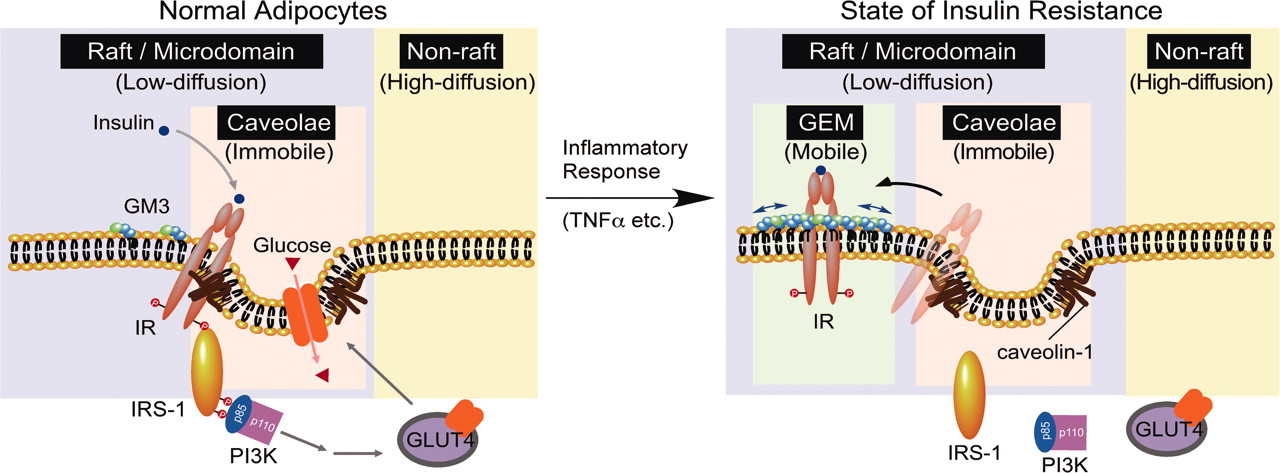
Insulin is a hormone generally made in the pancreas that helps our body take in glucose, which is processed and used for energy and stored in our cells for future use. In diabetes, this process does not function. In type II diabetics, insulin is produced but not able to complete the signaling pathway to intake glucose.
The Pathway:
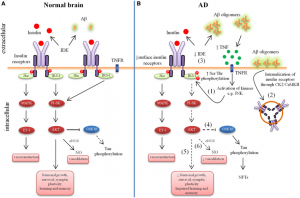
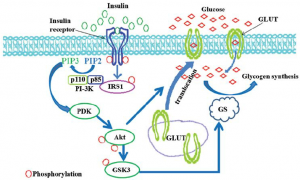
Insulin leads to the uptake of glucose through the pathway represented in the above image. Insulin binds to the transmembrane insulin receptor (IR). This activates the IRS1, leading to a phosphorylation cascade ending with the translocation of GLUT receptors to lipid rafts (compartmentalized sections) in the membrane.
Understanding Alzheimer’s:
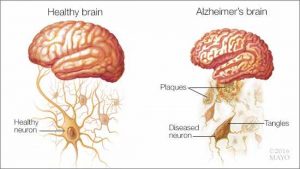
Alzheimer’s disease is characterized by the buildup of amyloid plaques and neurofibrillary tangles in the brain. The pathway to these malformations is complex, but has many connections to neuroinflammation and insulin resistance.
Connecting the Pieces
The pathways of AD and T2D connect through insulin resistance and neuroinflammation. The two figures below detail the complex mechanical connections between the diseases. More specific information on these topics can be found at source links 1 and 2 below.
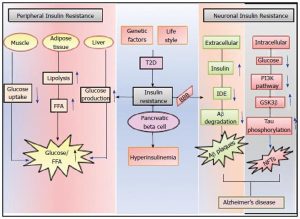
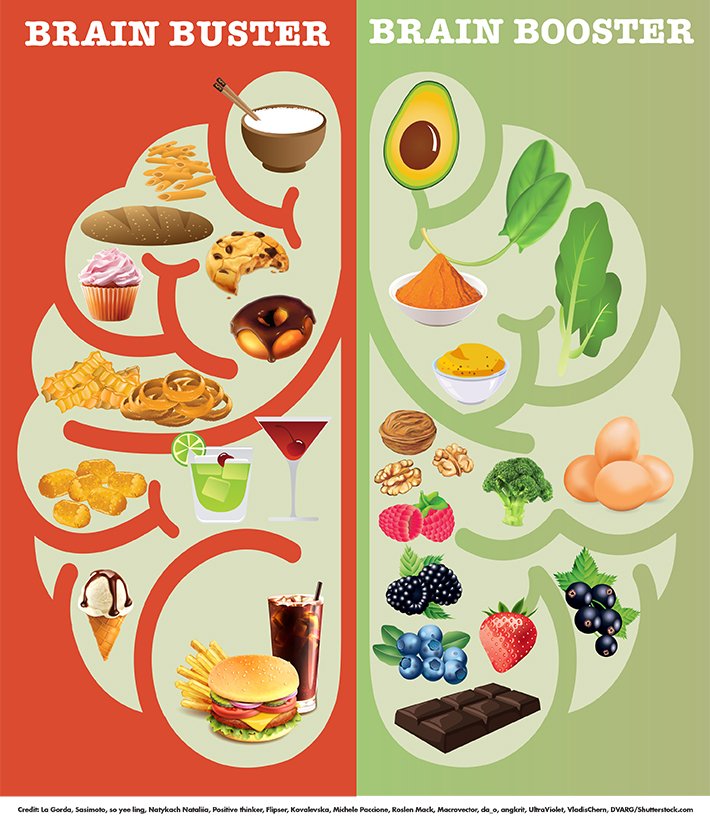
Image 3: Insulin resistance affects the production of glucose peripherally. This dysfunction in the CNS contributes to the formation of amyloid beta plaques and neurofibrillary tangles in the brain.
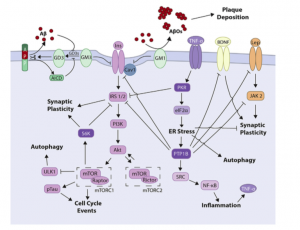
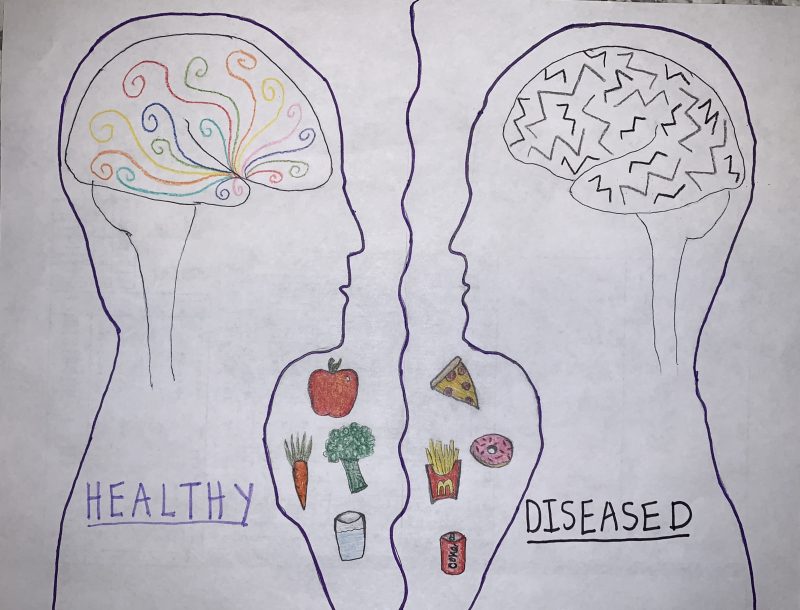
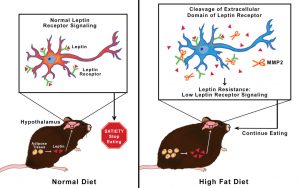
Image 4: This pathway shows that many factors (ex: PKR, S6K, PTP18, GM3) directly inhibit the processing of insulin. The buildup of GM3 molecules physically disassociates the IR from its connection with IRS 1/2, causing reception to be halted. The GD3 molecules that are made from GM3 perpetuate the buildup of Amyloid Beta plaques, showcasing the connection to AD.
So what?
Using the connections in mechanism between T2D and AD can inform future treatment options and research in both conditions. Seeing the parallel nature in pathophysiology between the conditions, it isn’t surprising how often the two disorders overlap. The knowledge gained from a dual-perspective view at both AD and T2D can influence further research in not only these conditions, but also other neurodegenerative conditions involving neuroinflammation due to the buildup of malformed molecules in the brain. This research has the potential to impact a large community of individuals and family members who are affected by neurodegenerative diseases or Type II Diabetes.
Sources for further research
- https://www.researchgate.net/figure/Schematic-diagram-of-the-insulin-signaling-pathway-Binding-of-insulin-to-the-a-subunit_fig2_232231667
- http://www.scielo.br/scielo.php?script=sci_arttext&pid=S1980-57642017000200105
- https://www.abcam.com/pathways/overview-of-insulin-signaling-pathways
- http://www.scielo.br/scielo.php?script=sci_arttext&pid=S1980-57642017000200105
- https://www.google.com/search?biw=1241&bih=715&tbm=isch&sa=1&ei=WRa8W6OxPO-l_QbNw6-ICA&q=alzheimers+and+diabetes&oq=alzheimers+and+diabetes&gs_l=img.3..0i10i24.15202.17476..17593…1.0..0.297.2054.4j5j4……1….1..gws-wiz-img…….0j0i10.cMHLL_jyY7Y#imgrc=67SBnaVcq0xlOM:
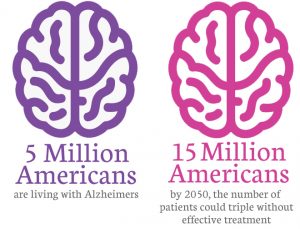 Although we have all learned about Alzheimer’s Disease in our courses, many of us also have personal connections to the neurodegenerative disease. According to the 2018 facts and figures released by the Alzheimer’s Association, 5.7 million Americans currently live with Alzheimer’s Disease. The number of deaths related to Alzheimer’s Disease has increased by 123% from 2000-2015. The association notes that every 65 seconds, another individual develops Alzheimer’s Disease in the United States. Cases of dementia, including Alzheimer’s Disease, are responsible for the death of 1 in 3 senior Americans–this is more than Breast Cancer or Prostate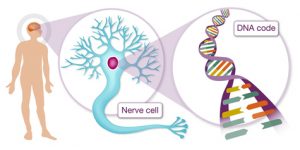
 When discussing Alzheimer’s Disease and many other neurodegenerative diseases, it remains important to note the vital interaction between genetic and environmental factors resulting in the development of disease. With the prevalence of genetic testing in today’s society, specifically through companies like 23andMe, people can know in approximately 6-8 weeks if they possess some of the genes associated with Alzheimer’s Disease. Without proper consideration or education, members of society may be mislead to think that they are destined to develop the disease. That may not be the case. It is more likely that even if an individual possesses the gene associated with a disease, environmental factors play a large role in whether or not that gene is transcribed or “turned on.” Research has shown that paying attention to the environmental risk factors above, and changing lifestyles to match, may reduce a person’s risk for Alzheimer’s Disease.