Alzheimer’s Disease: Understanding the Stages and How Your Diet Can Make a Difference

Most people have some knowledge of Alzheimer’s Disease (AD). Whether it be a relative who suffers its effects, or through vivid depictions in media, AD is one of the most prevalent examples of a neurodegenerative disease. Its prevalence, however, masks some important aspects of its progression, as most people only become aware of it in its later stages. People, therefore, are aware of its position as a malady that afflicts many in their old age, but don’t have a solid understanding of how the disease progresses, or what we can do to reduce the risk.
AD begins quietly. The first stage is characterized by the gradual accumulation of beta-amyloid plaques. At this point, AD is still early in its progression, and lacks the distinctive calling cards of late stage AD. Those unfortunate enough to be in the first stage usually wouldn’t know about it, as the first stage can last from 10-20+ years before progression onto the second stage.1 Compared to people in further stages, people in the first stage still function fine, as neurodegeneration hasn’t begun to kick in. If caught, this is the ideal stage to treat Alzheimer’s, as the beta-amyloid accumulation is early enough to treat; however, many don’t, as the requisite blood tests are not commonplace in our day-to-day routine.
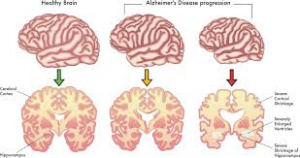
Stage two is where neurodegeneration begins. Brain cells start to deteriorate and cognitive changes emerge, though most people can still manage day-to-day life. This is when many people receive their diagnosis, and hence the stage where most pharmaceuticals are targeted – the aim being to prevent accumulation before even more damage to the brain. By the third stage, patients are in the worst of the neurodegeneration. Suffering permanent damage to the brain, treatments look at repairing damaged connections in the brain, as beta-amyloid accumulation is too far gone to prevent. Patients usually lose most of their grip with reality and are relegated to assisted living communities for constant care.
The Insulin Connection
To understand how diet plays a role, it helps to know what’s going wrong at the cellular level. Alzheimer’s is defined by two features: neurofibrillary tangles (NFTs) formed through abnormal changes in a protein called tau, and the beta-amyloid plaques described above. Both are tied to insulin. When you eat, your body releases insulin to help cells use energy from food. Two enzymes – GSK-3B and PI3K – are central to how insulin affects the brain. When insulin signaling works properly, GSK-3B is kept in check, which limits tau changes and plaque deposition. When it doesn’t, GSK-3B becomes overactive and accelerates the processes that define AD.2 Healthy signaling protects the brain; disrupted signaling does the opposite.
How Diet Fits In: What You Can Do
Diets high in sugar and unhealthy fats increase insulin resistance, making it harder for insulin to do its job. It’s worth noting that roughly 80% of Alzheimer’s patients also have dysfunctional glucose regulation, including type 2 diabetes, which is not likely a coincidence.3 High-fat diets also promote chronic neuroinflammation, further accelerating plaque accumulation and NFT formation. While a healthy diet won’t make you immune to AD, the link between diet, insulin, and brain health is real, and it’s something you can act on without overhauling your life.4 Being more mindful of sugar and calorie intake, and gradually reducing ultra-processed foods, is a meaningful step. Small, consistent choices add up, and when it comes to brain health, they may matter more than we once thought.