What you might have missed amid the election results last Tuesday were the number of new marijuana laws that passed. Four states, California, Maine, Nevada, and Massachusetts, passed laws for recreational use and now join four other states plus the District of Columbia with similar laws. Additionally, North Dakota, Florida, and Arkansas each passed medical marijuana laws bringing the total to 28 states and the District of Columbia with similar laws.
And while I’m happy the law I voted for in North Dakota passed, I was honestly surprised that my ultra conservative state passed the law so easily (64% in favor). But perhaps the resounding decision in North Dakota represents a broader change in opinion across the United States regarding marijuana, despite it still being classified as a Schedule 1 drug by the United States. My thinking is that North Dakota’s decision represents a willingness to view marijuana as more than an illicit drug and consider its medicinal value. However, before you jump on or off the cannabis bandwagon, don’t you think you should how it works in the brain first?
You’ve probably heard of THC before and you might know that it’s an active ingredient in marijuana. The full name for THC is delta-9-tetrahydrocannabinol and has the chemical structure shown below. THC is classified as a cannabinoid, but what you might not know is that we have cannabinoids in our body that are produced naturally. These most common endocannabinoids are anandamide (AEA) and 2-arachidonoylglycerol (2-AG). What might not be entirely evident is that all three of these molecules share a common receptor called a brain cannabinoid receptor (CB1).

The CB1 receptor is a G-protein coupled receptor that is highly expressed in the hippocampus, cerebral cortex, cerebellum, and basal ganglia. The CB1 receptor is essential to marijuana’s effects because it binds THC and our own endocannabinoids, leading to the downstream physiological effects of marijuana. An interesting point to understand is that the CB1 receptors are concentrated on the pre-synaptic neuron whereas our endocannabinoids are released from the post-synaptic neuron. To understand the effects of THC, however, we must first understand our own endogenous pathway in the picture drawn below.
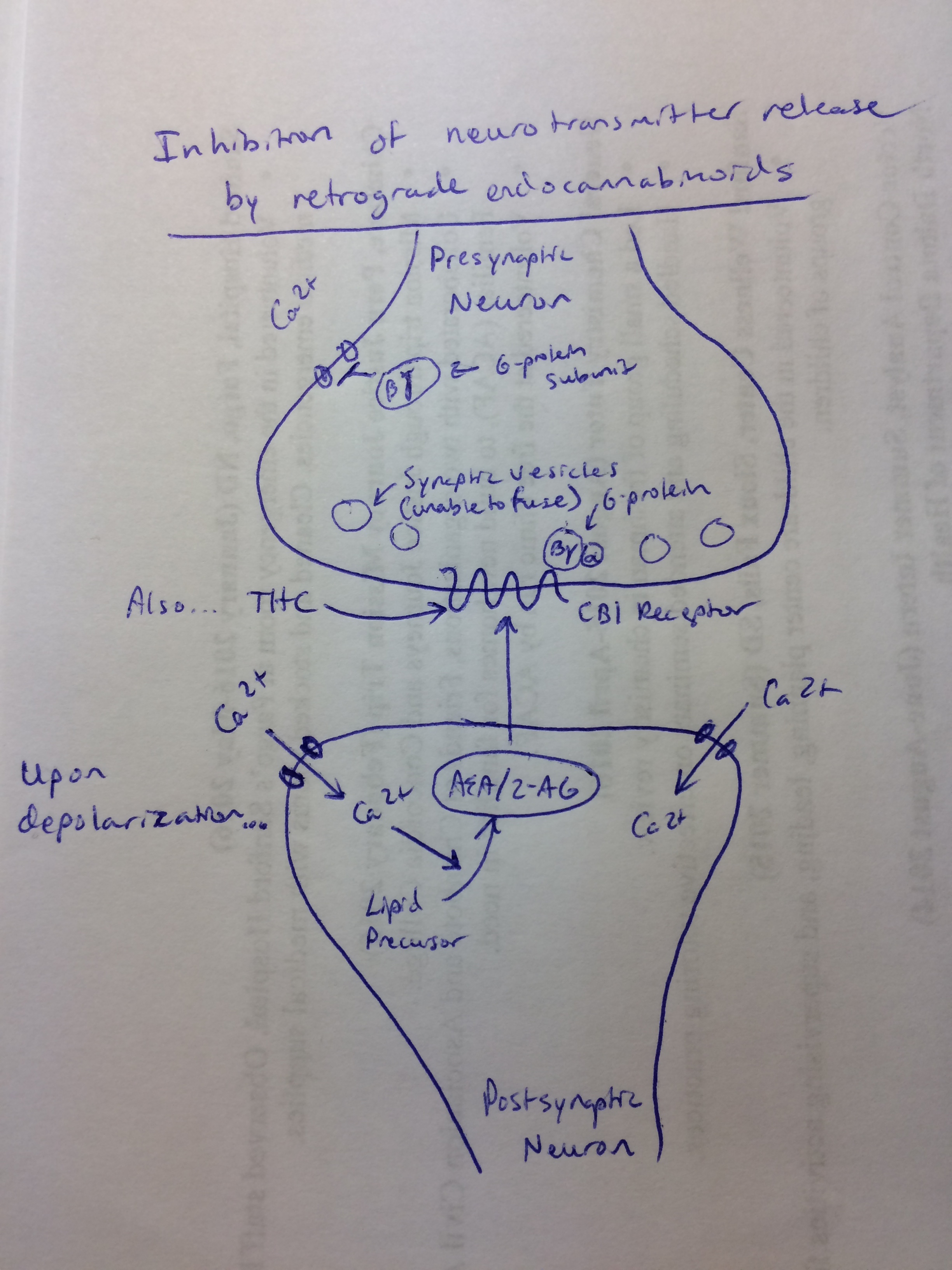
Depolarization (increased cell voltage) of the post-synaptic neuron leads to the opening of voltage-gated calcium channels. When calcium rushes into the post-synaptic neuron, it activates enzymes that synthesize our endocannabinoids (2-AG and AEA) from lipid precursors. The newly formed endocannabinoids then exit the post-synaptic neuron and diffuse to the pre-synaptic neuron where they bind the CB1 receptors. This seemingly backwards path is known as retrograde signaling.
When THC or one of our endogenous cannabinoids binds CB1 on the pre-synaptic neuron, it ultimately suppresses neurotransmitter release by decreasing the ability of synaptic vesicles to release their contents. This is a result of activation of CB1, which inhibits pre-synaptic calcium entry through direct inhibition of calcium channels by the beta and gamma subunit of the G-protein coupled to the CB1 receptor.
We know generally that cannabinoid signaling through CB1 leads to inhibition of neurotransmitter release, but what you have to realize is that not all neurotransmitters lead to more activity. In fact, both inhibitory and excitatory pre-synaptic neurons, releasing GABA and glutamate respectively, can be inhibited by cannabinoid signaling. I won’t specifically discuss how these opposite effects can be modulated leading to increased appetite, reduced pain, and reduced memory formation, but the general signaling always comes down to CB1 activation and inhibition of neurotransmitter release.
So when someone smokes marijuana, their entire body is flooded with the exogenous cannabinoid THC, which subsequently binds to CB1 receptors. This reduces the ability of our endogenous cannabinoids to bind the receptors themselves and regulate the cannabinoid response, which in turn leads to the effects we are familiar with after marijuana use.
A Connection Between Concussions and Migraines and My Own Experience
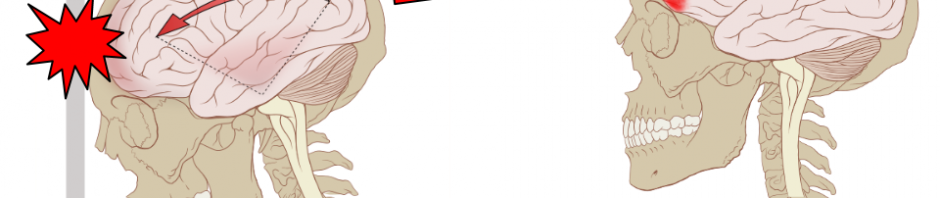
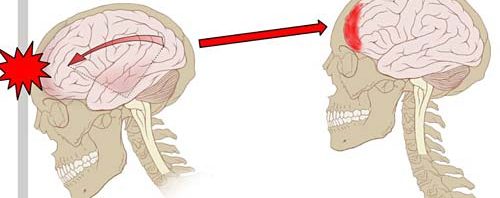
Concussions and migraines are both poorly understood conditions. In the past, both have been looked at as just bump to the head, or just a headache. However, we’re finding out that concussions are very serious and have way worse side-effects than a simple bump on the head if not handled correctly. A traumatic brain injury (TBI) can lead to damage in the brain that is deemed a concussion if the effects are large enough on the person. There are two connects between concussions and migraines that are interesting on their own and in light of my own experience with migraines.
First off, let’s clarify the different variations of migraines. There are two main categories, Migraines with Aura (MA) and Migraines without Aura (MO). MOs aren’t really important in this discussion because they haven’t been shown to be affected by concussions. However, MAs have been shown to interact with concussions through mechanisms of Aura.
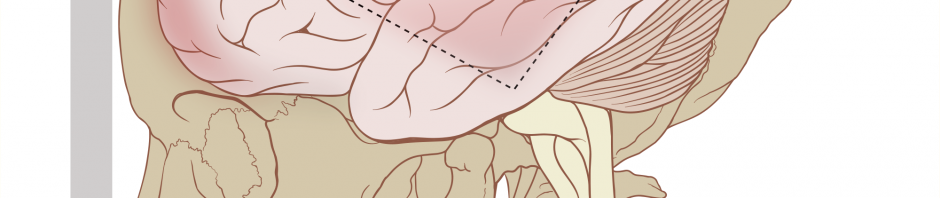
Aura is a general category of symptoms in some MAs. The aura effect includes symptoms of vision like light sensitivity, blind spots, patterns, etc… as well as other symptoms beyond vision like general confusion, inability to comprehend language, extreme sensitivity to touch, dizziness and others. Aura is important in the connection between migraines and concussions because they are both in some portion attributed to spreading depression in neurons in the brain. Spreading depression is referring to the spread of an action potential down a neuron. In a concussion it occurs due to increased ionic flux (charged particles like sodium moving across membrane, depolarization) in neurons due to mechanoporation, which is essentially putting holes in the neuron. Sodium and calcium move in and cause the neuron to fire randomly. MAs have also been well associated with ionic flux, which is where the connection lies. Those who are susceptible to migraines already have been shown to be more responsive to TBIs (concuss easier) and certain mutations leading to migraines with numbness/paralysis on one side of the body (hemiplegic migraine) have also been associated with increased concussion risk. So essentially, MAs and concussions both involve ionic flux, which can serve as a way for concussions to increase migraine risk and vice versa.

I find myself to be an interesting case study in this association. I have a history of migraines in my family, both my mom and dad experience them and other family members. The migraines I experience are with the Aura as well as hemiplegic. Many people have a typical path to their migraine progression. Mine starts with hemiplagia. I will all of a sudden feel oddly light and then one extremity on one side of my body will go numb, my arm or leg partially or fully. This is when I medicate if I can. If it continues, often I will regain feeling in that side and lose it in the other. This is kinda scary because these feelings have been associated with multiple mini strokes in the past, which I don’t want. Regardless, after the numbness I get visuals, including extreme light sensitivity and tunnel visions. This is when I hide out in the basement and prepare for 2-3 days of an extreme headache. The pain follows right after visuals. My migraine then ends in nausea, throwing up releases the pain of the migraine almost completely.
My migraines didn’t start on their own though. In 6th grade, I received a headbutt from a friend right into my right temple extremely hard. We were playing football and we just collided going for a ball. At first my head only hurt a little, but in the next four hours it got so bad I had to go to the nurse, home, basement ASAP. It was the most painful thing, couldn’t do anything but feel the pain and ignore the light. This was the beginning of my migraines which happened a little more than once a month through highschool. But they all but stopped after highschool. I’ve considered that I manage my stress better, cince that caused them in the past, but I still seem to get just as stressed at times. However the mechanoporation offers an interesting explanation. The increased ionic flux from my head injury might have increased my risk for MAs. But over time, as my brain healed up slowly, less and less ionic flux was allowed and my migraines gradually went away. This is an interesting concept because the most important thing with concussions is allowing them time to heal, but it seems my healing process took over 6 years. How can we determine when it’s safe to play if my brain may have taken this long to fully heal one impact? More investigation is needed in the long term healing of concussions to determine how truly bad these are for our health.
Why I Believe Marijuana Should Be Legalized.
In this blog post I am going to give my thoughts about why I believe Marijuana, otherwise known as “weed” or “cannabis” should be legalized.
While marijuana use definitely has legitimate medical effects, contrary to the narrative of it being a harmful drug that has persisted for so long, the reason I believe this is because of my own personal experience with it while in Amsterdam.
Growing up here in the United States, I have always had a pretty negative view on it, especially considering my family. Both my mom and my dad were pretty strict, with my mom even being my own middle school principal back at that time. And both, while still believing that are medical usages for it, were still very anti-marijuana.
So you can imagine that when I say while visiting Amsterdam I experienced one of the biggest culture shocks I have had. When I was planning my trip I knew that it was legal there, but I didn’t realize just how prevalent it was in the culture specifically in that city. I saw many coffee shops, or places where you can legally purchase marijuana, as well as museums and other various stores related to it. Obviously this is much different than anything I had seen before. Being legal, this as well as the smell of it being all over the place was considered to be pretty normal.

During my stay in the city, I figured this would be a good a place as ever to try it and not have to worry about the legality of it since I had always been curious. And so me, and the group I was with, all went out to one of the coffee shops near our hostel and split some of there “space cake”, which is basically a muffin infused with the cannabinoids. I should mention that the staff at the coffee shop was very professional, and let everyone know who had never experienced it before exactly what was going to happen, and what they should do.
I went into doing this pretty nervously, especially after about a half hour after eating it when I started to “feel it”. But, after I did finally feel it I stopped being nervous. I felt fine, just a little different. We walked around the city a little more, went through some beautiful tulip gardens, and enjoyed a bike ride through some of the small parks scattered around. I had a good time, and after a while the “high” went away and I felt normal again. Nothing bad had happened at all, during or since, and would say the experience was overall better than expected, if nothing too exciting. I didn’t get addicted, in fact I hardly think about it that often at all. And , just like that though, my views on cannabis had changed.

Just looking at some of the actual effects that this legalization has brought on in the Dutch people can shed some light for even more reasons for advocacy of legalization. Dutch citizens use cannabis at a lower rate than many of their neighbors, with lifetime rates being at 25.7% compared to the United States 41.5%, significantly lower prison population rates per 100,000 population (700 US vs 70 Netherlands).
There is also significantly lower rates of hard drug consumption, which could be linked to removing a cannabis consumers interaction with any illegal vendors who are more likely to try and sell them these harder drugs. Not only all of this but the Dutch Marijuana industry brings in over $600 million in tax revenue for the country yearly, imagine how much the United States government could make if it was legal and taxed as opposed to illegal and wasting billions on the war on drugs.
Not only do I advocate for the legality of it, I am also an advocate for removing the stigma behind it’s usage. I don’t believe that most of the people that are using it are anything like the typically depicted “stoner”. There are even many highly successful people that openly use it. If legalized I’m sure that there will even be many more medical usages that they will find that currently can’t be found since research is hard to do considering it’s legality here in the Americas.
Maybe even one day, my mom who sometimes has pretty severe sleeping problems will be able to use a medicine made from these cannabinoids to be able to sleep better at night without feeling bad that it came from cannabis. If anything I just believe that the stigmas behind using need to go away before we will accomplish what can be done with the plant, and if this last election has shown anything it looks like our country is on the way towards that.
Myths About Marijuana
The amount of misinformation about marijuana is astounding. Even though it is becoming legal in more and more states many people still don’t know much about this drug. Here are a few common questions and answers about marijuana:
Is it addictive?
- Yes, 10% of adults who smoke marijuana regularly become addicted. Seventeen percent of those who smoke marijuana as a teen become addicted.
Is it safe?
- No, especially for teenagers. Long term effects of marijuana include decreased IQ and memory loss. It can also cause respiratory infections, cancer, liver disease, and diabetes. There are also adverse effects on mental health, especially for teenagers. Marijuana can cause depression, anxiety, and even increases the likelihood of schizophrenia.
Can you drive after smoking marijuana
- No, recreational marijuana impairs vision, judgement, and motor skills. It is not safe to drive after smoking marijuana.
How are recreational and medical marijuana different?
- Medical marijuana has low or no THC. THC is what causes people to get high. Medical marijuana is mostly a compound called cannabidiol. It has a lot of potential for long term pain relief (it is less addictive than opioids like OxyContin or Vicodin) and has also shown a lot of potential for treating seizures.
Is marijuana worse than tobacco or alcohol?
- Unknown. There is not enough research about recreational marijuana to tell. Currently in the United States marijuana is a schedule one drug. This makes it almost impossible to do research on it.
Marijuana is becoming more and more common. It is important for everyone to be educated about it so we can make responsible decisions.
The Science Behind the Munchies
There were numerous topics discussed during the last election, and one subject on the ballots of some states was the legalization of marijuana. Some of the states were deciding on medical implementation, and others passed a new law for recreational use.
California, Maine, Massachusetts and Nevada voted in favor of recreational use. These four states are now a part of the few states that have legalized this drug. However, there is still no federal laws allowing the use of cannabis nationally. More states are approving this drug, but what are the consequences?
A lot of people use the drug without knowing what it is actually doing in your body. Most people know that alcohol is bad for your liver, but they do not know how marijuana is effecting the brain. There is science available to describe this, but I will give you a quick overview.
Neurochemistry
An article in the Elsevier Journal, written by B. M. Fonseco and colleagues, details the neurochemistry behind endocannabinoids. There are natural endocannabinoids in your brain, including Anandamide (AEA) and 2-Arichidonoylglycerol (2-AG). These ligands will bind to two main receptors, which are called CB1 and CB2. They are able to bind a few other miscellaneous receptors, but CB1 and CB2 are the most common.
The CB1 receptor is largely involved in cerebral areas, and the CB2 receptor is involved in immune cells. For this reason, the CB1 receptor is focused on in many studies in the brain. When people use cannabis, the main effects seem to be highly related to brain functioning.
When people smoke cannabis they also cause stimulation of these two receptors. The psychoactive component of marijuana, THC, binds to the CB1 receptor. This binding is what leads to the effects that are experienced when someone smokes.
The Munchies
One of the most well-known effects that marijuana has on people is an insatiable appetite. Most people know this occurs, but they do not know the science behind it. A paper in the International Review of Psychiatry, written by Tim C. Kirkham, explains why people get the munchies.
When receptors in the endocannabinoid system (ECS) are stimulated they will cause further effects in the brain. The ECS will stimulate the hypothalamus to release the hormone ghrelin in the stomach. Ghrelin will make you feel really hungry, even if you do not need to eat.
The ECS will also stimulate the release of dopamine in the nucleus accumbens. The nucleus accumbens is just another area of the brain, and dopamine will make you feel good. So not only do you feel hungry due to the ghrelin, but the food also tastes like the best thing you have ever eaten due to this dopamine release.
This combination of brain activities is what leads to the munchies. Since this hunger is biological, it seems likely that this could be used for medicinal purposes.
Therapeutic Uses
Natural endocannabinoids and cannabis have been shown to have multiple positive effects for therapeutic uses. Medicinal marijuana is different than recreational. There is less THC is medical marijuana, so the user does not get high. The point is to get the positive effects without the psychoactive component of the drug.
Medical marijuana has been used with patients on chemotherapy. Some of the positive things that cannabis can do is stimulate appetite, decrease the need to puke, and decrease pain levels. For these reasons, it is very useful for patients in chemotherapy to use this drug because they need to gain weight and experience less pain.
There is now research being done on whether or not cannabis would be a treatment option for individuals with eating disorders. The question is whether the effects of this drug, such as the need to eat, could overcome the desire to be thin. More research need to be done on this topic.
Discussing Marijuana in the Classroom
Marijuana has been a heavy topic in the last few years. Twenty nine states have passed laws either legalizing medical marijuana or for recreational use. Changes are occurring in our country regarding marijuana, so should our education about it also change?
When I was in high school, I had the typical health class that lasted about two months during my freshman year. We grazed over topics that included drugs, mostly focusing on the “harder” drugs which have more adverse and visible effects on the user. We were shown pictures, which were intended to make us scared about using the drugs. We also talked about alcohol quite a bit. It was drilled into us how alcohol use is bad and how alcoholism can ruin your life. But, the topic of marijuana wasn’t really touched on.
With the legalization of the drug in many states, I think that marijuana should be a topic which is focused on in schools. When alcohol was first legalized, nobody really knew how it affected the body. People would drive home after going to a bar and did not necessarily know about its addictive powers. Now, we are well aware of all of the negative side effects and long-term addictive properties of alcohol. Education has always been highly focused on alcohol, but why can’t we be pro-active about our education on marijuana?
We are in the beginning stages for marijuana legalization, just like we were with alcohol. But, I think that schools should devote more time to education their students about marijuana, just like we already do with alcohol. With it becoming more and more integrated in our society, students should know just what it does in order to make good decisions if they come into contact with it. I know that as a country we are still in the beginning phases, so more research does need to be done in order to determine if there are any possible long-term effects. But, for now, we can choose to be pro-active and commit to teaching society about marijuana, so that down the road more people are more informed about the drug.
Concussed? Sit It Out Pal, You’ll Thank Me Later!
Most athletes who play any contact sport at whatever level can relate to the guilt of injury, the feeling of not being there for your brothers and sister to fight for that W, bring that trophy home to a bunch of rabid fans, satisfy your own insatiable competitive will, prove the haters wrong, I get it, I’ve felt that too. To parents who’s offspring have dealt with a sports related injury, perhaps you are worried sick and want them to recover like yesterday so your kid can get off the couch, make some friends, learn to be tenacious, gracious in the face of defeat, disciplined even when it is physically painful, all of which are admirable traits that sport teaches us. To the service member who got concussion while out there training and fighting to ward off enemies both home and abroad, is eager to prove his worth to his fellow troops, eager not to let his family down, eager to please his commander, give me an ear. Today, I write to plead with you all: Concussed? Sit it out pal, you’ll thank me later! A concussion is defined as a clinical syndrome characterized by immediate and transient alteration in brain function, including alteration of mental status and level of consciousness, resulting from mechanical force or trauma. Here is what follows physiologically.
A concussed individual may develop cerebral edema, accounting for loss of consciousness, memory impairment, disorientation and headache. The Brain’s auto regulatory mechanisms compensate for this mechanical and physiologic stress and protect against massive swelling by acutely limiting cerebral blood flow, which leads to accumulation of lactate and intracellular acidosis. A state of altered cerebral metabolism occurs and may last ten days, involving decreased protein synthesis and reduced oxidative capacity. Loss of consciousness after head injuries, the development of secondary brain damage, and the enhanced vulnerability of the brain after an initial insult can be explained largely by characteristic ionic fluxes, acute metabolic changes, and cerebral blood flow alterations that occur immediately after cerebral concussions. Extracellular potassium concentration can increase massively in the brain after concussion, followed by hypermetabolism lasting up to ten days. This makes the brain more vulnerable and susceptible to death after a second sub-lethal insult of even less intensity.
Second Impact Syndrome (SIS), first described by Richard L. Saunders, MD and Robert E. Harbaugh, MD in 1984, consists of two events. Typically, it involves a patient suffering post-concussive symptoms following a head injury. If the patient sustains a second head injury/concussion, diffuse cerebral swelling, brain herniation, and death can occur. Though it is rare, it is devastating in that young, healthy patients may die within a few minutes. Fisher J, and Vaca F, hence conclude that when the patient sustains a “second impact,” the brain loses its ability to auto regulate intracranial and cerebral perfusion pressures. In severe cases, this may lead to cerebral edema followed by brain herniation. In a few implicated cases, death has been reported to occur in a matter of two to five minutes, usually without time to stabilize or transport an athlete from the playing field to the ED. This demise can occur far more rapidly than that of an epidural hematoma. Recent research has pointed out that brain swelling in minor head trauma is more significant in small children than in adults. The term “malignant brain edema” has been used to describe this phenomenon. Though more research in this area is necessary to determine if and when malignant brain edema and SIS are related, or even if they occur by the same process, it is unquestionable that getting back on the field of play or re-engaging in contact activity before a concussion is fully healed makes one more vulnerable to sustaining a second concussion. So again I say and again I plead, sit it out pal, you’ll thank me later!
Concussions: An Invisible Disease
According to the Center for Disease Control, Americans sustain approximately 3.8 million concussions annually from sports and other recreational activities. The risk is particularly high for high school and college athletes who not only have increased exposure for opportunities to sustain a traumatic brain injury (TBI), but their brains are increasingly vulnerable as they are still undergoing development.
The true seriousness of concussions if often either disregarded or goes unnoticed due to the fact the damage is typically on a microscopic rather than macroscopic level. In fact, many individuals that have been concussed show little to no observable or physical changes, unless exposed to specific conditions which result in an overuse or overstimulation of the injured area of the brain.
It is for this reason that concussions are often seen as in invisible disease. They are often disregarded, or warily acknowledged at best, both of which can be detrimental for the recovery of the concussed individual.
Recovery from a concussion should be regarded with utmost importance and is not something to be ignored. Unlike a sprained ankle or broken arm, it is difficult to isolate and prevent use of the brain. To stop thinking is to stop functioning – to stop being a human, to stop living. It simply is not possible. As such, the brain takes longer to heal as it must continue to function all the while. That is not to say it should continue to function at normal (prior concussion) levels. In order for proper and expedited recovery, use of the brain should be limited when possible.
Athletes are often at the highest risk for concussions (particularly college or professional) and stand to experience the most harmful effects (on a yet developing brain) if their injuries are not treated properly. Sadly, they are also met with the most difficult situations when facing a proper and hasty recover.
All too often, a concussed athlete is met with skepticism and doubt, as well as resistance. Sadly, this is often received from their educators. Concussions are an immediate injury and often difficult to comprehend. One day the student is fine, working on homework or taking a test, the next, they may have difficulty coherently reading a paragraph. This drastic change in ability can, understandably, be difficult to accept. However, it is imperative that we do. For the best possible recovery, most physicians suggest that student athletes take a complete break from school, following the injury. This period of time or “break” can vary in duration depending on the individual and the severity of the concussion. Following this “break” the individual typically follows a return to learning protocol, which gradually eases them back into the academic rigor they previously experienced. If the concussed individual is not supported and encouraged to follow these important recovery processes, it may prevent them from healing properly and take them far longer than it should.

Even with support, playing “catch up” after such an academic break can be daunting and perhaps impossible. Understanding that teachers/professors must be fair to all of their students, I think it is a worthy goal to search for methods (either as a professor or as a college) that can allow students who sustain a TBI to remain on track academically without having to drop a class, or be overloaded with material to catch up.
Even more important than academic support, in my opinion, is the support and understanding these concussed athletes receive from their coaches. In many cases, especially because concussions can be undetectable without significant testing, a coach may witness a potential cause for concussion and let it go unreported or unnoticed. They are not alone as many athletes may well choose to disregard the possibility of concussion, whether purposefully or unknowingly. However, in the case of concussions, all precautions should be taken. Second impact syndrome is a very real disease which occurs when a “second impact” or TBI is sustained before the healing process of the first has been completed. This can result in diffuse cerebral swelling, brain herniation, and death.

It is for this reason that a high expectation of responsibility and observation must be placed on coaches. It is difficult to bench the star player in the final minutes of a tie game, even more so if the player doesn’t feel as though they need to sit out. However, it is a coach’s duty to objectively view the situation and do what is in the best interests for the health of their athlete, whether the athlete protests or whether it costs the team the game.
It is important that we rid the stigma that can often come with concussions. Just because it may seem “invisible”, does not mean it should be treated as such, and devastating effects can occur if it is. It is imperative that we determine a method as coaches, teachers, individuals etc. to look objectively at situations involving concussions and work to provide the best care and best environment for an individual to recover and prevent further damage.
New Evidence Shows Immediate Effects of Soccer Headers
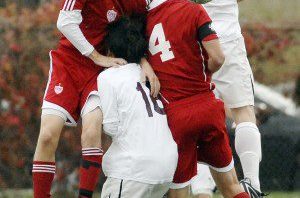
As a former soccer player who has suffered three in-game concussions, I’ve often wondered about the effects that “routine” headers have on the brain. When I played as a defender, I sometimes took 15 to 20 headers per game off of goal kicks. Most times, these balls would plummet from high in the sky and if I didn’t hit them just right, I experienced a stinging sensation that occasionally resulted in short headaches. Despite the fact that my concussions were a result of head to head collisions and not common headers, I’ve been more interested in what these sub-concussive and repeated hits to the head can do to the brain. Ultimately, if these routine headers are affecting the brain, steps must be taken to improve player safety.
In October of 2016, a study about cognitive and electrical changes in the brain following routine headers was published in EBioMedicine. Presently, it is undeniable that soccer has detrimental effects of the brain, as studies have shown microstructural changes in white matter as well as cortical thinning in former professional soccer players aged 40 to 65. Yet, less is known about the effects of sub-concussive and repetitive hits in soccer.
The research group from Scotland used transcranial magnetic stimulation (TMS) to study a common marker for concussion called corticomotor inhibition, which manifests as a silent period in the signal from the instrument. The TMS findings ultimately indicate electrophysiological changes in the brain after hits to the head.
Additionally, the team used the Cambridge Neuropsychological Test Automated Battery (CANTAB) to assess cognitive changes in the brain. Within this computer-based test, the researchers could study reaction time, spatial working memory, attention switching, and rapid visual processing.
Twenty-three healthy amateur soccer players between the ages of 19 and 25 were recruited for the study. They excluded participants who had a previous brain injury involving loss of consciousness and a history of concussion in the past 12 months. The individuals were then given a series of baseline tests before moving onto the “heading” protocol.
This protocol involved heading a standard soccer ball twenty times over a 10-minute period. The balls were launched from a machine 6 meters away at roughly 24 miles per hour. They used a custom built accelerometer on the back of the participant’s head to measure the g-force from the impacts. The participants then repeated the baseline tests immediately after the activity and three more times at 24 and 48 hours, and finally at 14 days post activity.
They discovered increasing lengths of silent signals in the TMS, which indicated mildly significant increases in the corticomotor inhibition immediately after the activity. There was no significance at any other time points, however. They also observed higher error scores in spatial working memory cognitive test immediately after the activity, which was indicative of impairments in short-term memory. Additionally, they observed higher error in tests of long-term memory function immediately following activity. While no other cognitive tasks had significantly different results, the study did provide evidence of transient disturbances in both short and long-term memory. Even though the impairments from the sub-concussive impacts didn’t ever persist for a full day, these results represent the first evidence that headers immediately affect the brain.
The research team believes that increases in silent periods could be linked to increased GABA inhibitory activity, which might be a mechanism for the body to protect itself against minor injury. The increased corticomotor inhibition, however, has previously been associated with pathophysiology in brain damage and suggests a link between functional issues in the brain and overactive inhibitory neurons.
While the study is far from perfect in terms of design and significance of results, it hints at immediate brain changes that cannot be taken lightly. Further studies into the effects of sub-concussive hits in soccer, i.e., routine headers, must be undertaken. The specific types of headers and the actions that contribute to these changes should be studied in order to improve education on safe heading practices. Additionally, studies should look into the effectiveness of “soft” helmets that are becoming more common in soccer.
Today, we see entertainment, money, and/or temporary happiness as potential higher priorities compared to our brains. TBI’s (traumatic brain injury) like a concussion can cause detrimental molecular issues which can have short and long lasting effects on your brain and the rest of your body. I am going to write about how people are ignoring the facts of a concussion just so they can do what they want and be “successful” in their realm of work. I will first talk about how concussions can vary and you can manipulate your concussion, and secondly, I will talk about the second impact syndromes well as the effects of a concussion short and long term and how TBIs can lead to higher probably chances of issues like suicide.
As a professional athlete like Tom Brady or Canelo Alvarez, the last thing they want to do is sit out because of a concussion. For Brady, his team relies on him, he is their QB, and for Alvarez, he is practically fighting for himself but he knows if he fights he gets paid regardless and even more if he wins. These men will sometimes do whatever they need to do to make sure their involved in their sport and that may lead to providing false information on any concussion or TBI they have had. I encourage you to read up on one football players perspective on concussions found here. People today impact themselves in so many ways and the way these two men do it is through physical contact to their bodies and most importantly their brain. These men may make a lot more than the average guy, but they simple are doing their job. Their career, and unfortunately their physical degradation gives us entertainment all throughout the week on television. These men most likely also get joy and happiness through their sports, but they are missing huge key facts that concussions can cause short and long term issues as well as what happens when you don’t properly heal from a previous concussion.
Concussions commonly lead to rapid onset of short-lived impairment of neurological function that resolves spontaneously. At the molecular level hours after the concussion/TBI, hypometabolism occurs via decreased amounts of ATP, NADH/NAD, and N-acetylaspartate and this can occur up to months after a moderate or severe TBI. This gives evidence along with a high calcium influx that sets the stage for another severe brain injury after a repeated concussion—described clinically as second impact syndrome. In a general sense, symptoms and signs may evolve over several minutes to hours. Some short-term issues involved include: headache, foggy feeling, behavioral and emotional symptoms, slowed reaction times and insomnia.
According to Concussion Foundation, 87 of the 91 former NFL brains that were in a study had a progressive neurodegenerative disease called Chronic Traumatic Encephalopathy. This disease has symptoms of memory loss, confusion, impaired judgment, paranoia, and much more. The tau protein in the brain gets misfolded and causes build ups throughout the brain which cause neurons to die slowly. Another major issue found from concussions is their link to suicide. According to Canadian Medical Association Journal, someone who encounters just a mild concussion is three times more likely to commit suicide than someone who hasn’t had a concussion. Regardless of short or long term issues, concussions aren’t going anywhere soon and we as society need to be more informed on what they can do to your health over a lifetime.