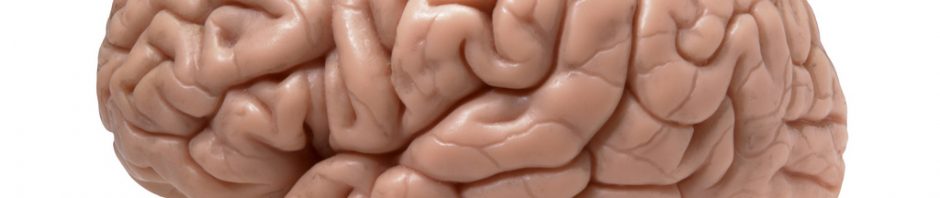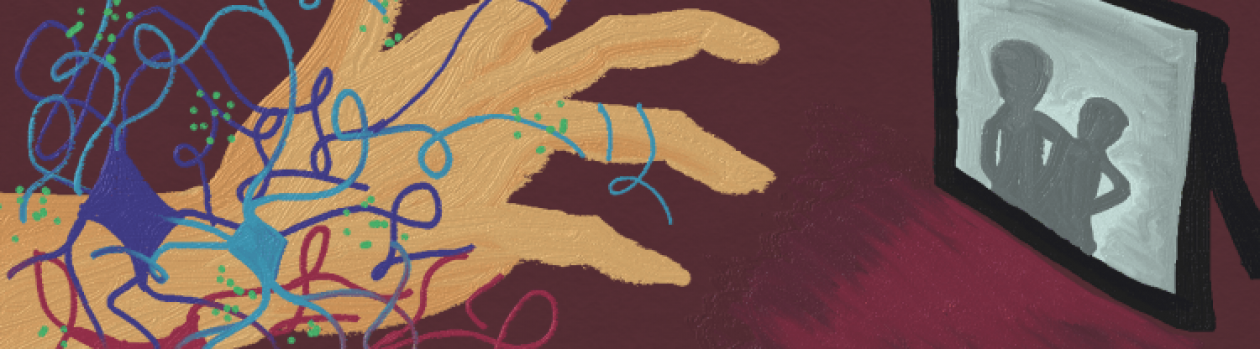
As of 2013, obesity has been officially recognized as a disease by some of the nation’s leading medical groups, such as the American Medical Association (AMA), American Heart Association, and the World Health Organization. With a rich body of literature to support the recognition of obesity as a disease, there still is a lot of controversy for this change. As a student majoring in psychology and neuroscience, I was automatically interested in this topic and decided to explore this topic further in hopes of understanding the science behind the disease portion, but also the psycho-social impacts it could have on the nation.
First, it is important to realize that the literature on this topic is incredibly convincing. Most of the research demonstrates that obesity is a complex disease mediated through the interplay of multiple genetic, biological, and metabolic determinants. After close analysis of the research, it is hard to argue that obesity does not have a medical basis. However, some people refuse to see obesity as a brain disease and instead believe that it is based on choice. Therefore, obesity is heavily stigmatize because of the perception that it is caused by modifiable behavioral factors such as diet and physical inactivity.
The Pros:
Proponents for recognizing obesity as a disease believe that it will help change the way the medical community tackles this complex issue. It could induce physicians to pay more attention to the condition and ultimately have more empathy. Similarly, defining obesity as a disease will hopefully spur more insurers to pay for treatments. Other supporters argue that it fits the definition of a disease, with similar medical patterns such as hormone imbalances, neurotransmitter deficiencies, and nutritional exhausted. Without considering obesity as a disease, important underlying medical issues may not be addressed by the physician.
The Cons:
There are many arguments against defining obesity as a disease. Firstly, the measure used to define obesity is the body mass index (BMI) scale which many believe to be too simplistic and flawed. Today, a BMI of 27 is considered obese. Some of the most fit people have a BMI of 27 because muscle weighs more than fat, and the scale does not take that into consideration. Another one of the main arguments against recognizing obesity as a disease is the fear that it will make people passive participants of their health. Instead of encouraging people to eat healthier and exercise more, some people believe that this will make people feel helpless. The focus will turn to creating medications to fight obesity instead of focusing on making smart, healthy lifestyle choices.
Though this is not a simple topic, I like to believe that like most controversial issues, the answer lies in both sides of the issue. The hard scientist in me believes that the research is obvious and that obesity has to be recognized as a disease. My psychological perspective though, leads me to believe that considering obesity as a disease could lead to social consequences. So where should the line be drawn? What is the answer?
Again, as with many of the most controversial topics in the world today, I find that the more I know the more I question.
My Capstone Experience
Concordia College has five goals for liberal learning in which most academic courses are based on. In each one of the courses I have taken over my years at Concordia these goals were introduced and addressed each in their unique way. However, it was not until this semester when I took my Capstone Course that I truly made the connection between what we were learning and doing in class and these goals.
Below are Concordia’s five goals for liberal learning with a brief description of how my Capstone Course addressed these goals.
- Instill a love for learning
My love for learning peaked in this course, as it was an absolutely essential part of the course. With very few assignments and no real exams testing our memorization of the information, there was not necessarily an incentive to learn. This course challenged me then, to make myself learn. However, it was much easier than I expected. Each week I found myself preparing for class days before, reading extra information on each topic for the week. After class discussions I often found myself continuing research on the topic, hoping to find answers to all the questions running through my head. With little pressure to learn and memorize information, I found myself loving to learn even more. I realized that learning should not be something that I force myself to do so I can get good grades and a better job in the future. Instead, learning is something that I believe to be instilled in all of us, and once reached, is something easily loved.
- Develop foundational skills and transferable intellectual capacities
This course was definitely a challenge for me as I was coming into the course with little chemistry background. However, within only a semester I was able to grasp basic chemistry topics and apply them to more difficult, in-depth topics. I not only able to understood the topics, but I was able to master certain topics and teach them to other students in my class. I finally was able to view other student’s knowledge as a tool and resource to help me, instead of something to be intimidated by or jealous of. We all have our strengths and weaknesses, and if we know how transfer/communicate them, then one person’s strengths can become a resources for another person’s weakness.
- Develop an understanding of disciplinary, interdisciplinary and intercultural perspectives and their connections
In a class of almost all pre-med students I felt as though this goal really applied to me. As a one of the only psychology majors in the class, I felt as though I was often the one to bring the interdisciplinary perspective. Other times though, I felt challenged to realize that my perspective sometimes lacked understanding of other disciplines and cultures. Through group discussions in this class, I was able to learn how to have my own opinion based on my discipline, but also how to apply my beliefs to other perspectives. I was forced to open my eyes to complicated issues that cannot be solved or explained using just one perspective.
- Cultivate an examined cultural, ethical, physical and spiritual self-understanding
There were many times during this course where I was frustrated. I wanted simple answers to some of the world’s most challenging topics, but in the end, I found no answer. However, as we discussed topics such as end-of-life care, I realized that in my search for answers, I understood more about my beliefs. Each discussion challenged my ideas of what I thought was ethical or spiritually right, and I learned so much from my peers as they both agreed and disagreed with my opinions.
- Encourage responsible participation in the world
One of the major assignments in this class was a community action project in which Neurochemistry and Social Work students teamed together on a popular issues affecting the world we live in today. For this project, we were asked to develop, plan, and carry-out a community action projected addressing this issue and problems that surround it. My team focused on Mental Health on our college campus, as we tried to bring awareness and decrease the stigmatization of mental health to the study body. This one just one of the ways that this course, specifically our professors, encouraged us to become actively engaged in our world.
Overall, this course exceeded my expectations, as I truly believe that ending my undergraduate college career without this class would have been an incredible loss. After almost four years of rigorous academics, I find that just now I am understanding the real mission of Concordia College.
Neurochemistry. My Capstone.
Concordia has five goals for liberal learning:
- Instill a love for learning
- Develop foundational skills and transferable intellectual capacities
- Develop an understanding of disciplinary and intercultural perspectives and their connections
- Cultivate an examined cultural, ethical, physical, and spiritual self-understanding
- Encourage responsible participation in the world
Walking in on the first day to Dr. Mach’s neurochemistry course, I was quite nervous. First, she let us know that there will be a lot of independent work and what we learn outside of class needs to be spoken on in class. We all were a team, benefitting one another even literally like when we did partner teaching on Wednesdays. Second, this is my capstone class, and with that, it should essentially encompass everything I have learned here at my four years are Concordia. With that, I want to briefly mention how each of the five goals Concordia has for liberal learning were met in my capstone experience.
Instill a love for learning
I have no doubt in my mind Concordia has instilled a love for learning inside of me. This goes back even to my freshman year, but this neurochemistry course really was the cap to all of it. This class wasn’t the normal class you can take at Concordia, it wasn’t even that similar necessarily even compared to other science courses. This class was treated as a job, attendance was a must, you get evaluated twice, and you don’t really have “true” homework. That is where the love for learning comes into play because I throughout my four years and especially in this course, I only keep wanting to gain knowledge especially in my area of study, but even beyond that in other areas of study. I simply love to learn.
Develop foundational kills and transferable intellectual capacities
Dr. Mach was our professor, and she always had great knowledge to spread and help break the ice when needed because as she stated in the beginning of the course, a lot of work and knowledge earned would come from yourself. I gained some skills over time, especially how to present information to one other person in a short but sweet manor but at a 400-level college course. I would also argue I gained a higher level of critical thinking because some of the articles we read in class were very difficult and on Mondays we had to brainstorm and basically pick apart primary research articles—truly trying to understand what the science was, how it was done, and what this means for neuroscience now and the future.
Develop an understanding of disciplinary and intercultural perspectives and their connections
This class wasn’t just neuroscience students, like me. For the most part, all of us had a science type of major or area of focus, but we even gain perspectives and connections through the social majors. We did a combined project with them which was done outside of class to impact our local community in some way. Our group created an Alzheimer’s prevention and information panel discussion in Fargo back in November. Throughout the semester, I gained a better understanding of how people think and why they think the way they do. As scientists, we always like to be right and usually opinions are held strong, but when it comes to neuroscience, there isn’t one care for one neurological disease. And I would argue our whole class sees how much we and the future generations need to work together and ignore who is right first or wrong and start to work and cure some of the most dreaded diseases known to man.
Cultivate an examined cultural, ethical, physical, and spiritual self-understanding
Every week was a different research article with a different disease or disorder, and with that came multiple opinions. For example, when we read on the endocannabinoid system and marijuana, some of us had completely different views. Whether it’s your cultural, ethical, physical or your spiritual views, we all weren’t the same and that caused some havoc but also it generated great discussion. It opened up critical thinking at the molecular level of these diseases, but also a broader view and maybe how society or science should be handling some certain situations with law or health.
Encourage responsible participation in the world
I can’t wait to take my knowledge and energy in the classroom and apply it to the real world. Don’t get me wrong, I like college and especially Concordia, but I am ready to move on to bigger and better things and that’s all thanks to Concordia. Beyond my neuroscience, I am excited to work on being more sustainable as well as spread the knowledge of climate change because I believe that is one the most important issues to date and many people still today don’t understand its real or they deny it and that would be very irresponsible for us now to ignore it and let the future generations deal with it because scientists today are saying we are already too late in combating this real crisis.
An Interception of Two Diseases: Binge Eating Disorder and Obesity
Many people do not consider obesity a disease—in fact, I am a skeptic myself. It seems so clear to me how obesity can be resolved if people simply modified their eating behaviors. For example, when are you eating, how much are you eating, what kinds of foods are you eating, these are all questions that could allow eating behaviors to change to be more healthy based on what nutritionists and dietician have discovered.
However, when I compare obesity to addiction, I understand how it can be seen as a disease. Addiction might start with inappropriate drug-using behaviors. However, it escalates when it becomes abused, and that substance abuse or chemical dependency illustrates malfunctioning neural transmission. Food can also be a substance that becomes abused when processes in the brain no longer work like they should.
A related disease to obesity is Binge Eating Disorder (BED). BED is a medical condition characterized by ingestion of large amounts of food due to loss of control while eating. According to Ginger Nicol, MD, weight gain and obesity can result in 40% of individuals with BED, because it does not involve compensatory behaviors.
Why do only 40% of all who meet criteria for BED weight gain and obesity? Perhaps it is due to an individuals neurochemistry and how it is different from another’s. For example, an non-obese individual with BED may experience more weight gain than another non-obese individual with BED, because that person has a genetic predisposition for weight gain to due their parents’ obesity.
It is also worth noting the metabolic mechanisms BED:
- Exacerbate hunger
- Prevent satiety
- Drive food preferences
So how do these mechanisms become malfunctioning in people with obesity and BED?
A 2013 journal article by Vogt and Bruning in Trends in Endocrinology and Metabolism explain how abnormal insulin and leptin signaling lead to obesity. Insulin and leptin are both released in the PNS and CNS to regulate food intake. Both substances work to maintain energy homeostasis by signaling fullness to the hypothalamus when food intake can cease.
Leptin and insulin levels actually rise with increased for intake, and this rising levels contribute to resistance. Leptin and insulin resistance leads to lack of satiety excessive food intake.
The endocannabinoid system also plays a role in obesity and BED. According to a 2015 study by Fattore, the endocannabinoid system is critical in changing energy balance by modulating food intake. In fact, it is commonly known that administration of cannabis increases appetite. Various human and animal studies have shown that CB1R agonists increase total food intake, particularly consumption of palatable foods. As a result, the a current treatment drug for obesity and BED is rimonabant, a endocannabinoid receptor blocker.
In addition, there is a connection between the endocannabinoid system and the endocrine system. Leptin inhibits endocannabinoid production by the hypothalamus. In the case of leptin resistance, endocannabinoids would be overproduced and food intake will increase.
All in all, there is much still to be discovered on the topic of obesity, and studying BED in conjunction may provide additional insights to the investigation.
The Danger of “Diet”
Obesity in America is a growing problem. Literally. A survey in 2015 showed obesity rates exceeded 35 percent in four states, 30 percent in 25 states and are above 20 percent in all states.
In 1985, no state had an adult obesity rate higher than 15 percent; in 1991, no state was over 20 percent; in 2000, no state was over 25 percent; and, in 2006, only Mississippi and West Virginia were above 31 percent.
Obesity isn’t just something that happens later in life. The NIH states that roughly 33.2% of youth ages 6-19 are considered overweight, and 18.2% are considered obese.
And now that you’ve heard these statistics, I bet that you are extremely motivated to do your part to help, right?
Not to offend, but I’m guessing I’m wrong. The fact is, whether we are part of these statistics or not, we do know of them and do nothing.
It’s a common, if simplified, mentality that obesity is a result of poor personal health choices. What if that weren’t the case?
Recent studies have proven that obesity could be a result of insulin resistance in the brain. Furthermore, maternal over nutrition, leading to fetal hyperinsulinemia can predispose kids to metabolic syndrome and obesity.
So is it really their fault?
Regardless, one thing is clear: being extremely obese or overweight is not healthy. I don’t care how someone looks; the importance of losing weight should be emphasized as a necessity to prevent the slew of health problems that obesity can cause.
The problem is we keep telling individuals they need to go on a “diet.”
I hate that word. It’s stupid, really, because your diet is what you eat, so whatever you put in your mouth– IS your diet.
Besides, the first thing to people’s minds when they hear the word diet is crash diets: things like Atkins, paleo, Nutrisystem.
I’m not saying that these “diets” don’t work, or have their benefits, but for most people, they are expensive, unappealing, and not practical long term.
The problem isn’t that obese individuals don’t want to lose weight. They don’t want to go on a diet.

If you tell me you want to put me on a diet, I think:
- DO eat less food
- DON’T eat after 5 pm
- DO eat salad and vegetables (and all other healthy disgusting things)
- DON’T eat sweets. Or bread. Carbs=BAD!
- I hate my life.
I hear the term diet and it becomes a list of dos, don’ts, and unhappiness.
Fad diets can work short term.They might make you look good in your wedding dress for a day, but unless you adopt a healthy lifestyle after that, it’s not going to last.
And there it is: lifestyle.
This is where the real changes are made. It’s not a diet, it’s a lifestyle change. It’s incredible the effect that this different approach can have.
You tell me that I need to adopt a healthier lifestyle, and I’ll generally agree with you. I don’t get defensive, because it makes sense.
With the pressing issue of the rise of obesity in the U.S. paralleled by the comorbidities associated with it, this is an important emphasis.

If you are obese, overweight, really anyone who wants to avoid future health problems, you don’t need to diet: you need to adopt a healthy lifestyle. Not because people tell you to, not because of the way you look, but because it’s good for you.
A healthy lifestyle shouldn’t be intimidating because it’s functional. It’s not “I’m starting my diet on Monday.” It is a string of conscious decisions to be healthy.
What does that look like? If someone’s eating out or eating fast food 5 times a week, it’s likely not so appealing to tell them to quit cold turkey. Start small. This week, go out 4 times. Next week, 3 times.
If something is going to become a lifestyle, you want to enjoy it, right? If you hate salad, don’t eat salad. Eat steak, eat bread, eat potatoes. Eat them while making healthy choices. Lean steak, wheat bread, sweet potatoes. Maybe not for every meal, but a treat on a Friday night.
Recognition that this isn’t an all or nothing situation is important. You can have ice cream, eat candy, drink wine. Maybe once a week, maybe three times a week. Either way, if you’re used to doing these things every night or even multiple times a day, you’re still making healthier choices than you were and not giving up something that you loe or brings you joy.
And this is where I leave you. We live in a day and age of instant gratification; hence why fad diets are so popular. Of course, if you starve yourself, you’re going to slim down more quickly. But when it comes to health, the easy way or the quickest way usually isn’t your best bet. I reiterate, obesity or being overweight is not a problem of vanity, but a problem of health. It’s important to maintain a proper weight, not so we can all look good in a bikini, but so we can avoid things like type 2 diabetes, cardiovascular diseases, insulin resistance. We all should try and pursue these lifestyle changes so we can have a happier, healthier life and enjoy it too.
Neurochemistry Capstone
I used to think that a Capstone course at Concordia was just a course with a special title because I thought all my classes accomplished the five goals of liberal arts education. Even when we went over the 5 goals of the Capstone course the first day of class, I was a little skeptical as to how we would accomplish these goals differently than we had in other classes. Over the semester, I learned not only that “Capstone” is not just a title, but also that Neurochemistry was the perfect Capstone for me.
Before I launch into my raving reviews of Neurochemistry, here are the five goals of liberal learning:
- Instill a love for learning
- Develop foundational skills and transferable intellectual capacities
- Develop an understanding of disciplinary, interdisciplinary and intercultural perspectives and their connections
- Cultivate an examined cultural, ethical, physical and spiritual self-understanding
- Encourage responsible participation in the world
Instill a love for learning
Neurochemistry reinforced my love for learning in a variety of ways. First of all, this course required active learning. We were not able to sit back and absorb information as it was presented to us, we had to seek it out on our own. As a student about to enter my final semester of college, the ability and motivation to find information on my own will be incredibly valuable in graduate school and beyond.
Develop foundational skills and transferable intellectual capacities
Not only were we asked to find what we wanted to know on our own, we had to be able to teach it to our classmates and relate it to the big-picture problem we were addressing. This is an essential skill to develop, because knowledge is pretty useless in an isolated environment. It is best utilized when it is shared with others and used to address larger-scale issues.
Develop an understanding of disciplinary, interdisciplinary, and intercultural perspectives and their connections.
This class was not only limited to chemistry and biology majors, it was open to social science students and neurobiology students as well. I learned so much from my classmates because of their diverse backgrounds and experiences. We heard stories about people’s life experiences dealing with the topics we discussed, and learned about how academic areas aside from chemistry can contribute to the knowledge required to solve neurochemical problems. Neurochemistry does not only involve or affect neurochemistry. Its effects are seen throughout the body and in behavior and physical deterioration, and having multiple perspectives with which to assess these problems gave us a well-rounded idea of the many paths that would need to be explored in order to completely understand the issue.
Cultivate an examined cultural, ethical, physical, and spiritual self-understanding.
When you are discussing end-of-life care, the morality of genetic engineering, or whether women should take antipsychotic medication during pregnancy due to risk of autism, you inevitably examine your cultural, ethical, physical, and spiritual views. This class fostered an environment in which we could discuss very difficult topics and respectfully disagree with each other. I really appreciated the opportunity to hear my classmates’ opinions as well as to express my own, and to combine science and personal ethics to further develop my views about these challenging concepts.
Encourage responsible participation in the world.
During our discussions, the conversation almost always turned toward what we can do about tragic diseases like autism, ALS, or obesity. I think this framed our discussions in terms of what we can do in our careers to be aware and active in these areas. Additionally, our community outreach project exactly accomplished this goal. For our project, we worked to increase awareness, knowledge, and intervention ability of students in situations of opiate use and abuse. In this way, we were being responsibly engaged in the world and encouraging our fellow Concordia students to do the same.
Overall, neurochemistry was an awesome course that initially looked at various health problems from a neurochemical perspective, but then broadened the view to a multi-disciplinary approach that is the epitome of liberal arts education.
My Neurochemistry Experience
My Neurochemistry capstone experience with Dr. Mach truly felt like a culmination of my learning and a practical application for that. Concordia’s five goals for liberal learning are a good basis to show how amazing this class has been. Concordia’s five goals for liberal learning are as follows:
- Instill a love for learning
- Develop foundational skills and transferable intellectual capacities
- Develop an understanding of disciplinary, interdisciplinary and intercultural perspectives and their connections
- Cultivate an examined cultural, ethical, physical and spiritual self-understanding
- Encourage responsible participation in the world
Neurochemistry succeeded in instilling a learning for me in the way that it was taught. Our weekly schedule was to read a literature article critically for Monday, learn a portion of it really well to teach on a partner basis on Wednesday, and a general discussion group. We had tests, however, they were tests that applied what we had learned throughout the year and didn’t require too much studying. This class was on of the few classes I’ve had where I’ve felt that I’m learning because I want to, not because the professor is requiring it. Every week we’re learned interesting things about how the brain works and those mechanisms can be see in daily life. I know I’ve really enjoyed a class when I discuss it outside of class independently. I’ve also grown in reading academic literature and can now understand some of the crazy lingo in neurochemistry.
Neurochem has improved my ability to read literature, function in a group oriented reverse classroom (that succeeds in teaching very well) and organize events. Reading literature is something we’ve been doing since Freshman year, but it’s nice to finally see that these are starting to make sense in their entirety. It used to be that any academic article would just be overwhelming and the only thing that made sense was the abstract, however, with my overall experience in college and my capstone here, I feel like a can read and comprehend most literature within science. That will be important for me going forward because as a physician, I will be expected to keep up with my readings. The reverse classroom was really interesting. Essentially the students are required for producing class discussion and the lesson, at least more than usual. Having the classwork centered around discussion and direction by us is part of what enhance the effectiveness of this class. Working as a class to discuss ideas and questions is much better for learning than being lectured at. It may be less efficient, but things I’ve learned in discussion in this class will stick much longer than something I learned by lecture. Organizing our group’s Narcan events and training session for the capstone project was an experience. I was able to work on my ability to work with a different group of students and produce an event that seemed to have a strong impact on the student body.
Developing perspectives and connections between disciplines and cultures happened by virtue of the interdisciplinary nature of this project and The Good Neighbor Project. Working with Social Work students was very interesting in this project. There are different group dynamics that develop over time in different disciplines either. As a group, we had some conflicts, but working together and seeing everyone settle into what they were comfortable with led to success on our project. Our project’s success was also dependent on The Good Neighbor Project. They put on the Naloxone training session and offered a window into the addict’s life, one which many at Concordia do not have.
This class simply reinforced my self understanding as a future health worker (Doctor). We learned a lot about brain mechanisms of diseases and how they may be prevented in the future. This has obvious medical implications, however, the project also served to apply future medical skills. The project is a practical application of medical knowledge through the cooperation of multiple disciplines and organizations. As a doctor, it’s important to understand that you are not the only one on a team. Others are going to be better and their own specialties.
And finally, this class encouraged me to BREW by calling me do it actively. In my mind, Narcan training for a community can only hold benefits. The Narcan training session seems like a great application of my knowledge to help a community.
Stepping away from Concordia’s learning goals, this was one of the best classes I have taken at Concordia. The routine we settled into a class reviewing the literature throughout the week was very welcome in hectic college life. As a class of 12, we grew much closer throughout the class. We had a mix between Bio/Chem students and some psychology students too. It was good to continue class with those I’ve been with since Freshman, but it was also nice to have a class with some friends I’ve only known outside of class. There were some unforgettable experiences and class discussions throughout the weeks and Dr. Mach was one of best professors I’ve ever had. All she asked of us, was that we give our best effort to understand the material and she assured us that the class would go fine. This made the class less stressful and much easier to focus on the actual learning. Dr. Mach was always available as a professor and advisor. Part of the class includes meeting with her for self-evaluations and this served as a great time to talk to someone who knows more than myself. We had a few discussions about life before and after college, that helped me gain perspective in my life. One of the most important lessons from this class: Neurochemistry is a great capstone class and anyone who can take it.
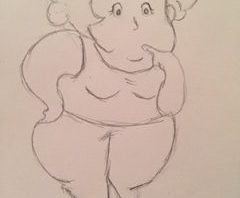
Obesity Is a Disease.
“Obesity is a chronic disease, prevalent in both developed and developing countries, and affecting children as well as adults.”—World Health Organization (WHO).
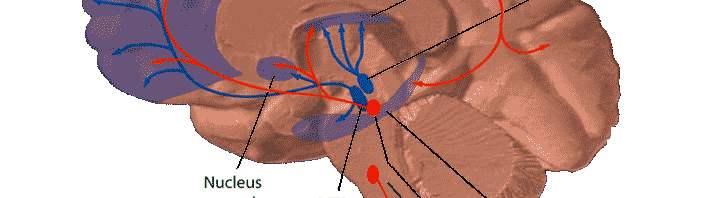
Obesity at the molecular level causes multiple issues eventually leading to the inhibition of IRS’s which stands for Insulin receptor substrate. IRS plays a crucial role in the cascade of events for properly insulin signaling in the brain.
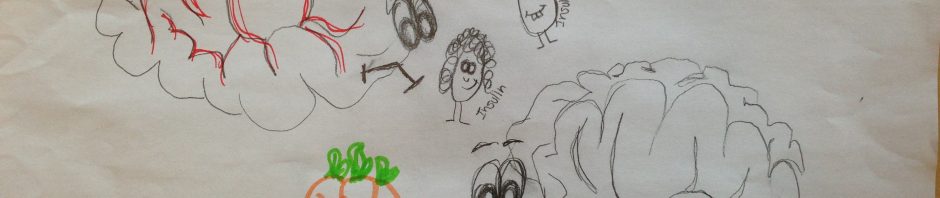
Our research article summed up obesity (over overnutrition) causing three main issues and those were: increase in fatty acids due to a high fat diet (HFD), insulin resistance, and chronic low-grade inflammation. Each of these issues have their own molecular pathway that stem from overnutrition and cause IRS complex’s to be inhibited. The main image encompasses all three issues at the molecular level.
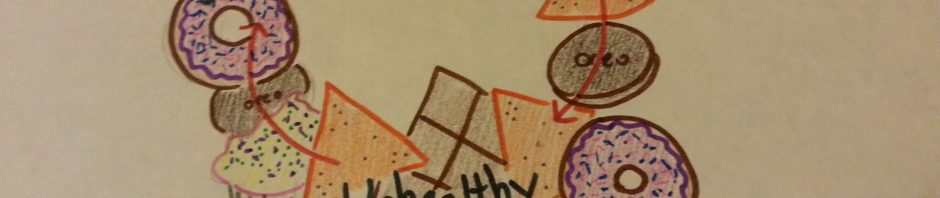
As you read and could see from the drawing I made, obesity physically alters brain function and can cause permanent damage to areas in the brain where insulin receptors are located.
Dictionary.com defines a disease as “a disordered or incorrectly functioning organ, part, structure, or system of the body resulting from the effect of genetic or developmental errors, infection, poisons, nutritional deficiency or imbalance, toxicity, or unfavorable environmental factors; illness; sickness; ailment.”
With that, it’s clear that obesity should and is classified as a disease, but some people today would disagree. If there is no genetic predisposition, and you choose to get fat, that’s your issue and it’s not a disease. I would agree initially that someone who is obese and was skinny prior at some point decided to make poor nutritional changes and that lead them to eventually gain weight. Studies have come out stating that it’s only a period of time when you make poor food choices that causes an imbalance in glucose metabolism and energy homeostasis—thus leading to chemical changes in the brain and boom…obesity as a disease is born.
Maybe some would say that they agree it’s a disease, but since the individual made the decision to fall down that route, they don’t see that person as a priority for treating them over other diseases, but they should. First, our society is helping us become more obese by implementing so much sugar everywhere (because too much sugar is much more important/worse than too much fat) so it is already tough not to make poor food choices. Most importantly, people should care about treating obese people because their diseases automatically predispose the unborn child to the development of metabolic disorders which can lead to obesity.
Insulin and Obesity
There is an obesity epidemic happening in America. More and more people are struggling with health problems due to over nutrition and too little exercise and despite peoples best efforts it is only becoming worse. There are a lot of reasons for this phenomenon, first, our diets (in general) are terrible. We eat too much, and the foods we prefer have wat too much unhealthy fat, too much sugar, and too much salt.
Sadly, people like unhealthy foods a lot, and more than ever before unhealthy foods extremely common. In fact, it is faster, easier, and much cheaper to find unhealthy foods than it is to find a healthy option. Plus processed and unhealthy foods taste great, and are specifically designed to be eaten often and in large amounts.
We know that eating like this affects our body, but how does this affect our brains?
As well as regulating metabolism in the body, insulin plays an important role in the brain. There are many insulin receptors throughout the brain, including many in the regions that tell us when and how much food to eat. When food is consumed, insulin is released from the pancreas into the body and eventually the brain. This helps the body regulate how fats, carbohydrates, and proteins are broken down and it also triggers various receptors throughout the brain.
If Insulin levels are too high for too long insulin resistance can build up in the brain (and throughout the body).
Insulin, as well as being triggered by the intake of food, also helps regulate energy metabolism. This means that insulin signaling helps let people know when and how much food to eat. If the brain becomes resistant to insulin it can cause people’s eating habits to become even unhealthier because they will not know when they should stop eating.
This insulin resistance in the brain can also be passes down from mothers to children. If a mother has insulin resistance and/or chronic over nutrition is can be passed down to her baby through exposure to high insulin levels pre-birth. It should also be noted that the environment after birth also has a significant effect on obesity and insulin resistance in the brain. Still, the importance of this pre-birth insulin resistance cannot be ignored.
So what can be done? Currently the only practical answer is to eat well and exercise. I know that everyone is tired of this advice, but that doesn’t make it any less true. Eating our vegetables and exercising will make us feel better and be healthier.
Now, this doesn’t mean that we can never eat a cookie ever again. We just need to be mindful of what we are eating and make sure that we eat a well-balanced diet and do some form of exercise on a regular basis. If we make a habit of eating mindfully it is okay to indulge every once in a while. It is when we eat nothing but unhealthy foods that it starts to affect our body, mind, and insulin signaling.
Concordia Capstone Experiance
When enrolling in the capstone course, Neurochemistry, I was very nervous about how I would do in the course with not much neurological background. Also, with this only being my 3 semester at Concordia I was a tiny bit skeptical of the whole capstone concept. I figured it would be just another class, that would be pretty hard and stressing, but in reality, it has been the best class I have taken at Concordia so far.
This class has made the whole Concordia experience come into reality, with experiential learning and becoming responsibly engaged in the world (BREWing). I wish all my classes could be like this one.
To me it has fulfilled all the liberal learning goals Concordia has set. First, instill a love for learning, never before have I wanted to read a journal article for the fun of it but this class has showed me how much I can learn by reading new information and dissecting the findings. It is truly amazing how much I have learned how excited I am to still be learning.
Second, it has definitely given me foundational skills and transferable intellectual qualities that I didn’t know I could even do. This class has made me look at science in many different ways rather than one straightforward way. This is partially due to us learning for ourselves but also being able to discuss with our peers about how they feel on a subject and learning from them.
Third, how not just one piece of science is key to all, that many different facets make up the whole picture and working with, and understanding everything will help in the long run.
Fourth, self examine my own understanding of cultural, ethical, physical and spiritual self. This was fulfilled by seeing a different side of illnesses that may not actually be our fault but really an imbalance in our brains causing these diseases, how to empathize with people and the ethical question about long term care. In this realm I also want to talk about our Community Action Project that opened my eyes to a real problem in this world and that is opiate misuse. I would hear news stories about opiate problems in our own community and not even bat an eye. After researching and hearing from the Good Neighbor Project I have a whole new perspective on opiate abuse in my own community that wouldn’t have been possible without this class.
Fifthly, when leaving Concordia to be responsibly engaged in the world. I think this class 100% does that for its biology, neurochem and chemistry majors it encounters. This course made me have to learn things for myself without the teacher simply handing over the material. It made me learn how to process things that I thought would be a hard concept in a manner that I could break down and understand because this class gave me the tools to do so. I hope I can continue to use these tools throughout my life to make hard tasks and problems simpler to do. These are the reasons why Concordia is the best in the league in producing highly qualified grad school and work positions.