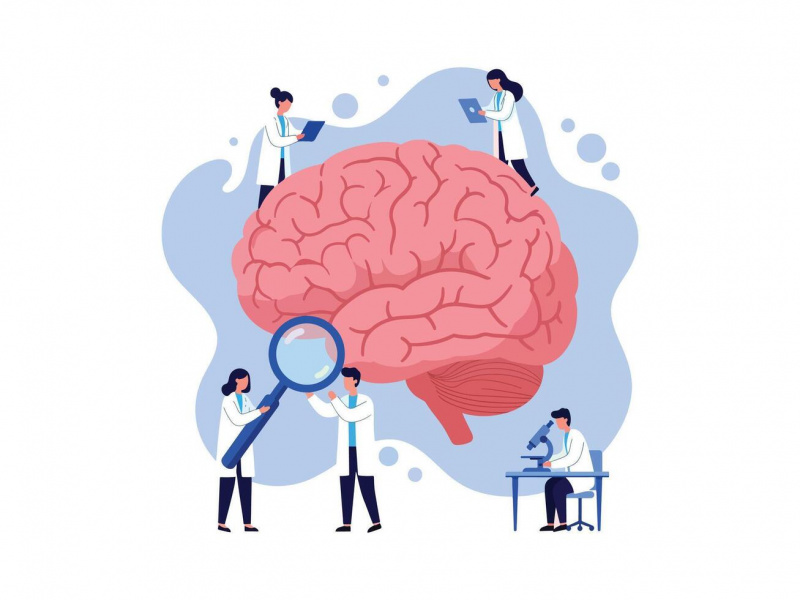
Neurochemistry was one of those classes I was not totally sure what to expect from going in. I knew it would be challenging, but I did not anticipate how different it would feel from most science courses I had taken here at Concordia. Finishing this semester feels like a good time to actually reflect on what happened over the last few months, not just in terms of what I learned, but how I learned it, and what I am taking with me.
Looking back at the semester, I can honestly say that this class pushed me more than a lot of courses in my four years here at Concordia. Not because of exams or the amount of material, but because of the way it was structured. Every week, we were reading real scientific papers, not textbook summaries of them. We had to understand them, pull out what mattered, and then find a way to explain it to someone who had never taken a biology class in their life. That process forced a level of understanding that I had not really experienced before.
What Learning Actually Looked Like This Semester
Most classes I have taken follow a pretty predictable pattern. You show up, you take notes, you study, you get tested. Neurochemistry did not work that way, and I think that is what made it stick. The learning here felt more applied. Reading a paper and then having to write a blog post about it for a general audience meant I could not just skim the surface. If I did not actually understand what the researchers were doing and why it mattered, it would come through immediately in the writing.
The Friday discussions were another big part of this. Sitting around and actually talking through the science, bouncing off ideas with classmates, and hearing different takes on the same paper helped me realize that understanding science is rarely a solo process. A lot of my best thinking in this class happened during those conversations.
The blog posts themselves were probably the most challenging and most rewarding part of the whole semester. There is a real difference between knowing something and being able to communicate it well. I learned that the hard way on my first few posts, and I think by the end I had genuinely improved.
Connecting to Concordia’s Goals for Liberal Learning
Concordia talks a lot about BREW, becoming responsibly engaged in the world, and about the five goals for liberal learning. Honestly those phrases were something I had not really heard or at least not paid much attention to, but this class definitely made them feel a little more real to me.
The goal of instilling a love for learning showed up in a way I did not expect. When you are reading primary literature on topics like how signaling pathways go wrong in disease, or how certain psychiatric conditions change the chemistry of the brain, it is hard not to get pulled in. There were weeks where I genuinely kept reading past what I needed to because I wanted to know what came next. That does not always happen in a science course.
Developing interdisciplinary perspectives was also a big piece of this class. Neurochemistry sits at this intersection of biology, chemistry, psychology, and public health, and none of those fields can fully explain the conditions we studied on their own. I found myself thinking about things from a bunch of different angles at once, which is a skill I think I will carry forward regardless of where I end up.
There is also responsible participation in the world. Writing blog posts that are publicly available to anyone forced me to take that seriously. If someone outside of Concordia reads what I wrote and comes away with a misunderstanding, that is on me. Getting that right felt like it mattered.
Skills I Am Taking With Me
If I were going to highlight one thing on a resume from this semester, it would be science communication. Before this class, I would have said I was a decent writer. Now I think I am a much more intentional one. There is a specific skill in taking something complicated and finding the clearest, most honest way to explain it to someone who does not share your background. I feel like I have actually developed that this semester, not just practiced it.
Critical reading is another one. I can look at a paper now and have a real conversation about its limitations, its methodology, and what the findings actually do and do not tell us. That felt pretty new to me at the start of the semester.
Using Multiple Perspectives to Understand a Problem
One of the things this class did really well was show how rarely a single discipline can fully explain something. Whether we were looking at neurodegenerative disease, psychiatric conditions, or addiction, the chemistry alone never told the whole story. You also had to think about behavior, environment, access to treatment, and the ethical questions around intervention and research.
A good example of this is how we approached addiction throughout the semester. From a neurochemistry standpoint, you can map out exactly what dopamine is doing in the reward pathway and how repeated substance use rewires those circuits over time. But that only explains part of the picture. Psychology brings in behavioral patterns and how stress and trauma shape vulnerability. Sociology asks who has access to treatment and who does not, and why. None of these perspectives are complete on its own, and learning to hold all of them at once is something I genuinely got better at this semester. That kind of thinking is what I would consider one of the more transferable things I am leaving this class with.
What Liberal Learning Means to Me
Being in Concordia and now graduating I have thought about this question in different ways at different times. Right now, at the end of my last semester, I think liberal learning means being trained to keep learning after you leave. It is not just about what you know when you walk across the stage, it is about whether you know how to figure things out, ask good questions, and communicate clearly once you are out in the world.
Neurochemistry, more than almost any other class I have taken here, felt like it was doing exactly that. I am finishing this semester with more questions than I started with, which is maybe the best sign that something actually worked.
[1] “neuroscience cartoon,” Bing. Accessed: May 03, 2026. [Online]. Available: https://www.bing.com/images/search?q=neuroscience+cartoon&qs=n&form=QBIR&sp=-1&lq=0&pq=neuroscience+cartoon&sc=2-20&sk=&cvid=04B1F41362D14FD7B9701B8121A6BCA5
