Therapies for Autism Spectrum Disorder

Autism Spectrum disorder (ASD) has a wide range of symptoms, but there are three core symptoms that include social interaction, communication, and repetitive behaviors. Other symptoms can be seen as neurological issues including sleep deficits, mood, anxiety, and others. Also, systemic issues like gastrointestinal disorders and immune dysfunction. The symptoms, shown in the figure below, can have a range of impact from mild to high on an individual.  ASD has a wide range of therapies fit for the variety of symptoms an individual on the spectrum can display.

The treatments and therapies are customized to the symptoms an individual with ASD displays.  It is not known what causes autism. Some research suggests a problem with the synapse structure (gap between two neurons) of glutamatergic neurons and a pathway called MAPK/ERK. These two problems are proposed to each result in zinc deficiency which leads to dysfunction of the immune system. Which then would result in dysregulation of the neurons causing an imbalance between the excitatory and inhibitory signals from the neurons. However, it is not known what causes autism. Therefore, medications that are recommended and approved for autism treatment only treat the side symptoms and not the three core symptoms as seen in the figure above.
Therapies are recommended because they are customized to the individual’s needs of this spectrum of a disorder. Therapies that are offered for ASD include family, animal-assisted, behavioral, and occupational therapy, amongst others. Behavioral therapy is recommended for early intervention. This includes a range of therapies like Applied Behavior Analysis (ABA). Under this category are therapies like floortime, pivotal response, and verbal behavior therapy. Floortime is commonly talked about and consists of the parent or teacher getting down on the ground at the child’s level to interact with them. This helps with expanding their communication by building on their strengths. The ultimate goal is an increase in self-regulation, intimacy, two-way and complex communication, and emotional ideas and thinking. Another recommended therapy based off of ABA and Early Start Denver Model is the Lovaas Model. This model uses one-on-one instruction of individualized treatment plans that the parents can be involved in.
The other therapies listed are generally recommended for toddlers on up. Animal-assisted therapy includes horseback riding and pet therapy. This type of therapy strengthens the child’s social skills. A study showed that of the families that own a dog, 94 percent said their autistic child bonded strongly with the pet. This has been seen to improve the social, emotional, and cognitive function of the individual. Occupational therapy focuses on the development and quality of life of the individual as well as considering the needs of the family. They do this by working on the individual’s ability to perform daily activities, instrumental activities, education, work, leisure, play, and social participation. Another type of therapy that is important is speech therapy. Enabling individuals with language impairment is helpful when it allows the person to communicate what they want or even their emotions clearer.
There are a wide range of therapies offered for ASD. The use of medication within the disease is limited to the side effects of ASD and not the three core symptoms because it remains unclear what exactly causes autism.

My Neurochemistry Experience

When I first enrolled in the Neurochemistry Capstone course, I was a little unsure of what I was getting myself into. But, now that I am quickly approaching the end of the semester and thus the end of this class, I am finding myself a little nostalgic. I have loved every second of this course, as it certainly represents the concept of a capstone course. Concordia’s mission is for students to BREW (become responsibly engaged in the world). Neurochemistry has represented the mission well, as well as aligning with the goals of a liberal education.
Being a biology major, I was a little nervous when I started the course. My general chemistry and biochemistry courses were the only things that I thought would help me out with learning neurochemistry content. However, I found that a lot of the mechanisms and structures that we were learning were things that I was able to understanding fairly well. I really appreciated that I was able to use my foundational skills from other courses to incorporate information across disciplines. I also found out that a lot of neurochemistry involves quite a bit of background from my biology courses. Knowing that I was going to be able to pull previously learned information from my brain made class a lot more enjoyable. Interdisciplinary work is something that Concordia strives for, with neurochemistry not being an exception to their goal for learning.
The concept of BREW was definitely illustrated through this course. Through our Wednesday speed-dating, Friday conversations and blog-posts, I found myself becoming more socially engaged with my peers, many of whom I did not know well at the beginning of the semester. The Friday sessions were pure discussions about the topic that we had gone over for the week. We were able to discuss ethical, cultural, and personal opinions on the topic at hand, an experience I had not had in any previous classes. It was interesting to hear what others had to say about some pretty controversial topics. I also really enjoyed learning new information that I had not known previously. The blog post also gave us another opportunity to showcase our knowledge and opinions about the weekly topic. It also allowed us to connect with the community, spreading knowledge about topics that they may not know much about! Even if not many people read my blogs, I hope that I was able impact some people within the community with my thoughts!
My specific capstone project that I worked on all semester with both neurochem and social work students was on the topic of anxiety. We chose to specifically target the teachers on campus in order to have a “trickle down” effect on the students. I really believe that we were able to succeed with our faculty and staff workshop. This project was challenging, but it allowed me to expand my friendships into other disciplines, while also learning how to navigate through a “real world” issue that exists within our society.
Throughout my entire four years at Concordia, I have fallen deeply in love with learning, so as much to pursue a career that will immerse me in education for years to come. Specifically, neurochemistry has contributed to my love of learning. Learning about topics that are prevalent within the community and may contribute to my work as a physician really stimulated my learning within the course. The environment of students that I have been able to work with throughout the semesters have been phenomenal. Also, having a professor that shares the same passions as you makes learning even more fun and worthwhile. Overall, this was a class for the books. It is hard to find professors that are willing to hold a class in such an environment.

Concordia College Capstone Experience

Concordia College prides itself on preparing its students for the real world after their undergraduate experience, and the capstone experience is supposed to be the final addition to the recipe. As my final semester at Concordia is wrapping up and I finish my capstone course, Neurochemistry, I believe I can say that Concordia is doing it right. I hope that I can say the same thing 20 years from now, too, but from where I am now I can.
Concordia has a list of goals for liberal learning that they try to incorporate into their liberal arts education, and at the same time they try to teach the students to become engaged in the world around them. I feel as though Neurochemistry has met these criteria.
The first goal for liberal learning is to instill a love for learning. Although this class has been challenging and a bit confusing at times, the material has been fascinating. I hadn’t taken a neuro class before this, so I thought I might be a little behind and easily overwhelmed. This may have been the case if it was a typical class, but, because we had to learn the material on our own outside of class, I could spend as much time as I needed. It was easy to spend a lot of time understanding some of the articles, but they were so interesting it didn’t matter.
The second goal is about developing skills and transferable intellectual capacities. I think that this goal was probably the most relevant to me because I am going into dentistry, which is a constantly evolving field. I will need to be able to pick up a scientific article years from now have the skills necessary to critically analyze and understand its content, something that I learned reading articles and discussing them in this class.
Developing an understanding of disciplinary, interdisciplinary and intercultural perspectives and their connections is the third goal of liberal learning. Our class had people from many backgrounds, majors, and countries, so we had people with different perspectives weighing in on our discussions. In addition, Dr. Mach did a wonderful job of bringing things to our attention that we maybe didn’t think of or that enhanced our discussion in some other way. Our topics were controversial at times (legalization of marijuana, end of life care, drug addiction, etc.), so it was interesting to see where people were coming from when they had a contrasting opinion.
The fourth goal is to cultivate an examined cultural, ethical, physical and spiritual self-understanding. Neurochemistry satisfied this goal through our class discussions. We were never just memorizing information from a lecture given by our professor. We were asking questions about the implications of a new discovery, discussing if a new treatment option was ethical or not, comparing our views to those of another culture, or looking inside ourselves to formulate our own opinions. Many of us will be professionals in medicine or a related field, so we will face these kinds of issues at some point and will need to deal with it properly.
The final goal of liberal learning is to encourage responsible participation in the world. Our weekly blog posts relaying scientific information to the public were an obvious way that we were participating in the world. In our discussions, we often found ourselves saying, “If only more people knew (fill in the blank).” Because we have the educational background and access to scientific articles, it is our responsibility to do what we can to educate others to make informed decisions.
Overall, this class was a great experience and I would recommend it to any science student that is looking for a capstone. It is challenging, yes, but it is an awesome class and is near the top of my list of engaging, interesting, and rewarding classes here at Concordia.

Our Brain’s Resistance to Eating Better

This week we asked ourselves a very important question: what comes first, over nutrition or insulin resistance?
In 2013, the American Medical Association (AMA) officially recognized obesity as a disease. According to new guidelines released by the American Heart Association, American College of Cardiology, the World Health Organization, and The Obesity Society, doctors should consider obesity a disease and more actively treat obese patients for weight loss.
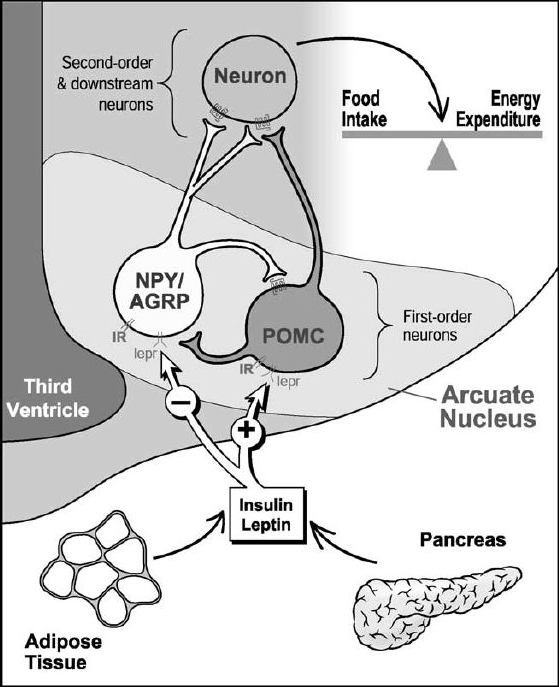
With this new diagnosis as a disease, more research is being done on how the brain plays a key role in the way we eat. In a paper published in 2013 we found many things that contribute to this energy imbalance in our bodies.scan-2016-12-11-19-34-17
Normally, the brain responds to many signals from within the body and from the external environment to help it to know when it is time to eat and when eating should stop. We are all familiar with things in our environment that seem to increase our appetites, such as the smells of food nearby, food advertisements, parties with friends, group meals and even emotional triggers, like stress, which can change our drive to eat.
This includes certain neurons in our brain that receive signals from insulin when we have enough energy, to tell us we don’t need to eat anymore. When we over eat these neurons can get desensitized and no longer receive the insulin signal that we are full. This starts a cycle of bad eating and just continues to damage the neuron. Also, research on animals has also shown rats fed a diet rich in sugar and fats are less sensitive to the pleasure-inducing neurotransmitter dopamine.
The other hormone controlling our appetite is leptin and as body fat increases, leptin levels also increase. However, instead of high levels of leptin leading to fullness and decreased appetite, it appears that obese people become resistant to leptin’s effects and it works less and less effectively as body fat increases. This resistance to the effects of leptin may help explain why many obese people have normal or even increased appetite despite having large amounts of stored calories in their bodies in the form of fat.screen-shot-2016-12-12-at-10-11-44-am
While scientists and doctors continue to work to better understand what causes obesity and to develop new treatments, there are many things individuals can do now and Diet and exercise and the key to it all.

The 4:1 Male to Female Ratio in Autism

Autism is seen four times as much in men than it is in women. This is a very odd phenomenon that has been hard to explain since it’s been observed. The reasoning behind it still isn’t well understood, but there were some interesting points brought up.
First off, the article Sex differences in autism spectrum disorders from NCBI discussed a possible diagnosing bias in Autism Spectrum Disorder (ASD). There may be a gender bias in diagnosing ASD that stems from how ASD is identified. ASD is diagnosed with many behaviors that violate traditional social norms and it is possible that males exhibit those signs for diagnosing in a more extreme fashion than females. Their main source of evidence of this was that in patients that fell just short of being diagnosed with ASD, the gender ratio was much more even, closer to 60:40.
After getting beyond this, multiple ideas were discussed to explain the ASD gender ratio. The most interesting one to me was about the role of testosterone and other hormones in the development of Autism and women’s genetic resistance. Since there is such a gender discrepancy, the first culprits looked at are what make us a boy or girl, sex chromosomes. A girl has two X chromosomes and a male has an X and Y chromosome. The first idea is that the Y chromosome is destructive, in that it leads to Autism. On the other hand, it could be that the X chromosome is protective against ASD. More than likely, it’s a little of both. Interesting evidence for this is that people with more than two chromosomes, their rates of Autism make sense in consideration to X being protective and Y being destructive. More X chromosomes and fewer Y chromosomes correlate with lower rates of ASD. This association makes sense in consideration with the role of testosterone in Autism.

The reaction changing testosterone to estrogen
The testosterone to estrogen reaction

Elevated levels of fetal testosterone and throughout development are seen in many who exhibit ASD. The exact role of testosterone in Autism isn’t well understood, but an interesting connection was made by the authors. Testosterone functions, on some levels, in a positive feedback loop. Testosterone inhibits the enzyme that changes is to estrogen. So naturally, the accumulation of testosterone leads to the inhibition of its own breakdown, leading to further accumulation. This is relevant to the gender discussion because, not only does the Y chromosome create more testosterone comparatively, but the X chromosome codes for the enzyme that changes testosterone to estrogen. This understanding might explain part of the gender story, as females with less natural testosterone and more enzymes to handle high amounts of it are more resistant to ASD. The most interesting piece of evidence for this hypothesis involves the siblings of those with ASD. When compared, siblings of a girl with Autism exhibit more symptoms of ASD than those with a brother with ASD. All these little pieces of evidence support the idea that women are resistant to ASD in a way that involves their additional X chromosome. An interesting analysis that comes to a funny conclusion, women having lower rates of ASD is due to their additional X chromosome or lack of a Y. Which is effectively saying, women are resistant to ASD because they are women, nonetheless, testosterone’s role in ASD will be important in the future for understanding and treating ASD.

Oxidative Stress, Aging and Overnutrition

The aging process is one we’ve studied as a people for as long we’ve existed. And extending our lives has always been a major motivation in those studies. Our current understanding of aging at a cellular basis is one of oxidative stress and mitochondrial damage. Over time, our cells create more and more reactive oxygen species (ROS) that cannot be broken down before doing their damage, which lead to the generation of more ROS. I’ll break down the concept and introduce a few interesting ideas from our class discussions.

biology-1293878_960_720

The mitochondria, the most well-known organelle in the cell. It gets its memorable nickname the “Powerhouse of the Cell” from its function, creating energy. The mitochondria can be thought of as a factory, but it can be better visualized as a furnace. Just like any bomb or engine, sugar breakdown is a combustion reaction. A carbohydrate reacts with oxygen and breaks down to water, carbon dioxide, and energy. So in the mitochondria, sugar is broken down and the heat/energy given off is utilized to generate energy molecules for the cell. However, this process isn’t perfect. Instead of becoming carbon dioxide, the oxygen molecules can be changed to reactive oxygen species, like superoxide.
These ROS are dangerous, a given with the name reactive. They damage DNA, proteins, and membranes. The damaged DNA works less efficiently and increases the chances for mutations. The proteins that are damaged dysfunction and/or accumulate. Membrane damage along with protein damage are important for their impact on the mitochondria. The ROS generated by the mitochondria, turn around and cause it to generate even more ROS. This positive-feedback loop would lead to the accumulation of a lethal amount of ROS. Our body takes care of this with proteins that neutralize ROS. As stated above, ROS damage proteins as well. Over time, our body loses the fight against ROS generation. Leading to disease and aging.
How does this concept apply to us? Calories basically equate to energy for the mitochondria. Meaning that, calories, by virtue, lead to ROS as well. The oxidative stress of calorie consumption is a natural part of life and the aging process. Overnutrition exaggerates that stress. When our body takes in too many calories over a short or extended period of time, it generates more oxidative stress. How relevant is this to the aging process? That’s where we need to learn more.
There is interesting evidence in support of that. Rats have been shown to live longer if their amount of proteins neutralizing ROS are increased. That doesn’t hold true 100% of the time, though. Sometimes the opposite effect happens with similar proteins. The current hypothesis is that ROS are damaging, however, they do have a necessary function in the cell that can be disrupted. The most interesting idea I came across was that reducing caloric intake extended life span.
It has been shown in many experiments with varying mammals that reducing caloric intake by 30-50% below what the animals would eat if they had no restrictions, leads to a significant extension in lifespan. This idea is very interesting for thinking about extending life, but it’s also very applicable on the opposite side of the spectrum, overeating and reduced lifespan. Overeating is obviously a concern in many countries throughout the world and its effects on aging and possible controlling those effects calls for more investigation. Life-extenstion is also very interesting, but those studies called for reduced feeding during development. Reducing calories that far is hard to do in the first place, but its negative effects on even an adult’s body wouldn’t be worth any hopeful benefit in lifespan. Going forward, it will be interesting to see how the role of oxidative stress and overnutrition becomes a factor in preventing and treating illness.

The Capstone Experience

The Capstone Experience
One of the major concepts that Concordia tries to instill in the students is to become responsibly engaged in the world. Concordia refers to this as BREW. Throughout my last semester here at school, I have been taking a neurochemistry course. This course has been different from any other course that I have been enrolled in while at Concordia.
I feel like this course has been a great teaching tool for BREW. The concepts and ideas that we have been able to discuss in class have been eye opening. The way we were able to learn about the details of different diseases gave us a new way to look at them.
For example, the topic of addiction was covered. Learning the mechanisms in the brain behind addiction made it much more pathological instead of a fault of that person. Putting things into scientific and medical terms makes it easy to be compassionate for anyone in this scenario.  Through our discussions in class we were able to share our different outlooks on ideas like this.
We were able to have lengthy discussions about each issue, and hearing others experiences and knowledge was incredibly interesting. This was a new way of learning and sharing ideas. These discussions were a great time to communicate about some difficult topics.
As I stated earlier, this course was different from any I have taken. In most courses, you are given a syllabus and told what is due and when you need to have it done. We were able to have a lot more freedom in this course. We were able to pick out topics that intrigued us, and then teach our fellow classmates.
The professor has always been the main source of knowledge throughout my time at Concordia, but this course was different. Our professor was there to learn with us, and of course teach us if we needed it. Learning from other peers was a new and interesting way to take in the information.
Since we were responsible to teach others about a certain topic, we needed to research that topic and be able to explain it. This course not only made us use reliable research, but it made us learn how to teach it to others. Most courses will have you give a presentation, but this was a more personal teaching approach.
This approach was very useful for those of us who are going to be venturing out into the world within the next year. This course taught us to think for ourselves, and be able to apply our knowledge to different aspects of our lives. This class was much more independent than any other I’ve been in.
As seniors, we are now going to enter into the real world, and we need to be independent. This was a bit of a test run I think, and a very successful one. During our time in this course, we were also given the opportunity to bring our knowledge into the larger community.
Everyone was given the chance to participate in a community action project. We got to team up with social work students to try and make an impact on others. Different groups tackled different topics, ranging from mental health to addiction.
The topics addressed impact millions of people a year, so we were able to try and make a difference. With the skills we were taught in the classroom, we were able to go out and teach others about the things we had learned.
Educating more people is just one way to start a conversation about difficult topics. The skills we have learned in this class are transferrable, and will only help us continue to grow. This neurochemistry course is one of the best classes I have ever taken.

Medications, Pregnancy, and the Risk for Autism

Have you ever been behind a parent with their child in the checkout line at the grocery store? Maybe the child is acting up and the parent does not seem to be doing anything about it. Do you wonder why the parent just lets the child misbehave? Do you silently judge their parenting technique? In our society, this is a normal thing to do.
This may be your natural response, but maybe we need to think twice about the situation. What if that child has autism? Maybe it is just a spoiled child throwing a tantrum, but maybe it is something more serious than that.
The rates of autism are rising in our world. There is little evidence that can explain why this is happening, but there is a lot of research being done on autism. With this rising occurrence, there is a lot of speculation that different environmental causes could be the culprit. I will explain a few of these, but first I will give you a quick rundown of the neurochemistry behind the disease.
The Neurochemistry
The mechanisms behind autism autismhave been widely investigated, but there is still a lot to be learned. An article in the journal of the frontiers in psychiatry, by Andreas Grabrucker, explains some of the research that has been done regarding autism.
There is a lot of evidence that shows there is a genetic component to this disease, including the possibility of a polygenic inheritance. The majority of this paper focuses on the environmental factors that might be risk factors for autism.
The two main factors discussed throughout the article were zinc deficiency and abnormal immune responses. Zinc is used widely throughout the brain for different purposes. When there is not enough of it, learning disabilities may be one of the results.
The immune system is also a major risk factor for autism. Many toxins or immune responses from the mother during pregnancy may increase the likelihood of that child developing autism. There is a lot of connections between the immune system and zinc too, so the combination of these problems can have devastating effects.
There are numerous other environmental factors that have been thought to impact autism. Some of them are malnutrition, parental age, and melatonin deficiency. Each of these factors have been researched, and there has been associations found with autism. The research that has been done shows how complex autism is.
Is medication use during pregnancy a risk factor for autism?
In the article by Grabrucker, there was a very short discussion about psychiatric medications and autism risk. This sparked my interest, so I researched the issue further. I found some really interesting correlations between autism and the use of multiple medications.
An article in Autism Speaks describes a study done by some California researchers who investigated a specific type of antidepressant. They looked at selective serotonin reuptake inhibitors in the first trimester of pregnancy. There was a modest link found between taking these medications and an increased risk for autism.
There have been other experiments that have shown Depakote, an anti-seizure medication, can increase the risk for autism. The big question is now whether it’s the medications that increase the risk for autism, or is it the fact that the mother has these physiological diseases that are passed on to their children.
Either way, these are not medications that someone can just quit taking. If a woman stopped taking her medication to protect her child, she may be at more risk for serious issues. This is a very complicated issue that needs to be researched more.

Why Was Weed Made Illegal?

Tobacco and weed have both been used for thousands of years by many different peoples, and yet the past 100 years in America have been a time of equating cannabis to heroic and other narcotics. Odd that tobacco which has been shown to strongly associate with cancer and other health issues many years ago (what a struggle that was against the cigarette corporations) is legal in today’s society when weed illegal even though it’s identified negatives are far below that of tobaccos. Some of the stereotypical negative effects cited by the first website to appear in google include memory issues, reduced reaction time, lower iq, impaired thinking, relationship issues, antisocial behavior, financial difficulties, increased welfare dependence, and greater chance of being unemployed. The effects are marijuana are poorly understood because it hasn’t been studied in the US due to being treated like a narcotic rather than potential medicine. So where do these drug effects come from if not from scientific studies? That’s the story of why weed is illegal.
It’s true that weed has negative effects. One you’re smoking, bad no matter what and damages the lungs. Two you’re introducing high amounts of outside chemicals to your body, may not harm too bad but can’t really be good for you either. And thirdly, weed and other drugs should never be used by those still in development, youth. However, side effects like relationship issues, antisocial behavior (stealing, lying) and the financial issues and welfare have a basis outside of science. Those trends might be seen in today’s world, but they were determined to be true long ago.
img_1414
Marijuana was legal in the use into the 1900’s, however, the Mexican revolution occurred in 1910. Following that event, many Mexican immigrants began to cross the border and with them came weed. Pretty much immediately, state governments began criminalizing marijuana (just like heroin) due to it’s association with the Mexican immigrants. Newspapers publicizing this said things like “Marihuana influences Negroes to look at white people in the eye, step on white men’s shadows and look at a white woman twice.” At the time, regulating drugs like the FDA does now wasn’t constitutional, which is why an amendment was required to ban alcohol. The next stage in our story involves that, prohibition ending in 1933. After prohibition ended Harry J. Anslinger (head of federal bureau of narcotic) being an ambitious man sought to expand his influence by demonizing weed. Using racist publications already in place to justify its demonization and coming up with own, like “….the primary reason to outlaw marijuana is its effect on the degenerate races”. In the end, he was able to bring enough “evidence” to Congress from various racist journals and many from his friend William Hearst, who was the owner of a chain of newspapers with a hate for Mexicans. He was able to convince Congress to pass tax penalties on marijuana against the wishes of Dr. William C. Woodward, Legislative Council of the American Medical Assoc. The doctor called for more primary research before this decision but was ignored and the Marijuana Tax Act of 1937 was passed.
The tax act was found unconstitutional years later, however, the Controlled Substances Act in the 1970’s struck weed down once again. Nixon and the war on drugs, we now know it was resounding failure that we still cling too. Regardless, when the three classes of drugs were defined, weed was placed in schedule 1 initially so that a commission appointed by Nixon could determine its danger. The commission recommended removal from schedule 1 and possibly not consider it illicit at all. Nixon completely ignored this and classified it as schedule 1. Why would Nixon do this though? Not shocking that it was a shady political power move (no way Nixon). Nixon had two main political enemies in America, the Blacks and the Anti-War hippies. As one of Nixon’s aides (John Ehrlichman) opened up about, you can’t just target the pacifists and blacks directly, you have to punish them indirectly. In this case, criminalize the main drugs of use of these populations so that raids and busts can be used to disrupt political organization against him. This racist and political use of drug enforcement continues to this day, just look up the weed usage rates by race and the weed arrest rates by race. I bet you can guess you gets off easy and who doesn’t.
 

Can Leptin Prevent the Obesity Epidemic?

Short answer, overall not signifiantly. More complicated answer is that in some individuals in the obese population, leptin might help with the return of normal weights.
Leptin is a hormone that is secreted by fat cells in your body that signal for the brain to have a decrease in appetite. Because of this, abnormal production of this hormone has been associated with obese individuals.
Specifically in the body, leptin interacts with specialized leptin receptors to inhibit excess feeding. In obese individuals though we see very highly elevated levels of this hormone. So why isn’t it working?
Well, in the typical Western high-fat diet, both rodents and humans have shown in various studies to demonstrate a non-response to leptin. This is a problem for being able to use leptin as a weight-loss hormone, as the already high levels of this hormone in obese individuals are already having no effect.
But, that doesn’t mean that looking into further uses for leptin aren’t going to prove beneficial. Although many obese individuals have high levels of leptin, there is about 10% of obese individuals that have very low levels of leptin instead.
In these individuals, there is potential therapies akin to insulin treatment of patients with type 2 diabetes in the form of leptin therapy. In these individuals with truly low levels of leptin, this therapy has shown to induce a sustained increase in weight loss.
This is good news to show that although leptin therapy is not for everyone, if you are overweight or obese it might be well worth it to go get a check up to view your blood-leptin levels to see if this is a potential reason for your obesity.

Spam prevention powered by Akismet