This week we asked ourselves a very important question: what comes first, over nutrition or insulin resistance?
In 2013, the American Medical Association (AMA) officially recognized obesity as a disease. According to new guidelines released by the American Heart Association, American College of Cardiology, the World Health Organization, and The Obesity Society, doctors should consider obesity a disease and more actively treat obese patients for weight loss.
With this new diagnosis as a disease, more research is being done on how the brain plays a key role in the way we eat. In a paper published in 2013 we found many things that contribute to this energy imbalance in our bodies.
Normally, the brain responds to many signals from within the body and from the external environment to help it to know when it is time to eat and when eating should stop. We are all familiar with things in our environment that seem to increase our appetites, such as the smells of food nearby, food advertisements, parties with friends, group meals and even emotional triggers, like stress, which can change our drive to eat.
This includes certain neurons in our brain that receive signals from insulin when we have enough energy, to tell us we don’t need to eat anymore. When we over eat these neurons can get desensitized and no longer receive the insulin signal that we are full. This starts a cycle of bad eating and just continues to damage the neuron. Also, research on animals has also shown rats fed a diet rich in sugar and fats are less sensitive to the pleasure-inducing neurotransmitter dopamine.
The other hormone controlling our appetite is leptin and as body fat increases, leptin levels also increase. However, instead of high levels of leptin leading to fullness and decreased appetite, it appears that obese people become resistant to leptin’s effects and it works less and less effectively as body fat increases. This resistance to the effects of leptin may help explain why many obese people have normal or even increased appetite despite having large amounts of stored calories in their bodies in the form of fat.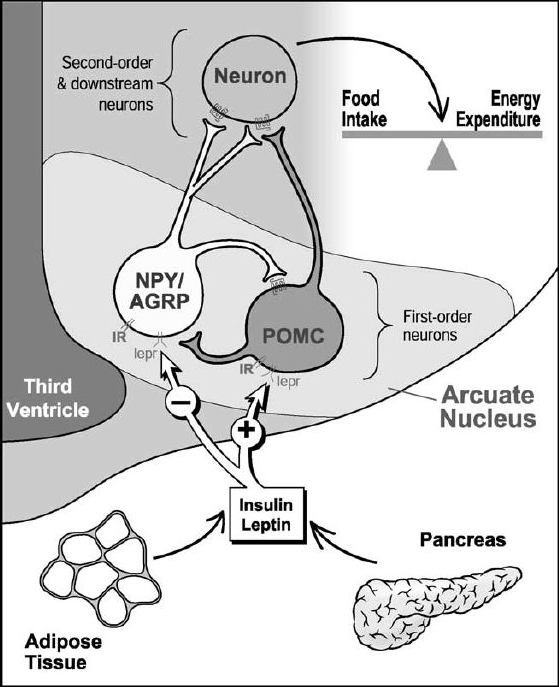
While scientists and doctors continue to work to better understand what causes obesity and to develop new treatments, there are many things individuals can do now and Diet and exercise and the key to it all.
Our Brain’s Resistance to Eating Better