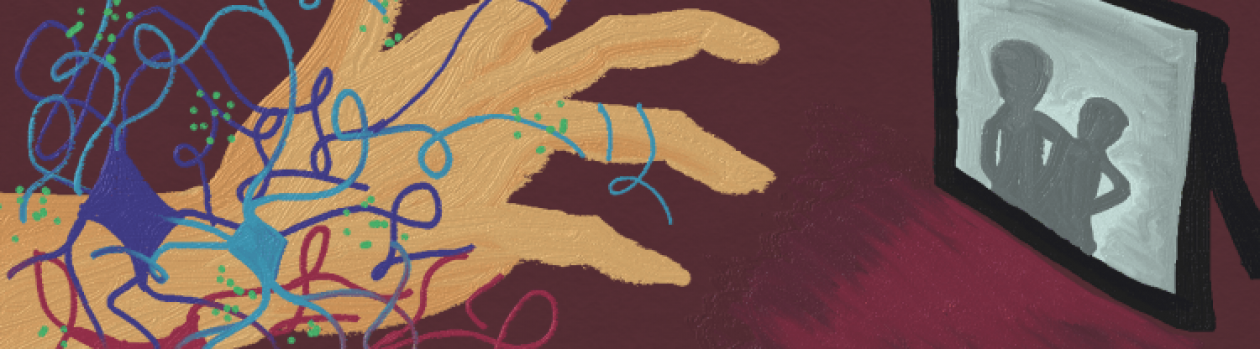
Cancer. That one word strikes fear into the hearts of Americans. Our own bodies grow uncontrollably, destroying us. People everywhere have been affected by it, whether the tumors feed off of them or their loved ones. Cancer can develop from environmental sources or genetically. Whatever the cause, malignant cells have the same characteristic: they divide and grow unrestrained. One pathway plays a key role in the development. This is the MAPK pathway, specifically starting with the protein Ras, leading to Erk. In addition to cancer, the Ras/MAPK and other MAPK pathways are also associated with Alzheimer’s disease, Parkinson’s disease, and Amyotrophic lateral sclerosis (Lou Gehrig’s disease).
Ras/MAPK Pathway in Brief
Ras is a protein that is activated by signals such as growth factors. Once activated, it can activate (which usually means phosphorylate) other proteins. For this blog post, I will focus on Ras activating Raf. Raf then activates MEK which then activates ERK. This protein will then activate several transcription factors (TF), which are molecules that encourage the turning of DNA into RNA (which can then be used to make proteins!). The majority of the TFs that ERK activates are those that encourage cellular division, growth, and migration. They also play a role in regulating cell death. With its signalling effects, the Ras/MAPK pathway plays a significant role in the development of cancerous tumors.
Role of Ras and Raf in Cancer
The genes that Ras comes from is actually a family of genes. The family includes H-Ras, K-Ras, and N-Ras. K-Ras has been found to be mutated in many types of human cancers. About 50% of colon cancer case displayed a mutation in K-Ras. Mutations in the protein right after Ras, Raf, are also present in cancer. B-Raf mutations are responsible for about 66% of melanomas, which are cancers in the skin. One of the most common mutations results in B-Raf being activated constantly. It then continuously activates the MEK. MEK’s action continues, which means MEK, ERK, and the TFs are activated as well, resulting in cellular growth that cannot be turned off.
Kind of scary, but there’s hope!
Malignant tumors exhibit uncontrolled cell growth and migration that results from genetic mutations. These mutations may have been inherited or caused by the environment. There are other oncogenes (genes that cause cancer) that are important in the development of cancer such as Rb and Myc. As we learn more about the mechanisms of cancer, we will be able to develop treatments to prevent unrestrained cell growth. A previous blog post discussed different treatment options that take advantage of our current knowledge.
Discovering Ambrosia
Extending one’s life has fascinated people for centuries. Eternal life appears consistently in mythology and religion: as ambrosia, a gift from the gods or a philosopher’s stone. Today, the average human lifespan is around 80 years. However, we are finding that more and more age-related illness, such as Alzheimer’s Disease and Parkinson’s Disease, along with cancers, are exhibited more frequently. Both of my grandmothers have age-related diseases (Alzheimer’s and PSP). The subject strikes at home for me. As such, the paper we discussed in class for Neurochemistry sparked my interest. It reviewed known mechanisms of aging and how a certain receptor, IGF1-R, may play an important role in aging of the brain and Alzheimer’s disease.
IGF1-R, Alzheimer’s, Ceramide, oh my!
IGF1-R stands for insulin-like growth factor 1 receptor. This is considered a tyrosine kinase receptor, one of the types of receptors found in the brain. These kinds of receptors usually bind to growth factors like insulin. The receptors, after binding to signal molecules, or ligands, can start a chain reaction of other signals within the cell. The signal pathways that IGF1-R activates are the PKB/Akt or Ras/MEK/ERK pathways, both important in cell growth and reproduction. The Akt pathway also encourages cell death. This plays a role in aging.
The signal from IGF1-R is thought to contribute to the switch in the presence of two different receptors: TrkA and p75 neurotrophin receptors. TrkA is exhibited more in younger animals, while p75 is shown in greater amounts in older animals. Somehow, the expression of these receptors switches; the mechanism has yet to be discovered. But it is this switch that is thought to contribute to the aging of cells and eventual development of Alzheimer’s.
p75 receptor signaling is associated with the production of ceramide, a lipid (fat). This lipid stabilizes the enzyme that breaks up the precursor molecule to the amyloid-beta. Amyloid-beta is a molecule that builds up to form the plaques that are characteristic of Alzheimer’s.
So, let’s review! IGF1-R can help cell growth, but also encourages cellular death. Somehow, it can lead the switch to p75, which will result in more ceramide. More ceramide means more enzyme; more enzyme leads to more plaques. The mechanism for Alzheimer’s is more complicated, and becomes more so everyday.
The Practical Applications of Roundworms
One thing that caught my attention is how we discovered the possible aging pathway. It was first found in roundworms. Mutations in the gene age-1 extended the roundworms’ lifespans. This gene in the worms codes for the protein PI3K which is also found in humans. Then IGF1-R was implicated as important to aging when mutations that inactivated the gene product in the daf-2 gene resulted in a doubling of the maximum lifespan of the worms. daf-2 codes for the insulin/IGF1 receptor. These genes and proteins are essentially the same as those found in humans. Further research into the human pathway confirmed that IGF1-R affects those pathways. It is logical to conclude that human lifespan, much like the roundworm’s, could be extended with mutations in the genes that code for IGF1-R and PI3K. However, we would not be able to see results right away like in the roundworm.
The fact that this information was obtained from a roundworm, something that is completely different from humans, is amazing. A simple organism can represent the “more highly evolved” organisms. All cells are connected at their roots. So next time you hear about research on roundworms, seahorses, or yeast, and think money and resources are being wasted, consider our continuing quest for life. Research is a necessity if we want to find our own ambrosia.
Tough Questions with Science: All the small things.
This week’s assignment is to explain why the public should care. Specifically, why they should care about the article we read which covers Alzheimer’s disease, Parkinson’s disease, Lou Gehrig’s disease, and Cancer. This sort of question sets off my teacher training. When setting up a lesson, teachers are challenged to give a rational on why a student should care about that issue. But, I don’t think there is much purpose in arguing the importance of specific diseases without first arguing why should the public care about the neurochemistry behind a disease.
As I trudge further into my schooling I am often reminded of the phrase “Innocence is bliss”. As a youth I would find myself in the doctor’s office for some kind of minor issue. Usually these sessions would consist of a Q & A session followed by the prescribing of some drug. To me it almost seemed implied that this one drug was the best and only solution to solve my problem. This theory was put to the test when I was prescribed drugs for my acne, (which on its own I find ridiculous).  At the time I didn’t even care enough to want to fix it. And, as if it had no consequence, I was quickly prescribed an oral drug. I was now putting medicine into my body to solve a problem that wasn’t really a problem. Here comes the interesting part. The positive effects on my acne were negligible, but after about 14 days on the drug I started experiencing horrific stomach pains. These pains left me unable to eat food for almost 24 hours, all just to “cure” a little acne. Looking back it seems quite foolish to introduce my one and only body to some biologically foreign chemical to solve something so small.
This experience leads me to add a bit to the previous phrase, now I would say “Innocence is bliss, yet the informed make the best decisions”. Now don’t get me wrong, I love the idea of having doctors. I am comforted by the fact that I am surrounded by many experts in the human body whose job it is to protect my health. Yet nobody knows the exact workings of the body, everyday there are new discoveries to how we function. In neurochemistry, the focus is on molecular pathways. A chemical pathway is sort of a domino effect, one molecule interacts with another which interacts with another….. and so on.

This domino effect has pros and cons to the medical world. Think of the last domino being the one that triggers the disease. This means that there are multiple places that medicine can intervene before that final domino is toppled. The same goes for molecular pathways. Many times a medicine is targeted at a specific point in the pathway to stop the disease from being triggered. Sadly, the con must come in. It is my regret to inform you this example is an oversimplification. Fixing our molecular pathways isn’t as easy as reaching in and removing a “domino”, Instead some sort of chemical reaction must take place in your body, usually by chemicals inside of pills. Many times the problem is that these chemicals don’t only react with the “trouble pathways” but they also react with “normal pathways” and this is where side effects come into play.
So picking the right molecule to target without disrupting other pathways can be a complicated thing. From what we know from research right now it isn’t easy/possible to determine the best way to handle a disease. So the next time a doctor hands you a pill, hopefully you will be more interested in finding out exactly what you are putting into your one and only body.
The Path to Cell Destruction
This week my classmates and I dissected an article pertaining to the MAPK signaling cascade and its role in neurodegenerative diseases. Diseases such as Parkinson’s, Alzheimer’s and Lou Gehrig’s disease (also known as ALS) are characterized by progressive motor cell death impairing motor function. We always ask ourselves what the underlying cause of such ailments are, and thanks to the evolution of research in neuroscience such causes can be illuminated and eventually comprehended.
Inside of a cell there is a nucleus and it is composed of proteins that encode specific functions for the cell. The MAPK pathway is a series of chemical messengers that are activated by stimuli outside of the cell. This pathway is important for carrying out essential function such as making new/different cells and the act of executing certain cells. The MAPK pathway has many branches that activate other pathways on other organelles in the body such as the mitochondria and endoplasmic reticulum. These organelles are important for energy and making other proteins essential to the body. When mutations in the MAPK pathway occur, activity happening downstream causes a multitude of problems. Mutations in certain enzymes and proteins in the cell causes cellular function to alter and affect the functions of other organelles. The presence of free radicals cause stress on cells and the changes ensue. Constant stressing of cells and the changes that are caused by them cause components of the MAPK pathway to take a route towards cell death.
So how is the MAPK pathway associated with Parkinson, Alzheimer’s and ALS? The direct cause is not completely clear yet, but there are a lot of indications and research that supports that the MAPK pathway plays a role in these neurodegenerative diseases. In ALS, a mutation in the SOD1 gene causes oxidative stress to neurons. This mutation in the SOD1 gene makes it so a neuron cell called an astrocyte unable to clear away an area of highly concentrated neurotoxins. The high concentration of neurotoxicity causes the cell to undergo a programmed cell death. Similar activity is seen in Parkinson’s and Alzheimer’s where neurons undergo programmed cell death. The problem with these diseases is that motor function is being compromised because of neurotoxicity. Aging shows strong correlation with the onset of these diseases but are being seen as early as 20-30 year old individuals. The Concordia Cobbers are using neuroscience in collaboration with neurochemistry to study such topics so that one day we will be the pioneers of present and new research.
Link between Parkinson's, Alzheimer's, Free radicals and Anti-oxidants!
Did you know that Parkinson’s disease and Alzheimer’s disease share the same causal cellular pathway? This pathway is the MAPK pathway which is involved in cell proliferation, differentiation, survival, death, and transformation. The pathway is believed to be started when the cell is under oxidative stress. Oxidative stress is caused by imbalance between the production of reactive oxygen, which are toxic to the body, and the natural ability of the body to react with or bind to them and detoxify the free oxygen radicals. These free oxygen molecules can bind to other molecules in the cells and cause damage. Once the damage was done in one cell, the free oxygen can spread to neighboring cells and cause damage to them as well.
Here is a brief explanation of how these two diseases share a common activation pathway. When a cell is under stressful condition due to, for example, genetic mutations or aging, the free radical formation is increased and this activates the MAPK pathway, specifically those activate p38 and JNK, which facilitates the mechanisms of cell inflammation and eventual cell death. In the Alzheimer’s disease and Parkinson’s disease, the MAPK activation leads to the death of the neurons which release dopamine, an essential neurotransmitter to mediate cellular activities in the regions of the brain important for memory, movement, and several other physiological and psychological functions.
As we talked about Alzheimer’s disease in my blog from last week, let’s take a brief look at Parkinson’s disease and MAPK pathway this week. Parkinson’s disease is mostly characterized by the formation of Lewy bodies in Substantia nigra of the brain. Substantia nigra is the region in the brain that is rich in dopamine releasing neurons called ‘dopaminergic’ neurons. These dopaminergic neurons project to Nigrostriatal pathway in the brain which is involved in controlling movement.
Normal neurons of Substantia Nigra

The main content of these Lewy bodies is the protein called Alpha-synuclein which is normally present in the synapses and nuclei of the nerve cells. The over-expression of the gene that encodes for Alpha-synuclein is usually caused by genetic mutation or oxidative stress which blocks the active degradation of this precursor gene. This over-expression leads to abnormal aggregation and deposition of Lewy bodies in the dopaminergic neurons of Sustantia nigra. As a result of this aggregation, these neurons are exposed to inflammatory reactions and eventual cell death and hence cause dysfunctions in mediating movement.
Lewy bodies in the neurons of Substantia Nigra of Parkinson’s patient

One of the most natural solutions to prevent and reduce these neuronal abnormalities is the anti-oxidants. Antioxidants are the compounds that can bind to the free radicals and detoxify them by giving an electron to free oxygen molecules. Antioxidants are naturally present in many fruits and vegetables that are rich sources of Vitamin C, E, Flavonoids and Carotenoids. Researchers have confirmed the positive effect of antioxidants in preventing aging related diseases like Alzheimer’s, Diabetes, and neurodegenerative diseases such as Parkinson’s disease.

It is recommended to have healthy diet of fruits and vegetables such as, grapes, citrus fruits, grapefruit,etc., rather than taking anti-oxidant supplements as the overdose of antioxidants can interfere with normal physiological functions of the reactive oxygen. Hence, it is important to have a healthy diet containing fruits and vegetables and to keep the optimum amount of anti-oxidants in the body in order to slow down aging and related diseases and to prevent other dozens of diseases such as cancer which are induced by oxidative stress.

Breaking Bad's Cancer

I’m sure many of you have at least heard of AMC’s hit show Breaking Bad. The show follows the story of Walter White, a high school chemistry teacher who was diagnosed with terminal lung cancer. In order to leave his family in a financially stable state when he dies, Walt starts synthesizing methamphetamine. Later on in the show, he starts his chemotherapy treatment. So, what exactly is chemotherapy?
Chemotherapy, generally, is a term for a treatment of any physical ailment with chemicals or drugs. Now, however, the term is almost always used to describe cancer treatment specifically. Before we can outline and understand the treatment given to Walt, we need to understand lung cancer. Lung cancer is just that, cancer that starts in the lungs. It is an uncontrolled cellular growth in the lungs. There is a mishap in the cellular signaling that sends the cells on a division spree. This is caused by a mutation in epidermal growth factor receptors (EGFR). These receptors regulate the cell cycle, meaning it controls division, proliferation, and apoptosis of the cell. It can also be caused by mutations in the p53, tumor suppressor gene found on chromosome 17. (A great paper on lung cancer progression can be found here)
Now back to the question before, what is chemotherapy in the context of lung cancer?
The most common drugs used in treatment are cisplatin and carboplatin. Cisplatin works in a very interesting way. It crosses into the nucleus and interferes with DNA. It prefers to bond to guanine out of the bases. By binding to the guanine, it can cause crosslinking in DNA. This calls in DNA repair mechanisms, which in turn causes apoptosis to occur. Pretty cool stuff.
Carboplatin works in much the same way, but it just has a different chemical structure than cisplatin. It also has reduced side effects. Nausea and vomiting are not as severe and are easily controlled. It is also less toxic to the kidneys.
So, there you have it, now you can understand a little bit of what exactly Walt is going through when he receives his treatment. He may be on cisplatin with the way he throws up so often, but we won’t know for sure unless the show tells us! Thanks for reading.
Stress, the Silent Killer
For years, doctors and other health professionals have been telling us that too much stress can kill us.
Well, it’s true.
Increasing research is showing that stress in the body changes how cells, systems, and organs function. Too much stress in our bodies can lead to increased cell death and many different kinds of diseases.
What kind of stress are we talking about?
Free radicals are chemicals that contain oxygen and are unstable, highly reactive substances. When the body uses and breaks down oxygen from its environment, free radicals are formed. These molecules are important for many cellular processes. But when levels of free radicals rise past a point, the excess amounts can have harmful, stress-producing effects on the body. This is called oxidative stress—stress at the cellular level that changes physiological functioning.
This can seem like an apparent contradiction: too much oxygen (obviously necessary for life!) can be toxic? However, it is a natural by-product of respiration and metabolism. Regular oxygen intake, as well as increased levels from exercising, must be metabolized by the body, which results in the formation of free radicals. We also encounter oxidative stress in the environment from heat, UV radiation, pollution, and a host of other chemicals we encounter frequently. These sources of free radicals alter physical functioning, contributing to many diseases.
The effects of oxidative stress
The map kinase (MAPK) pathway in the body is a series of biochemical reactions that are vitally important for many physical processes, including metabolism, growth, the production of new cells, and the disposal of old, damaged cells. This critical pathway has been the subject of our class readings and discussions this week as we have investigated how the MAPK pathway is involved in diseases like Alzheimer’s, Parkinson’s, Lou Gehrig’s (ALS), and the big killer, cancer. Something all these diseases seem to have in common is oxidative stress as a factor negatively affecting the function of the MAPK pathway.
How exactly does oxidative stress alter this important biological pathway? Stress can overactivate microglia, cells in the brain responsible for repairing damage. If there is too much microglia activity, they “clean up” tissue a little too much, killing and removing more cells than is necessary. This may be what is going on in Alzheimer’s Disease, a degenerative disease characterized by loss of brain tissue.
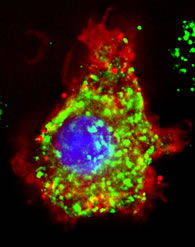
Microglia (green) busy at work!
Oxidative stress can also change the states of genes that code for important proteins and factors, including a family of proteins called ubiquitins that break down and recycle old proteins. If these proteins aren’t functioning correctly, other kinds of proteins can build up into significant deposits in tissue, leading to impaired function. This is evident in both Alzheimer’s and Parkinson’s Disease, both of which show pathological amounts of proteins building up in the brain.

Plaques (orange circles) caused by protein deposits in the Alzheimer’s brain
SOD1 is an enzyme that converts harmful free radicals into less dangerous substances. However, it can be de-activated by too much oxidative stress, allowing free radicals to build up and areas of the body to become inflammed. In both Lou Gehrig’s Disease and Parkinson’s Disease, inflammation of the nerve cells may contribute to the loss of neurons, a primary characteristic of these diseases.
Dopamine neurons, lost in Parkinson’s Disease, are critically important for movement abilities
Finally, the MAPK pathway is necessary for controlling the cycle of cell death and growth, which allows for new cells to replace old ones. However, in cases like cancer, if this pathway is harmed, cells can multiply rapidly, forming tumors. In other cases, cells die too quickly and are not replaced right away. Disrupting this pathway through oxidative stress can have a severe effect on the body.
How is oxidative stress combated?
Antioxidants! These molecules can come from a variety of sources and effectively neutralize free radicals in the body. By breaking down free radicals, they have the potential to stop the damage of oxidative stress. Research studies are currently investigating how antioxidants can protect the body from damage as well as help treat diseases like Alzheimer’s and Parkinson’s.
Some kinds of berries, like blueberries, contain high levels of antioxidants
Some sources of antioxidants include vitamins C, E, A, and polyphenols, to name a few. These are commonly found in many fruits, dark green or yellow vegetables, oils, tea, and wine. Other natural antioxidants like melatonin and ubiquitol are produced in the body already. As the value of these substances continues to be demonstrated by scientific research, they may become a useful nutritional therapy for degenerative diseases like Alzheimer’s, Parkinson’s, Lou Gehrig’s, and cancer.
New gene mutation is most common cause of ALS
This week’s article emphasized the role of a particular pathway of kinases – the MAPK pathway– that often leads to cell death in various well-known diseases including Amyotrophic Lateral Sclerosis (ALS). Throughout all of the confusing biologic pathways where proteins trigger other proteins and substances that ultimately lead to cell, the things that stuck out to me were how these pathways could be traced back to aetiologies of the disease. In ALS, a gene mentioned in the paper that leads to this cascading pathway is SOD1. This gene is mutated and leads to cell death in motor neurons that causes the characteristic symptoms of ALS. In my research, I found an article from September 21, 2011 published by the ALS Association about a recent new discovery and another possible cause of ALS. Here is the article: http://www.alsa.org/news/archive/9p21-abnormality.html . This new finding was confirmed in two different studies and found that a mutation of a gene called C9ORF72 on chromosome 9p21 in DNA contains a short nucleotide sequence that repeats many more times in ALS patients than in those without ALS. They found that it wasn’t a small difference either, the portion of this gene repeats 700-1,600 times in ALS patients compared to only 2-23 times in healthy individuals! The prevalence of this mutation in ALS patients, as well as those with frontotemporal dementia (FTD), has led researchers to believe that it is the most common cause of ALS, with 50% of familial cases of ALS in Finland displaying this mutation. It is believed that the repeated sections in the gene cause defects when the DNA is transcribed into RNA and protein clumps in brain cells result. The other mechanisms that follow to cause ALS are not completely known yet, and a mechanism like the cell death cascade described in this week’s paper are not out of the question. Future research will reveal more about the inner workings of this newly discovered gene mutation, but researchers are already saying that future treatments are likely to center around the C9ORF72 gene. It is exciting to see such renewed hope for the future of ALS in a world of scientific discoveries that sometimes seem to bring us no closer to a cure.
Introduction to the development of Cancer
Medical advances have allowed both an extended human life span and an improved quality of life. There is a downfall however, the longer we live the more likely it is that our bodies obtain harmful defects. These defects can lead to diseases such as cancer. Researchers have been intensely investigating the mechanisms of cancer to identify treatments which can be translated to the medical field. Cancer occurs when cells divide uncontrollably and develop the ability to move throughout the body. Under normal physiological conditions the cells in our body do not behave this way. To obtain these abilities the cells must acquire mutations at the genetic level, or in the DNA, which allow cells to do this. The following video gives a good introduction to how cancer develops.
Cancer development
One of the mechanisms which can give our cells the ability to divide uncontrollably is through the MAPK pathway. This pathway allows our cells to respond to hormones and other signaling molecules used throughout the body. Mutations in our DNA can cause this pathway to be turned on, constantly signaling. One specific protein of interest is p53. p53 is what is known as a tumor suppressor protein, it functions to stop cells from becoming cancerous. If p53 becomes mutated and is able to function properly its anti-cancer properties stop working. In this case cancerous cells are more likely to develop. Mutations in the gene which encodes p53 are often considered a necessary part of cancer progression, illustrating the importance of this protein.
The Role of p53
Although p53 plays a major role in the development of cancer, there are many more factors at work. This is what makes cancer such a complex disease; two people can be diagnosed with breast cancer but have to receive treatments tailored to the individual to be effective. Being able to identify mutations present in the cells of cancer patients, such as p53, will lead to improved treatment specified to the individual patient.
How far down does the PD rabbit hole go?
Most people know what Parkinson’s Disease (PD) is and for those that don’t know, the blogs below that were written by my fellow students all give a very good description of PD. But what is not commonly know is how far back to PD go?
Parkinson’s disease was first formally recognized in James Parkinson’s “An Essay on the Shaking Palsy,” which was published in 1817. Parkinson (1755-1824) was a doctor in London who observed what are now known as the classic symptoms of PD in three of his patients and in three people he saw on the streets of the city. Parkinson’s essay contained clear descriptions of some of the main symptoms of Parkinson’s disease which are tremors, rigidity, and postural instability. He theorized that the disease developed because of a problem in the medulla of the brain. Although Parkinson insisted the medical community study this disease, his essay received little attention until 1861. It was then that French neurologist Jean Martin Charcot and his colleagues distinguished the disease from other neurological conditions and termed it “Parkinson’s disease.”

But this isn’t the first encounter with PD symptoms. Symptoms and possible treatments for Parkinson’s disease are talked about in Ayurveda, an ancient Indian medical practice that has been around since as early as 5000 BC. And a condition like Parkinson’s disease was mentioned in Nei Jing, which was the first Chinese medical text, it is more than 2,500 years ago.
ANCIENT HISTORY
An ancient civilization in India practiced their medical doctrine called Ayurveda. They described the symptoms of Parkinson’s Disease, which they called Kampavata as far back as 5000 B.C. To treat Kampavata, they used a tropical legume known as Mucuna Pruriens, which they called Atmagupta. The seeds of Mucuna Pruriens are a natural source of therapeutic quantities of L-dopa. Mucuna pruriens is certainly the oldest known method of treating the symptoms of Parkinson’s Disease, and is still being used to treat Parkinson’s Disease.
It is claimed that there are references to the symptoms of Parkinson’s Disease in both the old and new testaments of the Bible. Often cited as possible references to Parkinsonism is the following depiction of old age in the Old Testament: “When the guardians of the house tremble, and the strong men are bent” (Ecclesiastes 12: 3), and the following description in the New Testament “There was a woman who for eighteen years had been crippled by a spirit…..bent and completely incapable of standing erect” (Luke 13:11).
ANCIENT GREEKS
In the Iliad, which, along with the Odyssey are claimed to have been written by Homer in the eighth century B.C., the septuagenarian King Nestor describes symptoms that appear to be those of Parkinson’s Disease. He remarks that, despite the fact he still partakes of the armed struggle, he can no longer compete in athletic contests, “my limbs are no longer steady, my friend, nor my feet, neither do my arms, as they once did, swing light from my shoulders.”
ANCIENT ROME
Aulus Cornelius Celsus (c25BC-c50AD), although apparently not a physician himself, compiled an encyclopedia titled De artibus (25AD-35AD) that included De medicina octo libri (The Eight Books of Medicine). He advised against giving those who suffered “tremor of the sinews” with drugs that promoted urination and also against baths and dry sweating. Stress free lifestyles, rubbing of the limbs and exercise by ball games and walking were thought to help with symptoms. The patient could eat whatever he wanted, but sexual activity should be restricted. However if he does allow this activity, he should afterwards be rubbed in bed with olive oil, by boys, not men. (Not sure why that is but hey to each their own!) Fine tremor was distinguished from a coarser shaking, which was independent of voluntary motion. It could be alleviated by the application of heat and by bloodletting.
Symptoms of Parkinson’s Disease were described by the ancient Greek physician Galen (129-200) who worked in ancient Rome. He wrote of tremors of the hand at rest. He wrote extensively on disorders of motor function, including the book on tremor, palpitation, convulsion and shivering. He distinguished between forms of shaking of the limb on the basis of origin and appearance. “The aged”, he noted, exhibited tremor because of a decline in their power to control motion of their limbs. The key to overcoming tremor was to abolish the proximal cause, but for the aged, this was impractical. He related that a person suffering from “catoche” has wild, wide open eyes, that he lies rigid in bed, as if he were made of wood. He also suffers from tremor, constipation and certain psychiatric symptoms.
SIXTEENTH CENTURY
The Italian artist, engineer and scientist Leonardo da Vinci (1452-1519) also studied anatomy, physiology and medicine. Leonardo da Vinci kept secret notebooks in which he wrote and sketched his ideas and observations. He saw people whose symptoms coincided with the tremors seen in Parkinson’s Disease. Leonardo wrote in his notebooks that “you will see…..those who…..move their trembling parts, such as their heads or hands without permission of the soul; (the) soul with all its forces cannot prevent these parts from trembling.”
There are examples of references to the symptoms of Parkinson’s Disease in the plays of William Shakespeare (1564-1616). There is a reference to shaking palsy in the second part of Henry VI, during an exchange between Dick and Say. Say explains to Dick that it is shaking palsy rather than fear that was causing his shaking. Dick asks Say: “Why dost thou quiver, man?” Say responds: “The palsy, and not fear, provokes me.”
SEVENTEENTH CENTURY
Nicholas Culpeper (1616-1654) was an English botanist, herbalist, physician and astrologer. He published books, The English Physitian (1652) and the Complete Herbal (1653). The Complete Herbal contains both pharmaceutical and herbal knowledge. Among the recommendations in Complete Herbal, he suggests sage for “sinews, troubled with palsy and cramp”. For centuries prior to this, Sage had also been recommended for tremor in the hands. Amongst other plant remedies Culpepper suggested for palsy and trembling were bilberries, briony (called “English mandrake”), and mistletoe. In the 1696 edition of his Pharmacopoeia Londinensis, a variety of substances were claimed to be useful in the treatment of “palsies”, the “dead palsy”, and “tremblings”. These included “oil of winged ants” and preparations including earthworms.
The Hungarian doctor Ferenc Pápai Páriz (1649-1716) described in 1690 in his medical text Pax Corporis not only individual signs of PD, but all four cardinal signs: tremor, bradykinesia (slowness of movement), rigor and postural instability. This was the first time that all the main symptoms of Parkinson’s Disease have been formally described. The book was published in Hungarian; however, because Hungarian is known by so few people, the description of Parkinson’s Disease was ignored in the medical literature. Not surprisingly, later descriptions of PD were wrongly claimed to be the first.
EIGHTEENTH CENTURY
Francois Boissier de Sauvages de la Croix (1706-1767) provided one of the clearest descriptions of a parkinsonism-like condition in 1763. He spoke of a condition that he named “sclerotyrbe festinans” in which decreased muscular flexibility led to difficulties in the initiation of walking. Both of the cases he observed were in elderly people. His observations, along with those of Jerome David Gaubius (1705-1780) and Franciscus de la Boë (1614-1672) were subsequently cited by James Parkinson, because although none of them described the whole syndrome, they all described aspects of it.
THE FIRST CLAIMED CURE
The English physician John Elliotson (1791-1868) published pamphlets concerning the disorder from 1827 to 1831 in the Lancet, which largely consisted of case reports. However, some of those he described probably did not actually have PD. Amongst his preferred methods of treatment were bleeding, induction and maintenance of pus building, cauterization, purging, low diet and mercurialization (treating someone with mercury), silver nitrate, arsenic, zinc sulfate, copper compounds, and the administration of iron as a tonic with some porter, which is a kind of dark beer. Elliotson made the first known claimed cure. He suggested that many young patients could be cured, although unreliably, using the carbonate of iron. On another occasion, he reported that the “disease instantly and permanently gave way” when he treated a patient, who was resistant to all other forms of therapy, with iron. This was well over a century before iron was found to be essential for the formation of L-dopa.
THE FIRST NAMED PATIENT
Wilhelm von Humboldt (1767-1835), a philosopher and diplomat, described in his letters from 1828 until his death in 1835, his own medical history, which gave a more complete description of the symptoms of Parkinson’s Disease than had James Parkinson. They included resting tremor and especially problems in writing, called by him “a special clumsiness” that he attributed to a disturbance in executing rapid complex movements. In addition to lucidly describing akinesia, he was also the first to describe micrographia. He also noticed his typical parkinsonian posture. There were incidental references in the following decades to what may (or may not) have been some of the symptoms of Parkinson’s Disease by Toulmouche (1833), Hall (1836, 1841), Elliotson (1839), Romberg (1846).
THE NAMING OF PARKINSON’S DISEASE
It was not until 1861 and 1862 that Jean-Martin Charcot (1825-1893) with Alfred Vulpian (1826-1887) added more symptoms to James Parkinson’s clinical description and then subsequently confirmed James Parkinson’s place in medical history by attaching the name Parkinson’s Disease to the syndrome. Charcot added to the list of symptoms the mask face, various forms of contractions of hands and feet, akathesia as well as rigidity. In 1867 Charcot introduced a treatment with the alkaloid drug hyoscine (or scopolamine) derived from the Datura plant, which was used until the discovery of levodopa (L-Dopa) a century later.
THE FIRST KNOWN DEPICTIONS OF PARKINSON’S DISEASE
Paul Marie Louis Pierre Richer (1849-1933) was a French anatomist, physiologist, sculptor, anatomical artist, and assistant to Jean-Martin Charcot. In 1880, Jean-Marie Charcot completed a full clinical description of Parkinson’s Disease. The symptoms were depicted by Paul Richer in drawings and a statuette of people with Parkinson’s Disease. Along with a photograph, these are the first known depictions of Parkinson’s Disease.
http://www.everydayhealth.com/parkinsons-disease/history-of-parkinsons-disease.aspx
http://viartis.net/parkinsons.disease/history.htm