- Concussions can happen to anyone at any time
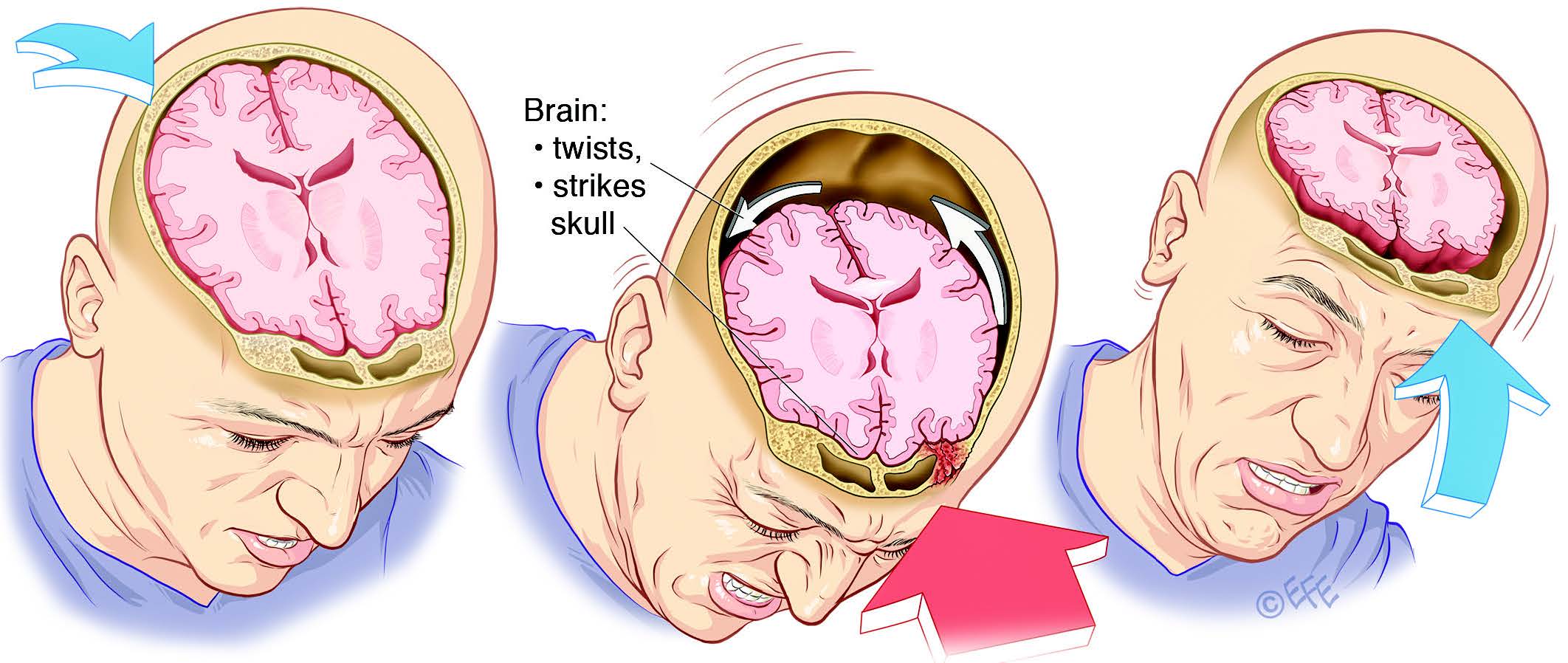
- Whether you are an athlete or not, anyone can experience a concussion. Most of the time, concussions occur by falling and hitting the head. I once fell while ice skating with my family and was out for a minute or two. While never diagnosed, I am sure I experienced a brain injury. But it does not always have to include impact to the skull. Whiplash from car crashes are also a common way to receive a head injury. Our brain is not fixated in place, so when there’s a sudden movement, the brain collides into the skull and experiences injury.
- Not just young people get concussions. Older people are actually more likely to fall because they are not as stable. Once they fall, doctors are more concerned about the broken bones, rather than the brain. Ignoring a cranial injury can possibly lead to experiencing a second injury, which can be fatal. Another fact that is often looked over is the idea that several elderly people are put on blood thinners. If they have a blow to the head, it is not unlikely that they will have a brain bleed and possibly die.
- Whether you are an athlete or not, anyone can experience a concussion. Most of the time, concussions occur by falling and hitting the head. I once fell while ice skating with my family and was out for a minute or two. While never diagnosed, I am sure I experienced a brain injury. But it does not always have to include impact to the skull. Whiplash from car crashes are also a common way to receive a head injury. Our brain is not fixated in place, so when there’s a sudden movement, the brain collides into the skull and experiences injury.
- Concussions are invisible
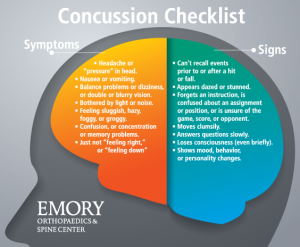
- It’s difficult to physically see if someone has had a concussion. There are some symptoms that help to identify the issue, such as, dilated pupils, headaches, sensitivity to light, trouble concentrating, etc. However, these symptoms can also be factors of other difficulties in the body, as well. It is easy to ignore concussions and say that someone is fabricating that they are injured because it is hard to determine that something is wrong.

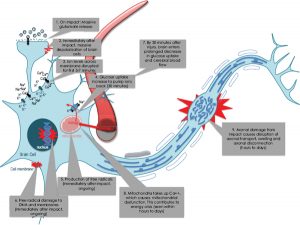
- When someone has a concussion, there is a stretch in the brain membrane after impact and there is an efflux of K+ and an influx of Ca2+. The influx of Ca2+ results in increased glutamate release which results in excitotoxicity. The overwhelming amount of glutamate increases ATPase activity, as the enzyme attempts to put K+ back inside the cell and Ca2+ on the outside. This issue of too much glutamate also creates hypermetabolism, increased redox and protease activation. This causes an energy crisis within the body, the NF to collapse, and then the microtubules disrupts axon transport. This prevents neuronal messages from being communicated to the rest of the body.
- It’s difficult to physically see if someone has had a concussion. There are some symptoms that help to identify the issue, such as, dilated pupils, headaches, sensitivity to light, trouble concentrating, etc. However, these symptoms can also be factors of other difficulties in the body, as well. It is easy to ignore concussions and say that someone is fabricating that they are injured because it is hard to determine that something is wrong.
- Concussions hurt YOUR BRAIN!!!
- We only get one brain. The brain controls every action in the body. It is important to note that unlike bones, neurons rarely ever get repaired after a serious injury. Therefore, if we are not careful, we can lose a lot of our function if we are not careful after a hit to the head. It is important to rest and not put the brain through any more trauma. If hurt doing a sport, it is essential to wait until fully healed (estimated to take 3 months to recover) to return to the activity again. I know it is difficult to sit out for that long from doing what you love to do, but it’s important to do so, in order to eventually be able to do those things again.
If you believe you have a concussion, please go to a neurologist and stop doing anything that will harm the brain!!
Live life, play safe.


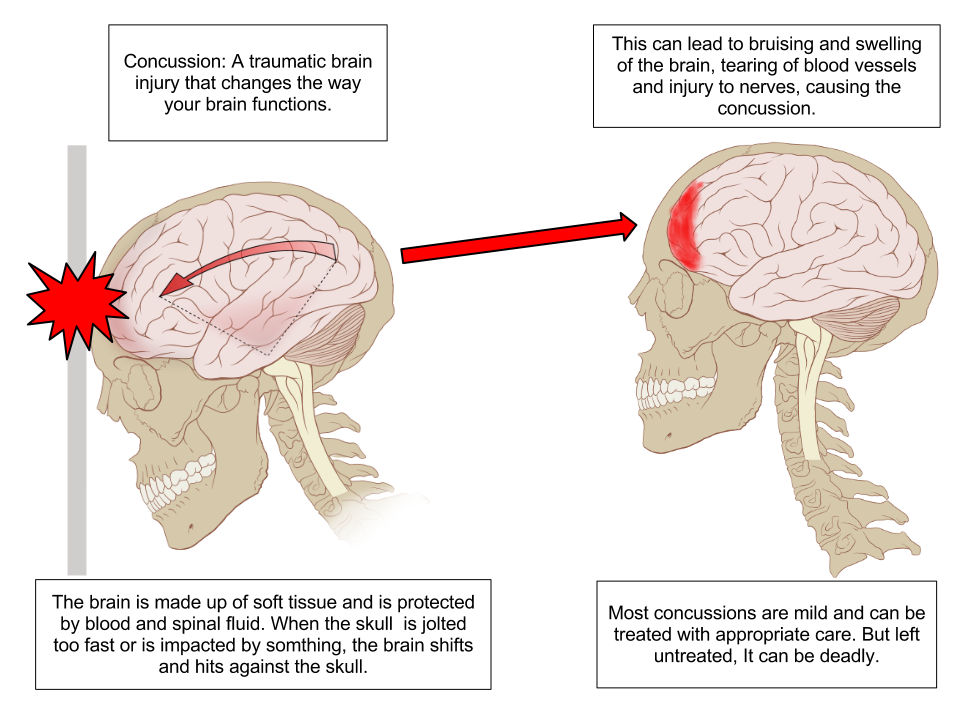 possible skull deformation. Depending on the force, position and angle of contact,concussions can vary in severity and symptoms. Typical symptoms stem from a cascade of molecular events inside the brain that shift from normal function. Balances of major ions in the brain like potassium, glutamate, and calcium are shifted during concussions, requiring energy in the form of ATP to return to homeostasis. This in turn calls for an influx of glucose to provide the ATP to the
 cell. After this initial influx in ATP and glucose, there is a depression of both compounds following concussion. The development of free radicals is also a result of concussion, causing damage to DNA and other fragile cell material. Other effects of concussion include damage to axons, synaptic plasticity, and connectivity changes.
 While there is no way to stop the cascade resulting from concussions, symptoms can be regulated with plenty of rest and reduced stimulation. Staying away from screens and intense reading can increase the recovery speed, and help alleviate symptoms like headache and difficulty focusing on things. Rest in this case means not doing things that exacerbate symptoms
 Over fall break this year, I had the opportunity to travel to North Carolina to visit the
  The experien
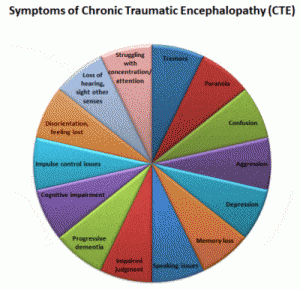 All things considered, society needs to start taking concussions more seriously–it is a brain injury, after all. We tend to think that it is more important to return to playing a sport or return to class than it is to properly care for a concussion. I personally have had experience with a few concussions. Specifically, sophomore year, I was involved in an accident that resulted in a major Traumatic Brain Injury (TBI). I lack any memory for months following the event. The one memory I do have is of sitting in class, about a week post-injury, and trying to take notes. I was nauseous, dizzy, and close to passing out. I had to leave class because I felt so sick. When I looked back on those notes a few weeks later, they were merely scribbles and random lines. I then realized that I should not have forced myself into going back to class so soon. I needed the rest. But society values us for our productivity, whether academically or athletically. When that “go go go” mentality is ingrained in us, it becomes hard to step back and take care of ourselves. This needs to change. Major TBIs and frequent head injury can lead to issues with mental health, cognition, memory, and neurodegenerative disease such as CTE. Just like we would take care of a broken leg, we must take care of our brains.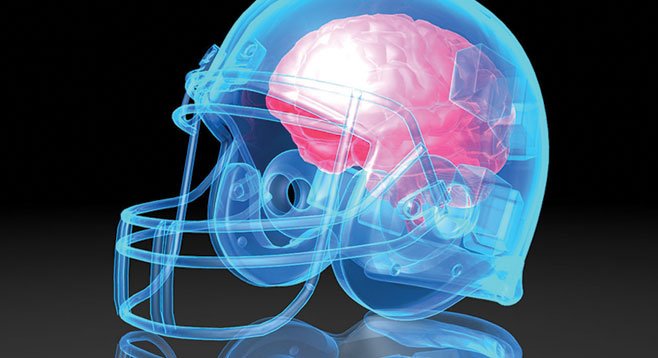
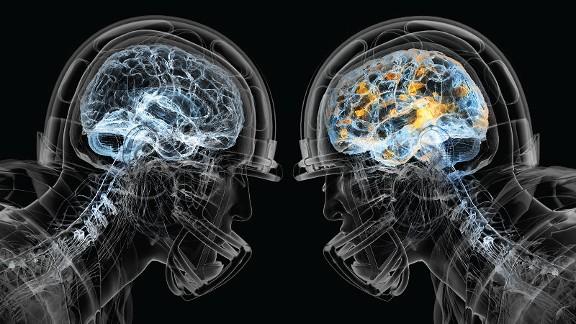


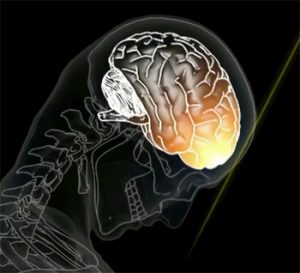


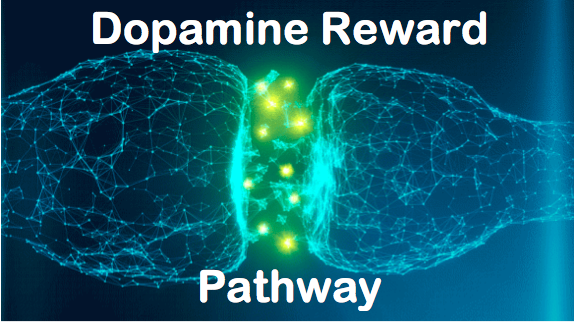
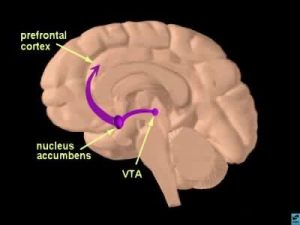 The human brain is capable of many complex memories and emotions all driven by chemical interactions and signaling in distinct brain regions. In response to experiences like eating food, sleeping, or having sex a portion of the brain called the reward pathway is activated. This pathway creates lasting memories connecting certain activities with the feeling of reward and encouraging repetition of the behaviors. Activation of this pathway takes place in the ventral tegmental area (VTA) which projects to the nucleus accumbens (NAc), with signals propagated by the release of the neurotransmitter dopamine. Dopamine creates the feelings of euphoria and energy and function to remind our brains to do things that help us survive.
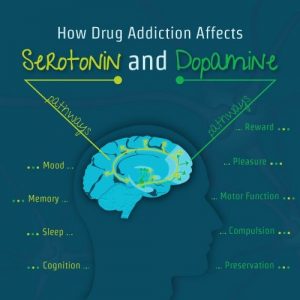 However, when addictive drugs are involved in this brain circuitry and dopamine levels are unnaturally raised the reward pathway is overthrown. A large euphoric high along with the connection of drug using behaviors with the reward leads to what we know as addiction and drug seeking behaviors. Addictive drugs act in different ways in the brain, but all function to make more dopamine available to activate the neurons in the NAc and signaling to the frontal cortex.
 The stress pathway can add to the dopamine levels in the reward pathway and compound drug-seeking behaviors in addiction. The release of dopamine driven by glucocorticoid hormones functions to increase the euphoric sense and desire to return to the behavior triggering the reaction. In an experiment done on rats addicted to cocaine, after being given a small amount of cocaine as a trigger, rats with excess stress hormones or an external stressor showed more signs of relapse than those that did not have increased stress levels.