The Endocannabinoid System
The endocannabinoid system (ECS) is involved in many functions of the brain, including modulating synaptic plasticity, learning and memory, homeostatic processes, mood, pain, perception, gene expression, neuroprotection, and making new proteins. Research has shown that the ECS is a promising target for many diseases, including neurodegenerative diseases, epilepsy, cognitive deficits, drug abuse and dependence, and potentially traumatic brain injuries (TBI). However, treatment through the ECS has a lot of complexities and additional understanding through continued research is essential. [1]
The Cannabis Plant
Cannabis as a Potential Treatment
Cannabis has been shown to have neuroprotective effects and show positive improvements related to numerous diseases. Treatment of cannabis in multiple sclerosis, which is characterized by demyelination of axons and death of neurons, has shown better motor function, decreased pain, and improvements in spasticity, spasms, and pain. In Alzheimer’s disease, cannabis has shown improvements in behaviors and dementia symptoms. Additionally, Huntington’s disease, traumatic brain injury, and epilepsy have shown promising results with treatment involving marijuana derivatives. [1]
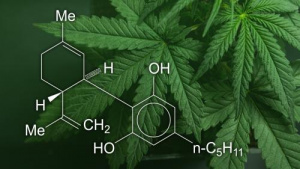
A possible approach for taking advantage of the benefits and trying to limit the risks of cannabis being investigated, is to isolate specific active ingredients. A main ingredient being investigated for its therapeutic effects is Cannabidiol (CBD). CBD has been shown to benefit anxiety, inflammation, nerve-pain, arthritis, and seizures. [3,4] The FDA has not approved cannabis for any medical uses; however, synthetic derivatives of marijuana have been approved, including CBD in certain forms for specific ailments. [5]
Challenges
The ECS works throughout the body, which means receptors that will be affected by cannabinoids are also widespread. This makes targeting this system and developing effective therapies challenging since it is hard to predict exactly what will be effected and where. A cannabinoid binding to a receptor in one area seems to have different effects than if it binds in another area, making it hard to develop generalizable, consistent treatments. [1]
Cannabis has many potential therapeutic effects, but there are also many potential drawbacks to consider. Thinking, attention, memory, coordination, movement, decision making, and perception of time can all be negatively impacted, especially in younger individuals. Brain development, especially from repeated exposure to THC can be permanently impacted. [6] Repeated use of cannabis can result in tolerance and dependence. [1] Additional research is important to understand cannabis, the effects of its isolated active ingredients as well as when interacting together, long-term effects of cannabis use, and its potential therapeutic benefits.
Footnotes
[1] Kendall, D. A., & Yudowski, G. A. (2017). Cannabinoid Receptors in the Central Nervous System: Their Signaling and Roles in Disease. Frontiers in Cellular Neuroscience, 10, 294. https://doi.org/10.3389/fncel.2016.00294
[2] What you need to know (and what we’re working to find out) about products containing cannabis or cannabis-derived compounds, including CBD. (2023). FDA. https://www.fda.gov/consumers/consumer-updates/what-you-need-know-and-what-were-working-find-out-about-products-containing-cannabis-or-cannabis
[3] DiLonardo, M. J., & Walker-Journey, J. (n.d.). CBD vs. THC: What’s the Difference? WebMD. Retrieved February 25, 2026, from https://www.webmd.com/pain-management/cbd-thc-difference
[4] What Is Cannabidiol (CBD)? Uses, Benefits, and More. (2018, August 3). Healthline. https://www.healthline.com/health/your-cbd-guide
[5] Medical Marijuana. (n.d.). Cleveland Clinic. Retrieved February 25, 2026, from https://my.clevelandclinic.org/health/articles/medical-marijuana
[6] CDC. (2025, July 24). Cannabis and Brain Health. Cannabis and Public Health. https://www.cdc.gov/cannabis/health-effects/brain-health.html
