When It’s More Than Just a Headache – Concussions

Concussions are a form of mild traumatic brain injury that occurs when a force impacts the head. What happens to the brain when this impact hits is it, quite literally, shakes back and forth inside the skull. This mostly affects the midbrain and diencephalon and causes a cascade of different neurological processes to occur such as hypermetabolism of glucose and disproportionate influxes of ions into neurons. Much of the healing process for concussions centers around getting these disruptions into Despite often being associated with contact sports (especially football), concussions do frequently occur in deployed military personnel and in workforce accidents.
Despite the fact that concussions are a fairly common occurrence, there are currently no known biomarkers that can definitively diagnose when a concussion occurs. CT and MRI scans can be used to detect concussions, but oftentimes are sidestepped for being a costly and time-consuming procedure. In other words, concussions are normally diagnosed purely based on what a person is feeling rather than medical data. Dizziness, nausea, headache, or even blackouts are common symptoms of concussions. But these symptoms can easily be attributed to other things or be minimalized by the concussed person. This is especially concerning for sports as frequent concussions have been linked to a variety of more serious neurological ailments such as Amygloid Lateral Sclerosis (ALS), chronic traumatic encephalopoly (CTE), and Alzheimer’s disease.
 
Sources:

  1. http://www.mayoclinic.org/diseases-conditions/concussion/symptoms-causes/dxc-20273155
  2. https://www.impacttest.com/products/?The-ImPACT-Test-2
  3. The Current Status of Research on Chronic Traumatic Encephalopathy. World Neurosurgery.
  4. http://www.alz.org/dementia/traumatic-brain-injury-head-trauma-symptoms.asp

Concussions and the Devastation of Second Impact Syndrome

A concussion usually occurs from a blow to the head resulting in symptoms including a possible temporary loss of consciousness, headache, confusion, nausea, and/or fatigue. At the cellular level, a concussion is causing microstructural injury to neural tissue in the brain. Axonal injuries caused by concussions can impair cognitive function, reaction time, spatial learning, and memory. Furthermore, concussions can impair brain function through energy malfunction, inflammation, and altered protein degradation.

After sustaining a concussion, cellular changes such as increases in ionic fluxes, indiscriminant glutamate release, and metabolic changes are thought to last up to 10 days. While the brain is still recovering from the injury, it is vitally important to protect the head and refrain from participating in a situation that could result in another blow to the head. Unfortunately, getting hit a second time during cellular unrest could result in injuries far worse than concussion symptoms.
 
Second impact syndrome (SIS) occurs when someone has recently sustained a head injury and another impact is taken to the head before the symptoms of an initial concussion have subsided. SIS is particularly devastating because it can result in death or severe disability. SIS is rare and there is little epidemiological data for the disease, likely because there is controversy over the definition of SIS.
 
When the patient sustains a “second impact,” the brain loses its ability to auto regulate intracranial and cerebral perfusion pressures due to the cellular changes in ion fluxes, glutamate release, and metabolic changes from the initial concussion. In severe cases of SIS, this may lead to cerebral edema followed by brain herniation. Death has been reported to occur in a matter of two to five minutes, usually without time to stabilize or transport an athlete from the playing field to the emergency department. Prevention of SIS occurs when a player is not allowed to return to a contact sport while still showing signs of concussion.
 
Resulting in the phrase: “When in doubt, sit them out”
 
This seems like a reasonable way to think about prevention after sustaining a concussion. Unfortunately, however, a concussion diagnosis isn’t always straightforward and clear. For example migraines have several symptoms in common with those of a typical post concussion. So how do you definitively know if someone has a headache/migraine or if they have symptoms of a concussion when they are consistently participating in situations of high probability contact?

Concussions also don’t have a testable biomarker and imaging of the brain is expensive and not always conclusive. Instead, in most cases, a health professional will diagnose a concussion based on the patient’s emotions and their outward expressions of symptoms. This isn’t fool proof, however, since symptoms of concussions can vary from person to person. In addition, patients might not always be truthful of their symptoms. For example, an athlete may hide their symptoms of concussion in order to continue to get playing time.
 
With so much on the line, a concussion should not be taken lightly. It is important for athletes, coaches, and parents to know the signs, symptoms, and life changing injuries that can be caused by concussions. Education of concussions might be the best way to make sure that everyone is on the same page of what kind of action to take in the event of a concussion. In this case, the most important action taken in the event of a head injury should be: “when in doubt, sit them out.”


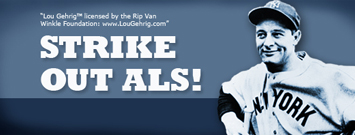
Lou Gehrig and His Killer

Lou Gehrig was born on June 19, 1903 in New York City.  He was the son of two German immigrants, Christina and Heinrich Gehrig.  In his youth he showed incredible promise in the sports of football and baseball, which ultimately led to a football scholarship at Columbia University.  While attending Columbia he also joined the baseball team where he became known as “Columbia Lou” for his incredible pitching ability and his uncanny ability to hit home runs.  These abilities ultimately led him to joining the Yankees in 1923 with the likes of Babe Ruth and Joe DiMaggio.  He was deemed the “Iron Horse” by his teammates and his fans for his determination to play in spite of injuries.

In his career he boasted a lifetime batting average of .340 and in 1934 he won the batting “Triple Crown”.  This is when a player leads the league in runs batted in, home runs, and batting average.  He also, helped the Yankees to win six World Series championships.  However, his career was cut short when in 1938 he noticed he was having trouble tying his shoe laces and was diagnosed with ALS by the Mayo Clinic in Rochester, MN.  He retired the following year and died in his sleep on June 2, 1941.
Amyotrophic Lateral Sclerosis (ALS), also known as Lou Gehrig’s disease, is a progressive neurodegenerative disease that affects motor neurons in the brain and spinal cord.  It was first discovered in 1869 by Jean-Martin Charcot, a French neurologist.  However, it was not in the public eye until Lou Gehrig was diagnosed in 1939, effectively ending his career.  ALS usually presents itself between the ages of 40-70 and currently 20,000 people in the United States have the disease.

The disease itself is split into two categories: sporadic ALS and familial ALS.  Sporadic ALS is most common and makes up about 90-95% of all cases.  However, one of the gene mutations found in familial ALS is quite common in sporadic ALS.  ALS is caused by oxidative stress that can cause oxidative damage to proteins, lipids, and DNA.  This oxidative stress is caused by Reactive Oxygen Species (ROS) that are a by-product of your body’s normal functions.  In your body Mitochondria produce ATP and energy that your cells use to survive, and as a result ROS are produced as well as other molecules that can cause oxidative stress.  If this oxidative stress is countered by your body it can cause problems and diseases such as ALS.
Your body has natural antioxidants such as SOD1 that turn ROS into normal molecules that are found in your body.  When there are mutations in these molecules, or they are malfunctioning this can lead to an accumulation of ROS that can cause damage to motor neurons, mitochondria, and RNA/DNA.  This damage to RNA/DNA can cause further problems in other natural processes that can accelerate ALS.
ALS is a terrible neurodegenerative disease that does not have a cure and the only hope is to prolong life as long as possible.  Please visit www.alsa.org to donate or participate in a fundraiser to fight this disease.

Concussion: Not Something to Be Taken Lightly

Kari grew up loving to ride horses. When she was 20 years old, she was riding and ended up falling off as her horse was going over a jump. She hit her head pretty hard and had a little bit of a headache and felt a little dizzy, but luckily she was wearing a helmet. She got back on and continued riding, because that is what you do. Two weeks later over New Years, she was skiing with her friends and took a tumble. This fall hurt a lot more. She went down off the mountain and tried to lay down, but she was so nauseated and disorientated. After a couple hours, she wasn’t feeling any better, and felt like she was going to pass out, so she convinced her friend to take her into the ER. The doctors weren’t too concerned because she didn’t loss consciousness at any point and told her she had a concussion and to take it easy for a week or two.
 
Kari also played hockey in college, so when she got back from her trip, she jumped right back into hockey practices and games, experiencing some of the contact that goes along with that. She was also pre-med student, so she had a large homework load, and of course always tried to do her best in school. Over the next year and a half of school, she found she had difficulty concentrating in class, even when she was interested in the content. She would have a sort of permanent headache throughout the day, but thought she must just be tired from school, sports, work, and riding horses.
 
Then about 10 months later, during her senior year, she was training a young horse, and ended up getting bucked off. She didn’t pass out, but was having throbbing headaches and continuous nausea so she went into the ER. They found out that she had a traumatic brain injury (TBI). Now today, Kari is 26 years old, and feels like she always has a headache and suffers from frequent migraines. She had started to have more difficulties with her school work, so ended up not going to medical school. She can hardly remember what it feels like to feel normal and not feel a permanent brain fog, because she hasn’t felt “normal” since she was 20 years old.

This is a theoretical story, but it is one that is not unimaginable as people who are active or are in athletics suffer head impacts and may not even know they have a concussion or mild TBI. They then also do not take the time they need to recover because they want to get back to competing, or do not want to fall behind in school. More and more people are getting diagnosed with concussions, especially younger adolescents as their youth sports have picked up, and this is probably in part to the fact that doctors are understanding the signs more and researchers are discovering more about it.
 
When there is head injury, it starts a whole cascade of things in the brain that can lead to the clinical symptoms of concussion. The impact results in ionic flux and increased glutamate release. This increases calcium influx into the cell from the NMDA receptors and increased potassium efflux. This makes the membrane ATPase pump have to work harder to try to restore the ion balance, so hyper-metabolism takes place, which increases lactate levels. Because of the increased calcium into the cell, it leads to increased sequestration in the mitochondria, which leads to impaired oxidative metabolism and mitochondrial dysfunction. When a cell has a non-functional mitochondria, they are often triggered to go through apoptosis. Also, the impact can cause axonal damage that leads to microtubule and neurofilament damage. These structural damages may not even cause cell death, but render the cell dysfunctional.

There is evidence that if there is a second impact in the time period that the brain is trying to restore its metabolism, it can lead to more severe lasting damage and cognitive impairment, as well as longer recovery time. This is why it is important to take time off from activities, and even school work, so that the brain can truly rest and repair itself. As there are advances in identifying and diagnosing concussions, as well as pharmacological treatments and a better understanding of the recovery process, it will likely help decrease the memory and cognitive impairments, migraines, and altered neurotransmission and metabolic balances. This will help people avoid having outcomes like Kari, and a better quality of life in the long run.
The Monkey on Your Back or the Bug in Your Brain?

The Monkey on Your Back or the Bug in Your Brain?
Dealing with addiction is no small feat. Those who are living with addiction face each day fighting the desire to relapse. But why do people become addicted? What happens to make the cravings people feel so hard to ignore? Although not everything is fully understood, the general principles of what happen in the brain of someone addicted to drugs or alcohol can be explained fairly simply.
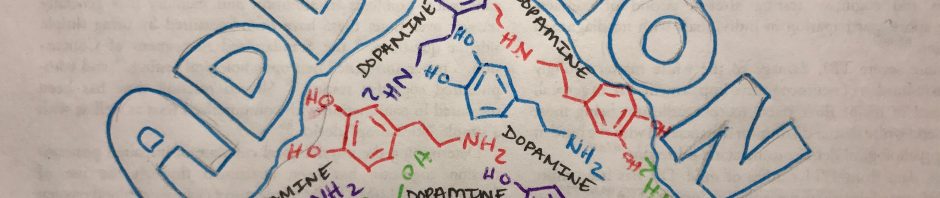
To begin, when the drug is introduced, the neurotransmitter flow in the natural reward system is disrupted. The neurons recognize the drug as a good experience and the brain tells the body to continue doing whatever action gave the brain this rewarding sensation. The natural reward system primarily works in specific areas of the brain. The ventral tegmental area (VTA) sends dopamine signals to the nucleus accumbens (NAc), which then send signals to make memories about good and bad experiences for future references. Because of this process, dopamine plays a critical role in memory formation. Once the brain forms these memories associating the drug with the intense pleasure, the craving for the drug will be the most prominent when the body is seeking reward in the future.
The dopamine receptors of the NAc have two different types; D1 and D2. When it comes to decision making, D1 receptors lay out all of the options for a typical decision. For instance, it will help recall all of the restaurants you have been to when deciding to do out to eat. D2 receptors help eliminate choices to come to the best decision. In drug addicts, the neural chemistry is imbalanced between the D1 and D2 receptors by having more D1 activity than D2 activity. This means that the D1 receptors are proposing the drug as the easiest possibility to obtain reward and the low activity of the D2 receptors isn’t enough to veto the decision.
Memory is not the only brain function that is affected by drug addiction. The expression of genes also contributes to a person’s development of addiction. When the drug is introduced to the brain, an excess amount of dopamine is released to the neurons. The neurons then respond over time with continued use of the drug by producing more receptors than normal for the excess dopamine. When the individual attempts to quite using the drug, the extra receptors are calling for more dopamine causing withdrawal symptoms, urging the body to find more drugs. The neurons also grow more spines and change their shape to accommodate for the abnormal environment.
Many enzymes and messenger molecules are affected by the excess dopamine, but in general, too much calcium is being pumped into the neuron. Calcium then activates many cell signals such as the gene expression for more receptors and the sensitization to the drug itself.
Unfortunately, treatment for addicts has not quite been pinned down. As we know, rehabilitation and support groups are the main forms of helping individuals recover from addiction. It personally makes me uneasy to think about treating someone with a drug addiction by giving them a different drug to help. It seems like it would be an endless cycle. If a drug could be developed that was not addictive and would fix the neuronal issues, perhaps there will be hope for the future of dealing with addiction!
For more information about the symptoms, risk factors and treatment of addiction, visit the Mayo Clinic’s page about addiction.
http://www.mayoclinic.org/diseases-conditions/drug-addiction/basics/definition/con-20020970

There Is Hope in Battling Drug Addiction

Drug addiction is a chronic, debilitating disease that has become a serious issue in our society.  Prolonged substance abuse can result in both long-term chemical and structural changes in the brain. The reward pathway and the “feel good” neurotransmitter, dopamine, are heavily involved in this process. The pleasure felt from taking these addictive drugs is due to an increase in dopamine release. More intracellular dopamine results in more receptors which strengthens the synapse, or increases long-term potentiation. When this happens, more of the stimulus is required for the same pleasurable effect. Soon, you become dependent on the stimulus, as its absence can result in withdrawal symptoms.

Addiction is a vicious cycle and can seem completely hopeless for those trying to recover, but there are some effective ways to fight against it. These treatments include preventative measures, rehabilitation, and medication.
 
Technically, the most effective way to prevent addiction from occurring is to not try the substance in the first place. I know, way easier said than done, as some situations are completely out of control. Many become addicted to prescription drugs after needing them for some sort of medical treatment. Then, once their prescription runs out or expires, they realize they are dependent and often look to street drugs (ex. heroine) as replacement. However, there are scenarios of recreation, where the user is either not thinking about the risk or believes there is no chance they will become addicted after one time. Sadly, they are frequently mistaken.

Once an addicted individual seeks treatment, the first step is to go through a process of detoxification, often at a rehabilitation center to help with withdrawal symptoms. When the substance has left the body, there are a few different rehabilitation options available:

  1. Inpatient Rehab refers to a more short-term program that allows patients access to healthcare professionals at all times, similar to a hospital stay. Often used in severe cases immediately after detoxification, this option gets rid of external distractions and responsibilities to allow the patient to focus solely on the recovery process. Often times, patients can be given medications to help with any lingering side effects, as well as starting some cognitive behavior therapy to understand their thoughts and feelings that may contribute to their behaviors.
  2. Outpatient Rehab is more of a long-term program and gives the patient a little more freedom, as they just have to come in to the rehabilitation center at scheduled times for progress reports. There is also more emphasis on cognitive behavior therapy.
  3. Social Programs consist of support groups to give patients a sense of community through sharing stories and experiences. Members can also work to keep each other accountable in living a better life and continuing sobriety.


Now, these treatment methods are not foolproof. Many relapse into their old habits after returning to their normal lives, as they still encounter the same old environmental cues and triggers. Treatments are also most effective when the addict truly wants to make a change in their life, as compared to being forced into treatment unwillingly.
 
While genetics don’t play a major role in addiction, they can make an individual more or less susceptible to developing addictive behaviors. For example, there are some genetic mutations that result in very unpleasant side effects to certain drugs or alcohol. As to be expected, these individuals are much less likely to abuse that substance and become addicted compared to someone who has no negative experience. It is interesting to think about the possibility of inducing these mutations in people as preventative measures, especially if there is a family history of addiction or alcoholism.

I cannot speak from experience, but I have watched close friends battle through the recovery process for drug addiction. It’s daunting, it’s ugly, and it definitely isn’t easy. It’s also extremely discouraging how high chances are for relapse, BUT, I’m here to tell you that it is possible and there is hope.
 

The Battle Against Drug Addiction

While we have amazing facilities in the US that aid in overcoming drug addiction, why are the chances of relapse are so high in drug addiction? The National Institute on Drug Abuse states that about 40-60% of people relapse. Relapse can be due to strong withdrawal symptoms and environmental triggers. Drug rehabilitation centers focus on cognitive behavior therapy to help change the thoughts associated with drug usage. These programs often last about three months or 90 days. While emersion in these programs often helps, there are still other factors at play.

In the case of drug addiction, we cannot forget biological processes as an opponent. With chronic drug use the cells change things that can be long lasting, and are a constant battle even after treatment.

Changes include increase receptors on the neurons which allow more binding of the drug and stronger effects of the drug. In the brain there is a region affected by drug use that contains spiny neurons which are true to their name, a neuron with spines coming off it. With chronic drug use, more spines develop on the neuron (long term potentiation) so it increases the receptors for drug interactions.

A common pathway associated with drug abuse is the dopamine or reward system. In the case of drug addiction, the brain system for reward is increased and punishment is decreased. Therefore, the good feelings associated with drug use are heightened and the feelings of punishment are lowered.

Some common words associated with drug use are sensitization and tolerance. In a biological sense sensitization means that with the increase of receptors, the brain is more sensitive or susceptible to drug use. With the same exposure a heightened or enhanced reaction happens. Tolerance means that although you may be sensitive to a small amount of drugs, it takes a longer time to satisfy the craving. This causes a user to need to increase the amount of drugs consumed to get the same effect.

Current treatments typically help with symptoms of drug addiction, withdrawal and aid in preventing relapse. However, we do not have drug that can target and stop these adverse pathways from happening. There are a few novel drug targets being researched. Until we are able to identify a viable, effective strategy, the battle continues.

Looking forward is important to continue researching and understanding the pathways involved in reward and drug-seeking behavior. Once we are able to couple therapy with an effective drug treatment can we begin to fight drug addiction on all fronts.

What Happens in Addiction??

It can probably said that everybody struggles with addiction. Not only the classic examples that often first come to mind of drugs and alcohol, but coffee, Netflix, sugar, exercising, chocolate, sex, pop, gambling, social media, etc. These are all things people may say they are “addicted” to. People become addicted to things because of the release of dopamine in their brain into their reward system. It makes them feel good and they want to do it more. They may even feel “withdrawal” symptoms if they don’t get their morning coffee or haven’t gotten to check Facebook in a while.
 
It can be hard to break old habits, but most people can survive and function if they don’t get their Pepsi for the day (even if they REALLY want some). The thing that people need to understand is that drugs of abuse and alcohol can actually cause structural and chemical changes in the brain, its neurons, and its signaling pathways. This makes it almost impossible for them to be able to stop using these substances without treatment or medication. They actually cannot help their behaviors even if they really want to stop, because their brain has changed and is controlling their actions in a different way.
 
The structural and chemical changes and pathways in the brain that may be affected are very intricate, but some basic changes from drugs of abuse and alcohol include the following:

  • Increased dopamine – this acts on medium spiny neurons in the striatum (associated with reward).
  • Synaptic plasticity – more medium spiny neurons grow as there is hyper-stimulation from the drugs, this means that they are even more susceptible to the dopamine being released. This can contribute to behaviors of drug users such as tolerance, sensitization, and dependence.
    • Tolerance – you need more of the drug to get the same “high”/effect/experience – receptors may be downregulated, so you need more of the substance to make up for that.
    • Sensitization – you need less of the substance to crave it more intensely.
    • Dependence – without the substance, you start to experience withdrawal symptoms.
    • This is essentially a downward spiral because you start to need more of the drug to feel the same effects, but you need less of the drug to want it more. Then if you don’t get the drug, you have withdrawal symptoms, which can be life-threatening in some cases. So not good….
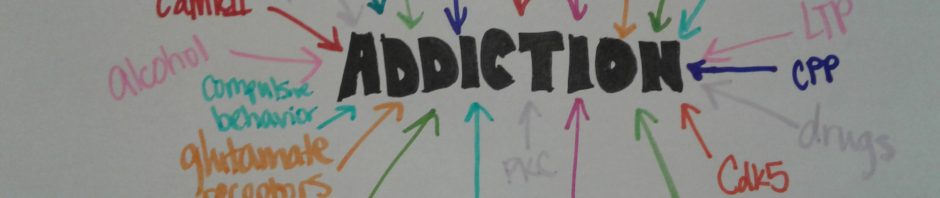
  • Changes in signaling molecules – in the article we read, it mentions several signaling molecules, kinases, phosphatases, and transcription factors. Changes in these cause downstream effects that contribute to synaptic plasticity, drug behaviors, and long-term potentiation, which is further damaging to neurons.

 
Addiction to drugs of abuse and alcohol is scary as you hear stories of people dying from overdoses, hurting loved ones or causing car accidents, doing things they do not even know they are doing which can often result in injury, and having it consume their lives so much they lose their jobs, family, money, and that is all they can think about. The problem is there are so many things going on in the brain, it is hard to “treat” addiction. Rehab and treatment centers often incorporate therapy which is great, but it does not change the chemical and structural changes in the brain, which are essentially controlling the addicted person telling them to continue to use the drug. Medication can help with some withdrawal symptoms, but is it still not fully understood how restore receptors, neurons, and signaling to its normal baseline state, or how long that can take naturally. It also greatly increases the chance of relapse. You also have to take into account the psychological dependencies that can develop as well through drug and alcohol abuse.
 
Identifying signs of addiction is important as it may help save someone’s life if they get treatment. Especially as you hear of younger teenager becoming addicted to drugs, perhaps education may help reduce the risk of that. Remember how hard it feels for you to stop watching your favorite Netflix show sometimes, and remember that people who struggle with drug and alcohol addiction feel that much more strongly and all the time. Don’t look down on them, but let’s strive to give people they help that they need.

Addiction and the Brain

The biggest thing I have realized from our classes weekly focus on the topic of addiction is that addiction is a complicated, multifaceted behavioral disorder. The article we read for this week explained that addiction is influenced by genetic, environmental, and developmental factors. While there seem to be several receptors and molecule interactions that influence the pathophysiology of addiction, it is clear that the normal reward pathway is disrupted.

In addiction, intracellular dopamine, a key player in the reward pathway, is increased in the brain. Dopamine is the neurotransmitter that induces pleasurable effects in the brain and solidifies memories associated with the pleasurable effects. With this increase in dopamine, addiction signaling can be impacted through changes in tolerance, sensitization, and dependence on the pleasurable substance.
 
Interestingly, addiction can actually physically change the brain. An example of this is an increase in the connections made by the medium spiny neurons (MSN) of the dorsal and ventral striatum of the brain. With overstimulation by different neurotransmitters supplied by the pleasurable drug, neural plasticity can be induced.

After learning more about the neurochemistry and epigenetics of addiction this week, one of my main questions is how do we combat addiction as a genetic and behavioral problem? It seems like society treats addiction like a choice, with very little sympathy for the fact that the chemicals ingested can actually change the pathways in the brain, resulting in modified behavior. While the initial use of a drug is generally the choice of the person, two people could make the same pleasure seeking choice but only one person, who happens to be more susceptible succumbs to addiction, while the other person that made the same choice, does not.
 
It is however important to recognize that addiction is a behavior that seems to be correlated with irrational choices for pleasure seeking. Addiction is also interesting because people who are addicted are clearly able to make the choice to quit using a substance without professional help, since many have done it before. At the same time, people who quit using an addictive substance can also be influenced resort to pleasure seeking behaviors by different triggers, even years after they have been sober.

Another interesting thought is that pleasure seeking is not limited to addictive drugs. While pleasure-seeking behavior can be appeased through substances with negative connotations like cocaine or alcohol, more socially acceptable addictions can be induced by caffeinated coffee or an addiction to sugar.
 
So how do we combat addictions in their varying forms?

  • Specialized drug treatment facilities: provide counseling, behavioral therapy, medication, case management, and other types of services to persons with substance use disorders.
  • Behavioral Treatment: delivered in outpatient, inpatient, or residential settings by a variety of providers.
  • Limited pharmacological approaches:
  • Expanded Educational Programs: education to young people about the effects of drugs and addiction can be used to reduce the forefront of the problem. Apparently educational programs have been shown to postpone or prevent smoking onset in 20 to 40 percent of adolescents.


You’re Addicted to a Drug, and You Might Not Even Know It

It makes you happy. You get cranky when you don’t have enough of it. Once you’ve gotten used to a certain amount, you need more to sustain you.
It’s sugar.
https://www.flickr.com/photos/aigle_dore/15061081508/in/photolist-oWTYP7-7Rzjvt-SgTksS-RAqXjh-db4bFZ-bgCJXR-4Ttyd-5xJ9ia-qT2w29-8XU25X-qV93uz-dPwY8F-eZSrCo-bokhS-eS48q2-7uwcBh-83NGkg-5UQJst-D5Zd5u-6iCrMx-aE3eu1-eS49Wr-GfLnxJ-bDkQ9f-qvRtka-8wosVJ-agZ1Fc-RRMVL3-P7QnvQ-5HBEhR-dKUYyC-49uNjV-6qyFYF-2w5pPA-a4kVzJ-R8LBak-qgEx9Z-83rthB-a3JXHQ-79agu-5zL5QF-4zeYaK-92rKRY-4zjbBj-8geE8J-r1kfED-7TZF84-s9SHbE-6SQjJy-fQyfyV/
The way that sugar works on our brain chemistry is very similar to that of other drugs of abuse—it can cause one to become addicted to sugar . It affects our dopamine systems, flooding the brain with this feel good chemical and inducing a high. Picture the stereotypical child with an ice cream cone.

To compensate for this large amount of confusing dopamine, the overwhelmed brain will turn off its dopamine receptors. The only problem with this is that the brain doesn’t always realize to turn the dopamine receptors back on. This causes a withdrawal, because without the registration of dopamine, you feel unhappy—cranky even.
We can also develop a tolerance for sugar. The brain learns not to get too happy from this extra dopamine, and the dopamine receptors are regulated so that they need a higher concentration of dopamine in order to register. You know the experience where you try eating the bright blue frosting on a child’s birthday cake and can’t stomach it because of the sweetness? Yet most kids could eat three pieces without a problem. They have a higher tolerance.
Tatym, eating birthday cake.
Yet sugar is different from drugs of abuse. We let kids have it, and reward them with it. It’s socially acceptable to be addicted to sugar here.  Sugar is in almost all of our food, and it is perfectly fine to have three meals a day with snacks in between. Half of the time in America, we don’t even realize that we’re consuming so much sugar. It is hidden in ingredients lists, and corporations want to keep us in the dark. If we’re addicted to a substance, we are more likely to keep buying items that have that substance in it.
Like I said, you might be addicted to a drug, and you didn’t even know it. You didn’t even really have control of this addiction—especially if you didn’t know about its side effects, or that you could become addicted to it in the first place.
Sugar addiction isn’t a huge problem at first, but like most drugs of abuse, it can lead to some serious health problems down the road. For instance, high sugar intake can help lead to heart and liver disease, diabetes, and even cancer.
 
I don’t mean to guilt trip you because of your addiction, but maybe realizing how easy it was for you to become addicted to sugar will help give you some empathy for those addicted to drugs of abuse—people that need real help, and not dirty looks and an overabundance of acquisitions.

Spam prevention powered by Akismet