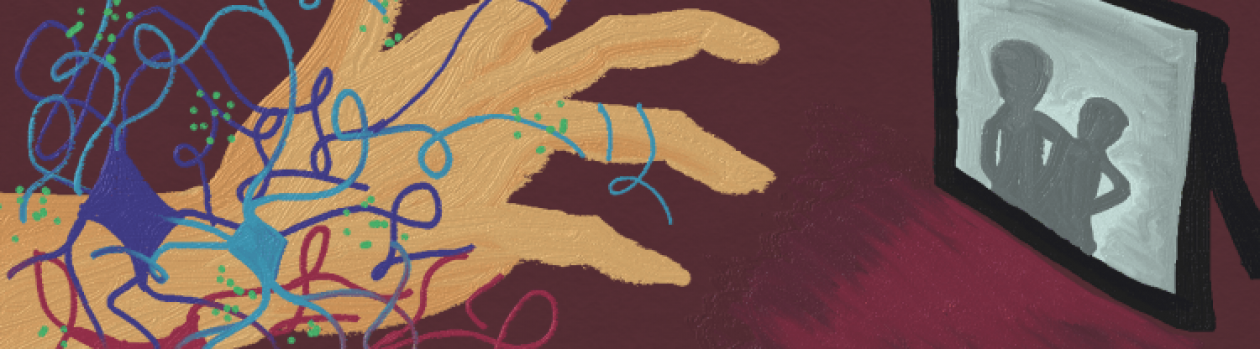
Concussions within the athletic realm have certainly been a hot topic the past few years. The NFL, without a doubt, is the case study that we as a society have used as a lens to view this concern. With new rules, enhanced awareness, and severe penalties this organization has began to lay some groundwork to the knowledge that has become known about head injuries. Also, in Minnesota, the Minnesota State High School League has made similar awareness gains even in the short time since I graduated from high school. The impact that a head injury can do to an athlete cannot be understated. Athletes are continually putting their well being at risk to participate in the sport that they love. The questions that remain are… Is participating in athletics worth it? And, what can we do to address this issue?
To address the above questions, I will start with a few of my personal convictions… To start off, I believe that participating in athletics is own of the most enriching contributors to the character of an individual. In a sense, athletics give our first sense of what life is really about, that nothing is easily handed to you. If you put hard work in, you are bound to get out some results. Now I am certainly not advocating that if you work hard enough a state championship is heading your way, but rather that no matter what genetic predisposition you may be in, your desire to improve leads to hard work, and if you do indeed to choose to work hard, then lasting life lessons can be obtained. Our competitive nature is something that needs to be cherished. It is a driving factor to the advancements we make within our society.
Secondly, I will address some observations I have made about this issue throughout my athletic career. I believe that I was well informed of the dangers of a head injury. I believe my coaches, trainers, and family informed me of the severe impact that a concussion could have on my well-being. (To establish some credibility, I also participated in wrestling and football at the state and national levels, so I was indeed putting myself at risk when competing.) In the same light, I also witnessed some words said by coaches that infuriate me to no end. Things like… “As long as you don’t throw up you’re fine,” “You’re going to have to suck it up,” “Remember that the IMPACT test is to establish a baseline score, not to get every single answer correct, so there is no need to take you’re time,” to name a few. Now I don’t feel that these coaches don’t care about their athletes but I think it is more of a result of a generational gap. I believe that my parent’s generation grew up with a “rub some dirt on it,” mentality when it came to injuries. With limited knowledge about the severity of head injuries they also were treated medically as such. They were not nearly as educated about the subject, and, in turn, coach with that mentality. This conviction is one that clearly needs to be thrown out the window. We (I’m including myself because one day I hope to coach my own children) are ethically obligated to inform our athletes about the impact a concussion could have on their lives. I believe that we have taken the elementary steps to rid of the “toughen up” mentality and replace it with the “smart” mentality.
The fact of the matter is, we as a society will always be competing in athletics. It is in our nature to put ourselves (whether it be physically or mentally) on the line with an intention to succeed. I believe that continue enforcement, advanced awareness, and proper medical advice are how we need to address the issue of concussions. If an athlete sustains a concussion, the reality needs to be brought forward and from there the athlete can make his/her decision. I also believe that it is completely worth it. Competing in athletics has had a profound impact on the individual that I am today. Life lessons that are hard to come by can be obtained through the hard work we put into our sports and I wouldn’t trade it for anything.
Concussions: An Endless Research Field
It is a Saturday afternoon in October, and across the country fans and athletes are gearing up (both literally and figuratively) to watch or play an exciting game of football. I am in a coffee shop, as a blogger should be, spending my time thinking about the effects of sports, like football, on the brain. This past week, my neurochemistry class read an article about the neuroscience of concussions. It brought up an almost endless amount of both ethical and cultural questions concerning the education, prevention, and treatment of concussions in relation to large and culturally significant sports like football. But most importantly, we came to the conclusion that the brain, much like an angst-filled teenager, is highly misunderstood. Because of this, the answers to the diverse questions about concussions are very difficult to answer.
However, it is important to understand the questions surrounding the topic because they help bring awareness to the importance of effective treatment and the management of concussions. Furthermore, by understanding the questions, one is able to remain involved and inquisitive about the discoveries that are constantly being made in the field of neurochemistry and brain injuries.
A few of the topics currently being researched include:
- Defining and quantifying concussions and concussion symptoms
By being able to quantify and define the severity of a concussion, both treatment and management practices will be more specific to each individual and their injury. It will also allow for a better understanding of how long it takes the brain to heal and how long a person should rest during recovery.
2. Subconcussions and their potential neurological effects
It is known that a concussion does damage to the brain and requires time to heal. Further research is needed in the area of subconcussions because little is known about the damage that builds after several less serious hits to the head. It is also important to investigate the effects of different injury intervals on brain damage and recovery time.
3. The long-term effects following injury
Extensive knowledge has been gained just recently as more is learned about sports related injuries in aging players. CTE (Chronic Traumatic Encephalopathy) has been noted in players as they enter their 40s. Symptoms include those similar to that of Alzheimer’s Disease, and it is being realized that concussions are serious injuries with symptoms that can extend throughout a lifetime. More investigation is being made in this area to determine the extent of the long-lasting effects of concussions.
4. How to restore normal cellular physiology after head impacts
It is important to understand what happens to the brain during a concussion, but it is even more imperative to figure out the most efficient and beneficial way to restore the brain after an injury. Researchers are looking into brain plasticity and reorganization as well as the amount of time necessary to heal the brain.
While these are just a few of the almost infinite amount of questions in the area of concussions and the brain, they act as a general list of the largest areas of research. Many brain imaging techniques are being developed and more is learned every day about the brain. While football and concussions will seemingly be around forever, the way in which the injuries are handled is sure to change in the upcoming years.
Visit this link to read the article referred to in this post:
https://moodle.cord.edu/mod/resource/view.php?id=234260
People Need to Understand What a Concussion Feels Like
Everything was black. I could feel weight being lifted off of me and I could feel that I was lying face down, I only became concerned when I rolled on to my back and still I could see only darkness. At this point my vision faded back in from the middle outward, flooding my brain with information. The referee was helping me up and I remember him asking me a simple question. “Are you OK?” Seems simple enough, but at the time I couldn’t put any words in my mouth, I just sort of grunted and began to jog back toward the huddle as I was supposed to be in the receiver rotation for a couple more plays. By this point it was clear to me that something was amiss, I just jogged past the huddle and back to our sideline. Seeing as I had come out of the rotation early an assistant coach walked over and asked what was wrong. Again, a simple question, and again I had no words. After I took of my helmet he asked what city we were in, I knew it was an away game but I couldn’t find the memory of where I had gotten off the bus just a few hours before, I glanced at the scoreboard and read off “New London.” He had seen enough. I sat out the rest of the game and although I didn’t know it at the time that would be the last time I wore football pads and took the field.
I went to the hospital later that night because my parents wanted to take me. The doctor basically told me I had a concussion and that I shouldn’t play contact sports ever again. He then gave me a prescription for standard prescription pain meds, and sent me on my way. I don’t remember really thinking anything for the next several days. It is all kind of a blur when I look back on it, I guess it was mostly a blur then as well. I went to class, hung out with my friends, took hydrocodone, and just sort of existed. There was really only one thing I could think about while I was sitting in class, when I wasn’t just drowsily daydreaming, that was the pain. My head hurt a lot, all the time, and after I ran out of medication it still hurt all the time, so I took OTC medication, a lot of it, for a long time. By the next spring I still got headaches from just running around during the tennis is season and to this day it still only takes some jarring or a heathy bump to bring back that familiar pressure an pounding behind my forehead.
I had no Idea at the time just how serious my injury was and the people around me couldn’t understand why I was complaining all the time. I looked fine and it had been months since the injury, so I just self-medicated and told myself everything was fine. It must be fine, I thought, that is what everyone was telling me. People need to be more educated on concussion and concussion symptoms, particularly if they or their family member has had one. I think it is absurd that a doctor just handed me hydrocodone and sent me home without telling me or my parents how serious an injury like this can be, and what the long term consequences can be like. Sure he told me not to play contact sports again, but if you were sixteen would you listen to him? On the car ride home from the hospital I was already thinking about what I would have to do to get back on the field, I brushed off his warning in a matter of minutes while I was still in immense pain. People need to have serious conversations with kids when they injure their brains and just give them an idea of the stakes. I am just glad my symptoms were so intense and so long lasting because I know that I would have suited up again in a heartbeat if I felt like I could. I know most young people, like me, have no sense of foresight and are only worried about their next competition, but you only have one brain and it is pretty important, I think even a sixteen year old boy can understand that.
Symptoms:
http://www.mayoclinic.org/diseases-conditions/concussion/basics/symptoms/con-20019272
Consequences:
http://www.ncbi.nlm.nih.gov/pmc/articles/PMC3208826/
"More than just a game"
Concussions are not something to think lesser of than any other physical or mental impairment. After all, concussions can be damaging to the point where they lead to both mental and physical impairments due to the fact that a blow to the head is exactly what controls one’s physical and mental capabilities.
But we live in a competitive world don’t we? Particularly in the United States, competition is something that is sought after, and in many cases rewarded for. In the sports world, competition could be the difference between a scholarship to play college ball, or the difference in that extra million for that next five year contract in the NFL. The serious implications that come with a serious concussion could be detrimental. Yet how do you stop a senior athlete from not going back into the championship game if his or her future is supposedly on the line?
It is hard to know the seriousness of concussions because…
- Each concussion/case is different. If someone breaks their bone, doctors are trained and aware to what needs to be done in order for the broken bone to heal correctly. If someone takes a bump to the head, it is hard pinpoint exactly where the damage occurred, as well as what exactly to do with the damage. Function within the brain is not necessarily localized. The brain has many components that operate and cooperate together to produce behavior. If damage to the brain occurs, it is almost nearly impossible to “fix” the problem at hand, because the problem at hand could be in one of many different locations within the brain.
- How long is long enough? For many who receive a concussion, they are told to wait it out for a certain amount of time. But how long is long enough for a certain individual? Studies have shown that even if they do return to activity, they may see negative consequences many years down the road due to their concussion, or from second impact syndrome, where a second concussion is received to the head before the first concussion had full time to heal.
- Awareness surrounding the issue has only recently become a common topic of interest. As mentioned before, the seriousness, because of the many unknowns surrounding concussions, has only been recently discussed about in terms of the many professional, collegiate and youth athletic programs. More awareness surrounding the topic needs to be made available to parents, coaches, teachers and athletes themselves for everyone to understanding the dangers that can surround receiving a concussion.
- Imaging technologies can be expensive and in some cases, ineffective. It would be impractical for someone to conduct an MRI exam every time someone took a hit or blow to the head. One, that would be very expensive. And two, many of the latest imaging techniques are not very well equipped to understand concussive damage.
I would be curious to know how many athletes would continue playing if they knew their quality of life could be impaired long after the championship game or their short term sports career was over? Yes, I will agree that sports and competition have very valuable lessons to teach kids, but if an injury is going to impact their quality of life in the future, a game is not worth it.
Concussions: Do we really know enough?
This week in neurochemistry, we talked about the topic of concussions. I had not known a lot about concussions before the week, but I knew that it was caused by some kind of blow to the head. From what I knew, a concussion was just associated with headaches, sensitivity to light, and a few other symptoms along those lines. What I did not realize was the long term effects that these concussions can have on the brain.
Going to high school in Minnesota, we had the impact test when someone was suspected to be the victim of a concussion. We would take a baseline test in the beginning of the season to provide as a comparison if we needed to take the test again to see if we had a concussion. This test was good and all, but many athletes would try to manipulate the test to make sure that they could return to sports as soon as possible. So the test was good for those who took it seriously, but not for those that didn’t. For those who didn’t take it seriously, they would often be allowed to return back to sports quickly because they really wanted to play in that big game. At the time it probably sounded like a good deal to them, but if they knew the effects concussions were having on their brain, they may have used their brain and thought twice.
This is where the long term effects of concussions come into play. Concussions can be related to short term problems like headaches, sensitivity to light, and other physical immediate symptoms, but they can also have long term effects on the brain. When you get a concussion, the brain has basically been rattled in the head. This can cause damage to parts of the brain that will die and cause the brain to be off, making other parts of the brain compensate for the part that was damaged. This can effect the development of the brain in those of the younger population, and contribute to the brain being more susceptible to a second concussion.
This is where second impact syndrome comes into play. If an athlete returns to sports too quickly after a concussion, they can run the risk of second impact syndrome. This is where the brain hasn’t recovered after a blow to the head, and when another blow to the head takes place the effects are amplified. One often gets inflammation of the brain, which can lead to death in many cases. This is the reason high school sports are often the focus of concussion talk. These athletes are often returned to game play without having the proper amount of time to recover. It is difficult to measure how long it takes the brain to recover because the long term effects it is having on the brain are hard to detect. So instead of keeping athletes out for a long time, they are allowed to return to play once their short term symptoms are cleared up, and they then run the risk of second impact syndrome, or are more susceptible to another concussion.
Overall, we still have a lot to learn about concussions. We don’t know exactly how these concussions are effecting the brain and how to measure all of the effects precisely. These creates a problem in the case of second impact syndrome because athletes want to return to play, but its hard to determine when exactly they should. Due to this they are often allowed to return to early. Hopefully as time progresses, more methods for analyzing concussions will be developed to give us more insight on how to measure these concussions and when to allow athletes to return to play.
New posts coming soon!

The 2015 Neurochemistry class is about to start blogging! Topics covered this semester will be autism, endocannbinoids, Alzheimer’s Disease, nitric oxide, emotional regulation, obesity and more! Next week’s topic: concussion!
Hope you enjoy – Julie Mach
Capstone Reflection
When I tell people that I study biology and neuroscience, I am frequently asked if I want to be a brain surgeon or something else involving treating people with brain disorders. While I do care about people being healthy, their treatment isn’t with what I want to mainly concern myself as a career: what interests me isn’t the “what” of disease but the “why.” I would much rather figure out the process behind how something happens than fix it with knowledge other people have discovered. There’s no doubt that application is important (and far less tedious than pure research, in some people’s eyes), but science is exciting to me because of that discovery.
What this capstone course emphasized was how understanding the neurochemical mechanisms involved in diseases and disorders can help us think about their possible treatments – something that benefits aspiring medical professionals and researchers alike. What’s more is that the discussion-based environment encouraged knowledge and perspectives to be exchanged amongst this group of critically thinking students with differing interests and insights, allowing everyone to benefit from the collective strengths of the group.
One of the most difficult aspects to this class was getting through the scientific literature. Since we read a new paper each week, we had to develop the skills to separate what we knew from what we needed to learn more about and make connections from our current knowledge bases in order for them to expand. We would pool together questions we had whose answers we thought would be especially important to our understanding of the paper, and each person would select one to share with the class. Many of the things we learned in the beginning were important for further papers, so as this general knowledge grew, we became more able to analyze the specific nuances to each one. Because of my interest and background in genetics, I found I was uniquely able to research and explain the genetic components of our weekly topic. The same was true for other students who, for example, had a better understanding of chemical structure or neuroanatomy than others. These different skills were needed for the inherent interdisciplinary nature of neuroscience and added to the capstone experience by drawing from various fields of study.
The final part of learning about a topic was its actual discussion, where we went beyond the scientific details and thought about what sort of implications our new knowledge on the week’s issue could have on how people live and how we view our world. This helped to identify how someone in a position to understand scientific topics has a role as an educator when hot topics such as obesity and Alzheimer’s are discussed in the general public. We needed to consider what people knew, what they should know, and what actions should be taken to ensure a better life for everyone. The personal conclusions we drew from these final discussions ended up in our blog posts, where we attempted to communicate our entire learning process with the community.
Problems do not exist in individual bubbles: more and more we are uncovering new ways by which all things are interconnected, signaling a greater need for information and interpretations of this information to be shared amongst seemingly distant groups of people. We need to get the input of others in fields different from ours to see how they view something, why that might be different from how we see it, and how we maybe need to adjust our approach to get a more favorable outcome. The organization of this course made it so that it could not be accomplished alone. Everyone’s insights and discoveries, however small, were needed for furthering the group’s understanding of the subject. It served as a reminder that while information and ideas are accessible to anyone, it is often the case that our peers can be our greatest teachers – and sometimes we take on the role of that teacher, if we are more qualified.
This class helped to solidify my desire to do research in that it allowed me to think by exploring questions that I personally had concerning seemingly tangential topics that also excite me – that is, it encouraged me to find the puzzle pieces I was good at and enjoyed finding in order to contribute to the whole, very complex picture. I believe that I have a renewed idea of how to approach what I do and how to use my ideas as well as a more defined way in which to be responsibly engaged throughout my life simply by doing what I love.
The End is Just the Beginning
Going into the class without being a neurochemistry minor or even a chemistry major for that matter, I felt as if I was blindly walking into a course which would be entirely over my head. For the first several weeks, that was exactly the case. It was as if I were thrust into a foreign country, one which I did not know the language, and was asked to analyze new scientific research. In the beginning, different neurological pathways were flying at me left and right and I barely had enough time to read the acronyms associated with a given pathway, before a whole new one was thrown at me! However after the pathways began showing up over and over in different disorders, I was able to reach a new level of understanding and it was then that real analysis and connection to the global issues.
Elements of panic set in every weekend as a new papers outlining a different neurodegenerative diseases were assigned. However the fear gradually subsided as everyone came back to class on Monday. We slowly picked the articles apart as a group and then identified subject matter that we would like to learn more about in order to better understand the articles. Topics were then assigned to each student to be researched and familiarize with for the next class period. Wednesdays were so endearingly coined the “speed dating” days. It was on these days that students brought their new-found knowledge from researching the topics that were assigned on Monday. Each student had a chance to break apart and explain these difficult topics in five minute sessions, one on one, with everyone in the class (thus the term speed dating). It was then on Friday, when we were able to apply these new concepts to the real world. Fridays consisted of large group discussions in which the neurodegenerative disease was discussed in a more humanitarian way. These discussions were far more centered around personal connections with the neurodegnerative disease of the week. Without fail, someone would know someone or have a relative who was suffering from the disease or condition. While neurlogical pathways were still discussed, Fridays allowed for the class to understand a whole new side of the disease that was typically detached from the hard sciences.
Not only did this class improve my critical reading skills when it came to groundbreaking neurological research, it provided an avenue in which I could view these issues from many different perspectives, and connect them to our current society. While I have come to realized that each one of these diseases is different, (even though they all might possess certain imbalances and “modulation” of normal function) I have also found that placing a label on an individual who is affected can be particularly harmful. For example, for people who are labeled as autistic or bipolar — even though they might be very high functioning — are immediately seen differently. This can lead to many adverse social affects, all due to the fact that other people do not know what is really going on with their condition, and therefore do not know how to act around them. So while these topics might be difficult to discuss, it is important that they are because otherwise general ignorance can lead to additional, unnecessary problems.
The end is just the beginning, why might I choose this title you may ask? Almost all of the articles that we have read in class have come from the past five years. The information that is coming out is groundbreaking! However there is still much more that needs to be discovered in order to fully understand and know how to treat many of these neurological diseases. So while the end of this class subsequently symbolizes the capping off of my four years at Concordia, there are still many more interesting findings that I am excited to learn about in the future and share with those around me!
The End That Shows We’re Really Only at the Beginning
When I first signed up for Neurochemistry last spring, I simply took it because it was hitting two birds with one stone. I could use it as my elective course for my chemistry major and also complete my capstone class with it. I hadn’t taken any other neuroscience classes throughout my career at Concordia and considered my knowledge of the brain to be pretty minimal compared to others I knew would be in my class. Needless to say, I was quite intimidated. Not only because I thought I might be behind my classmates knowledge-wise, but also because discussion based classes have never been my favorite. I’ve never been one that enjoyed having a class-wide discussion and arguing viewpoints on something with another classmate. My favorite types of classes have always been the professor in front of the class giving a lecture for the entire period. To some, this is excruciatingly boring, but I’ve always been someone who learned better – and preferred – to just sit and listen. For that reason, I was nervous for Neurochemistry and having to “force” myself to get into the discussion. But after an entire semester of the most discussion-based class I have ever taken, I’ve learned they aren’t always so bad.
At the beginning of the semester, we had several class periods discussing background information and learning things we would need to know to help us understand most of the papers we would be reading. This was immensely helpful for students like me who didn’t have a good background to begin with. Right away my fear of not knowing everything was gone. As the semester progressed and we read many very in-depth papers and covered topics from autism to marijuana, I came to realize that not knowing everything is okay. There wasn’t a single paper we read where the researchers understood every pathway or mechanism. In fact, most of the time it was a “this happens in this disease but we really don’t know why” case. As a class, we tried to take each piece of the puzzle that was known and formulate a way those pieces might fit together. Each week, every member in the class would tackle a particular topic and then share what they found to the rest of the class. It was amazing how little we would know about a disorder, even after reading the paper, but once we dug a little deeper and taught the class what we had learned, we began to have a really good grasp on the topic. The amount of learning in one single week was astonishing. For a class that didn’t have your typical lectures and quizzes and tests, I sure learned more than I could have thought possible. I think this truly highlights the idea of learning for school and learning because you are curious. I wanted to know what was happening in the brain in each one of these disorders because it was interesting, not because I had to. In addition, as the semester went on, I grew to love – instead of my usual hate – our Friday discussions where we could discuss not only the science behind that week’s topic, but also the social and ethical sides.
All in all, I really enjoyed neurochemistry. For a class that scared me at first, I realized that class discussions aren’t all that bad. I loved learning so many knew things and sharing my own findings with classmates and my professor, who was more like another student in the class and learned right alongside us. I saw connections between neurochemistry and other fields, like anatomy and biochemistry and psychology. I was able to discuss with my peers the social and ethical implications that certain disorders of the brain have on our society and what our next step should be in trying to treat or cure these disorders. This class went so much further than just the science, which ultimately is what a liberal arts education is all about. My capstone class certainly capped off my education in true Concordia fashion. I came to realize that not knowing everything is okay – it simply shows us how much we have left to discover and that we really are only at the beginning.
The Value of a Capstone
Capstone classes are all designed to be just that, a capstone. They are supposed to take what you have learned in four years of lectures, tests, and study groups and apply them to one goal. In Neurochemistry, that goal was to find, read, understand, and finally communicate scientific literature. I’m sure we all thought we had enough practice at researching and reading articles to be proficient but I think we all learned that it is a very hard skill to master.
The most important that this capstone taught me was how to communicate novel and abstract scientific ideas. To take a paper and be able to digest it is one thing, but to be able to tell anyone, whether they have a scientific mind or not, what you have just learned takes a much more refined set of skills. Not only is it a more challenging thing to perform, but communication is becoming more and more relevant and necessary in society today. One timely example of the power of scientific communication involves the “Vaccines cause autism” misconception. A few people claiming to know something that they actually know nothing about could have been more readily dispelled if the scientific community was more proficient in the communication of the facts.
Because interdisciplinary communication is so important I would recommend this class to students of any major. The fact that we all worked together to tackle the very difficult concepts of neurochemistry makes the challenging aspect of this class a lot less daunting. The teaching of this class fosters the teamwork and connection-making necessary to learn the material instead of just going with the flow. Overall, this was a very fun and positive experience and the lessons and skills learned will stick with me for a long time.