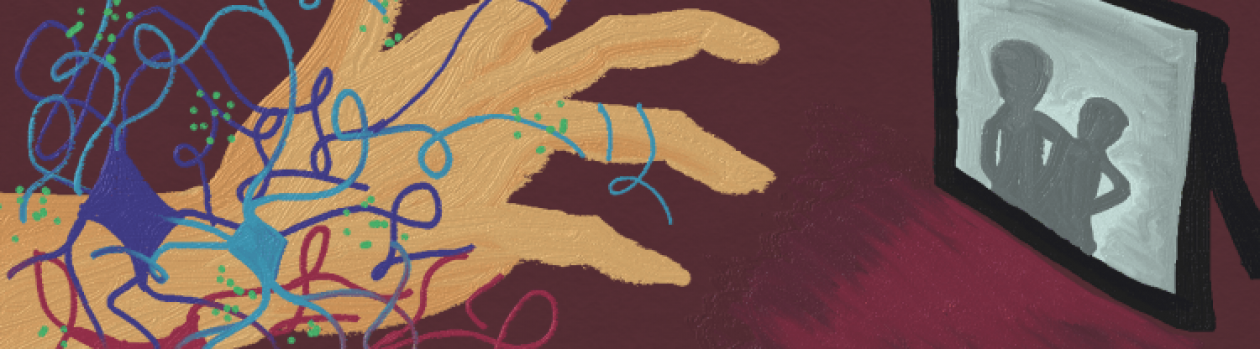
Psychological disorders, treatment and therapy to combat them, prescription medications…why aren’t we talking about it?
Reality slapped me in the face this week following my neurochemistry class in which we discussed bipolar disorder. I realized how much we as a society dislike discussing psychological disorders such as this very one. I don’t think that it is a stretch to say that we don’t recognize them unless there are visible manifestations of the damage such as shakes that appear with Parkinson’s disease, and memory loss in those who suffer from Alzheimer’s. But what about Bipolar disorder? Depression? Schizophrenia? Multiple personality disorder? All of these disorders are very real but perhaps not as easy to see on the surface. It is therefore easier to push them under the rug, which in my opinion is what we do as a society, even while people who are dealing with these diseases are struggling everyday.
I believe with the utmost importance that people need to be educated about psychological disorders such as bipolar disorder as being the first step in understanding how debilitating the disease is to those who suffer from it.
Bipolar disorder has an average onset age of 20, and is a psychological disorder affecting mood and actions. An individual who has been clinically diagnosed with bipolar disorder will cycle between manic and depressive states. The length of the cycles determines the type of bipolar disorder. In the manic state, which lasts for at least a week, the individual will experience symptoms such as high self-esteem, little need to sleep, constantly talking, irrational thoughts, distraction, or psychomotor actions such as pacing. On the other hand, during the depressive state an individual will have symptoms such as depressed mood, lack of interest, changes in diet and sleeping habits, lack of energy or even suicidal thoughts that lasts for at least two weeks.
Not much is known about the actual mechanism of bipolar disorder, but with a large amount of research having now been done on the subject, we are able to understand it better than ever before. There are findings in links between bipolar disorder and dopamine, glutamate and inflammation.
Dopamine is a neurotransmitter in the brain which plays a large role in reward-based behavior. In those with bipolar disorder, extensive dopamine release has been seen to lead to an increase in reactive free radical and oxidative stress. In simpler terms, free radicals are molecules that are highly chemically reactive, and too many of them can cause damage to cells in the brain, such as oxidative damage to DNA, lipids and proteins. The damage to these molecules can cause apoptosis (programmed cell death), cell membrane damage, and protein aggregation. Glutamate is an excitatory neurotransmitter and its increase can lead to an influx of Ca2+, which also causes oxidative stress as I previously described.
As for inflammation, there appears to be an increase in cytokines in those with bipolar disorder. Cytokines are pro-inflammatory molecules that modulate immune responses. This process is normally quite helpful with regard to our immune response, but research shows the process goes haywire in those who suffer from bipolar disorder. While inflammation in the brain has been identified in those with bipolar disorder, researchers are not completely sure on the inflammation process in its link to bipolar disorder.
Though many various drug cocktails are available to treat bipolar disorder, much more then determining the types of prescription medications to use needs to happen in order to understand this disease. I hope that in the future we are able to do much more to help people suffering from this debilitating disease, who need our understanding as much as our help. People with bipolar disorder might choose spend time in a therapist’s office discussing their condition, but there is no reason why we also can’t be there for them and discuss it outside of those doors.
Bipolar Disorder: Well, They Say Opposites Attract…
Bipolar Disorder: Well, They Say Opposites Attract…
It is human nature to display a range of emotions. As a college student, it is unwise to approach me in the morning immediately after I wake up because you will get the reaction of an unhappy, angry bear that has just woken from his slumber. But after a hot shower and some breakfast, I will be cheery and as friendly as ever. By the end of the school day, I will be antsy and anticipating the end of the day. When supper rolls around, I will be conversational and looking to ask how your day has been. Then darkness will set in, and I will be in a state of great focus until I can study no longer and must lie down to sleep.
These general changes in mood occur nearly every day; each person has his or her own individual manner and range of emotions. While these emotions are triggered by external events and internal thoughts, they are largely controllable based upon our own willpower, but most evidently, we are capable of recognizing these varying emotional states in which we might find ourselves.
On the other hand, there exists a commonly known disease called bipolar disorder. Although there is still much we do not know about bipolar disorder, we have classified it as one of many psychological disorders that can afflict our personality and behavior. Specifically, bipolar disorder is usually clinically diagnosed by the uncontrollable presence of varying emotional phases between which the patient cycles. These two phases include a manic phase where passion, energy, and goal-driven actions are intense and brilliant. Everything is over-the-top, and productivity can reach an incredible maximum. But, the manic phase tends to be somewhat short-lived; most patients with bipolar disorder spend the majority of their time in another state: the depressive phase.
In the depressive phase, one can imagine how this might look. If you simply imagine all associated factors with regular clinical depression, that about sums up the depressive phase of bipolar disorder. Oftentimes, patients with bipolar disorder understand that their brains chemically cycle between these two phases, but the transition between the two is not often as simple as flipping an on/off switch. And still, even if the patient recognizes that they are in the center of a certain cycle, they are powerless in attempting to act in a way that might counter the symptoms. For instance, if you had bipolar disorder and you recognized that you were at the peak of a manic phase after organizing your entire house in an hour, you could not simply tell yourself to “calm down” and relax to depress the manic phase because the chemical signaling in the brain cannot be overridden by your conscious thought. Similarly, telling yourself to be happy or to go for a walk in the park during a depressive phase simply will not magically transition you into a neutral or manic state.
Thankfully, there has been much research into the topic, and while I mentioned previously that there is still a large amount that we do not know, some light has been shed in relation to the disease. Originally, the focus in bipolar disorder was on a class of molecules called monoamines, but recently, new ideas have especially indicated the importance of inflammation, oxidative stress, and even some other common cellular processes.
Inflammation is generally characterized as an immune response which occurs through the use of molecules called cytokines. When a tissue is disturbed, (trauma, heat, infection, etc.) these cytokines are released, and they act as “targets” that attract white blood cells to the area. The white blood cells are part of your body’s immune response that can trigger inflammation and removal of infectious or problematic agents in your cells. Normally, this process is excellent and works to keep you healthy, but in patients with bipolar disorder, inflammation in the brain has been linked with their emotional phasic symptoms. Unfortunately, the cause of how inflammation is related to bipolar disorder is still unknown.
Oxidative stress is a very broad category that is usually associated with a cellular machine called mitochondria. Mitochondria are thought of as the “energy factories” of your cells, and just like any power plant or factory functions, they typically generate wastes while producing the energy that we need. In the same respect, mitochondria produce waste called reactive oxygen species. While reactive oxygen species are important in producing energy, if we have too many of them, they end up being toxic to many other functions in your cells and can cause other parts of the cells to become dysfunctional. I am sure you have heard of “antioxidants” in foods such as tomatoes or vegetables, but you may have not known that antioxidants are important because they get rid of these excess reactive oxygen species. Like inflammation, patients with bipolar disorder typically have irregular function of mitochondria, and therefore have problems with reactive oxygen species which lead to oxidative stress, but again, unfortunately, we have not yet uncovered exactly how oxidative stress is linked to the symptoms of bipolar disorder.
The crazy thing is that things like inflammation and oxidative stress are commonly found in a whole variety of psychological and neurological disorders such as Alzheimer’s disease, Parkinson’s disease, schizophrenia, and even have a link in head trauma like concussions! So then, the big question that scientists are working on answering is how many of these same irregularities that can occur in the brain will lead to the variety of vastly different clinical diseases. Clearly, there must be something different, otherwise the diseases would be the exact same. It will be very interesting to see within the coming years if we can tease out the subtle differences and begin to understand exactly what causes each of these separate diseases. Once we know this, I believe it will open floodgates for treating the true roots of these problems. Think of it this way: “If you have a leaky pipe, you can continue to plug and patch small cracks, but the best way to stop the flooding would be to simply turn off the water altogether…”
Final thoughts on bipolar disorder written by Steven Dotzler
Beyond the Shakes: Brain Pathology of Parkinson's Disease and Non-motor Symptoms
If you have ever witnessed someone with Parkinson’s disease suffering from tremors, it is a heartbreaking experience. To see someone trapped in a body they cannot control, unable to do anything but ride out the tides of tremors with no relief in sight, is absolutely gut-wrenching. It is difficult to imagine one day having a body that you cannot control, but for many, this becomes a reality as they age. Parkinson’s disease is the second most common neurodegenerative disease, with Alzheimer’s being the most common. It is characterized by a loss of motor control due to degeneration of dopaminergic neurons in the substantia nigra. This results in impaired motor functions that include: rigidity, tremors, bradykinesia (slowness of movement), as well as gait and postural changes. In addition to motor deficits, non-motor symptoms are also present in Parkinson’s, though research in this area is minimal.The presence of non-motor symptoms may come as a surprise due to the emphasis on motor deficits in PD. Less is known about the pathology of non-motor symptoms, but they can precede motor symptoms of PD by many years. Non-motor symptoms include: sensory abnormalities, autonomic dysfunction, cognitive decline, sleep disturbance, and depression. The frequency of non-motor symptoms increases with the severity of Parkinson’s, and they affect all PD patients.

In Parkinson’s disease, neuronal death occurs in various regions of the brain, not just the substantia nigra (the location of dopamine). The affected brain regions are pictured in the image above. Dopamine is the neurotransmitter involved in motor control and reward-motivated behavior. Degeneration of the non-dopaminergic areas of the brain is believed to be implicated in the onset of non-motor symptoms.
Here is a brief summary of the roles of the brain regions that degenerate in PD:
Substantia nigra: comprised of two parts, pars compacta and pars reticulata. The pars reticulata conveys signals to other brain structures. The pars compacta, the region that degenerates in PD, supplies dopamine to the striatum.
Non-dopaminergic Brain areas
Primary motor cortex: contains upper motor neurons that mediate planning and initiation of complex voluntary movements, receives input from substantia nigra
Locus coeruleus: largest group of of neurons involved in synthesis of norepinephrine, modulates circuits involved in attention, memory, emotion, stress, arousal, as well as posture and balance
Raphe nuclei: releases serotonin in the brain, helps regulate motor, somatosensory, and limbic systems
-low serotonin levels found in depression, damage to this area could be linked to depression observed in PD
Thalamus: involved in sensory perception and motor function regulation, receives sensory signals and projects them to the cortex, controls sleep and wake states
-degradation of this area impacts cognition, awareness, and perception
Amygdala: plays a role in processing memory and emotion
Hippocampus: involved in consolidation of information from short-term to long-term memory as well as spatial navigation
The presence of Lewy bodies is another defining characteristic of PD. Lewy bodies are abnormal protein clumps that aggregate in diseased neurons in PD. They are composed primarily of the alpha-synuclein protein, along with other proteins such as ubiquitin and tau. Lewy bodies build up inside the neuron and displace other parts of the cell, leading to cell death. Lewy bodies are found in the brain stem and deplete dopamine levels, and eventually spread to the other brain areas listed above.

Treatment of Parkinson’s disease is extremely difficult due to the complex pathology involved. Genetic mutations, excess glutamate, oxidative stress, and mitochondrial dysfunction are all contributing factors to neurodegeneration in PD.
The most common treatment of PD is the administration of L-Dopa, the precursor of dopamine, in an attempt to increase dopamine levels to help control tremors. It does help, but unfortunately, L-Dopa is not a cure-all. It cannot prevent neurodegeneration, and has averse side effects that include: nausea, hallucinations, confusion, extreme emotional states (especially anxiety), and insomnia, further exacerbating non-motor symptoms. We need more research into the pathology and onset of non-motor symptoms of Parkinson’s disease, as they often precede motor symptoms. Research into the pathology of non-motor symptoms is a viable outlet that could lead to new neuroprotective treatment strategies for Parkinson’s disease in the future.
This post was written in response to an article read and discussed in the Neurochemistry class at Concordia college.
The article can be found here: http://www.ncbi.nlm.nih.gov/pubmed/23380027
PD Brain pathology image retrieved from: http://stepsys.files.wordpress.com/2013/11/parkinsons-disease-204114724_std.jpg
Lewy body image retrieved from: http://www.cumc.columbia.edu/publications/in-vivo/Vol1_Iss19_nov20_02/img/LewyBody.jpg

The Mystery Named Parkinson's
Last week in neurochemistry we talked about Parkinson’s disease. This is a disease that has gained much popular attention in our culture due to celebrities and other famous individuals becoming diagnosed with this terrible disease. With as well known as this disease is, I thought that there would be well known mechanisms and pathways to how this disease manifests and can be treated. Normally, when a disease is this well known it is usually incredibly well funded—translating into research and a subsequent wealth of knowledge. Surprisingly though, researchers do not know very much about Parkinson’s. If you have been following along with our neurochemistry blogs you will have heard about how many of the neurological diseases that plague humanity boil down to oxidative stress, misfolding or tangling of proteins, and over activation by an excess of neurotransmitters. Many of those same factors come into play here and in Parkinson’s case the proteins of note include a-synuclein and parkin. Parkin is special in the fact that it is used as a cleaning crew for the cell.
In talking about this disease during a class discussion we came to a very interesting and difficult discussion. Throughout the semester we have examined many diseases where the physical capabilities of individuals are diminished, yet their mental faculties remain. We have also seen the exact opposite. An interesting question to ask yourself is which of these scenarios you would rather have.
When the death of Robin Williams occurred late this last summer, and when later details of his recent diagnosis with Parkinson’s disease and with depression I was given much to think about. When diagnosed with a terrible disease where you will slowly lose function is it an acceptable decision for an individual to end their life before their disease progresses? Imagine yourself on the deathbed or imagine watching a loved one slowly suffer themselves to death over the course of ten years. This shouldn’t be an easy question for you to answer, if it is I would ask you to think again about it.
The Hard Life with Parkinson's Disease
Working in the hospital has allowed me to care first hand for patients diagnosed with Parkinson’s disease. Parkinson’s is a very hard disease for a patient and family to deal with as it drastically changes the lifestyle of the patient as the disease progresses. I have seen families have to make many sacrifices to care for a loved one with Parkinson’s disease. I have also seen some of the sadness and frustration in the patient that can come from needing to ask help with meniscal tasks such as brushing ones teeth.
Parkinson’s disease is a disease that many people have heard about and can recognize some of the symptoms, but don’t fully understand what actually happens to a patient diagnosed with this disease. They believe it is a disease that affects the elderly by causing them to begin to shake uncontrollably until they can’t control their movements anymore. This is fair description of this unfortunate disease, but there is so much more to it than that. A lot of times it is misunderstood that Parkinson’s disease is something only the elderly get. As this is most often the truth, people as young as their mid 20’s can be diagnosed with early onset Parkinson’s disease.
Resent research has interestingly discovered that even though the disease isn’t caused by a virus or bacteria, it spreads from one region of the brain to next similar to how a virus would spread. Some of the implications of this is the disease starts in the area of the brain that involves muscle control. This is why some of the first signs of the disease is muscle spasms and shaking that progressively gets worse. As the disease moves to other areas of the brain it begins to affect mood and cognitive thinking. When the disease affects the mood areas of the brain it becomes especially hard to deal with because it can drastically change a patients behavior and personality, even causing depression.
So why haven’t we discovered a cure for Parkinson’s if we have been doing research on it for such a long time? Well as is the case with many neurodegenerative diseases, it seems as if multiple pathways go wrong at the same time and it is hard to pinpoint which pathway is initially causing the disease. Within Parkinson’s there is issues with the pathway that cleans up damaged molecules. There is also oxidative stress, inflammation, and mitochondrial malfunction. As it is hard to determine what is causing these issues the current method for treating the disease is to treat the symptoms described above, but this doesn’t ever slow the progression of the disease. Scientists have isolated a few mutated genes that appear to increase the likelihood of getting the disease, but are still working on developing a medication that could halt the progression of the disease.
The upside of Parkinson’s disease is that the life expectancy isn’t much less than that of someone without the disease. That doesn’t mean it isn’t incredibly difficult to live with, something that is clear to see whenever you observe someone struggling with the symptoms of the disease. It makes me happy to know that researchers are straining their brains to find a cure for this disease. Because of the difficulties that come with living with this disease, I hope that our advancements in technology will allow us to narrow in on a treatment for this disease in the near future.
We should be racing for the cure… An Analysis of Parkinson's Disease
Like most other degenerative diseases, Parkinson’s Disease (PD) is familiar to much of the population, however unless we know someone that is affected by the disease, this familiarity is only at face value. Influential figures such as actor Michael J. Fox and boxer Mohammed Ali have brought this disease into the spotlight of our culture. We always associate the symptoms of Parkinson’s Disease with the shaking that is observed when we see one of these influential figures walk up on a stage or give a talk. We are starting to learn more about the disease, how it starts, and what is occurring, however there currently is no cure to the second most common neurodegenerative disorder.

Symptoms
Symptoms associated with impaired motor function are the most visible signs of Parkinson’s Disease. Persistent tremors, delayed reflexes, rapid shuffling steps, and hunched over posture are all motor functions that are frequently observed, and serve as primary diagnosing tools for Parkinson’s Disease. However recently, many non-motor symptoms such as depression, sleep disturbance, cognitive decline, and autonomic dysfunction have been linked with the disease. In fact, many of these non-motor symptoms begin to occur earlier than their motor counterparts. Therefore, understanding how these pathways is crucial for the diagnosis and treatment of the disease.

Cause
Neuronal loss, the subsequent loss of dopamine, and the presence of Lewy Bodies (structures containing the misfolded protein alpha-synuclein) are the primary causes of Parkinson’s disease, however there are several different pathways behind these losses. Oxidative stress, mitochondrial disfunction, and inflammation have all been shown to be integrally linked with neurodegeneration and Parkinson’s disease. Like many other neurological diseases, the primary cause of the progression of the disease is aging, early onset Parkinson’s disease is very rare. Genetics also play a role in the development of Parkinson’s. Several different genes (alpha-synuclein, parkin, UCH-L1, PINK1, LRRK2, and GBA), both autosomal dominant and recessive, have been liked to PD. Lastly, head trauma has shown to increase the risk of developing Parkinson’s disease (evident in the case of Mohammed Ali). Studies done on ex-NFL players has shown that repeated head trauma could significantly increase the risk of developing the disease.

Current Treatment Options
Over the past 30 years, the treatment of Parkinson’s Disease has not changed substantially. Instead of treating the disease, many of the treatment options aim to combat the loss of production and function of the affected neurons. Current therapies include administration of L-dopa, dopamine agonists, and enzyme inhibitors such as peripheral decarboxylase inhibitors, catechol-O-methyl transferase inhibitors, and MAO-B inhibitors. All of these treatments are directed toward treating motor symptoms, in fact very little is being done to address the non-motor symptoms. Additionally, these treatments have not been shown to slow the progression of Parkinson’s disease. A potential new treatment that is being looked into is the inhibition of glutamate, as glutamatergic function may influence disease progression.
While there are several developing treatments, targeting different areas associated with Parkinson’s disease, there is much more that must be done in order to discover a true cure to this debilitating disease. It is here that Parkinson’s research could take a page from breast cancer research. Increased funding towards Parkinson’s disease could provide us with the answers to these questions and save many individuals from developing many of the symptoms. Therefore, we must race for the cure, so that those in the future will be spared from loosing the ability to do just that.
The Many Pathways of Parkinson’s
A friend of mine is quite fond of tattoos. She has several, and they all have their own special meaning. My favorite of hers, though, is the words “I love you” in her dad’s handwriting. This kind of tattoo would be special for anyone, but this particular one is even more special. My friend’s father has Parkinson’s disease (PD), so writing anything can be difficult for him. That “I love you” in his best handwriting is an accomplishment for him – one that my friend will take with her forever. But Parkinson’s is more than just a neurodegenerative disease that affects motor function. It also has many non-motor symptoms that are not as well-known or recognized.
Behind Alzheimer’s, Parkinson’s is the next most common neurodegenerative disorder. Average age of onset is 60 years old, and diagnosis between the ages of 20 and 50 is considered early/young-onset. The motor symptoms of Parkinson’s are the ones that are most commonly known and are obvious. These can include rigidity, tremors, gait and posture changes, difficulty speaking or swallowing, or little expression in the face. But PD is more than that; it also involves non-motor symptoms like depression, cognitive decline, rapid eye-movement sleep behavior disorder, and constipation, among others.
Important factors for diagnosis of PD include death of dopaminergic neurons and the presence of Lewy bodies. Lewy bodies are clusters of a particular protein called alpha-synuclein. When there is a mutation in any one of a number of particular genes, the alpha-synuclein protein can misfold. This means that it does not form into the correct shape and is then prone to cluster together and form the Lewy bodies. In addition, the enzymes used to clean up these unwanted aggregation of proteins do not work correctly so the Lewy bodies continue to accumulate. Eventually this leads to oxidative stress in the mitochondria and, finally, death of the neuron. PD is not as “simple” as that, however. There are multiple pathways that can cause the neurodegeneration, which is what makes PD so complicated and difficult to understand. Glutamate excitotoxicity is also thought to play a large role in PD. When there is too much glutamate in the body, it over-activates certain receptors that can lead to a huge influx of calcium into the cell. When there is too much calcium, the mitochondria again become stressed and cell death occurs. Inflammation in the brain has been linked to PD, as well. When there is inflammation, certain substances are produced, called cytokines. These cytokines then cause increased production of reactive oxygen species, which cause oxidative stress.
Because Parkinson’s follows so many pathways, it can be difficult to treat. Some research even suggests that PD is more of an umbrella, and full-blown PD is actually a syndrome encompassing several “diseases.” Risk factors for developing PD include age, genetics, and environmental factors. There is no cure for PD, and treatment can be difficult. Generally, MAO-B (monoamine oxidase B) inhibitors are used to prevent the breakdown of dopamine in the body. The two MAOIs used most commonly are selegiline and rasagiline. MAIOs are usually used alone in early PD and then used in combination with levodopa – another drug that helps increase dopamine levels – in later PD. Treatment usually helps with the motor symptoms of PD but has little effect on the non-motor symptoms.
Since Parkinson’s disease is one that is not completely understood, it is important that we continue research in finding what is causing this neurodegeneration to begin with and better ways to treat the disease.
The many causes and symptoms of Parkinson's
Most of us have heard about Parkinson’s disease and can visualize the symptoms of the disease. You probably picture Muhammad Ali or Michael J. Fox exhibiting shakes or tremors. What you don’t think of perhaps, is the mental aspects of this neurological disease. Parkinson’s is a disease caused by neurodegeneration, neurons dying in excess, and this is brought about by a variety of different things. Mutated or irregular genes is one possible way the neurodegeneration can come about. Parkin, PINK1 and DJ-1 are a couple different genes that have been known to cause problems and lead to Parkinson’s. Even though researchers have identified these genes and their link to Parkinson’s, little is known about the actual mechanism by which mutations in these genes can cause neurodegeneration. Another big piece of the Parkinson’s disease story is inflammation.
Inflammation, for those of your neuronerds who follow this blog, has been talked about at length last week in relation to concussions. Researhcers have found that inflammation may also be linked with Parkinson’s and this does not bode well for professional athletes in contact sports. Inflammation being linked with Parkinson’s may seem like a no-brainer due to how fragile the brain and its structures are. Inflammation causes harm to microglial cells, which help support neurons and keep them healthy, which can cause critical imbalances of chemicals needed for natural neuron function. No matter what the cause, Parkinson’s is a disease that affects people in more ways than just the tremors. A somewhat murky understanding of the mental problems associated with Parkinson’s is now being looked at more and more by researchers and might shed some light on the links between Parkinson’s and other neurodegenerative diseases.
Parkinson's Disease: Another Neurological Mystery
My previous knowledge on this week’s topic came from the movie “Love and Other Drugs.” In the movie, Anne Hathaway plays a woman in her early 20s living with the disease. I immediately think of the scenes where she is worn down physically and emotionally because she can’t do everyday things like drive to the pharmacy or simply to take care of herself. In this article, I got a deeper look into what happens in the brain of those with this PD.
First, the article talks about the need to look not only at the motor symptoms, but at the nonmotor symptoms (NMS) as well. In most cases, motor symptoms are expressed in the later stages of this neurodegenerative disease. These include difficulty speaking and swallowing, tremors, and an expressionless face. Specifically, damage to dopaminergic neurons in the substantia nigra leads to motor dysfunctions Some of the NMS include depression, sleeping issues, smelling impairment, rapid-eye movement, and cognitive issues. . By the time the physical symptoms occur, a lot of damage has already been done to the brain. If a method for NMS analysis can be fine-tuned, then current treatments, such as L-dopa and selegiline, may be more effective in slowing the progression of the disease.

PD is a complicated disease with a number of mechanisms for degeneration. The main categories are oxidative stress, mitochondrial stress, altered protein breakdown, excitotoxicity, and inflammation. The article states that inflammation is a general system reaction that may be the primary cause of dopaminergic loss. Inflammation is induced by the neurotoxins 6-hydroxydopamine (involved in the oxidative stress pathway) and MPTP (part of the mitochondrial stress pathway). All of these pathways seem to be in a complicated interplay. For example, oxidative stress may be induced by protein aggregation, specifically a-synuclein aggregation which are a component of Lewy bodies. Lewy bodies are a well-known marker of PD and are made up of unwanted proteins and cellular components which cluster together in the neurons. This oxidation may also lead to mitochondrial stress. However, mitochondrial stress increases reactive oxidative species (ROS), contributing to the oxidative stress. It is still unknown whether the pathways discussed are the initiators or downstream effects of some other cause of the disease. It may be that the specific mechanisms or combination of mechanisms are unique to each patient. Therefore, PD may never be reduced to one general cause.
Parkinson’s unlike other diseases we have looked at has more distinct environmental factors. The main environmental effectors are pesticides, exposure to metals, and solvents with the best evidence for pesticides. One herbicide, paraquat, mimics the neurotoxin precursor MPTP involved in mitochondrial stress. Paraquat is known to increase ROS which lead to oxidative stress. The mechanisms that the environmental effectors use highlight the combination of the pathways discussed. The environmental factors should not worry everyone. They are factors that require long-term exposure and are most commonly occupational risk factors. The combination of genetics and environment determine the expression of PD in each individual.
In “Love and Other Drugs,” Hathaway’s character attends a conference for Parkinson’s patients. The room is full of people who suffer from the same disease, but who could be affected by any combination of the mechanisms discussed above. Some people may have had a weak sense of smell or depression long before they saw any motor loss. Some people may be early onset patients affected by the parkin gene while others could have been victims of old age. That room may represent the spectrum of cases seen in Parkinson’s disease. Unfortunately, all that can be done currently is to treat the motor symptoms. If the nonmotor symptoms can be used to diagnose the early stages of the disease, drug interventions may slow the progression so that young cases like Hathway’s character don’t have to succumb to the fate of PD patients.
Article discussed found at:
http://www.sciencedirect.com/science/article/pii/S0891584913000282
Image found at:
https://www.michaeljfox.org/page.html?what-is-parkinsons-infographic
A Look at Parkinson's Disease
The first time I heard of Parkinson’s disease was when I watched an interview of Michael J. Fox. I was a huge Back to the Future trilogy fan. I remember seeing his tremors, and learning about the disease. It wasn’t until my great-uncle had been diagnosed did it become personal. It very difficult for people to see those you love suffer with something they can’t control. It’s important that we learn about this disease, so we can find a cure.
Parkinson’s disease is a neurodegenerative disorder. It is the second most common one behind Alzheimer’s disease. It is characterized by the loss of dopamine neurons in the substantia nigra, a specific area in the brain. The figure below highlights this area and compares a healthy brain and a brain with Parkinson’s disease. The disease has both motor and non-motor symptoms. The motor symptoms include rigidity, tremors, and posture change. I had known about these but was surprised about the non-motor symptoms. Some of those symptoms are olfactory deficits, constipation, rapid eye-movement, sleep behavior disorder, and depression. The medical field believes that if they could give an early diagnosis if they can recognize these symptoms as a part of Parkinson’s disease.

After some research, it seems like Parkinson’s is more like a combination of diseases under one name. I’ll highlight a couple of the important pathways that contribute to Parkinson’s disease. Glutamate excitotoxicity is one route. Glutamate is a neurotransmitter that allows calcium to enter. When there is too much glutamate, too much calcium enters. This leads to the mitochondria, the organelle that helps with energy production, becoming stressed (oxidation stress). This causes neurodegeneration. Another pathway includes the accumalation of proteins. Mutations can cause proteins to be folded incorrectly and enzymes not to work properly. This causes the proteins to tangle together and there isn’t anything to clean it up. This can cause oxidative stress just like the glutamate pathway, and leads to neurodegereation. The last pathway I’ll talk about is inflammation. When the brain experiences trauma, it becomes inflamed. The brain tries to fix itself, it can causes oxidative stress too.
To prevent Parkinson’s disease and treat the symptoms, research has gone into neuroprotection. These involve dopamine agonist, antioxidants, MAO inhibitors, and agents that affect mitochondrial function. They all try to prevent the initiation of the pathways that I previously highlighted. One interesting neuroprotector is estrogen. Men are more likely to have Parkinson’s than women, and this is due to estrogen. Estrogen has possible antioxidant effects and can inhibit glutamate receptors. While estrogen seems like a great treatment, it can increase the chance of breast cancer and coronary heart disease. Many people suffer from this disease, and we’re just beginning to understand it. We must continue this research and look for a solution for those who suffer with this disease.
Resources:
https://moodle.cord.edu/pluginfile.php/390935/mod_resource/content/2/bipolar.pdf
http://neurochemistry2014.pbworks.com/w/page/88087888/Parkinson%20disease%3A%20from%20pathology%20to%20molecular%20disease%20mechanisms
http://www.healthcentral.com/ency/408/guides/000051_1.html