Lithium does things?


What do you think of when you first hear the word lithium?  To be perfectly honest, before I read this article on lithium, the most that popped into my head was batteries (you know, the lithium ion kind), and maybe if I dug real deep I could remember hearing about lithium in relationship to psychology at one point in time.  Well, this article has really opened my eyes to how involved lithium really is in our own bodies.  As a simple monovalent cation that is the lightest of all metals, it sure can make a difference. 

            Usually people associate the use of lithium with the treatment of bipolar disease. What I found interesting about this is how little is know about its action.  Basically lithium is used as a shot in the dark.  It is difficult to know if it will work for someone so a doctor will just try it and see how it works on its own or with a combination of other drugs commonly used.  If it works, great, but if is doesn’t then on to the next drug.  It can also help the manic phase as well as the depressive phase of bipolar disease, but again, you just have to try it and see.

            Another observed effect of lithium is its neuroprotective properties.  One way it does this is through inositol which is used by G protein-coupled receptors.  Lithium prevents inositol from being recycled and this depletion induces autophagy which is the degradation of unnecessary or dysfunctional parts of the cell.  Another cool way that lithium protects the brain is by directly helping prevent cell death and by inhibiting proteins which cause cell death.  It does the first by inhibiting glutamate-induced, NMDA receptor-mediated apoptotic death.  This is done my long term treatment with lithium.  It does the second by downregulating pro-apoptotic proteins p53 and Bax.   These are just a couple of the things it is found to do.  It also is seen to promote survival pathways and molecules, and induce neurogenesis, which is when the brain repairs itself.

            These actions are quite interesting and exciting to think about. When you ingest a simple little ion, so many good things could be happening inside of you.  When our class was discussing this topic, the question arose, why isn’t everyone taking lithium?  The fact is, lithium has to be monitored carefully when ingested.  It can have some nasty side effect like vomiting, diarrhea, poor concentration, hair loss, and muscle weakness just to name of few.  When taken by someone, they need to get regular blood tests to make sure that they are not getting too much lithium.  Regardless, I still find its benefits to be interesting, and hopefully, you can now share more about lithium than you ever could before.

Drink your tea and watch your Iron


This topic has to do with Parkinson’s disease but you should still read this even if you do not care about Parkinson’s.  Why you may ask?  Well, you see our bodies really need iron.  It is very useful for accepting and donating electron and is essential in our central nervous systems.  It is needed for DNA synthesis, neurotransmission, myelination, oxygen transport, storage, and activation, mitochondrial electron transport, and metabolism.  The oxidative stress from high levels of iron in the body is related to other diseases as well including Alzheimer’s disease, Huntington disease, Friedreich ataxia, and ALS.  However, the role it plays in Parkinson’s disease is what we will focus on today.

Parkinson’s disease is an illness that affects the nervous system and thus, movements.  It also affects cognition.   What makes it worse, is that it is not curable yet.  This is a huge reason the public should care!  What is currently known, and I think is important for you to know, is that proteins in the brain that regulate iron are messed up with excess iron which can leave the brain vulnerable to oxidative stress.  This can lead to loss of neurons and to Parkinson’s disease.  The toxicity of this excess iron can be due to iron-containing molecules not functioning properly. 

There are drugs that can help with Parkinson’s disease that are iron chelators.  These protects against dopaminergic neurodegeneration induced by iron.  Also, people can go in for phlebotomy, which is the first treatment usually done.  This involves removal of approximately 500ml of blood each week to reduce serum ferritin.  Also, a fascinating inverse correlation with brain aging, dementia, and neurodegeneration has been noticed for plant-derived polyphenol flavonoids.   These have metal-chelating capacity and can be found interestingly in green tea. 

Parkinson’s disease does not sound like a fun disease to have.  It should be researched further so that people can be cured of it instead of simply treated for it.  However, in the meantime, make sure your body is using iron the right way.  You don’t want to have to get poked by a needle every week and pay for drugs!  Hopefully a cure will be found soon but in the meantime, drink your green tea!

What if I told you Diabetes will increase your risk of Alzheimer Disease?


Type 2 diabetes is a prevalent disease in America where the body has too much glucose in the blood system.  Many adults suffer from this and it results in insulin resistance.  This poses a huge problem for the body because insulin is essential.  It is needed to process the sugar that your body takes in.  Another little known role of insulin is the one it plays in the brain.  It plays a part in signaling in the brain and scientists have been noticing a possible link between type 2 diabetes mellitus and Alzheimer Disease.  In fact is appears to be a significant risk factor.  Alzheimer Disease is another disease that is on the rise and touches many families.  It is characterized by dementia and loss of brain function and memory.

            There is a lot of heavy science done to find the link.  It is all very complicated so I will make it easy for you and tell you about some of what is going on.  There are features of Alzheimer Disease that are seen a lot.  Among these are neurofibrillary tangles.  These can increase due to insulin resistance from type 2 diabetes.  When this is the case, neurodegeneration can occur which can lead to Alzheimer Disease.  Another feature of this disease is amyloid plaques.  These as well can be increased due to insulin resistance, and dementia and Alzheimer Disease can follow.

            America is famous for being obese as a country.  We have lots of fast food and many people resort to this because it is the easy and cheap option.  However a big problem we spoke about in our discussion of this topic was the ignorance of the public.  A very small number of people in the world know about the research that has found the connection between diabetes, something many obese people suffer from, and Alzheimer Disease.  Many people would not even believe you if you told them this.  However there is a link and this could be something that could change the way people think about what they put in their bodies.  But it is very difficult to educate the public.  People already know that there are many benefits to eating healthy but they still eat food that is bad for them.  People know that you can get diabetes from eating too much sugar, which is in so many of our foods yet they still eat and eat and eat.  What is going to change this?  Will the prospect of an increased risk of getting Alzheimer Disease and losing all memory and dying without knowing your own family’s faces be the tipping point? I wish we had the answer now.  We can only hope that people will soon get the picture and start looking for ways to take in what is good while refusing that which does them harm.

Marijuana and Endocannabinoids: More Research Needed

Cannabis sativa, more commonly called marijuana, and its use has long been a hotly debated topic all over the world. For the most part, the public has been ignorant about the potential it holds within and thus it has remained illegal in many countries for recreational use. While most of the population remains ignorant, lots of interesting research is being carried out.
This plant contains, at the very least, 400 chemical parts and 60 of those are in the cannabinoid class. With the onset of research done on these compound in this class, people began to wonder if there were similar compounds found naturally in our bodies. They looked at what was activating the chemical receptors that were activated by cannabinoids. These receptors are linked to memory, cognition, movement, and nociception as well as modulation of the immune system. Sure enough they found molecules in the body that had many of the same properties. These are called endogenous cannabinoids or endocannabinoids and are similar in their structure. Endogenous simply means that they are found naturally in the body. The first discovered is called anandamide (AEA) and two other common ones found later are 2-arachidonoylglycerol (2-AG) and N-arachidonoyl glycine (NAGly).
AEA
These compounds have many interesting effects on the body. It is now well known that AEA can produce innability to feel pain, control motor activity, reduce vomiting, stimulate appetite, induce hypothermia, and have effects that prevent cell growth. AEA has also been seen to induce cell death of tumor cells and cervix cancer cells.
2-AG
2-AG is quite similar to AEA however the brain and reproductive tissues contain higher concentration of it. It has been seen to cause cell death in certain cells and serves as messenger molecules in systems such as the endocrine and immune systems.
NAGly
NAGly is found in brain, spinal cord, intestine, kidney, blood, and skin tissues. It has been found to have analgesic or pain killing properties and has shown an active role in sending help to places in the brain where neurons are damaged.
With the interesting research going on, it begs the question why is this not a more acceptable topic in our society? There are obviously many positive possibilities in this area. I truly believe that people are ignorant in this area and are blinded. There is an attitude of being absolutely against this plant without any constructive and informed discussion about it. Why would we not want to explore cannabinoids more when they can reduce pain for people with terrible diseases? They can help reduce cancer in people and give them the desire to eat when chemotherapy takes it away. There should be more study going on in this area. There is the problem with the way marijuana use can affect each user differently, sometimes in a negative way. Endocannabinoids open up the possibility for targeting pathways and receptors that effect only specific areas. This could potentially eliminate adverse effects and unknowns while helping people with specific issues. There is so much potential for this family of compounds. The public should be educated so that good can come from the many compounds in this plant and the effects it has on the body.

New and Valuable Experiences Learned Through a Capstone Course

There are many different courses that are we are required to as students at Concordia College.  There are exploration courses, perspective courses, and religions courses.  Another class that is required before a student leaves Concordia is a capstone course.  According to Concordia College, the capstone course is the final course in the Core Curriculum which is a writing intensive course.  This course invites student to apply their liberal learning to significant problems of a global nature.  This definition seems to fit the definition of Neurochemistry perfectly.  One reason for this is that we were asked to write blogs after every paper that we had discussed.  This definition also seems to fit the class because of the topics that we covered can deal with global problems.  This is because of the neurological diseases that we covered are diseases that are issues all throughout the world and are constantly being researched everywhere.
The way that the class was set up was also very interesting.  This because the course was writing intensive, but when I was doing it did not seem like it.  This is because of the topics that we covered were interesting so writing about them was easy to do.  There were some though that were a hard to write about, buy that is expected with so many topics.  Another interesting aspect of the class was the way that it was set up.  The class met every Monday, Wednesday, and Friday. On Mondays, we discussed the article a little and talked about subjects that were confusing and topics that we would like to know more about.  On Mondays, we also evaluated how comfortable we felt about the article.  At this point in the week many of the students don’t feel very comfortable.  To help increase this number, every Wednesday we take the topics we didn’t know much about and presented them to each other.  This part of the class was really beneficial because it is what taught me the most about the papers.  I also thought this helped my understanding of the papers so much more.  Then to finish the week we discussed the papers in two groups.  This is where we would discuss ideas on how to treat the disease or many other random topics.  By this time, I felt fairly comfortable about the paper and felt that I knew most of the ideas associated with the paper.  To cap off this class we got into groups and made a PSA about one of the neurological diseases.  I felt this was one of the most enjoyable experiences of the class.  I hope that these may be used in the future to show the dangers of these neurological diseases.
Another interesting experience that was associated with this class that was new to me was the blogging.  I have never thought about doing this before, especially on a subject matter like this.  I feel that this class has changed my idea about blogs.  I feel that if you look at the right blog it can be beneficial, such as the ones on this blog.  The problem is that as a reader you have to be able to distinguish between the good and the bad blogs.  I also feel that it was a good experience and it helped me be able to summarize important information in a brief, but thorough manner.  Another part about the blogs that I liked was the idea that I could discuss the information that I thought was meaningful to me.  This is one of the first times that in my science classes that I have been able to do that.  Another interesting part of the blogs to me is that all of us were in the same class, but the ideas that motivated the blogs were all different.  It allows for the readers of them to learn many different ideas related to the topics.
Overall, I felt that this has been one of my favorite classes that I have taken throughout my time at Concordia.  This is because I learned a lot of new information when not knowing that I was.  I also that it a valuable experience to have a class that was taught to each other rather than being lectured to by a professor.  Another valuable experience from was the fact that I learned so much about nutrition in the brain.  There was much information about this subject that I didn’t even know.  I feel that there should also be a class taught about nutrition in the brain.  We learned a lot about what nutrients are important for the brain, but I feel that it would be beneficial to have a class where we learn about what we should eat for that.  The problem with that is, I would learn how bad my college diet is then for my brain.  A class like this could also have a positive effect on students and their grades that they have in their classes.

Obesity: Is it our fault?

This week we discussed an article that claims obesity is a brain disease and that over-nutritious diets change our brain chemistry.  In contrast the to “eat less, exercise more” theory, these authors implicate countless mechanisms in the brain as the source of obesity.  Mainly, the over-nutrition during development, such as high fat and high carbohydrate diets
Our brain should be able to tell us when we are hungry, “go gather food”, and when we are full, “stop eating”, but in the obese these signaling pathways are modulated and do not work properly.  Leptin and insulin are the main signaling molecules in these pathways.  However, there is commonly insulin resistance and down regulation of leptin receptors in obese patients brains.  The picture below is an image of two mice, the one on the left does not have leptin receptors and is unable to tell when it is full so it just keeps eating, while the one on the right is a healthy mouse.

Obesity is really a downward spiral, once the balance is disrupted, it is hard and nearly immposible to make right.
During development, if exposed to over-nutritious or high caloric diets energy and food intake control will be impaired.  This will lead to overnutrition and weight gain, like seen in the mouse above.  When we eat, our bodies process the food and produce insulin, but because of the over nutrition the body was already exposed to it is possible that the body is now insulin resistant.  This insulin resistance directly impairs our ability to send the signal to stop eating.  In addition, over nutrition leads to weight and adipose (fat tissue) gain.  Adipose tissues produce a molecule called leptin, which is also responsible for sending a signal to stop eating.  But because of the large amount of adipose tissue on obese subjects, leptin resistance occurs.  Without either of these signals, food intake continues, and the spiral begins.

In addition to the signal molecules excess nutrition can structurally change our brains.  For one it is possible to alter the structure of the protective barrier to the brain, or the blood brain barrier.  If this structure is modulated our brains can quite literally become leaky, and let molecule that aren’t supposed to be in our brain, into our brain.  These structural changes can then lead to cognitive deficits.   So not only is one’s physicality altered, but cognition is as well.
Obesity is already a problem in our country, and childhood obesity is on the rise.  It is scary to think that as our population ages, and is exposed to the bad nutrition that is so common in so many households, not only is our population going to be obese, but dumb as well.
Maybe that sounds like a harsh thing to say, but we need to realize that there is a serious epidemic on the rise, and we need to step up and stop it.
Reading this article I kept thinking about the movie WALL-E.   We are going to destroy our planet, and our population, all in one fell swoop.

The solution starts at the beginning.  Proper diet during development is key, and we better start now before its too late, otherwise our entire population will be in that downward spiral.

Knowledge is Power: power for muscles affected by ALS

Amyotrophic lateral sclerosis (ALS), a disease made famous by Lou Gehrig, is the most common adult-onset motor neuron disease.  Characterized by upper and lower neuron degeneration, ALS patients commonly present with spasticity and atrophy of the limbs since the neurons responsible for voluntary movement and muscle power are compromised.
The most common form of ALS is the sporadic form, making up 90 percent of patients, while the familial form only makes up 10 percent and is associated with several genes.  The cause of ALS is still greatly undefined, but recent research has shown that calcium disturbances, endoplasmic reticulum stress, and mitochondrial stress may be implicated in the disease pathology.
Under normal conditions calcium levels are low inside our cells, and is stored in our endoplasmic reticulum (ER) and mitochondria.  However, calcium is responsible for proper cell signaling, and signal transduction.  Making it very important in nerve cells.
The ER is responsible for proper protein synthesis and folding.  If proteins are misfolded they become dysfunctional and accumulate in the ER, causing ER stress.  Protein synthesis starts at the ribosome; after the protein chain is put together by the ribosome it enters the lumen of the ER where proteins called chaperon proteins are able to guide the folding of the new protein.  Chaperon proteins can also try and refold already misfolded proteins.  Unfortunately, many chaperon proteins are negatively affected by calcium.
This is where researchers suggest ALS comes into the picture. Many wonder why only motor neurons are targeted in ALS, and this theory may answer the question.  Motor neurons are more susceptible to calcium influx because they have more calcium permeable channels.  Based on this new research the greater levels of calcium in these motor neurons negatively impact the proteins responsible for proper protein folding.  Since proteins aren’t being folded properly, there is increased stress in the ER.
There are a number of proteins that are supposed to alleviate this stress, these proteins decrease regular protein synthesis and increase the level of proteins that can relieve this stress.  But in ALS patients there is so much stress that extensive activation of this process eventually triggers apoptosis, or cell death.

So what can we actually do with this information?
This new research will serve as a way to develop pharmacological treatments.  One way, suggested by the researchers, was to promote the proteins that are supposed to alleviate ER stress, but without inducing cell apoptosis.  There are, however, many gaps in our knowledge about ALS and this mechanism, so even though we have potential, a lot has yet to be seen.
Unfortunatley, ALS is a fairly rapidly progressing disease, and the disease will typically take the patients life within 2 to 5 years after diagnosis.  The fact that the disease only attacks motor neurons, not cognitive neurons like Alzheimer’s, makes the disease that much harder to watch.
We need to expand on this information about ALS, because at the moment, ALS seems to attack anyone, and we here time and time again that knowledge is power.

Discussion on Concussion

Many people associate concussions with football and boxing, but the reality is, concussions affect between 1.6 to 3.8 million athletes yearly in a variety of contact sports, including hockey, soccer, basketball and the list goes on.
Concussion, or mild traumatic brain injury (mTBI), is biomechanically induced, meaning it’s causing by a mechanical injury (i.e. a blow to the head).  The acceleration and deceleration forces initiate a number of events, beginning with the disruption of neuronal cell membranes.  This disruption to the membrane quite literally makes the cells leaky.
I don’t know about you but a leaky brain doesn’t seem like a very good thing.
These leaky membranes allow for the flux of ions into and out of the cell.  This disrupts cell signal transduction, increasing oxidative stress, axonal swelling, and potentially the severing of axons.

Now, none of those symptoms are good things obviously.  They negatively affect memory and cognition in the short term, and if the injury isn’t given enough time to heal its effects can become permanent.  This is why there is so much discussion about concussion.
Parents are concerned about the physicality of contact sports.  No one wants to be injured, and no one wants their injury to affect their ability to think and process information.  That’s why concussions can be so scary, to parents and the athletes alike.
Unfortunately, no two concussions are alike.  There is a series of guidelines for diagnosing concussions, but when athletes are allowed to return to play is incredibly variable.  This is where athletes face the majority of stress and pressure from coaches.  Its seems like the question, “when can you play again?” is always being asked.  But returning to play too early can be just as traumatic as the concussion itself.  If an athlete returns to play before their injury is fully healed it can increase their chance of getting a second injury and increase the chance of getting a worse injury.
I feel like we have tried so hard to change the games in order to lessen the number of concussions athletes’ experience.  But all of the protective headwear and new rules, have they really made a difference? Or have they just allowed for greater contact?
Concussion has short term and long term consequences on the brain, and repeat injury can cause a number of other deficits, and I think to truly decrease the number of concussions we see, athletes coaches and parents alike need to understand and communicate the dangers of playing with a concussion and the increased risk of a second injury.
To view a video about concussions, and how they occur click here.

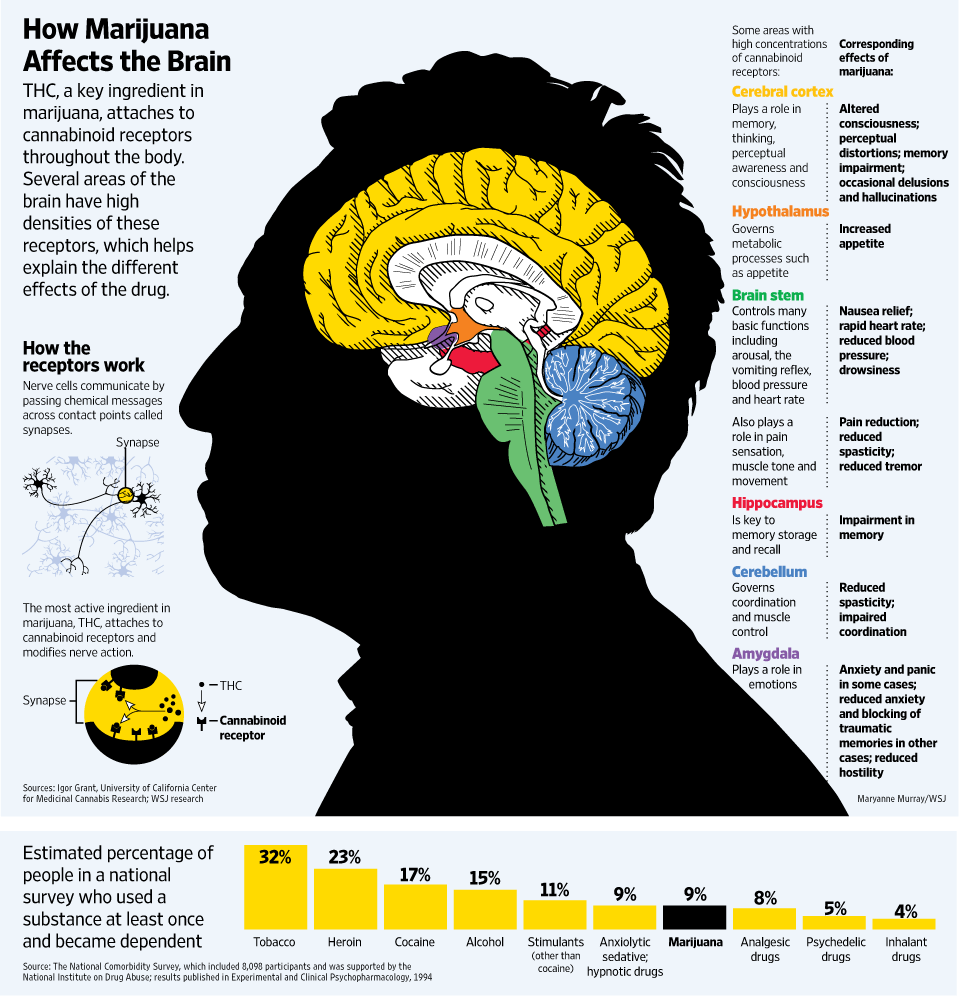
Marijuana: the real story behind endocannabinoids

Everyone in the United States seems to have this stereotypically view of marijuana.  When we hear about it, we think of all the pop culture references from music by rap singers, TV shows like Weeds, and movies like Pineapple Express, but what we don’t think about is why it was used in the first place.
The use of marijuana for medicinal purposes predates recorded history, and the earliest record of its use for medicine was in 1500 BC by the Chinese.  Even in today’s society marijuana can be prescribed for treatment of chronic pain, seizures, muscle spasms causes by MS, nausea caused by chemotherapy, poor appetite, glaucoma, cluster headaches, the list goes on.
And the reason it works? THC (tetrahydrocannabinol)

Our response to marijuana is based on the fact that our body produces molecules called endocannabinoids, which are structurally similar to THC.  The two main endocannabinoids we produce are called Anandamide (AEA) and 2-arachidonoylgylcerol (2-AG).  After these molecues are synthesized, they enter the extracellular space and bind to CB1 and CB2 (cannabinoid) receptors initiating the response.  THC acts on these receptors in the same way.  After the activation of these receptors a number of pathways are turned on or altered, many of which affect signal transduction in the brain, and of course the common side affect of marijuana, appetite.
Unfortunately, THC does have some downfalls, like it’s psychotropic effects, which contribute to marijuana’s addictive qualities.  However, researchers are looking for ways to synthesize an alternative to THC, because of its numerous benefits.
A potential alternative, could alleviate some of the social consequences of using and prescribing medicinal marijuana, but it is important to think about the pharmacological characteristics of taking THC in the form of marijuana.
Marijuana can be taken as a liquid extract, eaten, vaporized, or the most common, smoked.  Now, smoking marijuana has its benefits over the others, because in this form THC enters the body the most rapidly.  Pharmacologically this is important because the therapeutic qualities become apparent much more quickly.  For example, if one feels a cluster headache coming on, and they use their medicinal marijuana, they can essentially stop the headache before it starts.  Whereas, if they were using a THC alternative in the form of a pill, the results may not be quick enough to provide the best therapy.
So, before you pick a side of the legalization of medicinal marijuana, really look at the benefits that were listed here, and weigh the very few consequences, because they are greatly outweighed by the therapeutic properties that THC provides.

Iron-Chelator? I thought the super hero was Ironman…


A few weeks ago we discussed the new idea that iron levels in the brain potentially have implications in the development of Parkinson’s disease.  As a progressive neurodegenerative disease, affecting about 2% of the elderly population, Parkinson’s disease (PD) is typically associated with tremors, rigidity, and instability, and also cognitive deficits.
Biologically, these symptoms are caused by the progressive loss of dopaminergic neurons (neurons that release dopamine) and the formation of Lewy bodies (abnormal protein clumps).  However PD has also been shown to be associated with oxidative stress and metal accumulation, this is where iron comes into the picture.
In general iron accumulates in the brain with age and is regulated by a number of proteins, many of which also regulate the amount of iron allowed in the blood stream.  Iron is essential for many processes such as DNA synthesis, neurotransmission, oxygen transport, and metabolism.  In regards to Parkinson’s, an imbalance of iron in the brain can lead to greater levels of free radicals leading to oxidative damage of DNA and lipids, as well as proteins like alpha-synuclein.  If there is oxidative damage to alpha-synuclein it will misfold and can lead to protein aggregates called lewy bodies.
There is no cure for Parkinson’s disease, we can only treat the symptoms.  Common treatments include, Levodopa for motor dysfunction, Dopamine agonists to promote dopaminergic signaling, and physical therapy to improve mobility and gain balance, and potentially we will be able to treat the symptoms associated with iron now.
Due to this new evidence, a new form of treatment for Parkinson’s has been identified.  Iron chelators have the ability to lower iron availability; this is done by binding to free iron.  The decrease in free iron will decrease instances of misfolding of protein as well as lower concentrations of free radicals, and overall keep iron levels in the brain in check.
Some research has shown that ingesting foods with antioxidant capabilities could also be a therapeutic treatment for PD.  Green tea for instance contains catechins, specifically one called Epigallocatechin gallate, or EGCG for short, which have the ability to chelate iron but also have important neuroprotective action and potentially anticancer agents.   Now, I am not a tea drinker, but there are plenty of other foods that contain catechins such as apples, blackberries, grapes, chocolate, and red wine.  (For more interesting facts about catechins as well as the foods that contain them follow this link, Catechin Facts)
So what does this mean for the average person? Well, it is important to have balance.  That’s what it comes down to most of the time when talking about the brain.  We don’t want too much and we don’t want too little.  It obviously wouldn’t be a good idea to go on a low iron diet, iron is an essential nutrient, but at the same time too much iron isn’t the greatest either.
Although there is no cure for Parkinson’s at this time, research on iron mechanisms in the brain has identified promising new treatments for the disease, and hopefully a cure is around the corner.


Spam prevention powered by Akismet