
What is Addiction?
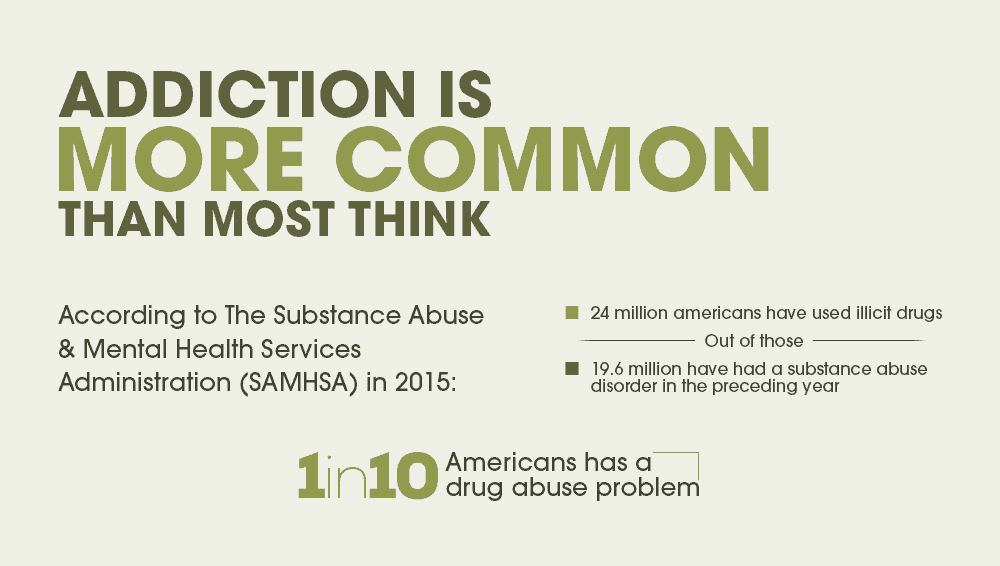
Addiction is common and many people may know someone who is addicted to something, their phone, their favorite drink of choice, a drug. In his article, is there a common molecular pathway for addiction, Eric J Nester defines addiction as “a loss of control over drug use.” Addictions are also referred to as substance use disorders. Statistically, more than 20 million Americans suffer from substance use disorders, with the youngest age being only 12. When people think of addiction, the first thing to top into their mind has nothing to do with what they think is going wrong in the brain. Most of the time, someone who suffers from an addiction is just looked at differently, thought to have a hard life, or just labeled “crazy.”
But the brain is altered due to addiction, and once a person becomes so dependent on a drug, there might not be any going back.
So, what goes wrong in the brain?
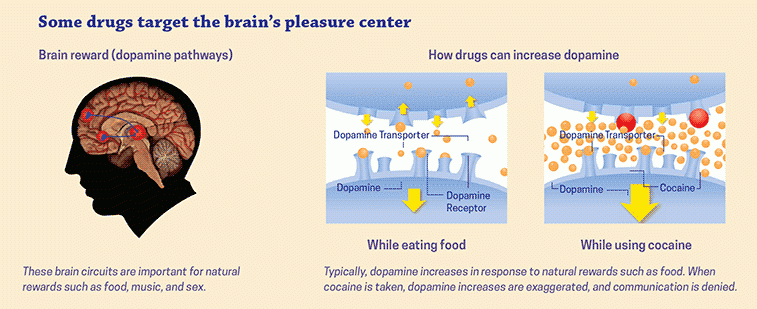
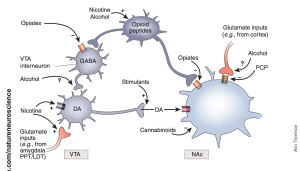
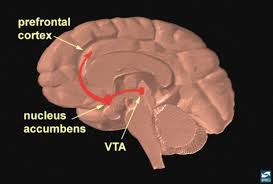
Drugs of abuse activate the brains reward pathway, the mesolimbic dopamine pathway. Dopaminergic neurons are in the ventral tegmental area (VTA) of the midbrain. These neurons target the limbic forebrain, more specifically the nucleus accumbens (NAc). So, with these things interacting with each other, the VTA-NAc is the most important thing to look at when researching the effect of drugs of abusive on the brain. Drugs activate dopaminergic transmission giving people a feeling of euphoria. The VTA-NAc pathway physically changes when these drugs induce cross-tolerance and cross-sensitization. Cross tolerance is defined as developing a tolerance for one substance that leads to a tolerance of another. And cross-sensitization is when a drug of abuse is taken away from
the person who has been repeatedly abusing the drug and the brain searches for a different way to produce the same effects that the drug did. Simply, in conclusion, drugs of abuse increase dopamine in the reward pathway. Drugs increase dopamine about ten times more than any natural reward does. Because more and more dopamine is produced, the brain builds tolerance to dopamine causing a person to need more and more of the same drug to achieve the euphoric effect that they want. In the figure pictured below, provided by the national institute on drug abuse, everything that I mentioned above can be summarized.
Why should we care?
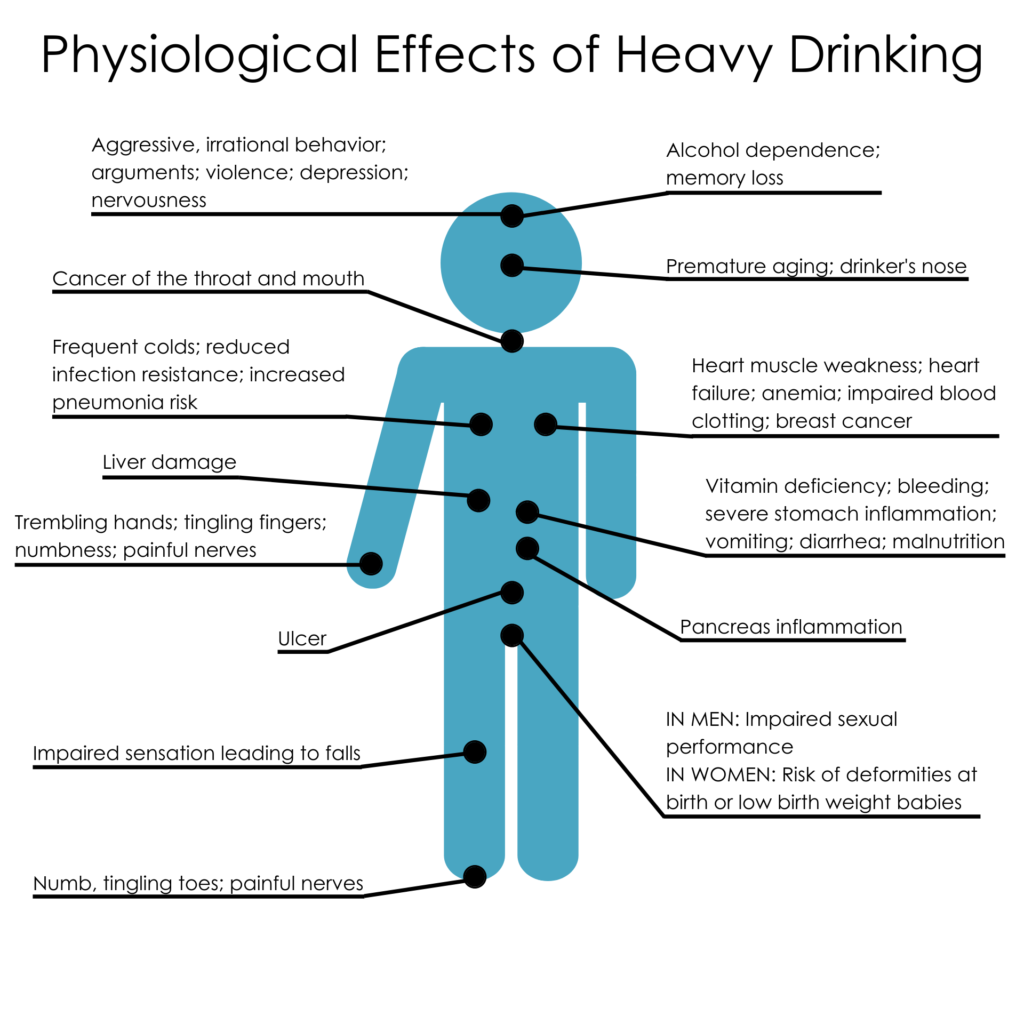
Drugs of abuse don’t just cause harm to the developed or growing brain, they also greatly impact physical and mental health. According to the CDC, alcohol is one of the most widely abused substances among people in the United States. Alcohol is classified as a depressant, meaning that brain activity is slowed, muscles are relaxed, and neurons can’t communicate effectively in the brain. Alcohol physically alters the brain, causing less communication between neurons, and causing the brain the shrink in comparison to a person who is not dependent on alcohol. Drugs of abuse, including alcohol effect more people around us than we know. Not only do these drugs effect our brains, but they also affect our body. Pictured below are some of the effects on the body from heavy drinking. Many of these are like those of other drugs on the body.

References Used:
https://www.hopkinsmedicine.org/news/articles/new-research-and-insights-into-substance-use-disorder
https://www.yalemedicine.org/news/how-an-addicted-brain-works
https://www.ncbi.nlm.nih.gov/pmc/articles/PMC4036816/
https://nida.nih.gov/publications/drugs-brains-behavior-science-addiction/drugs-brain
https://delamere.com/addiction-treatment/alcohol-addiction/effects
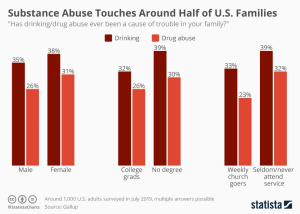 Statistically,
  Addicts will choose this feeling over anything else in their life because eventually their brains don’t feel motivation or reward for any other activity other than using their drug of choice. Even with their drug of choice, they will eventually need to increase the amount they take to keep that high.
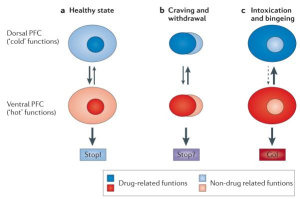
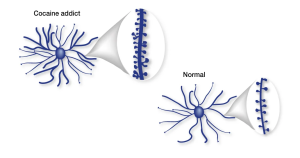 Part of the brain responsible for reason, judgment, learning, and memory begin to have changes as well. In some spots, the neurons are pruned back whereas in other regions there are more connections, completely changing the shape of the neuron. After all of these changes, the drug-seeking behavior becomes habit and the person becomes addicted.
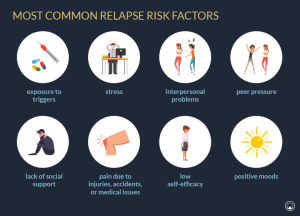 Relapse is defined as when a person returns to using drugs or alcohol after a period of sobriety. There are many factors that contribute to relapsing, which can be seen in this image. After the neurons are changed and the feeling and memories of drugs are implanted into someones brain it can be extremely hard to just give it up. The brain is still searching for this increased reward feeling and it isn’t getting it from ‘normal’ daily activities which can make turning back to drugs really tempting.
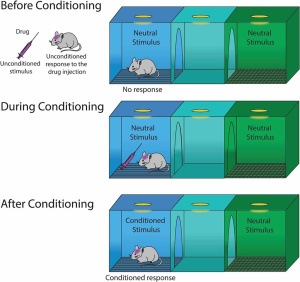 Conditioning is defined as a higher dose of drugs that can be tolerated when external stimuli is associated with prior administration of the drug is present. Basically, this means that if someone is doing drugs in the same room at the same time everyday they will eventually build up a tolerance because their brain will release the the effects of the drug before it is even taken. This leads to a tolerance, and if the drug is taken with any of the external factors changed it can lead to an overdose.
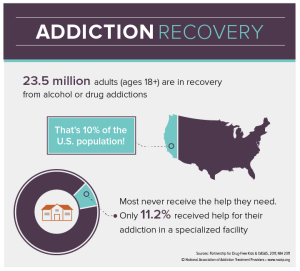 Recovery is much more complex than it is made out to be. There are many factors that play a part in the life of an addict. It is not as simple as quitting cold turkey sometimes. There are memories and outside factors that can effect the ability to remain sober. Being educated on all the facts of addiction can help stop the stigma that it is just a simple choice. It truly goes down to the cellular and molecular level and changes are happening at those levels making it difficult to change behaviors right away. Treatment for addiction can be very expensive and difficult.