Drug Addiction

When you think of a person who is a drug addict or an alcoholic, some people would think of typical stereotypes of them such as having no control over themselves. However, just because they are an addict doesn’t mean that they have no self control. Some people do not know all of what goes on in a person’s body when they become addicted to drug stimulants or sedatives. I believe it is important to understand the chemical and physical side effects while the drugs are in your system and when they are out of your system during a period of withdrawal. 

One important piece of information about drug addiction is the changes in your body that can be caused by drugs. One such change is involved in epigenetics. Much of epigenetics is still unknown but it is defined as the changes or mutations on the outside structure of the DNA, specifically on the histones [1]. Histones are a group of proteins that the DNA wraps around to be condensed into chromatin and fit in the nucleus of a cell [2]. How much the DNA is condensed can be heavily influenced by the epigenetics of the histones. Two types of histone modifications are histone methylation, which causes the chromosomes to become more compressed and inhibit transcription, and histone acetylation, which causes the chromosomes to become loose and increase transcription [1]. More transcription means that the cell has more activity and more things that are being produced as opposed to no transcription with little activity in the cell. Drugs like cocaine and amphetamines can cause Histone acetylation because they act as stimulants [1]. This is but one change occurring on your body when you use drugs and it only gets worse the more you use them.  

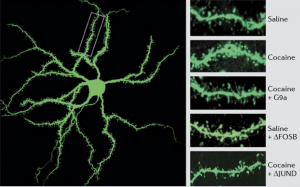
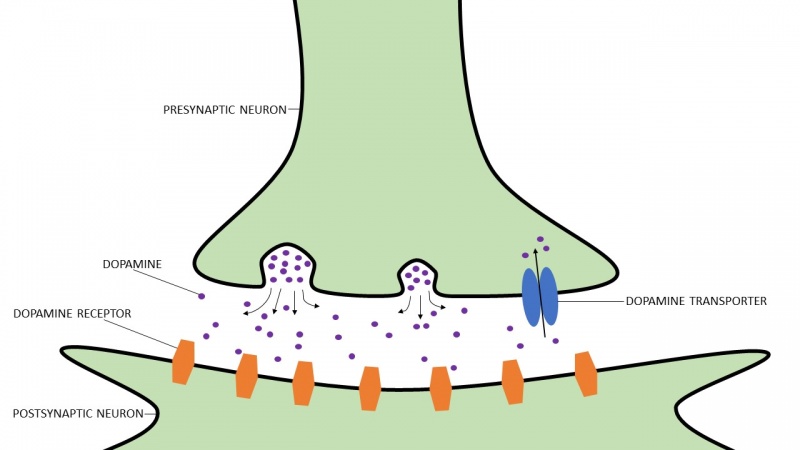
Another important change is involved in affecting synaptic plasticity of the person and this is probably the most detrimental change on the body. Synaptic plasticity is when there is a change in structure shown in the synapses between the neurons causing a type communication between them that results in an overall action. Different types of drugs can influence the synapses by hijacking and impairing their behavior and elicit the release of dopamine, a reward drug to make somebody feel good [1]. The mechanism of synaptic plasticity with the release of Dopamine is shown in the figure below. This explains why people do drugs because in a way, we all know how it feels. Whether we get a good grade on an exam or win a competition, dopamine is released so you feel a surge of pleasure and satisfaction that we would all like to experience. That is why people do drugs, to get the same feeling. However, the more you use the drug, the more your body gets tolerant of it so in order to get the same feeling of pleasure, you need to increase the amount you take, which can cause drastic effects on your body, especially if you want to try to stop [3].

With these changes caused by epigenetics and synaptic plasticity, it can cause a person to depend on the drugs to a degree that when they stop using drugs, they experience a great deal of withdrawal. Withdrawal can cause very harming physical and mental effects such as depression, fatigue, nausea, sweating, vomiting, restlessness, and sleep deprivation [4]. This shows that just because somebody is continuing to use drugs, despite knowing the side effects, doesn’t mean that they do not want to stop or that they just don’t have enough self control. It is possible that they keep using drugs because of the painful withdrawal effects they go through afterwards. It is because of these effects we should be more mindful and thoughtful of what drug addicts go through to stop and get clean. 

  1. https://www.ncbi.nlm.nih.gov/pmc/articles/PMC3898681/
  2. https://www.nature.com/scitable/definition/histones-57/ 
  3. https://www.drugabuse.gov/publications/drugfacts/understanding-drug-use-addiction
  4. https://www.verywellmind.com/what-is-withdrawal-how-long-does-it-last-63036


Gambling, what could go wrong?

Overview

If you are anything like me, you don’t see the point in gambling. You see that you are risking a lot with minimal chance of winning big. Around 6-9% of young adults experience problems related to gambling. Gambling becomes an addiction once a person starts to compulsively gamble, even when it takes a toll on your life. Compulsive gambling is a serious condition that can destroy lives.

Artstract by Alex Braun

Symptoms

A person might be a compulsive gambler if they are preoccupied with how to get more gambling money, needing to gamble with increasing amounts to get the same thrill, try to cut back and are unsuccessful, or they gamble to escape problems in their life. Unlike most casual gamblers who stop when losing or set a loss limit, people with a compulsive gambling problem are compelled to keep playing to recover their money; a pattern that becomes increasingly destructive over time (Mayo Foundation et al., 2016).

https://inventa.com/en/news/article/642/can-gambling-and-casino-trademarks-be-protected-in-egypt

Biological similarities between substance abuse and compulsive gambling

Pathological gamblers generally have lower levels of norepinephrine than normal gamblers. Furthermore, norepinephrine is secreted under stress, arousal, or thrill, so pathological gamblers gamble to make up for their under dosage. It was also found during MRI and fMRIs that, “Monetary reward in a gambling-like experiment produces brain activation very similar to that observed in a cocaine addict receiving an infusion of cocaine (Jazaeri et al., 2012).

Comparison on prevalence of substance abuse and gambling disorder

Comparing substance abuse and compulsive gambling

Compulsive gambling is described as “persistent and recurrent maladaptive gambling behavior,” similar to the description for substance dependence and abuse (Jazaeri et al., 2012). One of the key components to categorize substance abuse is withdrawal. One of the criteria for compulsive gambling is a need to gamble with increasing amounts of money to achieve the desired excitement. This is an example of “tolerance” in gambling. Furthermore, substance abuse includes a persistent desire or unsuccessful efforts to cut down or control substance use. Similar in compulsive gambling, a person may desire to cut down on the amount they gamble, but may find themselves unsuccessful (Jazaeri et al., 2012).


Treatments

There are a few ways to treat compulsive gambling including, therapy, medications, and self-help groups. Therapy can include behavioral or cognitive therapy. Behavior therapy uses systematic exposure to the behavior you want to unlearn and teaches you skills to reduce your urge to gamble. Cognitive behavioral therapy focuses on identifying unhealthy, irrational and negative beliefs and replacing them with healthy, positive ones. For medications, antidepressants and mood stabilizers may help problems that often go along with compulsive gambling such as depression, OCD or ADHD. Narcotic antagonists, which are useful in treating substance abuse, may help treat compulsive gambling (Mayo Foundation et al., 2016).


Conclusion

Although I may not understand the desire some people may have to gamble, it is clear that this is a serious disorder that some people cannot control. It is important to recognize if someone you know might be a compulsive gambler so you can reach out to them and help. If you currently are like me and do not gamble, you should probably keep it that way.


Works cited

Jazaeri, S. A., & Habil, M. H. (2012). Reviewing two types of addiction − pathological gambling and substance use. Indian Journal of Psychological Medicine, 34(1), 5–11. https://doi.org/10.4103/0253-7176.96147


Mayo Foundation for Medical Education and Research. (2016, October 22). Compulsive gambling. Mayo Clinic. Retrieved from https://www.mayoclinic.org/diseases-conditions/compulsive-gambling/symptoms-causes/syc-20355178.

Trauma: Is It Universal?

Given the trying times of the world today, we are all bound to endure and carry present or past traumas. The pandemic in which we live is a prime example of enduring the hardship and stressors that come with trauma. As the pandemic has taught us, trauma has no boundaries, it does not discriminate by age, gender, socioeconomic status, geography, race, or sex. And, it is especially prevalent in those with mental and substance use disorders. But what happens when we endure a traumatic event, and the world moves on and we are stuck in shock, shame, or arousal? Why do some people move on with the world, and others are left trapped enduring the events of the past? More importantly, why does a particular event be deemed traumatic for one person, but not for another? Essentially, what is trauma and does everyone experience it the same? 

The Framework:

In effort to design a concept of trauma that was universal for practitioners, researchers, trauma survivors, etc., workers in the field of trauma, as well SAMHSA developed an inventory of trauma definitions. They then turned to an expert panel to craft a concept that would be relevant to public health agencies and service systems. The framework they instructed is as follows:

Trauma can be broken down into “Three E’s” the “event,” the “experience,” and the “effect.”

The Event(s)

The event can include the actual or extreme threat of physical or psychological harm. Some examples of the “event” are natural disasters, violence, etc. This event can occur once or happen repeatedly over time. The event is represented from the DSM-5 which requires all conditions classified as “trauma and stressor-related disorders” to include exposure to a traumatic or stressful event.

The Experience of Event(s) 

This is important because it helps to decide whether it is considered a traumatic event. For instance, a particular event may be experienced as traumatic for one person and not for another. For example, a “child removed from abusive home experienced differently than a sibling, one military veteran may experience deployment to a war zone as traumatic while another veteran is not affected.

Likewise, “how an individual labels, assigns meaning to, and is disrupted by physically and psychologically by an event will contribute to whether or not it is experienced as traumaticThis shows that what is considered “traumatic” will differ based on the individual, it will not be the same for everyone. Since each person is different, there may be no predicting whether or not an event will be traumatize one person and not the other. The experience can be linked to cultural beliefs, social supports, and developmental stage. Additionally, feelings such as humiliation, guilt, shame, betrayal, or silencing often shape the experience of the event.

The Effect 

The effect of trauma can occur right after the event or have delayed onset. Long-lasting adverse effects are critical components of trauma. These effects may have short or long-term duration. For example, someone may have an inability to cope with daily stressors or normal life events, they may experience distrust in relationships, and their memory, attention, and behavior regulation may be altered. Other effects may include hyper-vigilance, continuous states of arousal, numbing or avoidance behavior and they can all wear someone down physically, mentally, and emotionally.

The Three E's
Artstract by T. Zetocha

All in all, trauma can impact anyone and its criteria is adapted and to every individual, based on their own events, experiences, and effects.

How Does Marijuana Affect the Adolescent Brain?

Figure 1; provided by me

Our current culture seems to be very adamant about legalizing the recreational use of marijuana. As someone who works in the healthcare field and often sees people who are suffering from marijuana induced psychosis, I often find myself wondering if that is wise. Lets put our personal opinions aside and look at the effects that marijuana has on the brain. As a caveat I would like to mention that the effects which I speak about will almost entirely be negative. To be fair however, here are some of the speculated benefits of marijuana; it is used to treat chronic pain, used in different aspects of cancer treatment, and it is used to help treat symptoms of epilepsy (MediLexicon International).

Currently, legalization on a state level would allow 21 year old’s to have, purchase, and use marijuana recreationally. But that is not to say individuals who are younger than 21 will not use. 23% of adolescents in grades 8-12 report using marijuana in the past month as is, what happens when marijuana becomes even more available (Jacobus, J., & Tapert, S. F)? If 23% of high schoolers used marijuana when it was illegal in almost every state (the article I am referencing is from 2015),  what will the percentages be when states legalize it for those over 21? Will the punishments for violating the age requirement be similar to alcohol, punishments that seem to be no more than a slap on the wrist? If that is the case then we need to look at the affects that marijuana has on the adolescent brain. There are certainly side effects of marijuana in adults as well, here are some of them; increased risk of psychosis (including schizophrenia), increased likelihood to experience suicidal thoughts and depression, increased rates of testicular cancer, and increased risk of respiratory diseases (MediLexicon International). However, for the sake of this blog I am going to focus primarily on adolescent marijuana use.

Those that use marijuana during their adolescent years show impaired attention and memory later in life even after quitting. Individuals who use marijuana during their adolescent years lose on average 6-8 IQ points by their mid-adult years (National Institute on Drug Abuse). Figure 2 below shows a nice overview of some of the negative aspects of adolescent marijuana use. Although some adults are prescribed marijuana to help with anxiety and depression, it has been shown that marijuana use in adolescence can actually worsen depression and anxiety. There is a common argument that “marijuana is not addictive, so unlike other things I can quit whenever I want.” Now to an extent this is kind of correct, but not entirely. Research varies but it has been found that 9-30 percent of indidiuvals who use marijuana develop something known as a substance use disorder (National Institute on Drug Abuse). A substance use disorder essentially means that the individual cannot stop using the substance in question even when it is causing them health and social problems. Okay, so how does this dependency reflect in children. The answer is in a bad way, those that use before age 18 are four to seven times more likely than adults to develop a marijuana use disorder. Those that try quitting after becoming dependent report the following symptoms; grouchiness, sleeplessness, decreased appetite, anxiety, and cravings. Although marijuana is not as addictive as something like alcohol or opiates, it certainly has addictive characteristics (National Institute on Drug Abuse).

Figure 2, shows a summary of the negative psychological affects on adolescent users

What evidence is there to support the bold statement that “marijuana is a gateway drug?” Well, its complicated and certainly in a way that makes it feel intentional. Many of the studies and research done on marijuana has political and ideological agendas that influence the research itself (Powell, A.). It is hard to find evidence that is not biased, therefore take this next statement with some pessimism. Almost all of the studies conducted on the “gateway drug theory” are done using animal models. It has been found that animals exposed to THC at younger ages have enhanced reactions to addictive substances later on in life. They are also more likely to show addictive behaviors to those addictive substances, this is shown by their increased behavior of self-administering drugs (National Institute on Drug Abuse).

It has been speculated, and partially verified that THC changes the brains reward system in a way that alters connections and reduces vital structures of the brain. These structures include regions associated with memory, learning, and impulse control (National Institute on Drug Abuse). Additional changes linked to THC use include; gray matter alterations, damaged white matter integrity, and abnormal neural functioning (Jacobus, J., & Tapert, S. F.). Some of these changes in brain structure/functioning are shown in the two figures below. Speaking on each of these altered brain structures would propel me well into the completely rambling section of blogging, so I will not.

Figure 3 ; shows abnormally high levels of a protein that is directly linked to stress

Figure 4; shows the hippocampus and amygdala before and after cannabis use, after use there is a clear size difference

Something important to note about cannabis use relates to dosage, the saying “all things in moderation,” is certainly applicable here. There is certainly a valid concern for individuals using cannabis before their brains are fully formed. However for adults, dosage is important because like all things dosage, and therefore quantity, can determine if something is recreational or detrimental to the user. All of the negatives and positives that I have listed are dependent on different quantities of marijuana use. For adults this varies wildly by person, perhaps controlled usage can do more good than bad. However, for adolescence there seems to be no real benefit, only negatives. The reality of our situation is that adolescent individuals will continue using marijuana even if it is not legalized. If we legalize the drug perhaps we can limit the lacing and contamination of the drug itself via a regulated provider. Many of the individuals I meet in the hospital used marijuana that was laced with something more potent. There are many in our society that believe that marijuana has no negatives to it, that it is simply harmless. If we legalize marijuana, there is a concern that this idea of a “harmless” plant will continue and even grow exponentially until marijuana is thought to be completely safe by society as a whole. The reality though is that nothing is cut and dry, we need to have honest conversations without falling into the trap of completely believing one side over the other. Our brains are on the line here, literally…

Jacobus, J., & Tapert, S. F. (2014). Effects of cannabis on the adolescent brain. Current pharmaceutical design. Retrieved October 11, 2021, from https://www.ncbi.nlm.nih.gov/pmc/articles/PMC3930618/.  

MediLexicon International. (n.d.). What are the health benefits and risks of cannabis? Medical News Today. Retrieved October 11, 2021, from https://www.medicalnewstoday.com/articles/320984#What-are-the-medical-benefits-of-marijuana?  

National Institute on Drug Abuse. (2021, April 13). What are marijuana’s long-term effects on the brain? National Institute on Drug Abuse. Retrieved October 11, 2021, from https://www.drugabuse.gov/publications/research-reports/marijuana/what-are-marijuanas-long-term-effects-brain.  

Powell, A. (2020, February 24). Professor explores marijuana’s safe use and addiction. Harvard Gazette. Retrieved October 11, 2021, from https://news.harvard.edu/gazette/story/2020/02/professor-explores-marijuanas-safe-use-and-addiction/.  

The Use of Psychedelics as Treatment for Addiction

Neurophysiology of Addiction

The reasons why one person will become an addict while another person will not are still widely unknown. Genetic factors have an influence on whether or not someone will develop an addiction. Most of the genes that increase the likelihood of addiction have not been identified; researchers hypothesize there are possibly hundreds of genes that affect this. Environmental factors are just as important as genetic in determining whether or not someone will develop an addiction. Exposure to the drug of abuse, psychological distress, childhood abuse, and the use of gateway drugs all affect the chances of a person developing an addiction. 

A build-up of ΔFosB is demonstrated in the brains of virtually all persons suffering from addiction. ΔFosB is an unusually stable product of the FosB gene. After repeating drug exposure, ΔFosB becomes the most prevalent protein of the FosB family. ΔFosB suppresses dynorphin which contributes to the increase of the rewarding effects of drugs.


Psychedelic Therapy for Subjects with Addiction

Psychedelic drugs were widely used in the 1960s because of the euphoric experience users reported. Clinic research with psychedelics was put on hold after Presiden Nixon declared a war on drugs. Since then, a fear, aversion, and stigma has surrounded the use of psychedelics. Although these drugs are some of the safest drugs when used in their classical form, more research must be conducted to understand their benefits to humanity. The following video provides a short history of psychedelics, current therapeutic treatments, and future directions for research: This Will Change Your Mind About Psychedelic Drugs.


What is a “microdose”?

Microdosing is the practice of repeatedly taking small doses of a drug not to get high, but maintain better homeostasis. The typical size dose depends on a variety of factors: amount of food consumed, body weight, and type of drug. The general rule for a microdose is 5-10% of a normal dose. A microdose is typically taken twice a week during a time of the day outside of work/school hours. The benefits of microdosing are most prevalent when not mixing other drugs or alcohol with it. The user should be in a comfortable setting when taking a microdose. Figure 1 shows an overview of common benefits and drawback of microdosing psychedelics. 

How and why people 'microdose' tiny hits of psychedelic drugs | CBC News

Figure 1: This image depicts various symptoms experienced by those utilizing the practice of microdosing. There are both benefits and drawbacks that must be considered before taking a substance of any type.

Experimental Evidence of the Benefits of Psychedelics on Addiction

In 2014, researchers conducted an experiment to determine if psychedelics can help those addicted to tobacco with quitting smoking. The participants were all aware they were receiving the drug (psilocybin) and not a placebo.  The first round of psilocybin was a “typical” dose, not a microdose. After receiving the drug, the participant laid on a couch wearing sunglasses and listening to music. Researchers were present during the entirety of the patients trip, but did not talk to them or guide them along their spiritual experience. This first round of drug was administered on the participant’s target quit date for smoking. A microdose was then administered two weeks later. 

During the following year, participants had multiple check ins with the researchers to track smoking habits. 80% of participants abstained from cigarettes for at least one week, 67% were still clean one year later, and 60% had not smoked for over 16 months. Researchers are not sure of the exact neurphysiological mechanisms by which psychedelics work, but they hypothesize that the feeling of mystical significance participants experience aids with success in quitting. 

Another experiment was conducted on ten voluntary participants diagnosed with alcohol dependence. They received orally administered psyilcybin in two supervised sessions with the researchers. Participants did not abstain from alcohol use during the first four weeks of experimentation (they had not yet received any psilocybin). After receiving psyilocybin, abstinence from alcohol greatly increased when statistically analyzed (p < 0.05).  These effects were long lastly without the need to readminister psilocybin. Participants reported decreases in their craving levels and increase in their self-confidence to maintain abstinence. Abstience was maintained for 90% of participants six months after psylocibin administration.


Alcohol Addiction & Sleep

Alcohol is a depressant to the Central Nervous System that causes the brain to slow down. However, that doesn’t mean that it helps your brain get a good night’s rest. It is a common perception that alcohol will help you fall asleep and keep you asleep due to its sedative effects that can help you relax and cause drowsiness. The excuse of “better sleep” is one reason alcohol is such a common addiction. (1)

Normal Stages of Sleep:

  1. NREM:
    • the transition between wakefulness and sleep
    • Body shuts down
    • Heartbeat, breathing, and eye movement will slow down
    • Muscles relax
    • Brain activity decreases
    • “light sleep stage”
  2. NREM:
    • Heartbeat and breathing continues to slow down into deeper sleep
    • Body temperature decreases
    • Eyes will become still
    • Longest sleep stage
  3. NREM:
    • Heartbeat, breathing rates, and brain activity reach the lowest levels
    • Eye movements cease and the muscles are relaxed
    • Slow-wave sleep
  4. REM:
    • After 90 minutes of falling asleep
    • Active eye movements
    • Breathing rate and heartbeat are faster
    • Dreaming occurs
    • Memory consolidation

(2)

Alcohol reduces the duration of the REM stage and causes sleep disruptions. REM sleep is important as it maintains mental and brain health, the most restorative stage, processing of the day’s events, and the cleaning of neuro-toxins. This is helpful to reduce the chances of developing Alzheimer’s and Parkinson’s. Once the individual has consumed the alcohol it is absorbed into the bloodstream from the stomach and small intestine. The enzyme in the liver will then metabolize the alcohol which causes an increase in waking up, trips to the bathroom, and poor quality of sleep. The increase of sleep disruptions will result in a feeling of tiredness the next day. In order to fall asleep, the individual may fall into a vicious cycle of drinking to get “a good night’s sleep”, fall asleep faster, building a tolerance, soon developing an addiction, and destroying the individual’s circadian rhythm. It is suggested to not drink 4 hours before bed in order to avoid sleep disturbances caused by metabolizing. (3) (4)

A Deep Dive Into Brainwaves: Brainwave Frequencies Explained (5)

An increase of alpha and delta brain waves is found during sleep after consuming alcohol. The increased activity of these two waves is correlated to the feeling of fatigue, depression, and cause of sleep disorders. Delta activity helps with memory processing and consolidation from the day’s events. Delta waves are the slowest waves and are most commonly found in babies, children, brain injuries, individuals with learning disabilities, and severe ADHD (6),  Normal alpha activity occurs during rest not sleep. They help with creativity, lower feelings of anxiety and depression, increases pain tolerance, and boosts stress resilience. (7)

Below is a diagram showing the difference of the Theta and Delta brain waves in the frontal and parietal lobes of individuals who were exposed and not exposed to alcohol before sleeping. Theta waves are normally seen during meditation, prayer, and sharp focus with the benefits of increased creativity, daydreaming, and storing memories, sensations, and emotions. (8)


Delta and theta power during slow wave sleep in the frontal and... | Download Scientific Diagram

(9)

Interestlingy, it is found that the elder population are more prone to have alcohol relate sleep disorder due to higher levels of alcohol found in their blood and brain compared to younger adults when consuming the same amount of alcohol content. (1)


Resources:

  1. https://www.webmd.com/sleep-disorders/drug-alcohol-related
  2. https://www.sleepfoundation.org/nutrition/alcohol-and-sleep
  3. https://desertcoverecovery.com/blog/alcohols-impact-on-sleep/
  4. https://clearliferecovery.com/rehab-blog/alcohol-rehab-costa-mesa-california-explores-the-impact-of-alcohol-on-sleep/
  5. https://choosemuse.com/blog/a-deep-dive-into-brainwaves-brainwave-frequencies-explained-2/
  6. https://www.sciencedirect.com/topics/agricultural-and-biological-sciences/brain-waves
  7. https://daveasprey.com/alpha-brain-waves-lower-stress/
  8. https://nhahealth.com/brainwaves-the-language/
  9. https://www.researchgate.net/figure/Delta-and-theta-power-during-slow-wave-sleep-in-the-frontal-and-parietal-cortex-after_fig1_324041698

Addiction and Adolescents

What is addiction?

Addiction is characterized by an uncontrollable urge to engage in behaviors that are pleasure to someone, but can have extremely negative neurological impacts. In this blog, the focus will be on addiction to substance addiction, such as cocaine and opioids. Drug addictions are dangerous because illicit drugs create neurological changes that extend far beyond the high.

Neurological changes in addiction

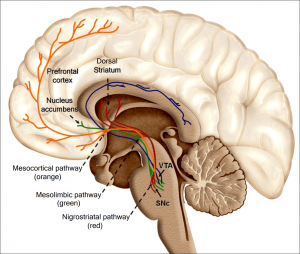
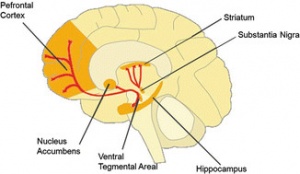
The main pathway of addiction that leads to repetitive and overwhelming behaviors to seek out drugs is influenced by the mesolimbic dopamine system, responsible for releasing dopamine from the ventral tegmental area (VTA) to the nucleus accumbens and other structures of the brain responsible for creating memories. Memory forming structures include the nucleus accumbens, hippocampus, amygdala, and prefrontal cortex, all of which aid in synaptic plasticity.

Synaptic plasticity is a neuron’s ability to strengthen or weaken the communication between neurons, which allows for the brain to learn and store memories. With drug exposure, the neurons learn and form memories through synaptic plasticity. When there is prolonged drug exposure, positive and negative behavior reinforcements are responsible for how drug-related behaviors begin.

Factors that reinforce behavior:

            CREB

Negative behavior reinforcement is modulated by a transcription factor, CREB. CREB decreases pleasure from taking drugs and contributes to uncomfortable physical and emotional symptoms when the drug level decreases, contributing to tolerance and dependence with every drug exposure in the VTA and nucleus accumbens.

DeltaFosB

Positive behavior reinforcement is modulated by a transcription factor DeltaFosB. DeltaFosB is upregulated with drug exposure in the nucleus accumbens, and helps to form new synapses on dendrites to influence learned behaviors and memories related to drugs. Positive reinforcement from DeltaFosB increases the reward and pleasure sensation from taking drugs, which is seen in most, if not all, addictive drugs.

           BDNF

With opioids and even marijuana, the act of taking these drugs can decrease BDNF produced in dopamine neurons. Reduced BDNF synthesis can decrease the activation of a tyrosine kinase receptor, which then reduces the activation of IRS-2, Akt, and mTor. The downregulation of this causes neurons in the VTA to lose volume. The loss of neuronal volume can increase an addict’s neuronal excitability and decrease dopamine release on the nucleus accumbens, which can increase the symptoms of tolerance and dependence seen with CREB. Stimulants, such as cocaine, increase BDNF signaling in the nucleus accumbens to strengthen the behavior to administer drugs, which is similar to DeltaFosB.

Who is at risk for addiction?

Genetics, environmental factors, and previous drug (nicotine, marijuana, cocaine, meth, etc.) exposure all pose potential risks for developing an addiction. Being surrounded by friends or in an environment with drugs can influence someone’s decision to try various substances. Adolescents who have had drug exposures can be at an increased risk compared to adults.

Youth drug exposure:

In adolescence (13 years-20 years), the brain has an increased capacity to learn and form memories compared to adults. With the increased capacity for synaptic plasticity of adolescents, exposure to gateway drugs or street drugs can create an increased ability to learn and store memories associated with that drug compared to adults. Also, as the brain is still undergoing development, adolescents experience a heightened sense of reward from dopamine compared to adults because DeltaFosB is more readily expressed in adolescents than adults. Also, adolescent brains do not experience as much negative reinforcement as adults do. Then, the prefrontal cortex, controls impulse, does not fully develop until the mid-twenties.

These factors of decreased negative reinforcement, increased positive reinforcement, and an immature prefrontal cortex means that taking drugs is more pleasureful and thinking about the full impact of taking drugs is decreased. On top of the pleasure, the synapses from learning and memory formation from taking the drugs are more extensive than adults due to increased DeltaFosB synthesis, making addiction in adolescence hard to treat. Additionally, some brain structures decrease in size, such as the amygdala and pars opercularis, which also control impulse, as seen in Figure 1.

Brain Structures and Drug Use:

Figure 1: Brain structure changes during adolescent drug use


Adolescents who already use gateway drugs have an amplified DeltaFosB accumulation when using other drugs, such as cocaine, to increase the pleasure of the high compared to an adolescent just using a hard drug as cocaine and even compared to adults.

Summation:

Addiction is tough to cope with for the individual, as well as the family and friends of that individual. Addiction treatment is more than just telling someone not taking the drug, but rather a neurological disease that needs more research to be done on effective treatment options. In general, drug education needs to be more extensive on why adolescents should not consume drugs.

Sources:

  1. https://www.ncbi.nlm.nih.gov/pmc/articles/PMC2274940/
  2. https://europepmc.org/article/med/19547960
  3. https://scholarscompass.vcu.edu/cgi/viewcontent.cgi?article=1491&context=etd
  4. https://www.routledge.com/rsc/downloads/9781138919105_chapter_2.pdf
  5. https://europepmc.org/article/med/19547960
  6. https://www.drugabuse.gov/news-events/nida-notes/2019/04/research-links-adolescent-substance-use-to-adult-brain-volumes
  7. https://scholarscompass.vcu.edu/cgi/viewcontent.cgi?article=1491&context=etd

Addiction is a disease

What is addiction?

Addiction is the compulsive seeking of an addictive substance or act despite horrible consequences. In addiction there is a loss of control, the individual can no longer determine their actions. The addiction I will be focusing on is drug addiction. Drugs have the ability to change the brain in a way that drives uncontrollable behaviors to seek out drugs and continue their consumption.

Figure 1: https://www.drugabuse.gov/drug-topics/trends-statistics/overdose-death-rates

Since 2000, there have been over 700,000 deaths due to drug overdose in the US. 11.7% of Americans aged 12+ have used illegal drugs within the past 30 days. 165 million Americans aged 12+ currently abuse drugs, including alcohol, tobacco, and illegal drugs. Over 70,000 drug overdose deaths occur in the US annually. The number of overdose deaths increases at an annual rate of 4.0%. Figure 1, shows how many overdose deaths have occurred pere year since 1999.

9.5 million adults over the age of 18 have both a substance abuse disorder and a mental illness. There are more frightening statistics like these that could take up the rest of this post, but I think I have made my point. Drugs are scary and they cause disaster. 1

Drugs and your brain

Figure 2: https://youtu.be/f7E0mTJQ2KM

The circuit of the brain that receives the most attention in addiction is called the Mesolimbic Dopamine Pathway (ML-DA). In figure 2, you can see where in the brain this pathway is by the purple area between the two structures. This path is also known as the reward system. The start of the path is in the ventral tegmental area (VTA) a group of neurons located in the midbrain. 65% of these neurons are dopaminergic, meaning they produce the neurotransmitter dopamine. Dopamine is our feel-good neurotransmitter, it doesn’t cause pleasure itself, but it induces other things to produce those feelings. When the VTA is activated by a stimulus it sends dopamine to the nucleus accumbens (NAc).

What kind of stimulus can activate the VTA?

There are three main stimuli that stimulate the VTA: a reward, anticipation of a reward, and a stressor. The type of stimuli will determine the kind of signal VTA neurons send and thus how much dopamine is produced. If the stimulus is a drug of abuse, the signal will send a lot of dopamine to the NAc.

Figure 3: Artstract by Alison Amundson

The NAc is a region in the basal forebrain, and it is best known for its role in reward, cognition, reinforcement, and motivational salience. When this structure is stimulated by the dopamine from the VTA, it encodes a value to the stimulus. Researchers believe that the NAc is involved in stimulating actions to pursue rewards and inhibiting actions not helpful in obtaining a reward. The transitions between the two types of firing patterns form the VTA are thought to change concentrations of DA at the terminal and ultimately help encode the salience of stimuli, promote seeking of reward, and tune reward predication error for cue-associated behaviors.

There are some general assumptions provided for what dopamine does in this system. Dopamine is released in response to positive rewarding stimuli, but also in aversive stimuli & stress AND in the anticipation of a potential reward. This response to DA, is one of the reasons for the affective neuroethological perspective that views the ML-DA system in terms of its ability to activate an instinctual emotional appetitive state (seeking) evolved to induce organisms to search for all varieties of life-supporting stimuli and to avoid harms. This view is that the reward system not only aims to seek out rewards but also to avoid non-rewarding stimuli. Therefore, this could relate to the withdrawal factor of addiction. Symptoms of withdrawal are uncomfortable; thus, the reward system could stimulate the addict to seek out a reward (drugs). The memory of the NAc is that this drug has value, and this mechanism could potentially encode a value for a drug that is the same as food and water (actual life-sustaining substances).

Addiction is not a choice

After reading this information on how drugs change brain chemistry, you should understand that addiction is not a choice. Drugs create a hold on an individual that they cannot shake. Their brain has turned on them to need this drug for survival. Therefore, drug addiction is not easy to overcome. Drug addicts require our empathy for the disease state they are in. It takes tremendous strength to quit drugs of abuse, you can’t just stop taking drugs. Drugs are scary and they cause disaster.

References:

https://www.ncbi.nlm.nih.gov/pmc/articles/PMC3898681/

https://www.ncbi.nlm.nih.gov/pmc/articles/PMC3125054/

https://www.ncbi.nlm.nih.gov/pmc/articles/PMC1920543/

A foreign perspective on Schizophrenia

I think it’s one thing to be health condition but, it’s another to be able to get the help that you need. I grew up in an area that used to see mental illness as evil spirits, bad karma, family misfortunes. This not only caused stigmatization and discrimination against mental health patients but it also prevented the patients of the disease to be able to get the adequate help that they need.

In other words, Schizophrenic patients are prone to human rights violations in society and even in mental health facilities (WHO,2019).

Mental illnesses that attack the central nervous system such as Schizophrenia are mostly genetic and/or can be triggered by environmental stressors such as drug abuse, domestic abuse, other neurological illness, etc.

Schizophrenia is a psychosis largely characterized by cognitive, emotional, physical distortions. The actual cause of it is not fully known but hypotheses have been made of the possible reason behind the gradual deterioration and based on the symptoms. There are cognitive, positive, and negative symptoms. Positive include delusions, negative include lack of emotional expression, and cognitive symptoms include the inability to make decisions (PsychCentral, 2021).


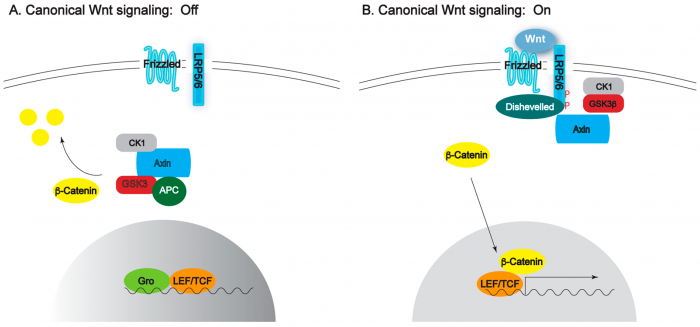
Considering that a large probability of proneness to schizophrenia is linked to genetic and early development, it is important to understand the role of the Wnt signaling pathway in this cascade

The Wnt signaling pathway

It is involved in cell maintenance and renewal. Basically, Wnt ligands bind their receptor complex which causes the recruitment of APC to the membrane, facilitating the dissociation of the destruction complex. This results in decreased phosphorylation of β-catenin. When the destruction complex is dissociated, β-catenin is then able to get into the nucleus and influence the targeted genes.


In a study on the “Convergent functional genomics of schizphrenia“, the targeted genes, in this case, researched in different groups included African Americans and European Americans, and were graded and ranked out of 5points as seen in the illustration below

The top genes targeted include DISC 1 (protects synaptic plasticity), and decreased expression of MBP ( involved in protein formation for myelin formation). Both these genes for example allow responsiveness to stimuli and learning which is seen to be hindered in schizophrenic patients.


The question at this point is how can we better deal with it, in terms of prevention, treatment and awareness. Given that it can be heredited, to what extent to we start treating it? Do we wait for symptoms to show once the disease has progressed? Can technology and gene therapy be the future for mitigating schizophrenia gene vulnerability? And how can Schizophrenic patients get affordable help regardless of their economic standpoints?


These are the big questions to think about in my opinion in order to progress more in the treatment of schizophrenia for long-term.

References:

  1. John M. Grohol, Psy.D. “Schizophrenia Symptoms: Negative, Positive, and More.” Psych Central, Psych Central, 4 Feb. 2021, https://psychcentral.com/schizophrenia/schizophrenia-symptoms?utm_account=&utm_medium=cpc&utm_semcampaign=&utm_adgroup=&utm_match=b&utm_query=&utm_term=&utm_content=540967374863&utm_source=google&marinid=s&gclid=CjwKCAjwhuCKBhADEiwA1HegOXz527pV8bxnc59QXv7zMOppnMTflRYTKeTiTg13jh_FpCC06OhxQRoCS3UQAvD_BwE.
  2. “Schizophrenia.” World Health Organization, World Health Organization, https://www.who.int/news-room/fact-sheets/detail/schizophrenia.
  3. Ayalew, M, et al. “Convergent Functional Genomics of Schizophrenia: From Comprehensive Understanding to Genetic Risk Prediction.” Nature News, Nature Publishing Group, 15 May 2012, https://www.nature.com/articles/mp201237.

How to Humanize Mental Illness

Mental illness is a rising phenomenon in our society, and it is something that as a society we have failed to appropriately address. People with mental illnesses are often shunned or downright discriminated against for something that no one can control. Hopefully this post will shed some light on the concept of mental illness and what can be done to help rather than hinder the efforts to help people with mental illnesses.


What is a Mentally Ill Person? And Can They Control It?

Mental illness is often considered an attention seeking tool or lumped in with general psychosis, but neither could be farther from the truth. Mentally ill people have a chemical or genetic dysfunction that is causing either direct damage or indirect changes to the way the brain functions. For example, schizophrenia is based on a pathway called the Wnt pathway, when any one part of that pathway goes wrong the chances of developing schizophrenia skyrocket. Schizophrenia can also be caused by a number of genetic issues, but the moral of the story is that mental illnesses like schizophrenia are caused by major impacts to the brain and are under no control of individuals. More on schizophrenia and Wnt signaling


What Are Symptoms of Mental Illnesses?

The most important thing to know about mental illness symptoms is that no two people present their symptoms in the same way. Sometimes the symptoms are not visible to outside view, which further complicates the matter. Using schizophrenia as an example, there are symptoms that are described as both positive and negative. Positive symptoms are symptoms specific to schizophrenia, which is primarily described by hallucinations and delusions that feel completely real to the person. On the other hand, negative symptoms could be cause by a variety of things: these symptoms include lack of emotion, lack of joy, speech issues, and lack of initiative. Figure 1 below visualizes the important distinction between these symptoms. Not only are these symptoms challenging to see and diagnose, they also are very individual based on the type of hallucinations and type of negative symptoms experienced. More on schizophrenia symptoms

Figure 1: The Positive and Negative Symptoms of Schizophrenia: A Common Mental Illness. Taken from above source


What Are We Doing, and What Can We Do?

Mental illnesses are challenging to treat due to their direct impact on the brain and the stigma that comes with being mentally ill. There are a fair amount of medicines that focus on management of symptoms, such as anti psychotics and lithium, but in addition to symptoms and varying effectiveness these treatments don’t do much to actually manage schizophrenia in a patient. When the illness becomes too overwhelming or the behaviors become out of control, hospitalization may be necessary, but for the majority of other people impacted by mental illness they live in the same world as neurotypical people. The best way to “treat” schizophrenia and other mental illnesses is to interact with these people with empathy and grace. People may seem weird or even dangerous to you, but it’s entirely possible they just have a different brain chemistry than you. The more society begins to understand and welcome these people, the better off they will be and the better science can begin to understand these people. As the Platinum Rule says; treat others the way they want to be treated

Figure 2: The Platinum Rule. https://cawood.com/blog/platinum-rule/

Spam prevention powered by Akismet