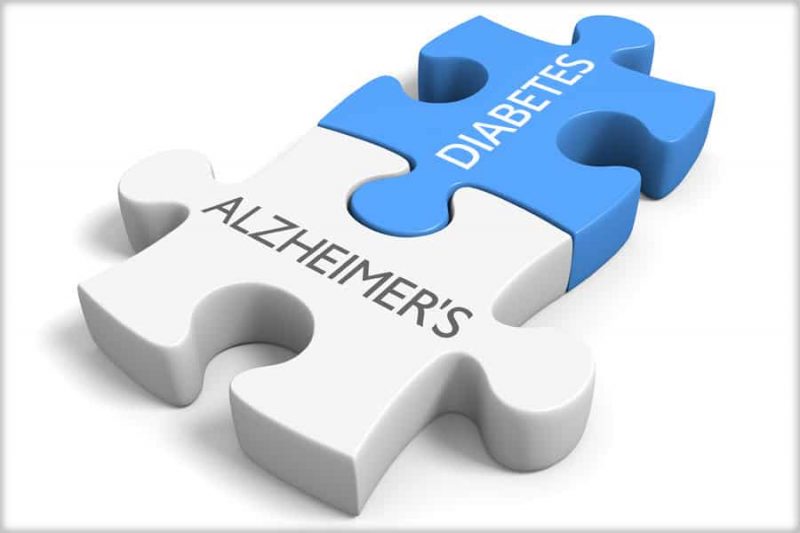
Many of us may know of someone who has suffered from either Type II Diabetes or Alzheimer’s. Maybe you even know of someone who suffered from both. Did you ever think that there could be a link between the two?
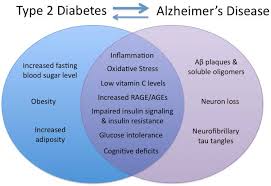
Type II Diabetes nearly doubles the risk of dementia. Conversely, Alzheimer patients have an increased risk of developing Type II Diabetes. These two diseases are also on the rise, likely due to the increase in unhealthy eating habits seen across the globe.
Making unhealthy choices today can lead to an unhealthy brain later in life. The evident connection between Type II Diabetes and Alzheimer’s shows us why it is important to adopt a healthy lifestyle. The remainder of this post will describe the evidence found between these diseases.
WHAT’S THIS ALL ABOUT? – INFO YOU NEED TO KNOW
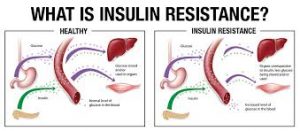
Type II Diabetes: Many times due to unhealthy eating habits, our bodies over time can become to the insulin that is being produced in our bodies. Once this ability is lost, insulin is unable to respond to increased blood sugar levels. Because of this resistance, our bodies cannot make enough insulin to keep blood sugar normal/lower blood sugar levels. Therefore, the body can no longer send insulin to tell cells to store the sugar and a buildup of sugar is found in the bloodstream. Symptoms of Type II Diabetes may include:
- increased thirst and urination
- increased hunger
- tiredness
- blurred vision
- neuropathy
- weight loss
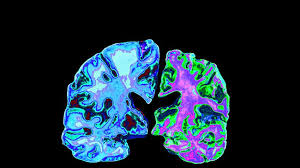
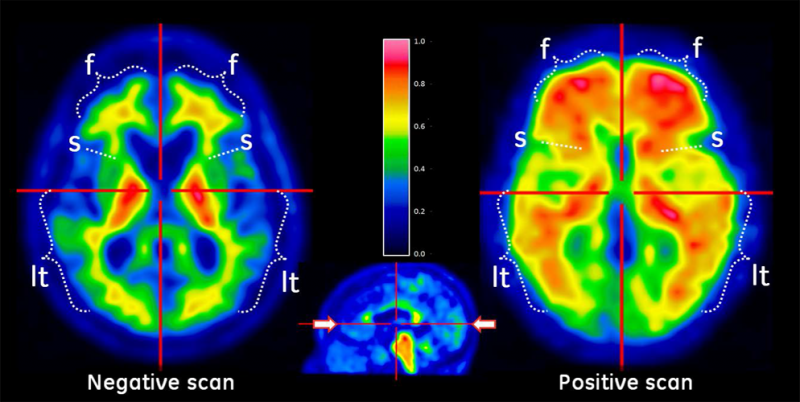
Alzheimer’s: The most prevalent form of dementia, Alzheimer’s causes memory loss due to cerebral atrophy and a buildup of neurofibrillary fibers and amyloid beta oligomer (ABO) plaques. These physical detriments can be caused by a number of factors, many of which can also be related to Type II Diabetes, such as:
- Neuro-inflammation
- Abnormal ganglioside metabolism
- Deregulated mTOR signaling
***the science for these factors will be described below
WHAT’S THE CONNECTION? – THE SCIENCE BEHIND IT
Insulin resistance, as seen in Type II Diabetes is a result of chronic inflammation in peripheral tissues due to an increased amount of fat tissue. Brains with Alzheimer’s also have increased levels of inflammation compared to a healthy brain. Sustained inflammation causes the recruitment of macrophages and local secretion of proinflammatory cytokines. Secretion of these cytokines induce insulin resistance. Once these cytokines are released in the brain through neuro-inflammation, ABOs can bind to them causing the plaque formation.
Insulin receptors are involved in many major pathways in the brain. Microdomains allow for cells to perform different signaling tasks based on their location. Gangliosides are commonly associated with these microdomains and facilitate reactions such as the transformation of a single ABO molecule to a plaque formation. With too many ganglioside reactions occurring, they will begin to displace insulin receptors in the brain, thus contributing to insulin resistance.
mTOR, a serine/threonine kinase, is critical for the development of the cerebral cortex. Increased activation of the mTOR pathway can lead to neurodegeneration and insulin resistance. This may be due to the buildup and hyper-phosphorylation of the tau protein, which binds and stabilizes the microtubules found in the neuron. An increased amount of tau protein is found in both Type II Diabetics and Alzheimer patients. Tau makes up the neurofibrillary tangles once it detaches from the microtubules and finds another tau molecule to bind to. This buildup forms tangles inside the neuron and the neuron loses support, shape, and integrity. Therefore, an action potential is unable to be successfully carried out.
SO… TAKE CARE OF YOUR BODY!
Our choices we make today regarding how we treat our bodies will affect us somehow in the long run. Will that be a positive or negative effect? You get to choose! Let the correlation between Type II Diabetes and Alzheimer’s that has been described above influence you choice. A healthy brain for life starts today!
Follow these helpful links to learn more about the importance of maintaining a healthy brain:
https://www.alz.org/help-support/brain_health/10_ways_to_love_your_brain
https://www.ncbi.nlm.nih.gov/pubmed/29129775