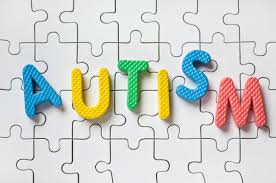
The number of children being diagnosed with autism spectrum disorder (ASD) has been consistently increasing the past decade.According to the NIH, It is estimated 1 in 68 children in the United States has autism. This is the highest recorded prevalence in history. Described as a disorder that impairs a child’s ability to communicate and interact with others, autism is a prevalent disorder that modern research needs to focus on to enhance the lives of children everywhere.

There are many common symptoms of autism, but the most distinguishable include impairment of social communication and interactions, or repetitive behavior. A child with autism will fail to respond to their name being called. They might be isolated to their own private world or even engage in repetitive behaviors.
While the causal mechanisms of autism are unknown, modern researchers hypothesis that there may be environmental influences that affect the development of autism in children. Some believe that the inability or culmination oxidative stress in brain may lead to some causes of autism. Implying that the environmental factors. On the other hand, other researchers postulate that some children are predisposed to have fundamental discrepancies with the chemical makeup in their brain.
Overall, there is no concrete understanding or consensus on the disorder. Treatment options also vary with some children receiving chemical agonists or antagonists to excite or inhibit various neurological functions. On the other hand, others seek therapy options to learn how to handle the condition and work towards full immersion into society.
Personally, I find the ASD to be a fascinating topic. I think it encompasses all of the neuronal pathways we covered in this class and proved to be a difficult, yet satisfying problem to try and solve. I hope that the field of neuroscience will continue to unveil the ASD story so we can learn, as a society, how to treat, diagnose, and prevent this disorder.
Autism Spectrum Disorder
Autism is described as a disorder that impairs a child’s ability to communicate and interact with others. The number of children being diagnosed with autism spectrum disorder (ASD) is slowly rising. According to the NIH, It is estimated 1 in 68 children in the United States has autism. The exact number is unknown, but it is still a serious problem that needs to be handled.
Symptoms of autism include impairment of social communication and interactions, or repetitive behavior. A child with autism will fail to respond to their name being called. They might be isolated to their own private world or even engage in repetitive behaviors.
The CDC, NIH and Mayo Clinic state the causes of autism may be due to genetic factors and environmental factors. Some genes may make a child more susceptible to autism. There are over 100 genes that may induce some symptom the autism spectrum. Currently, there is no identified environmental cause related to autism, but environmental factors may cause abnormal gene function and development.
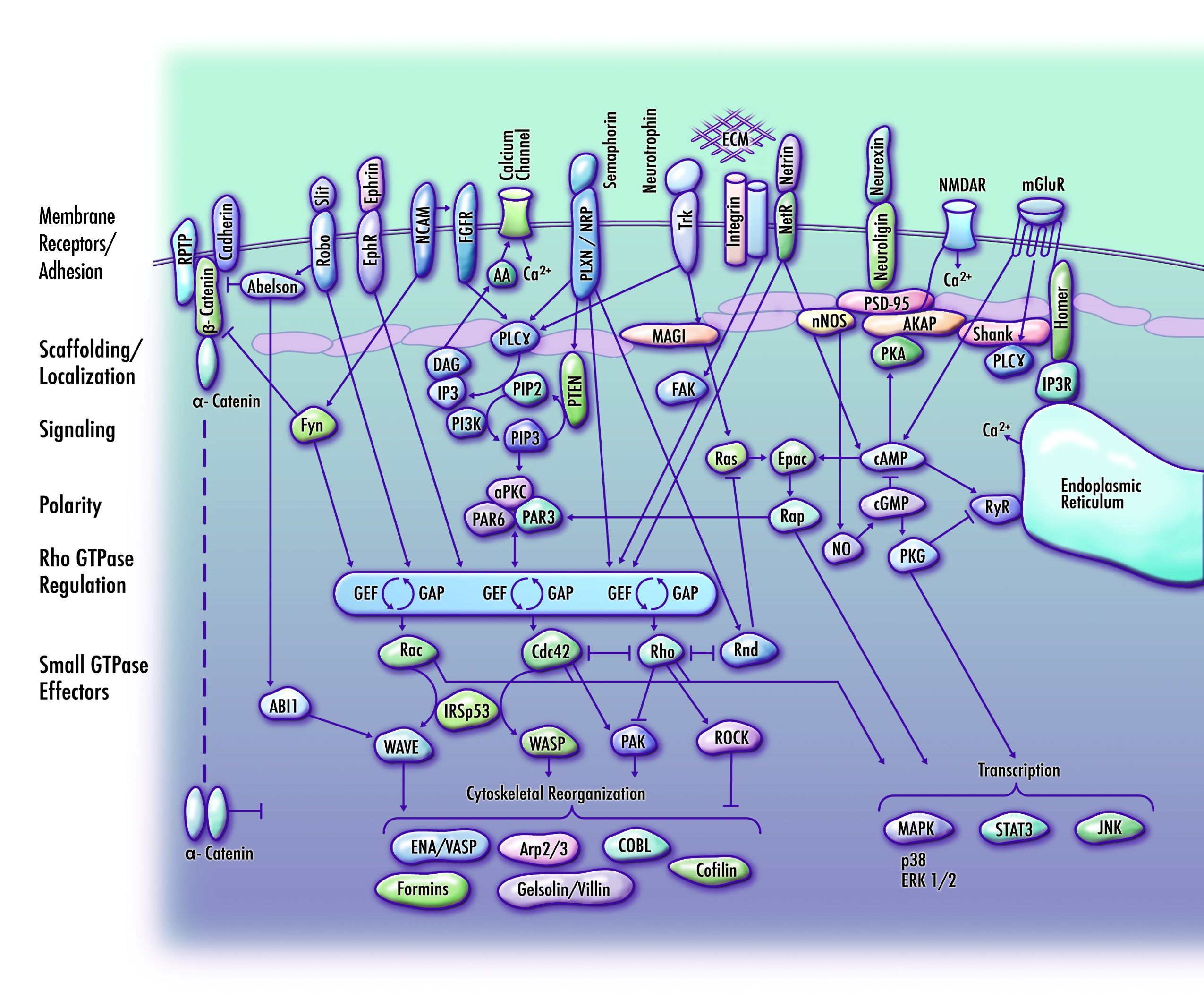
What truly causes autism in the brain is more complicated than genetic or environmental factors. The signaling pathway associated with ASD is complex. From this figure, it shows the possible pathway ways ASD may be triggered. The figure may show which molecules are mutated in red, but the problem lies with what molecules started ASD first? With the mRNA portion in the middle of the figure, PTEN, TSC1 or Shank each can cause the increase of activation of FMRP and eLF4E. This will result in too much gene translation, which could lead to ASD.
Neuroligins (NLGN) are synaptic cell adhesion molecules at the post-synaptic membranes. They help mediate synaptic functioning and maintenance of synapses between neurons. Dysfunction of NLGN impairs the properties of synapses and disrupt neural networks. This leads to an imbalance of excitatory and inhibitory signaling, which could lead to ASD.
There are medications available in treating symptoms of autism, but no cure exists. As research continues on ASD, the pathways are a potential in trying to understand ASD, then a cure may be found.
I am glad I was wrong…
As an international student, I had no idea what a capstone course means. When I first heard the word “capstone”, I thought it was just a word that I did not know. And well, I knew nothing about a capstone course. At first, when I registered, I expected that the Neurochemistry class would be just hard, with a lot of memorization and reading.
I am glad that I was wrong.
Even before the semester begin, the professor invited the students to explain what we should expect of the capstone course. I got really excited, because it would be a chance to not just learn about Neuroscience, but to TALK and DISCUSS about it.
Reading through Concordia goals for liberal learning, I just thought that Neuroscience is the perfect scientific area to put all of them into practice.
- Instill a love for learning
- Develop foundational skills and transferable intellectual capacities
- Develop an understanding of disciplinary, interdisciplinary and intercultural perspectives and their connections
- Cultivate an examined cultural, ethical, physical and spiritual self-understanding
- Encourage responsible participation in the world
I mean, who would not love learn more about what is going on in the brain and how it works? (Ok, maybe some people would not, but I know I love it)
With the schema that the professor created, where every week all the students had to present more information about some small part of a topic, I believe that we all improved our skills in transferring intellectual capacities. We were not only students, we ended up being teachers, sharing what we learned with the whole class.
Neuroscience, a scientific area that involves biology, psychology, data processing, chemistry, nutrition, and so on. Learning about the brain instigates you to make the connections between all these subjects. It is an interdisciplinary course, and I dare say that is the most interdisciplinary of all.
I believe that we have to unite all the disciplines in order to better understand the complex structure that the brain is.
Understanding and learning about the brain is to understand and learn about ourselves. It is to unveil our behaviors and beliefs, seeking out a way to improve our society.
Responsible participation in the world is what neuroscience is about. In our class, we discussed every week how brain diseases affect our society and how we could treat them. Alzheimer’s disease, Parkinson’s disease, Schizophrenia, Bulimia, Obesity, Autism, Alcohol and Nicotine addiction. All these diseases and even more were discussed in each week, what made me realize how much neuroscientists are working in order to understand how we could help people that are suffering with brain diseases.
I am glad that I took this capstone course as a part of my year in Concordia. I would never have the chance to do such a different and exciting class back in Brazil. In the end, it was not just a class, it was an opportunity to learn and appreciate science, improving my communication and research skills. I will leave Concordia proud and happy to have participated in this great experience that was Neurochemistry class.
Sarcosine: Good News for Schizophrenia
What is Schizophrenia?
Schizophrenia is a developmental brain disorder in which people interpret reality differently than normal. This can result in hallucinations, delusions and disordered thinking and behavior.
What causes Schizophrenia?
A recent review article cites the Glutamate signaling system within the brain. This is the main excitatory pathway in the brain and it is believed to be overactive in the brain of people with schizophrenia. This over excitation causes normal stimuli to often be too much for people with schizophrenia to handle.
What is Sarcosine and what does it do?
Sarcosine is actually an amino acid that is naturally found within the human body. But besides just being an amino acid it also blocks glycine transporters in the brain. You see one of the main receptors in the Glutamate signaling system is the NMDA receptor. This receptor needs not only glutamate to fire but also needs to be in the presence of glycine. Without a transporter to bring the glycine to the NMDA receptor it cannot do its job. However in the case of schizophrenia the NMDA receptors appear to be working overtime and blocking the glycine transporter helps the receptors get on a regular schedule. On paper one would think that sarcosine would help the symptoms of schizophrenia and studies also agree. The cool thing about sarcosine is that it treats negative symptoms. Schizophrenia symptoms are broken up in to positive and negative symptoms. The positive symptoms are the hallucination type and the negative symptoms are essentially the cognitive decline part of schizophrenia. Until recently most treatments only treated the positive symptoms but studies show that taking sarcosine along with normal treatment can improve negative symptoms as well.
Parents: When is it Appropriate for Your Kids to Drink?
There is no doubt about it – alcohol is a big part of our society. Whether someone drinks or not is actually, partly a defining characteristic about them. Maybe that’s purely form the perspective of a college student, but I think there’s some merit in saying that. And being in college, I have definitely seen the effects of drinking, whether they are positive or negative. Obviously, drinking is mostly a harmless event that is usually enjoyed with a group of friends, but there are significant dangers as well. Through my experiences with drinking, however, there is a commonly asked question: when did you start drinking? In high school? Freshman year? Never?

Usually these groups are split. Some people started drinking and partying in high school with their high school friends, usually behind the backs of their parents. Some didn’t drink until college. And some have never had a drink before. Whatever group a person belongs in, I’ve noticed a trend – those that drank in high school have tended to binge drink at a dangerous rate less often in college. Seems crazy and obviously secluded to the small sample size that is Concordia, but it’s my observation nonetheless. So, should that be encouraged? Have a drink or two with your parents before coming to college? Or even party a couple times with your high school friends before you get to college? It’s an interesting concept, that’s for sure.
Why exactly would it make sense to “condition” someone to drinking before they get to college where it is so prevalent? Well, as I mentioned before, binge drinking is common in college. And obviously harmful. However, if someone is used to drinking or has done it before, binge drinking becomes less prevalent. That would mean the effects of binge drinking on the brain would also decrease if an incoming freshman had experienced drinking before.
What exactly are those effects? Well, it’s well defined that alcohol has a direct impact on certain parts of the brain that involve movement, speech, judgment, and memory. The impact causes impairment, which results in the typical drunken behavior such as slurred speech, difficulty walking, blacking out, and impulsive behavior. In the case of a binge drinking session, these effects are amplified significantly.
The question becomes, should parents drink with their kids before they go off to college? In my experience, it seems that there would be advantages to this thought process. However, it is completely dependent on the parents.
A Reflection on the Journey: Neurochemistry Capstone
By far this course has been one of my favorite at Concordia. I looked forward to going to Neurochemistry every day.
This course was a place where we could put our chemistry expertise to use and explore real world problems. It was so fun to have discussions surrounding real world science with fellow students and be able to apply our various backgrounds to the discussion.
Throughout the course we delved into various neural disorders that worked to incorporate the five goals of liberal learning Concordia has set forth as the cornerstone for capstone experiences.
Instilling a Love for Learning
Each week we explored a different neurological disease. Each week we worked to understand the science of the disease with each other through discussion Mondays and speed dating Wednesdays.
The love for learning was so easily instilled as we worked together to understand each piece of the puzzle. Not only was it immediately interesting to us all, but it was collaborative learning that made the class so exciting.

The atmosphere was full of students who cared about the subject material and were excited about learning all we could about the disease and the best ways to treat and/or cure it.
The exciting real life learning we did in neurochemistry instilled in us a passion for learning and discussing the things we learned with one another, and also to share what we had learned with the larger population through our blogging.
Developing Skills and Transferable Intellectual Capacities
What made this course so great was the ways in which it was applicable to daily life. We all had heard of the diseases we discussed, and had an interest in figuring out what chemically was causing the diseases.
By having these vested interests, it was easy to study the diseases in depth and then use the knowledge we acquired to write blogs to share the information with the broader community.
Blogging was one of my favorite parts of this course. It was a chance to put the complexities of chemistry we had researched throughout the week into an understandable story for people outside of the Cobber Chemistry Bubble to engage.

The skills we developed will be so useful in our professional careers as we are required to explain complex science to people who have a various array of scientific literacy.
As a physician in particular, I find the skills I have developed in this course to be essential to relating to patients and making them feel comfortable in their health journeys.
Developing Diversity of Disciplines
Our class had a wide array of expertise. Many of us were chemistry majors, but we also had several biology majors and psychology majors. This variety aided in our collaborative learning immensely.
I have very little understanding of psychology, and very little interest in it. By those who live and breathe psychology were so helpful to me.
They were the ones who understood the papers about schizophrenia, bulimia nervosa, and autism best. They were the ones who could explain where clinical treatments currently lie, and speak from experience in working with individuals who suffer from these diseases.
In this way, the course has instilled in me the importance of interdisciplinary work, and the invaluable resource that is new perspectives.
It is always humbling to be around someone who’s strengths differ from your own. I was blown away by the different perspectives in this class and how they shed light to the problems we were discussing. They helped me to understand the diseases and solutions in new and deeper ways.
The interdisciplinary work in this course helped me to understand my own abilities and where they are helpful as well as where they fall short in looking at health concerns. I will carry this awareness and value with me as I venture into the world of medicine.
Cultivating Holistic Self-understanding
As I have already touched on, the interdisciplinary work we did in this course helped me to understand how my training in chemistry has both prepared me, and in some ways hindered me in my abilities to solve problems.
With a chemistry brain I am very good at deduction and problem solving, but terrible at memorizing specific bits of information for each disease. In this way, I relied heavily on my biology and psychology classmates to fill in the missing pieces.
It was also through this course and collaborative learning that I became aware of my great training in taking lots of information and organizing it into a helpful and useful format.
Inspiring BREW

As an aspiring physician I found this class to be so applicable to my future career in medicine. I found the ways of discussing both the science and the societal norms surrounding each disease we looked into to be asking the deep questions of what this information means to the world.
From this experience I have gained the ability to critically engage scientific research and the ways in which understanding the deep chemistry of the problems can help in developing treatments and prescribing medicines.
As a chemistry major, graduating from Concordia College in just four short days, I feel so prepared to be a thoughtful and informed responsibly engaged participant in the medical profession, both locally and globally. Both this course and all those I have taken at Concordia have prepared me so well for the future ahead.
The Autism Diet…Is It Real?
What is Autism?
Autism Spectrum Disorder (ASD) is a neurodevelopmental disorder that is characterized by impaired social interaction. Other symptoms include restricted repetitive behaviors, interests and activities. These symptoms often lead to impairment in social and occupational functioning. The cause of ASD is still not completely understood, however a recent review article summed up much of what we know so far about the pathology of ASD. This article essentially tells us that there are a number of genes that are linked to ASD a number of them code for proteins that impact the growth and development of neurons and synapses. One way I like to think of what is going on with the neurons is that they are not communicating very well. Now the brain has multiple regions to it that each has a specific function and for each of these brain regions to work properly it must be connected to other parts of the brain. One symptom we see in ASD is over-connectivity of neurons within a certain region but under-connectivity between the brain regions. Because ASD is a spectrum we see a wide array of symptoms and a wide array of severity of those functions.
Is there a diet suggested for people with ASD?
Many parents of children with ASD report that their child’s behavior improves when they eat a dairy and gluten free diet.
Does this diet actually work?
In 2009 a review of research concluded that there was not enough evidence to say empirically that a gluten and dairy free diet helped with autistic behaviors. However there has been more recent research into the topic and two different studies (One from Denmark and one from Penn state) both showed that if the diet was stuck to very strictly for at least 6 months or more, patients showed improvements in behavior. Improvements meaning less hyperactivity, temper tantrums and speech skills.
How hard is the diet to implement?
It can be difficult to very strictly watch the diet of any child and perhaps especially one with autism so the Autism Research Institute issued a couple helpful tips to parents about implementing this diet. The full article can be found here. But to sum up they essentially said that taking “cheat” days can be a bad idea and to really watch out for foods that could be hiding gluten or dairy.
A Capstone Experience
The main goals of liberal learning include the development of a love for learning along with a deep understanding of how what you learn can impact both interdisciplinary and intradisciplinary understanding. These goals are meant to enable students to draw connections across academic boundaries while promoting connections to the world outside academia to enrich the lives of those who our knowledge might help. In my four years at Concordia College, I have never experienced a class more suited to these goals than Neurochemistry.
At first glance, Neurochemistry appears to be yet another science course offered at Concordia. With an emphasis on developing an understanding of remarkably complex neural pathways involved in neurological diseases, Neurochemistry explores the brain’s circuitry to better understand how these diseases are developed and how they might eventually be cured.
However, there is something that sets this course apart from many other courses offered at Concordia. While a goal of the class is to delve into the world of neurochemisty and all of its complexities, there is another purpose beyond simple content mastery. After learning the ins and outs of the science behind a particular disease, a discussion is opened as to how this new understanding can impact the world outside of neurochemistry. The focus is not to sequester the information we understand within the scientific community, but to share and spread what we have learned with the public at large to foster a better understanding of what we have learned.
Between blog posts, public service announcements, and cross-disciplinary discussions, this course has showed me the importance of widening the base of impact that scientific discoveries can have. Too often, novel scientific discoveries are limited to a highly devoted scientific population without much consideration for how the public at large could understand what has been discovered. A goal of this course was to distill that information into a form that makes available the impact of current research and discuss how these findings could lead to changes for the better in the lives of people.
The motto I’ve heard consistently at Concordia is an importance to BREW, or become responsibly engaged in the world. Neurochemistry has shown me both what is currently lacking and what could result from a scientific community more in tune with responsible engagement in the world.
The Impact of Neurochemistry: My Capstone Experience
Around March of 2015, I was constantly emailing the professor for the Neurochemistry class, trying to get registered. The class was already full, and I was pretty bummed. I thought that this class would allow me to learn more about how the molecular signaling cascades in the brain attribute to how we behave and function as humans.
Now, as I am taking this class a year later, I realize that I was completely wrong; this class taught me much more than that.
I know that that sounds cliché, but it’s true. I went in to this capstone class expecting to just learn more about the brain. As it turns out, I learned more about how we can contribute to society with the knowledge we have, what the current issues are involving neuroscience (i.e. autism, schizophrenia, obesity), and how I am capable of much more than I had thought.
This was one of the first classes that I retained most information from the class AFTER the last day. I also enjoyed GOING to class. I never felt that pain and suffering that most students feel as they trudge their way to class on Mondays.
I looked forward to tackling the scientific articles we read (mostly because I didn’t know what half the words meant on most of them, so I was excited to hear some explanations). The articles were very interesting to read because they were topics that pertained to today’s society.
They weren’t articles that I usually read for classes. They talked about real issues, current science, and the implications of future research. This kept me interested and fascinated throughout the course.
Another aspect of the class that we get to take home with us was how we, as Concordia Neuroscientists, can contribute to society utilizing our knowledge and understanding of the topics that we discussed. We had a diverse class, with some people wanting to go into entomology and some wanting to go into clinical psychology (Hint: The last example was me).
Now that I’ve talked about how awesome the class was and how I can take what I learned and use it to Become Responsibly Engaged in the World, I also wanted to reflect on my emotional experience throughout this class.
That sounds a little lame, but hey, I’m a Psychology major. Emotions were bound to come up.
I was actually really nervous for this class. I haven’t had a lot of chemistry background, and so I knew that I would have to work really hard in this class. I knew that I would be behind my peers, so I was definitely not very confident at the beginning of this course.
Once the course started going, I started to feel more comfortable. I was able to answer questions that some other people weren’t able to, and I was able to utilize my psychology background when talking about things such as Bulimia Nervosa and Schizophrenia. Being able to answer questions like that also had made me realize that I do retain a lot more than I think I do, and that I am a lot more capable than I think I am regarding science.
My knowledge and confidence grew in this class almost exponentially. In fact, I am leaning more towards research as a potential career path. If you would have told me that about a year ago, I would have laughed in disbelief. I loathed research, research articles, basically anything that had to do with research.
That was until our first Neurochem exam.
The paper that we had to read for our exam was about Alzheimer’s and the over-phosphorylation of eukaryotic initiation factor 2-α (eIF2-α). Basically, protein expression doesn’t work properly, and signals are sent throughout the cell to promote cell death.
On one of the last pages of the paper, it stated that this eIF2-α was not only found in Alzheimer’s and Type II Diabetes; it was also over phosphorylated in Autism Spectrum Disorder.
If you know me or have taken any class with me, you would know that this stood out like a sore thumb to me. I am extremely fascinated by ASD, but I have only focused on the behavioral aspects of the disorder. Working as a Behavior Therapist, that is mostly all that I do.
However, learning about eIF2-α phosphorylation inspired my project for Neurobiology, which then inspired my research proposal for Neuro Senior Seminar. And now, I can proudly say that I am strongly considering a career path in neurological research regarding Autism Spectrum Disorder.
In class, we also read a paper about the potential causes for ASD. The schematic from the paper below shows how simple it is:

Pretty easy, right???
Looking at this schematic and breaking it down inspired me. I would love to spend my career trying to tackle at least one of the malfunctioning proteins or transcription factors and, potentially, discovering more about ASD.
The whole point of my little soap box was to mention how much Neurochemistry has impacted me. I am very thankful for this class, and I encourage anyone to take it for the capstone experience. I know that because of the knowledge that I have obtained through this class, I will be able to go out into society with more empathy, more confidence, and more inspiration.
Neurochemistry: A Capstone Reflection
Neurochemistry, or neurochem as we like to call it, has been single handedly the most interesting class I have ever taken. Neurochem has spiked my interest in numerous areas of study and educated me to a whole new level on various subjects. I have thoroughly enjoyed nearly all class periods and learned so much more than I initially thought I would. This class was the pinnacle of my chemistry major and neuroscience minor during my college career and I know that because of this class I will follow many of these topics as they become further researched. This class is the reason I have chosen neurodegenerative disease research as a possible career plan for myself.
In this class we delved into the most recent research on hot topics for diseases and disorders. We broke down what each main article had to say, answered any questions we had by doing research of our own , then had a class discussion on the big picture of the problems and what maybe we can do as scientists to help get closer to answers we don’t have. This class helped us as students understand what it means to learn in a liberal arts school and how we can help change the world.
The first goal for a liberal arts education was to instill a love for learning. In this class we learned about the most recent research there is and I found that fascinating. I love that I not only can understand the problem, but also what needs to be done to fix it and even give input of my own. Very rarely do I have classes that I actually enjoy going to, however, this class made me feel like I can make a difference and actually led me to decide on a possible career path.

The second goal is develop foundational skills and transferable intellectual capacities. In this class we first started out talking about a lot of basics that we need to know to understand the articles. Most of the information was not new to me for I have a background in neuroscience, however, it gave us a foundation needed to move on to bigger topics. We also read many scientific articles which, a less obviously, helps us understand scientific literature and will help us in the future when writing and reading may be essential to our careers.
The third goal of a liberal arts education is develop an understanding of disciplinary, interdisciplinary and intercultural perspectives and their connections. In neurochem we read about many different diseases, disorders, and conditions. It helped us understand that the brain is a very plastic organ and is extremely complex and fragile. We learned that when one area goes wrong it can trigger a number of different problems. Many diseases and disorders in the CNS are different, but in many ways they are all connected. This class challenged us to see these differences and similarities and explain why they might be. Much of the class was coming up with hypotheses as to why something might be happening the way it is.
The fourth goal is cultivate an examined cultural, ethical, physical and spiritual self-understanding. In this class we saw many different ways the human mind works. Using the knowledge we gained from the readings we are able to examine ourselves and maybe answer questions as to why we think a certain way or why we act a certain way. There is a lot we can learn about human behavior from observing the effects of diseases and disorders. This class helped us be able to execute many of these actions.
Finally, the last (but certainly not least) goal of a liberal arts education is to encourage responsible participation in the world. As I stated before, this class has spiked my interest on many topics and I have become quite passionate about many over the past few months. It has changed the way I think about food. It has changed the way I look at someone when they are acting out of the ordinary. It has even changed the way I think about certain topics like alcohol and marijuana. I have told many people what I have learned from the class and what they should know to live a smarter and healthier life. This class makes me want to research certain diseases because I really think I can help research in the field. One of the best classes I have ever taken.
Image citations:
https://i.ytimg.com/vi/aHp2hkue8RQ/maxresdefault.jpg
https://www.google.com/search?q=neurochemistry&source=lnms&tbm=isch&sa=X&ved=0ahUKEwj-9PKqqq_MAhWEND4KHV_7COAQ_AUICSgD&biw=1920&bih=929#q=neurochemistry+lab+work&tbm=isch&tbs=sur:fmc&imgrc=398aPFItkEwGgM%3A