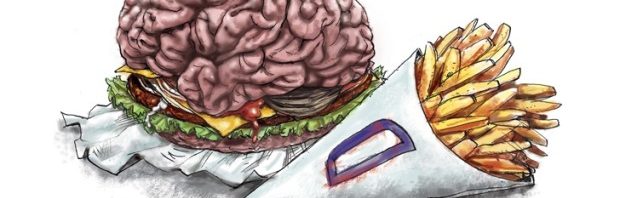
What Came First: Obesity or the Brain Disease?

As we all know, obesity is a danger to this country but it may be in more ways than one. There are the physical dangers that come with obesity that are pretty well-know, but thats not all. There are mental effects that will occur with the lifestyle choices of unhealthy people.

Obesity Brain Scan
Above is a comparison of two brains and their dopamine receptors. In the obese brain there are less dopamine receptors, lower dopamine levels increase cravings for fatty foods.


There is a lot of different things going on in the brains’ of obese people compared to the brains’ of healthy people. On the right is a picture taken by people who were researching dopaminergic response. Studies show that obese brains have a different response to pictures and smells of foods. They have more of an emotional response and have less control over their choices. 

These choices come back to damage the brain in a vicious cycle. A high fat diet can break the blood-brain barrier, the only thing that protects the brain. Researchers believe that the increase in breakdown of the blood brain barrier is due to the circulation of beta amyloid from the high fat diet. Beta amyloid is associated with diseases such as Alzheimer’s.

There are also genes that factor in. Brain derived neurotrophic factor (BDNF) is a protein that fixes neurons. It is activated by many factors and one of them is leptin, which regulates fat storage in the body. Some people have variations of the BDNF gene and others have a genetic leptin deficiency that will cause and decreased amounts of BDNF.

When there isn’t enough BDNF the homeostasis of the brain is upset in. This causes a response of over eating trying to fix the homeostatic problem. The body wants more fat to produce more leptin in order to feel full. Leading the the vicious cycle of a high fat diet.   

The question is did are the bad eating habits inevitable and part of a brain disease or did the brain disease stem from the poor habits?


Why do I Keep Getting Fatter?

Obesity is something on everyone’s minds these days. The days of being skinny sort of slipped away, slowly but inevitably. Fatty and sugary foods, expensive (and not as good tasting) vegetables and fruits, lack of time to cook and exercise, and stress are all major reasons for why we continue to gain weight despite small but often inconsistent attempts. Why don’t we have the willpower to just go on a diet and stick with it? Well, it could be that we don’t have the energy to exercise like we once used to have, or maybe it is because we just don’t care anymore. Whatever reason you may have been told via doctors or the internet, it was probably not entirely true.
Weight gain tends to be labeled as a bunch of bad habits, and that is a huge part of it. Lack of strength (laziness) to maintain a fitness and health plan is usually what society tells us is the reason for why we are fat. However, new research is revealing that obesity may be more of a problem of the brain than anything else. In fact, many of us may have been set up to be obese later on in life since growing in our mother’s womb, as there are brain development patterns of the child that change when exposed to high fat and sugar diets that the mother had eaten  during pregnancy. This can cause the child to crave those foods more than normal, and develop obesity as well.
The label of “brain disease” could possibly be applied to obesity because there are changes in the brain following poor diet that both harm the brain via inflammation, and change it such that there is an increased craving for fatty and sugary foods. For example, obesity goes hand in hand with insulin resistance, which leads to diabetes and more recently is being linked to Alzheimer’s disease. In addition, obesity is correlated with lower brain volume and diminished cognitive functioning compare, but is reversible with weight loss, depending on the progression of the problem. Obesity also causes leptin resistance in the brain. Leptin is a hormone in the brain that prevents hunger, so being obese turns into downward spiral for the brain because leptin resistance means the effects of leptin in the brain are being prevented and makes obese people more hungry than is necessary. This makes it harder to diet, the main way to fix the problem.
With all of the societal problems, can obesity really be considered a brain disease? It is kind of an arbitrary question, as it is both maintained by brain dysfunction caused by poor diet, but also by society: we have too much easy-to-access and unhealthy food; we also live in a fast-paced time when convenience is necessary to the point that cooking our own food is impossible or just too stressful or rushed. While the negative effects of obesity are far reaching for human health, there are many more problems that could be addressed to prevent obesity in our society.
Whatever we decide to call it, obesity is a problem that reduces our cognitive functioning and even affects our children’s futures. New drugs are being developed to target the new brain pathways discovered in obesity, so it is only a matter of time before we have that on our side.

Obesity as a Brain Disease – A Public Wakeup Call

It’s a weird thought – an obese person being at the mercy of his or her brain – but recent research suggests this may be the case. According to a study done by Shefer et al., a diet high in calorie intake is linked to various negative neurological qualities such as a cognitive decline and reduced brain volume. This high calorie diet the researchers are attributing to these diminished qualities works via the blood brain barrier – they breakdown the proteins responsible for constructing the barrier, which then hinders the brain’s ability to protect from pathogens in Brain chem   the blood. Furthermore, this destruction can lead to devastating inflammation in the brain, which leads to even further consequences for the high-calorie-consumer’s brain.
 
For example, the researchers showed that the resulting inflammation can damage various sensitive areas of the brain such as the hypothalamus, the amygdala, and the hippocampus. All of these areas are not only to crucial to everyday functioning, but they also contain signaling pathways important for learning and emotional processing. Because of this, behaviors like overeating can eventually transition into a learned behavior – a development very similar to that of addiction. In addition, the research showed that the chemical reward pathway in the brains of obese people is severely changed when exposed to food after fasting. These findings suggest that, maybe, obesity is actually a neurological disease. Is there merit to this claim? Or is it simply an opinionated, open-ended discussion topic that will be debated for a long time?
screen_shot_2014-04-16_at_2.41.39_pm
In my opinion, either way, this research should draw attention to a novel way to approach tackling obesity. And here in America, it seems that we should take any new approach we can get to make our nation healthier, right? In addition, these findings just further push me to believe how pertinent it is that our country becomes more educated on not only our brains, but what our lifestyles do to them. If we can actually understand what is happening when we eat a lot of calories instead of just knowing that eating unhealthy makes us fat, I firmly believe things may change. And in the case of this topic, the brain is a great place to start.
It’s time to educate the public on this topic – what we eat doesn’t just make our stomachs big and our bodies unhealthy, but it literally changes our brains. We begin to change the way we think about food and the decisions we make about our diets in response to overconsuming calories. It’s crazy. But it’s also reality.
 

Obesity: Social Issue or Brain Disease?

Defined as the excessive amount of body fat, obesity has historically been described as a physiological disease. However, recent research has challenged this classical idea by looking into the neurological degenerative nature of this condition.
While the accumulation of body fat occurs through the excessive intake of fatty foods and extreme caloric consumption, the mechanisms of hunger and food satisfaction in the brain have been further studied in recent research.
One such studied focused on the brain signaling pathways found throughout the prefrontal cortex of the brain in the postprandial state. They chose to target this portion of the brain since the prefrontal cortex is the control center for decision making and executive function. The postprandial state means that they conducted imaging tests on individuals after they had had a full meal. This was done to see how different individuals reacted to the consumption of food.625-obesity_625x350_71428659378
Following the study, researchers were able to determine that obese individuals were less satisfied by standard caloric intake and had showed less inhibitory control in the prefrontal cortex. More or less, it took more food for these people to be satisfied and even then it was more difficult to resist eating more. They attributed these behaviors to a difference in the neuronal activity of the posterior cingulate, which is a portion of the prefrontal cortex, between obese and lean individuals.
While this information may suggest that obesity may be attributed to an innate chemical imbalance or inability to control executive function, individuals that had previously been obese that lost weight and remained at a normal BMI for three years showed similar neuronal activity to lean individuals. This would suggest that neurological disfunction found in the brain may be due to a physiological factors rather than innate conditions.
The question of whether obesity is dependent on social factors such as diet and exercise or on the genetic composition of the brain remains unanswered. However, I think it is safe to say that the neurological function of our brains is dependent on the way we take care of our bodies and the physiological health of our bodies is dependent on the condition of our brains. At the end of the day I guess the real question is, which came first, the chicken or the egg?

Obesity in the Brain

https://student.societyforscience.org/article/cool-jobs-brainy-ways-battle-obesity

According to multiple studies that I have read, obesity is of great concern in all societies. In every state at least 20-35% of their individuals are considered obese. These numbers continue to rise every day due to the lack of exercise and easy accessibility of unhealthy food.
Throughout class we discovered the impact food can have on the brain and how alterations are made to the brain from the food we eat.
I was specifically interested in leptin receptors and their effect on the brain. Leptin is released into the brain proportionately to body weight. Therefore if someone consumes food that is higher calorically they tend to produce more leptin.
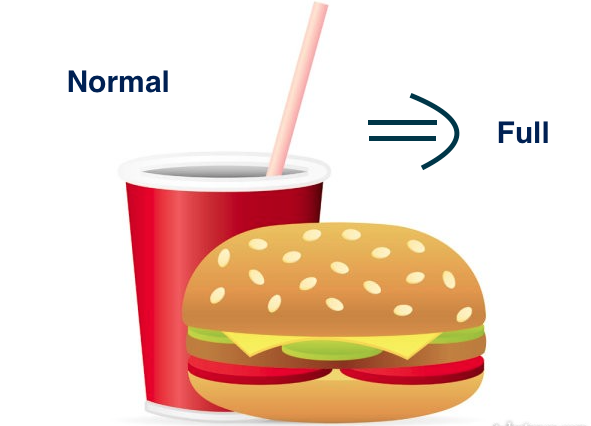
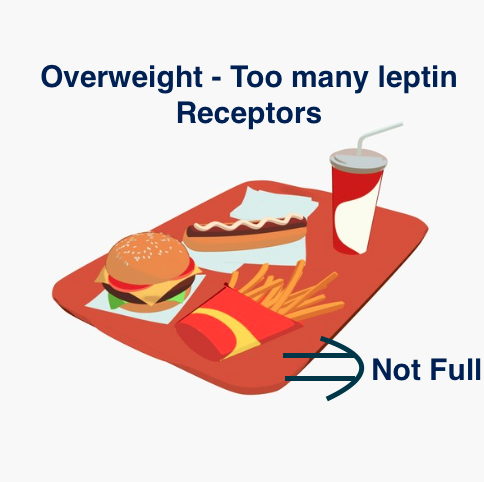
Leptin is then released into the brain where it binds to leptin receptors in the hypothalamus, the region that controls hunger and thirst. In a normal body when leptin binds to the receptors in the hypothalamus the feeling of fullness is triggered causing individuals to stop eating. But in individuals who are overweight leptin receptors fail to work. When the receptors become resistant it takes a lot more leptin to trigger the individual that they are full causing them to consume more food. This is why individuals who are overweight have such a hard time reducing the amount of food they eat and why losing weight can be difficult.
Screen Shot 2016-04-28 at 3.30.08 PMScreen Shot 2016-04-28 at 3.30.22 PM
For further information about how obesity is a brain disease the paper we read in class is very helpful.
Knowing that obesity isn’t necessarily an individuals choice but rather is a brain disorder is alarming. This encourages us all to educate our communities about the impact unhealthy food can have on our bodies.

It's More than Morals: A Look at Obesity and the Brain

As most people know, obesity has impacted the lives of many people in western society.  Everywhere you turn, there is a fast-food building, a convenience store with cheap, sugary snacks, and fewer places with accessible health foods.
teen-obesity
Reading blogs and watching you-tube videos about explanations to this, people tend to lean more towards the “moral judgement” explanation.  Some people say that obesity happens when people lack will power, and some people say that it’s because of the parents.  However, the explanation that isn’t talked about as much is the idea the increase in high caloric diet could be because of brain dysfunction.
According to a paper that we read in class, cognitive impairments and hormone regulation were affected by obesity.  It seems to be an endless cycle.
High caloric diets can lead to the breakdown of the Blood Brain Barrier, which can have detrimental effects (i.e. toxins can potentially enter the brain) itself.  It also leads to inflammation, which will affect areas of the brain that are susceptible to damage such as the amygdala (emotions), hypothalamus (hormones), and hippocampus (memory).
Overeating can become a learned behavior in result of the effects on emotions, hormones, and memory.  In a way, the brain acts as if it is an addiction because of how reinforcing it is.  The changes can also result in detrimental effects such as oxidative stress and Insulin-receptor signaling breakdown.  All of these can result in cognitive impairment, and more of high-caloric diets.
20160412_165101 (1)
Although obesity can result in changes to the brain, thus resulting further as more of a brain disease, it is also important to look at what initially starts the high-caloric diets.  This is where most people think it’s a matter of moral decisions.  However, studies show that genetics and environment (socioeconomic status, fresh food availability, etc.) can also play a very large role in obesity.  It is not just a matter of moral decision, although that does play a role as well.

20160412_165622

Furthermore, more research needs to go to into this topic in order to fully understand obesity, what causes it, and how we can help alleviate it as much as possible.

http://andconsulting.org/blog/brain-obesity/

Obesity: A rising problem?

Obesity is a disorder when a person has an excessive amount of body fat. It is estimated one-third of adults in the U.S. is obese. Obesity can also lead to other unwanted health problems, such as heart disease, diabetes, and high blood pressure.
It sounds easy to fight obesity by having a healthy diet and exercise, but it might be more complicated than that.
Obesity can be labeled as a brain disease due to the changes in brain structures. Overnutrition will cause a breakdown of the blood-brain barrier. Another problem caused by overnutrition is the increase of inflammation in different brain structures. The hippocampus, which is important for memory, has seen lost in size due to a high-fat diet or obesity. The reduction in the size of the hippocampus will cause memory and cognitive defects.
IMG_3770
The hypothalamus is another structure affected by overnutrition. The hypothalamus helps regulate body temperature, hunger, and sleep. The increase in inflammation within the brain will cause the hypothalamus to affect insulin resistance too. The change in structure due to obesity will impair insulin secretion. This will result in glucose building up, and lead to type 2 diabetes.
While obesity can be labeled as a brain disease, some might not consider it as so. People who are obese had a choice in their life to become obese. People with other brain diseases, such as Parkinson’s and Alzheimer’s Disease, didn’t choose to obtain a brain disease. The change in brain structure in obese patients can’t be denied, but the aspect of placing it in the categories with “true” brain diseases is still questionable for me.
Regardless, obesity is still a problem and needs to be tackled with steps to help patients improve their life. By figuring out the parts of the obese brain is a possibility in treating obesity.

The Science Behind Obesity

http://andconsulting.org/blog/brain-obesity/

Obesity is an epidemic. According to the CDC, 34.9% of American adults (that’s 78.6 million people) are obese. The complications of this condition include heart disease, type 2 diabetes, and cancers. Around 7% of all money spent on healthcare in 2008 was devoted only to obesity.

Obesity rates among adults by state

There is no doubt that this unprecedented rise in obesity rates is a product of the western diet, but a recent study has linked a high fat and calorie diet to chemical changes in the brain. According to the study by Shefer et al., excessive nutrition (a high calorie diet) is linked to reduced brain volume and objective diminished mental status. This occurs through a high calorie diet leading to a breakdown of proteins that construct  the blood-brain barrier that protects the brain from pathogens and dangerous elements found commonly in the blood.
The resulting inflammation damages sensitive areas of the brain like the amygdala, hypothalamus, and hippocampus which contain signalling pathways important for learning and emotional processing. Because of this, overeating can become a learned behavior that has many parallels to addiction. Obese individuals have been shown to demonstrate a stronger response to perceived food after fasting, suggesting that obesity warps brain chemistry to reward overeating.
IMG_3263 (1)
A generalized pathway of overeating
The danger of overeating leading to obesity is that once your brain warps to accommodate the disease it becomes incredibly difficult to remove yourself from the cycle. However, the alternative is dangerous and quite possibly deadly. Obesity is the next leading health problem in the United States and without some drastic changes to the way we deal with food our country might not be able to stomach it.

Obesity: Could it be a brain disease?

Overeating and obesity has been a problem throughout the world for quite some time. As food makers find ways to make their food more processed and cheap to produce, humans are continually eating more and more calorie rich foods.
The obesity rate around the world is skyrocketing and it is nothing short than an epidemic. Recent research has discovered a link between obesity and brain dysfunction that makes the condition seem like a disease.
_44342178_global_obesity_map416
Over-nutrition can cause catastrophic effects in the brain. Recent research has even shown that over-nutrition can breaking down the blood brain barrier which results in a whole new set of complications. Over nutrition also directly causes weight gain in individuals.
When someone gains a lot of weight it results in fat tissue expansion and inflammation, and amyloid-β precursor. This causes insulin resistance in the brain which has been directly tied to cognitive defects.
Obesity also leads to inflammation in the hippocampus which directly leads to a decrease in working memory. Obesity has also been tied to atrophy which results in the decrease in the persons ability to move properly.
Obesity also leads to hypothalamic inflammation which leads to an imbalance in chemicals in this region which inhibits a person’s ability to control energy and food intake which feeds back to over nutrition in a vicious cycle.
Another very interesting discovery was that not only did cognitive functioning and memory become impaired with increased weight gain, but cognitive functioning and memory actually become restored when something impedes and weight loss is a result.
A lot of conversations have been had about whether obese individuals were more at risk for developing this condition than healthy individuals and some of the information found was astounding.
For example, a person who grew up eating nutritious foods had an easier time controlling hunger and food intake later in life, while a person who grew up on an excessive amount of calorie-rich foods developed an imbalance in chemicals in the hypothalamus which resulted in a difficult time controlling cravings for calorie-rich foods. Also, when given a test for brain activity when shown a picture of a sought after food item, obese individuals brains lit up more than an average weight individual.
Obesity is a problem and needs to be dealt with properly. This new information about the neurological effects of obesity makes it that much more intimating of a disease. That being said, it also opens new doors for possible treatment options for obesity.
By figuring out the exact mechanisms, we may be able to treat obesity easier and more effectively than say a gastric bypass.
Artstract:
new new thing


Image citations:
http://news.bbc.co.uk/2/hi/health/7151813.stm

Obesity in the US


The Secret to Becoming the Biggest Loser

Avoiding obesity is simple. You eat well, you work out. You don’t eat McDonald’s every night, and you don’t sit all day. Problem solved.
So why is it that so many people in the United States struggle with obesity? Why has it become an epidemic, when the solutions are so simple? Why does The Biggest Loser attract such a wide audience and never have trouble filling its roster?
It’s because obesity is more than life choices. Like all biological diseases there is more at play than two easily solved factors.
There is increasing research being conducted looking into the psyche of obese people. The question now becomes, is obesity a brain disease?
The Scandal of the Question
As a class we left the question unanswered—as the research does. What defines a brain disease? What implications does labeling obesity as a brain disease have? What kinds of consequences does this label produce?
There is a danger in the diagnosis of obesity being strictly a disease of the brain. It could be used as a cop-out to make excuses for the choices people make. It could excuse the importance of diet and exercise. It could place the ramifications solely on the brain, and belittle the major effects that are observed throughout the body.
But, the psyche should not be underrated. It could hold the key to becoming the biggest loser champion.
The Importance of the Brain
First we must explore the severe damage obesity wrecks on the brain. The assaults include: degradation of the blood brain barrier (which protects the brain form foreign invaders), impaired cognition (like having too much to drink, but all the time), decreased synaptic plasticity (the ability to grow/regrow neurons in the brain), and many more detrimental effects.
blood brain barr
All of these devastations lead scientists to believe the obesity epidemic is linked more to the brain than previously thought.
Becoming the Biggest Loser
So how does this information play into becoming the biggest loser?
Understanding Obesity as a disease in the brain helps to understand the ways in which to treat it.
Tip One: Cut the High-fat Diet and Restore Homeostasis in the Hypothalamus
Even a few days of eating a high fat diet can lead to inflammation in the hypothalamus which will then lead to an upset in the homeostasis of eating/digesting cycles, resulting in a drive to overeat.
fat
There is a potential to trigger a downward spiral, that can become irreversible when diagnosed with obesity. This homeostasis in the hypothalamus is a key piece of the obesity puzzle, and holds great potential for an area of treatment.
All in all, avoiding the high fat diet will prevent obesity and keep you from having to become the biggest loser. If seeking to become the biggest loser, one should avoid high fat diets and look into decreasing inflammation in the brain.
Tip Two: Get Good Sleep
Circadian Rhythm disruption is also a key piece to the downward spiral of obesity. When one’s circadian rhythm is interrupted, the body changes it’s eating habits and the way it stores, digests, and utilizes nutrients for energy.
1200px-Biological_clock_human.svg
If you happen to be competing for the biggest loser, or simply want to avoid having to seek this title, it is best to stay in a routine that involves a normal pattern of sleep.
Once the rhythm is disrupted, it can spiral out of control. Many reports show that those who suffer from obesity also suffer from sleep apnea—which perpetuates the problem.
Tip Three: Hope Your Mother Ate Healthy While In-utero
There is increasing links to maternal nutrition and weight and a person’s overall risk of obesity. Studies have been conducted that suggest maternal nutrition can impact development in the brain of a fetus—for the better or worse.
devel
If a mother binges on junk food while pregnant, certain structures in the brain are impacted in negative ways. If you want to be the biggest loser, hope that your mother ate well and the wiring of your brain did not suffer from her choices.
At the end of the day, these tips will likely not win you the title. They may help to prevent you from getting into the competition, and there are promising areas of brain research into the chemistry of obesity.
Whether or not we classify obesity as a brain disease, the increasing amount of research done helps to understand the ways in which the disease works and how we can go about treating and preventing it. Who knows, maybe the biggest loser will be eradicated in our lifetime?
 

Spam prevention powered by Akismet