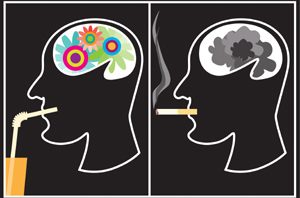

"Food for Thought" Takes on a Whole New Meaning

As scientists continue to research obesity and its effects on the body, the phrase “Food for thought” takes a whole new meaning. Can too much food have negative effects on the brain and its function? Sadly for an America with a growing population of obese individuals, the answer is yes. It has been shown that overnutrition, or the chronic over consumption of food, can impact the brain by causing inflammation, causing structural changes, and elicit cognitive deficits as a result.
 

Inflammation

The hypothalamus is a common place in the brain that is found to be inflamed when it is exposed to overnutrition. Because of the role of the hypothalamus in the brain, cytokines that are released when the hypothalamus is inflamed can be related to obesity-induced hypertension and problems with insulin resistance. These inflammatory cytokines from the hypothalamus have recently been shown to reduce neuronal insulin secretion, increased systemic insulin  resistance, and increase markers in the body for programmed cell death of pancreatic cells. In obesity research it is still unknown whether overnutrition stimulated hypothalamic inflammation or if hypothalamic inflammation contributes to an individual’s cause for obesity, but the hypothalamus is still a hot part of the brain because it is such an important regulatory region for the entire body.
 

Structural Changes

Medical imaging of obese people and their normal weight counterparts has also shown structural differences in the brains of people who are obese. People who were obese showed to have decreased brain volumes independent of age or brain disease. A recent report indicates that BMI is linked to a reduction of white matter in the brain as well. Research is also exploring the effects on the gray matter in the frontal lobe, and blood supply to the prefrontal cortex. Though the reason for these structural changes in the brain has not been totally pinpointed, it is hypothesized that inflammation, breakdown of the blood brain barrier, and insulin resistance associated with high-fat diets may be contributing factors.
 

Cognitive Defects

Related to inflammation of the brain and structural differences in brains of obese individuals, comes the question of any cognitive deficits that may be associated with the condition. Many studies are finding that obesity during midlife is a predictor for mild cognitive impairment during old age. Closely related to this is the onset of dementia and Alzheimer’s. Currently, normal weight people have a relative risk of about 1.64 for developing dementia or Alzheimer’s while the relative risk for obese individuals is about 2.4. As for the entire age spectrum of the population, obese individuals statistically score lower on short-term memory and executive function tests than normal weight individuals.
 
When people think about the health risks associated with obesity, the brain is often the last organ that is worried about. Recent research is making people think otherwise. As more and more research is bashing overnutrition and obesity, the negative effects on the brain are coming to surface as well. Reducing the risk of brain-related illnesses later in life is just another reason overweight Americans should look at improving their health with a little exercise and a healthier diet.


The Vicious Cycle of Obesity

America has a problem
Obesity rates are on the rise in America. Obesity is currently the second leading cause of preventable death in the US behind tobacco use. Americans who have a lower education/income are more likely to become obese than those with higher education/income. A Southwest salad will leave you three dollars shorter than a Big Mac. There is a real concept in fast food called the “Bliss Point” with the perfect combination of sugar, salt and fat to make a “Sensory profile where you like food the most”.
The Vicious Cycle
Current research into the effects of eating lots of fat/carbs/calories (over nutrition) on the brain is shedding light on a scary truth. Whether a person is obese, overweight or very thin consuming high amount of carbs, fat or calories has been shown to very quickly cause brain inflammation. This is believed to be due to an excess of waste coming from the intestine during the digestion of excess food. This inflammation leads to a number of responses by the brain. For one the insulin signaling system in the brain can begin to breakdown and mitochondrial function can also be impaired. Unfortunately when the mitochondria do not work as well this makes the insulin signaling problem even worse. The insulin signaling system is actually a very important brain pathway and is shown to have an impact on a number of brain functions including memory formation, gene expression and metabolism. Another unfortunate truth is that when the insulin pathway is not working properly an increase in appetite and an increased palatability for high fat/calorie food has been shown to follow. This palatability towards high fat/calorie foods simply begins the cycle over again.
 

Do Alcohol and Nicotine go Hand in Hand?

While it is common knowledge that alcohol consumption impairs the ability for individuals to make wise and rational decisions, could it encourage people to feed their nicotine addictions? Or could the inhalation or absorption of nicotine products increase the levels of alcohol consumption on any given night? The answers to these questions remain uncertain, but modern research has led scientists and physicians to believe that these two commodities may be closely correlated.

In one such case, researchers discovered that the higher nicotine content in the blood was positively correlated with higher levels of alcoholic consumption. While this data may seem promising, there are many other factors that could have altered this study. In later trials, researchers were able to suppress alcohol consumption by using noncompetitive nicotinic receptor antagonists. Conversely, when competitive nicotinic receptor antagonists were used they did not illustrate the same scenario. Because of this discrepancy, the researchers that conducted this study postulated that there may be different types of nicotinic receptors found within the body and their activation or inhibition may be altered depending on the biochemical makeup of their activation sites.

http://www.smokefreetn.org/the-5-benefits-of-quitting-smoking-timeline/
So what does this actually mean for the general public? Regardless of the biochemical mechanisms of activation or inhibition, I think it is safe to say that, for the most part, both alcohol and nicotine seem to play a role in the increased consumption of the other. This does not mean that if you smoke cigarettes or chew tobacco that you innately drink more. Nor does it mean that if you drink excessively you are bound to smoke excessively. However, by engaging in either of these activities, you are increasing the activation and potential chance of using either of these two products.
With this knowledge, it should be easier for people to recognize these risks and take actions to prevent them from happening. This information can also be extremely useful for those that are trying to decrease their alcoholic intake as they may want to also stay away from any tobacco products. The same could also be said for people trying to stop smoking or chewing tobacco.
While going out on Friday nights may be a fun and entertaining time, I think that it is important to understand the potential risks and temptations that may arise. Based on both sociological and scientific studies, it has been strongly theorized that people tend to drink more when they have nicotine and people tend to smoke or chew more when they drink. Regardless of whether or not this is fully due to the biological affects of these drugs or the social aspect of downtown life, citizens should be aware of these factors so they can make more informed decisions for themselves.

Why do Alcohol and Tobacco usually go together?

The danger of smoking and drinking is already spread to all the society. Advertising campaigns try to alert people of the evils involved in smoking and drinking, showing how this kind of behavior can affect not only your own healthy, but others around you.
The neural mechanisms involved in the onset and maintenance of addiction are subject of many scientific researches, that try to solve the puzzle of addiction, in order to help people who are in this condition.
Nicotine is a stimulant substance present in Tobacco and it can bind to a type of acetylcholine receptor, called nicotinic receptor. The nicotinic receptors are present within the brain and muscular junctions. When nicotine binds to the nicotinic receptors, the neurons end up releasing different kinds of neurotransmitters in the brain, such as norepinephrine, epinephrine, serotonin, and dopamine, causing different feelings of adrenaline and a later relaxation.
Nicotinic receptors are present in different parts of the brain, including the reward pathway, which together with other parts responsible for memory and decision making, form the circuit of addiction. The use of drugs of abuse can alter this circuit, building up the physical and chemical dependence.
Nicotine can alter the availability of receptors in the brain, increasing the number of the receptors. With more receptors, the sensitivity to nicotine is higher, which is correlated with nicotine addiction. Thus, nicotine can alter not just the function, but also the structure of neurons, and that may explain why is so hard to smokers to quit this habit.
Recent studies that focused in nicotine and alcohol addiction revealed important connections between the brain receptors involved in the maintenance of smoking and alcoholism. Ethanol does not bind directly to nicotinic receptors, or any kind of acetylcholine receptors. However, alcohol can increase the response of acetylcholine receptors, including nicotine receptors. That is, alcohol can potentiate the response of nicotinic receptors to nicotine, what could explain the high number of alcoholics that are also heavy smokers.
It is important that scientists continue to investigate the neural circuits involved in addiction, and how different drugs of abuse can relate to each other, so it will be possible to help people and to regulate these kind of drugs.

Quitting is Scientifically Hard

http://www.smokefreetn.org/the-5-benefits-of-quitting-smoking-timeline/

As many people know, alcohol and nicotine are extremely addictive, but the reason why is unknown to most individuals. Through my research, I was interested in why quitting can be so difficult.
Throughout drug abuse, synaptic changes occur, affecting the way individuals normal synapses function. Long-term depression (LTD) and long-term potentiation (LTP) cause the synaptic changes in the amygdala and hippocampus.
When people think about addictiveness, it is not always understood that there are actual changes in the brain, but in the paper it discusses the causes of synaptic changes, as I mentioned above. As addiction continues, the amount of Nicotinic Acetylcholine Receptors (nAChR) drastically increases in brains that have an addiction to nicotine and alcohol. The amount of receptors increases due to the drug supplying more neurotransmitters and needing places to enter the cell without flooding the synaptic cleft.
When someone quits, they have a massive amount of vacant nAChR that are hungry for neurotransmitters, and this is why it can be so difficult to quit. In a study I found, the researchers discovered that the amount of receptors does not begin to return to normal until around 6-12 weeks of abstinence. But for full return to normal with receptor content, it takes close to a year. This study did not include behavioral aspects that are difficult to stop, such as constantly having something in your mouth.
Through my research, it made me want to inform more individuals about how addictive and life changing these chemicals actually are. I feel as though many individuals who begin these drugs say its not a problem and they can stop whenever, but with the great effects they have on the brain it is not that easy.
 

Nicotine in the Brain: Will E-Cigs be able to Solve the Problem of Smoking?

As we are all aware, smoking has some pretty severe possible side effects that result in physical changes inside and outside your body that could potentially cause death. Something that we don’t make as public is the effects that smoking has on the brain and what about nicotine a person gets addicted to.

Nicotinic acetylcholine receptors (nAChRs) are ligand-gated ion channels that mediate fast signal transmission at synapses. In the brain nAChRs are found between neurons at the synapses they are involved in cognitive function, learning and memory, arousal, reward, motor control and analgesia. Activating nAChRs causes and influx of calcium ions, which affects the release of neurotransmitters. 

Nicotine gets into the blood stream and can easily cross the blood-brain barrier. Initially, nicotine activates nAChRs, opening their channels causing the high and the feeling that users will get. The excessive stimulation causes a decrease in receptor synthesis. Nicotine ends up desensitizing the receptors.

Once the receptors are dysfunctional there is an sudden increase in the amount of certain nACHRs. With more receptors to please there is more of need for nicotine which drives the addiction. The amount of receptors you have eventually can go back to normal, but it is tough. The withdrawal symptoms a smoker goes through often times lead to relapse.

Messing with nAChR amounts and functions disrupts normal brain function. nAChRs play a huge role in learning and memory. There are studies that show smokers to have a lower IQ than non-smokers.

After advertising how unhealthy smoking is there has been a huge decrease in the amount of people who smoke. Web M.D. says that the transition from cigarette smoking to e-cigarettes happened pretty quickly. Unfortunately the research didn’t quite move as fast and the potential long-term effects have not been discovered.

electronic-cigarette-2

The idea behind e-cigs is that they take away one of the most dangerous effects of cigarettes: the smoke from tobacco. Another term for using an e-cig is “vaping”. E-cigs still contain nicotine, so they have the same effects on the brain as cigarettes. You can become addicted to them and could experience withdrawal symptoms. It seems to be that e-cigs might just be the lesser of two evils. It will need to be something that we keep on our radar. There could be decreased health benefits if a smoker can turn into a “vaper”. 

A Martini A Day Keeps the Doctor Away?

This past week in Neurochemistry class focused on Alcohol and Nicotine.  We learned about how the effects of both drugs are more related on a chemical level than I had previously known; however, the topic resonated with me the most was how different our society is compared to others regarding alcohol.
It goes without saying that alcohol plays a major role in most aspects of society.  From religion to recreation, drinking has impacted the lives of many people in positive and negative ways.  However, in the United States, most of what is portrayed is negative.
In American society, people often associate alcohol with inappropriate, dangerous behavior through binge drinking.  This is because of the known physiological effects that alcohol has on the brain.
This is a quite one. I have been quite busy last week and up until today, I didn't even have an idea for my shot.  Then I saw an Amarula bottle ad in the subway on my way home and though the bottle looked nice. I didn't go to far to find an idea to mix self-portrait with Amarula... For the record, I didn't drink at all while shooting this. And maybe it shows for being so straight ;)
Alcohol has a direct impact on certain parts of the brain that involve movement, speech, judgement, and memory.
The impact causes impairment, which results in the typical “drunken” behavior such as slurred speech, difficulty walking, “blacking out,” and impulsive behavior.
The picture below shows the brain areas that are directly affected by binge-drinking.
20160405_144557
Although the negative effects of binge drinking are very clear, it is very popular in the younger population.  If you think of the college culture, you probably are also thinking of alcohol.  This is just one factor that could be contributing to the increased binge drinking, and negative portrayal of alcohol, in American Society.
This negative view on binge drinking is justified because of the danger that some individuals who partake in such behavior exude onto society.  However, smaller doses of alcohol per day have been associated with health benefits.
According to recent research, moderate alcohol consumption can reduce your risk of developing heart disease, possibly reduce your risk of ischemic stroke (when the arteries to your brain become narrowed or blocked, causing severely reduced blood flow), and reduce one’s risk of diabetes.
These facts, when represented in a visual graph, illustrate something known as the “J-Curve,” which is shown below.
20160405_143952
Although binge drinking does have negative effects and can lead to further detrimental changes to the brain involving tolerance, dependence, and withdrawal, understanding that moderate consumption can result in health benefits may reshape the way that the United States views, and consumes, alcohol.

Vapor or Smoke? Pick Your Poison.

In 1965, according to the CDC, 42% of American adults were considered regular cigarette smokers. Today, with the help of scientific publication and a large governmental push to expose the negative effects of smoking, that number is at 16%. In just over 50 years, this decline is a huge accomplishment and many lives are saved because of it. That being said, there is a current trend rising in the world of nicotine: electronic or E-cigarettes.
E-cigarettes are battery operated devices that deliver nicotine (and often flavoring) to an individual without producing tobacco smoke and instead a water vapor is released. With this method of smoking, the risk of second-hand smoke is eliminated, but there are huge concerns still about whether or not this pure nicotine can still have negative health  effects for the person who ingests it.
In the brain, nicotine binds to receptors called nicotinic acetylcholine receptors or nAchRs. Multiple exposures to nicotine causes up-regulation of these receptors which increases their affinity for the drug and addiction is the result. Several studies have be done to investigate possible negative effects of this interaction between repetitive nicotine exposure and these nAChRs so explore possible neuronal damage that nicotine addicts may be experiencing.
One area of the brain affected is the ventral tegmental area (VTA) which is largely responsible for dopamine, a neurotransmitter that corresponds to pleasure and reward, release. When nAChRs are activated by nicotine, dopamine is released in the VTA and studies have found that continuous stimulation of these receptors from nicotine has the ability to desensitize this response. Clinically, this could result in a decreased ability to experience pleasure from this area of the brain.
With nicotine use, there is also the concern of cross-sensitization between it and alcohol. Like nicotine, nAChR’s are the receptors that alcohol interacts with. The concern with cross-sensitization and these drugs is that being addicted to one drug may make you more likely to be addicted to the other. Studies on this phenomenon have mixed findings, but it is confirmed that lab animals addicted to nicotine consume more alcohol when provided it compared to animals who are not addicted to the drug. Because these drugs act on the same receptors,  cross-sensitization is an important aspect to consider as one studies how drug addiction works.
In conclusion, though E-cigarettes eliminate the worry of second hand smoke and the tobacco-related toxins that cigarettes have, people are still left wondering: Can the nicotine from E-cigarettes still be damaging for a person? Also, current testing of the cartridges for E-cigarettes if showing that many of them release vapors containing carcinogens and other toxins. Long story short, I believe that there are two reasons that people who are addicted to nicotine should be hesitant about E-cigarettes.

  1. It still in unclear how long-term exposure to nicotine can damage the brain or predispose the brain to new addictions and
  2. It is still unknown what the exact chemicals in E-cigarettes are and how those chemicals can damage the body.

The fight against cigarette smoking is a battle well fought by the government and health professionals alike, but it’s important to continue to use our expanding scientific knowledge to protect the public from new threats to our health that are being developed every day.

LTP and how learning effects abuse potential

There are numerous ways our brain “learns” and one of the main ways, and most common, is called long term potentiation (LTP).
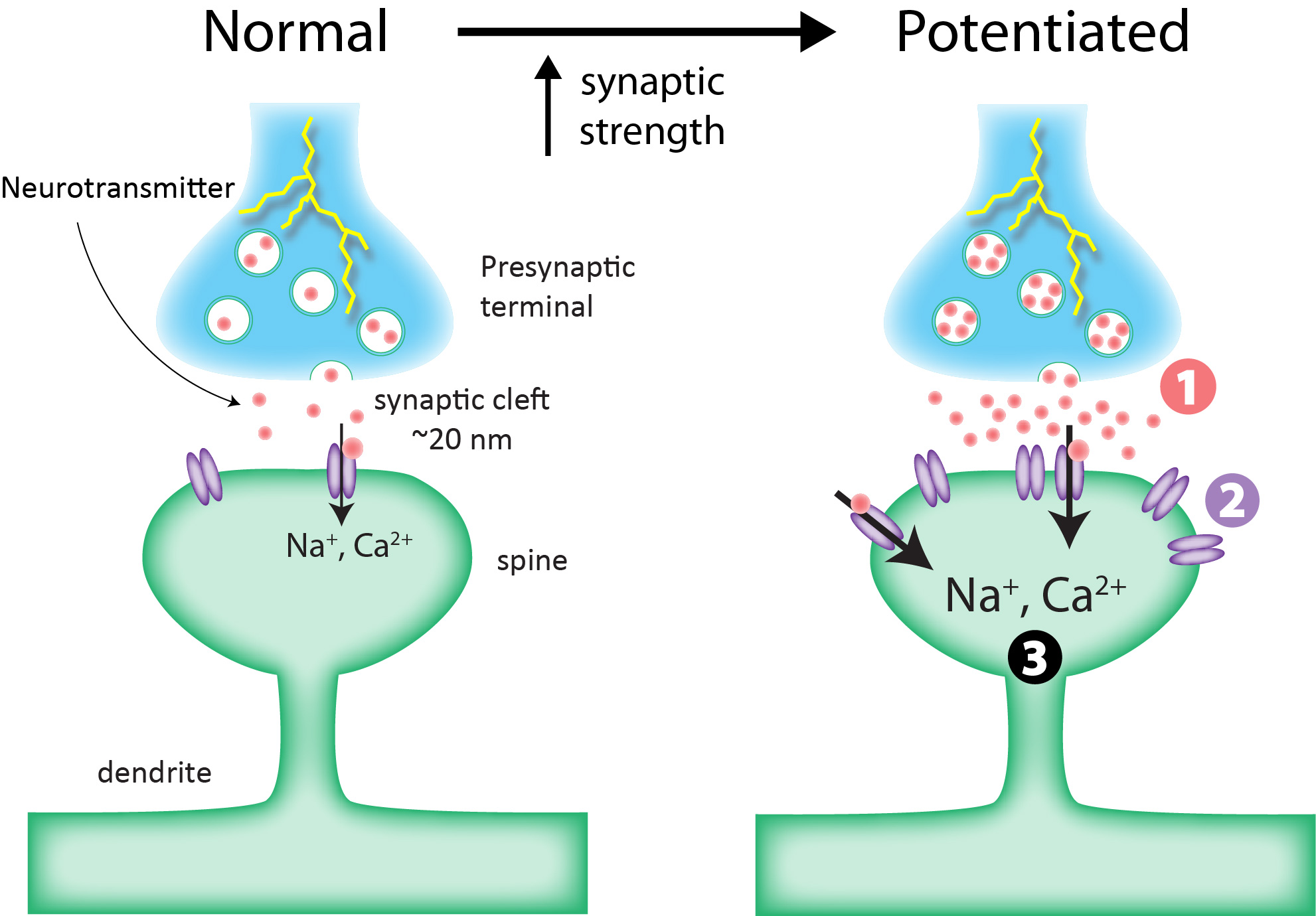
What happens is in certain areas of the brain glutamate (the CNS’s main excitatory neurotransmitter) gets released in response to some stimulus. Glutamate binds to an AMPA receptor in the post synaptic neuron which allows sodium to flood the neuron and fire an action potential which proceeds to send the signal for the initial stimulus. This could be anything from hearing a noise or smelling a flower to thinking about an event or trying to memorize a phone number.
When the learning occurs is when that initial stimulus fires over and over again causing a lot of Glutamate to be released and lots of post synaptic binding to AMPA receptors occurs resulting in a large amount of sodium to enter the post synaptic neuron.
Long-term-synaptic-plasticity_QBI-the-brainWithin this post synaptic neuron there are also NMDA receptors. NMDA receptors are both ligand gated and voltage dependent receptors. The NMDA receptors have a magnesium ion lodged in the middle of it. When there is enough sodium in the post synaptic neuron the magnesium ion gets repelled outside of the neuron allowing calcium to enter the post synaptic neuron.
Once in the cell, calcium induces activity in enzymes in the cell. Calcium activates calmodulin  which activates CAM-KII, a kinase which will phosphorylate a dendritic vesicle. This dendritic vesicle has an AMPA receptor lodged in the membrane waiting to be activated. The phosphorylation activates it and the vesicle places the AMPA receptor into the post synaptic neuron’s membrane.
Now the post synaptic neuron has more receptors making it easier for the neuron to fire. This is also known as learning.
When it comes to drugs of abuse, this pathway has a very important role. An example could be that this pathway is in the reward center of the brain. The initial stimulus could be a cigarette. This ultimately releases dopamine into the nucleus accumbens. The person really liked that feeling so they start smoking a lot more causing that over stimulation of the neuron making the post synaptic neuron “better” at firing.
Now that learning has occurred, it only takes the smell of a cigarette to trigger this action potential to get the same feeling as one cigarette took the first time. This is an example of craving.
LTP is a very important CNS pathway whether it is for memorizing a fact for an exam or causing craving troubles in an addicted person.F1.large
I think it is one of the most interesting topics because scientists have found a way to literally see dendritic growth from LTP meaning if the growth was removed, the memory would be lost. This could be incredible for future treatments for certain disorders such as PTSD.


Artstract:
new thinger


Image citations:
http://thebluediamondgallery.com/l/learning.html
http://www.nature.com/articles/srep01957
 

Cheers to Ethanol and Nicotine is the Devil: Why We Need to Take a Second Look at the Glories of Ethanol

Everyone knows the horrors of cigarettes. We’ve all seen the commercials of the premature aging, the inevitable lung cancer, the life draining chemicals that come with cigarettes. We’ve heard the threats of chewing tobacco—seen the story of the man who lost half of his jaw to mouth cancer.
smoking ad

(From: http://designbump.com/anti-smoking-advertisements/)

We’re all aware and rightfully afraid of the power of addictive nicotine and the cocktails of chemicals it is mixed up with.

But what about ethanol?

We love ethanol—beer, wine, cocktails, happy hour. We can’t seem to fathom a party or holiday without it. We idolize a good time in the media by complete loss of control and the endless flow of ethanol.
However, the two drugs share commonalities we never seem to give them credit for. The brain chemistry alterations of both nicotine and ethanol are very likely the same in many ways, and addiction of both can be extremely detrimental to our health. It’s time we reexamine the ways we look at ethanol.

The Relationship

Ethanol and nicotine act on the same receptors in the brain, the neuronal nicotinic acetylcholine receptors (nAChRs).
nachr
Nicotine activates these receptors and leads to receptor desensitization—meaning the tolerance for nicotine increases with each dose. This results in more receptors present, leading to a dependence upon nicotine to continue to simulate them—this is a major proponent in nicotine’s addictive properties.
Ethanol also is linked to these receptors. It potentiates these receptors leading them to be active more often. This increased activation then leads into the cycle that is observed with nicotine addiction. Ethanol does not activate the receptors in the same manner as nicotine does, however, and this is likely a reason it is considered less addictive.
Along with this this receptor commonality, the patterns of addiction are the same and the areas of the brain the two drugs effect overlap tremendously. These brain structures include: the ventral tegmental area, the nucleus accumbens, the prefrontal cortex, the striatum, the amygdala, and the hippocampus.
All of these major brain regions are affected by both drugs and may explain the cross-sensitization observed between the two—meaning that once a person is addicted to one they are more likely to get addicted to the other.
Ethanol begins to look a lot like nicotine in the brain. Why then do we paint such a black and white picture of the two drugs?

FullSizeRender (1)

(#artstracts)

Time for Reexamination

We can argue that anti-alcohol rhetoric is in the media, too. We have seen a dramatic increase in campaigns against drunk driving in recent decades. But, there is little knowledge or publicity about the effects of ethanol on our overall health and brain chemistry.
There are surely no shrunken, deteriorated brain posters displaying ethanol dangers next to the smoking lungs harmed by chronic cigarette usage.
Granted, the lines of alcohol addiction are blurrier, and the fact of the matter remains that alcohol is less addictive than nicotine. But this should not be our scapegoat for research into the effects of ethanol abuse.
It is notably easier to drink one beer per week than to simply smoke one cigarette. But why is that? Because these two drugs are so linked in their brain chemistry—affecting the same neuronal receptors, displaying the same development pathways of addiction, targeting the same brain structures—there is need for further research into these connections.
In the research our class conducted on this topic in the past week we learned a lot about the effects of nicotine, and learned very inconclusive results about the effects of ethanol—simply because there is significantly less research done on this drug.
It’s time we stop saying cheers, and start investigating the links. While it may be true that ethanol is less of a threat to health, it is extremely hypocritical to raise one drug up so highly above the other while scientific links continue to emerge.

Spam prevention powered by Akismet