The amount of people smoking cigarettes in the United States has been on the decline since it was first recorded in 1965, and is continuing to decline. This is largely because of the vast amount of research that has been put into showing how many negative health effects that smoking has on a person, as well as being an expensive and addictive habit. You may be looking for information on how to rid either yourself or someone you know from cigarettes, which “harms nearly every organ in the body” and is responsible for almost one in five deaths in the United States, usually because of premature deaths related to smoking-related diseases.
Many people start out at a young age and later on seek to quit for various reasons, but that can be very difficult because of the neuroplastic changes that occur because of long term nicotine consumption, a chemical in cigarettes and other tobacco products, which acts on receptors found in the brain. In fact, one neuronal receptor, the nicotinic acetylcholine receptor (nAChR), is named for its activation by nicotine. nAChR is found extensively throughout the brain on neuronal cells and plays a significant role in brain plasticity.

Brain plasticity means that the brain can physically change it’s patterns of neuronal connections in response to various types of inputs it receives, such as learning, the environmental stress, or drugs. The brain regulates which neurons connect and how strongly they interact, leading to behavioral changes in a person.
This is where nicotine plays its role as an addictive substance, because when the nAChR is activated by nicotine, it initiates “long term potentiation,” the strengthening of neuronal connections in response to stimulus. Addictive learning is involved with the act of smoking cigarettes because nicotine directly activates the neurons involved with performing this behavior, and the reward system is activated. The neurons that are activated while a person smokes a cigarette are strengthening their output because of the effects of nicotine. This is why certain emotions, locations and smells (like smoke) can trigger a person’s desire to smoke. Even the hand motions of smoking and holding a cigarette will activate the neurons that have been over-strengthened and create a reward response in the brain.

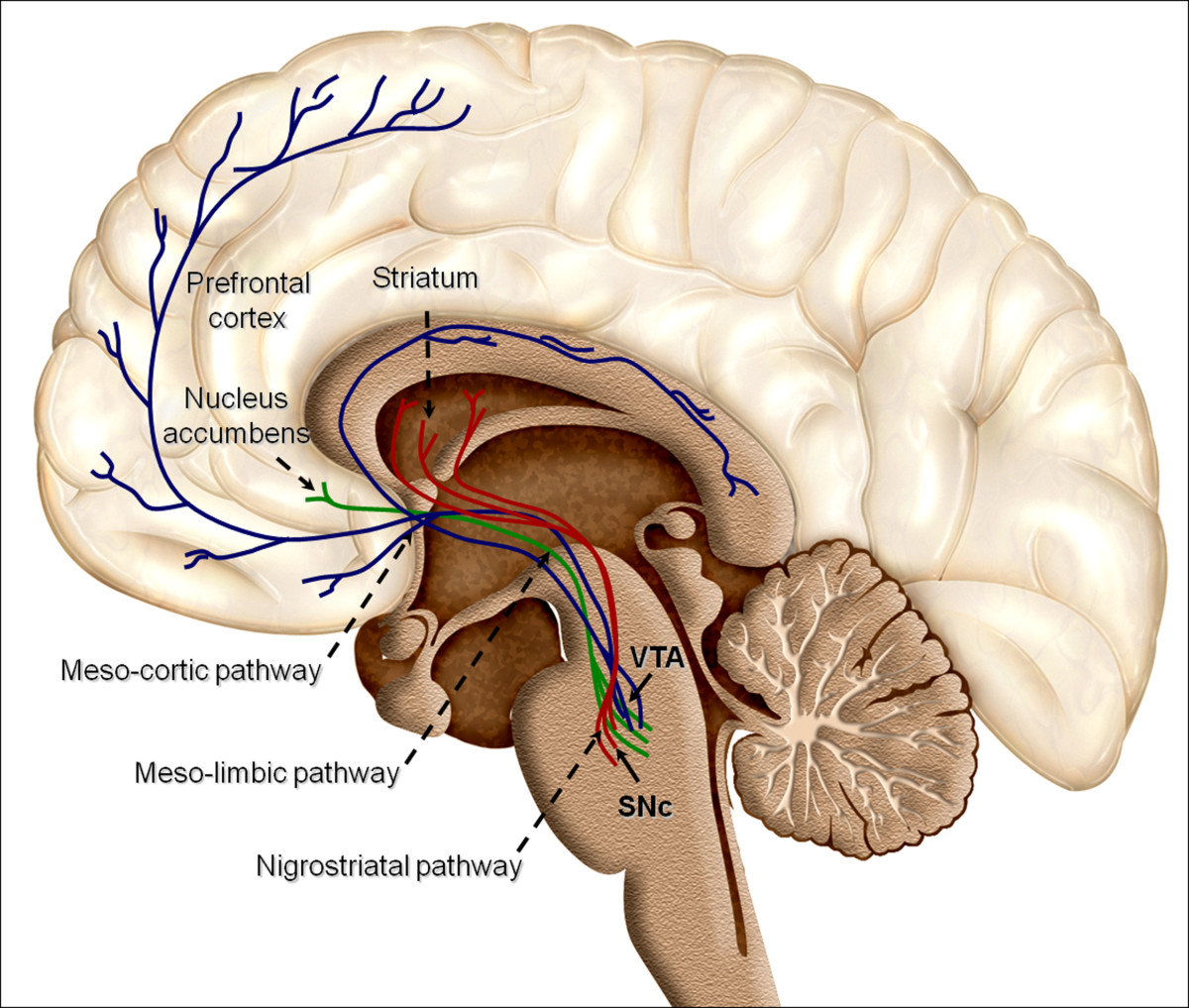
Looking at the trial of quitting this habit from a neurological perspective reveals why quitting is so hard. A person who has smoked cigarettes for a large portion of their life has rewired their brain so that they need cigarettes in order to feel good, because that is a major part of their reward system (dopamine release in the nucleus accumbens). The brain seeks activation of the reward system and creates negative emotions to get the addict to perform the action and resolve its stress. Luckily, there are treatment options like medicine, nicotine replacement, and therapy to make it easier. Talk to your doctor for options that can assist you in your journey towards recovery.
Behind Schizophrenia: Research and Understanding
This past week, the Concordia Neurochemistry Class talked about the neurology behind Schizophrenia, which is a long-term, developmental mental disorder that involves a dissociation between thought, emotion, and behavior.
This dissociation leads to symptoms such as hallucinations, delusions, withdrawal from reality, and a sense of mental fragmentation.

Similar to Autism, the diagnosis of Schizophrenia lies on a spectrum. Some people are able to function well in society while having this disorder, and some are unable to. Those who are very low functioning often live in group homes or hospitals.
One of the topics we talked about during the Friday discussion was the treatment of Schizophrenia, and where we think the research should focus on. Being such a “reactive” instead of “proactive” mental-health system, a lot of the research and funding is going towards treating those who are currently diagnosed.
Some people agreed with that. It is—for obvious reasons—essential to help those who are already trapped by such an inhibiting disorder. It is important to make sure that they are receiving adequate care and have access to current antipsychotic medication.

However, we also talked about the importance of nipping it in the bud by focusing research on neurodevelopment and understanding how the brain develops and, therefore, what causes the malfunction in neural communication that leads to disorders such as Schizophrenia.
Right now, there is research on certain hypothesis and theories regarding Schizophrenia that may explain the cause of the symptoms of the disorder.
The oldest and most established is the Dopamine Hypothesis.

Dopamine is a neurotransmitter that is a precursor for adrenaline, and is part of the reward pathway in the brain. That means that it is the neurotransmitter that is released when something “feels good.”
The Dopamine (DA) Hypothesis started off as stating simply that there is an increased amount of Dopamine in the brain of someone with Schizophrenia. Now, thanks to Neuroimaging techniques and advanced research, the DA Hypothesis has even more support.

Studies since the ‘90s have been focused on pinpointing the exact impact that Dopamine has on Schizophrenia. Some had found that the most prominent Dopamine receptor is D1, and Dopamine is unable to properly bind to those receptors, causing an influx in DA in areas of the brain such as the prefrontal cortex, which would explain some of the cognitive symptoms of Schizophrenia such as inhibited working memory and attention deficits.
This influx of Dopamine then causes a misfiring in a signaling cascade, which leads to a lack of Dopamine in the mesolimbic system. This is correlated with the negative symptoms of Schizophrenia, which include social withdrawal, lack of emotion, and inability to experience pleasure.
Our increasing knowledge about Dopamine and Schizophrenia means that we have a potential explanation for Schizophrenia symptomology, but what’s next?

By encouraging research on development and the direct etiology of neurodevelopmental disorders such as Schizophrenia, we will be able to identify what causes the abnormal Dopamine amounts in the brain, and how we can better treat, prevent, and even cure this disorder.
Wnt signaling pathway in schizophrenia
Schizophrenia is a fairly common psychiatric disorder. It is currently top ten disabling conditions worldwide for young adults. It is known for causing positive symptoms including hallucinations, delusions, and racing thoughts. However, it also has negative symptoms attributed such as cognitive disfunction.
Effective therapeutics for schizophrenia is difficult to come by mainly because of a lack of understanding of the disease. The most popular hypothesis is that schizophrenia is a developmental brain disorder causing a disfunction in neural connections. The exact area of the brain this is happening is a bit of a gray area, but from the symptoms it is thought to occur mainly in the pre-frontal cortex and the basal ganglia (the main dopamine output center in the brain).
Recent research has found Wnt signaling in the brain may have a significant role in schizophrenia etiology. Wnt signaling starts out by Wnt protein binding to a frizzled receptor (FZ) which causes an activation of the Disheveled (Dvl). This molecule breaks up the destruction complex which would have inhibited β-catanin, an important molecule in gene transcription. Another part of the puzzle is dopamine signaling. Schizophrenia patients have an increase in dopamine signaling which results in the inhibition of AKT enzyme which would have inhibited the destruction complex. Schizophrenics were also found to have a smaller number of AKT proteins which again, leads to an activation of the destruction complex and ultimately, a decrease in β-catanin activity resulting in a loss of gene transcription.
There are a few treatments that target certain areas of this signaling process, but many have proven ineffective such as Lithium. Lithium directly inhibits GSK3β, a key player in the destruction complex. However, for whatever reason it has shown ineffective for a majority of schizophrenic patients.
Anti-psychotics target the dopamine signaling in this process and has proven effective, however new treatments are needed for not all antipsychotics were effective in treating schizophrenia.
This research has opened a new door for schizophrenia treatments. With the discovery of the Wnt pathway’s role in schizophrenia, new drugs can be synthesized and possibly more effective treatments can be discovered.
Artstract:

Image citation:
https://www.emaze.com/@ALFWTCCI/Schizophrenia
Understanding Schizophrenia
When people think of brain disorders, they’ll think of the more common diseases but not schizophrenia. Parkinson’s Disease has Michael J. Fox and Muhammad Ali to help raise awareness of the disease. Alzheimer’s has been more commonly observed in older patients and funding for it has been steady. Schizophrenia, on the other hand, has been quiet with its effects.
Schizophrenia affects about one percent of the population, so 1 out of 100 people have the illness. There are three categories symptoms can be placed in. Positive, which contains the symptoms most would associate schizophrenia with, hallucinations, delusions and thought disorders. Negative, associated with behavior and emotions, reduced feelings of pleasure in life and having difficulty beginning and finishing activities. Cognitive, changes in memory and thinking, having troubles focusing and problems with their working memory.
Currently, there are only effective treatments for schizophrenia, such as anti-psychotics or psycho-social therapies. These treatments only help reduce the symptoms of the positive nature, and not the other two categories. The exact schizophrenia is still unknown, but by continuing research of the illness will be beneficial in finding a cure.
New research has shown the Wnt pathway can be useful in finding a cure for schizophrenia. The Wnt pathway is essential for neural development and circuit functioning. Anti-psychotics inhibit dopamine receptor. These types of drugs are the norm for treating schizophrenia, but by looking into another pathway associated with schizophrenia a cure can be found.

Glycogen synthase kinase (GSK3β), which regulates β-catenin. β-catenin is necessary for gene transcription, when phosphorylated causes proteasome, instead of gene transcription and reduces its amount in the cell. The disrupted signaling may play a critical role in schizophrenia.
Wnt is a signaling pathway that interacts with GSK3β, as well as dopamine too. By looking into the different signaling pathways to GSK3β, a cause for schizophrenia may be found. This will lead to a cure to be found for a disease with harsh effects on the human.
Schizophrenia: A New Possible Target for Drug Development
Mental illness can be quite a burden for anyone affected by one of its many forms. Come mental health diseases such as schizophrenia, bipolar disorder, and depression devastate lives for new people every day. Among them, schizophrenia is one of the most severe and tends co-occur with depression. It is so devastating because its sufferers lose touch with reality and are likely to attempt suicide. Symptoms of schizophrenia include abnormal thinking, loss of contact with reality, hallucinations, delusions, inability to focus, and more.
Without any way to cure this disease, there are large costs for the person with schizophrenia, their family and society. The person affected loses their ability to enjoy life and to even function, while the family has to sit by and watch them suffer without having any way to help. When someone is disconnected from reality and truly believe that the people on T.V. are plotting to kill them, the only thing one can do it seek out the help of doctors and the most prescribed medications for schizophrenia: antipsychotics.
Antipsychotics are a class of drugs used primarily for treating schizophrenia, and are relatively successfully at eliminating the positive symptoms such as hallucinations and delusions, but they do not help with the negative symptoms: Flat affect, reduced speaking, reduced pleasure and focus. These medications do not cure schizophrenia, they only make life more manageable. They are very helpful, but research is still heavily involved in finding the underlying cause of schizophrenia to possibly prevent it from happening in the first place.
Even thought schizophrenia is typically diagnosed in a person’s early 20s (when they first start having the obvious symptoms: delusions and hallucinations), many researchers believe that schizophrenia is a developmental disorder in which neurons do not correctly associate with each other through their connections of axons and dendrites.

Through much more data and analysis of how antipsychotics work for schizophrenia, a new and exciting mechanism is being explored for the treatment of schizophrenia. Antipsychotics work by blocking the over-activation of dopamine receptor D2. The “Wnt pathway” of neurons is involved in signaling within the cells of people and facilitates normal brain development for people. For people with schizophrenia, it is now thought that this pathway is not activated enough for normal development. Wnt works normally, but its effect on another protein important in neuronal development – GSK3-beta – is reduced because of too much dopamine signaling.

By targeting this pathway, the development of new drugs that treat all the symptoms of schizophrenia could be just around the corner.
Filling in the Blanks of Schizophrenia
Schizophrenia is a disease of many known and many unknown variables. For researchers, the general public, people living with the disease, and their loved ones, these knowns and unknowns can be very frustrating. Everyday, people question how schizophrenia develops, what is happening in the brain, how to treat it, and how much it impacts daily life.
The Known
Affecting about 2.6 million adults in the United States, schizophrenia is a mental disorder that presents in a person’s late teens to early 20s. With schizophrenia, there are often positive, negative, and cognitive symptoms. Positive symptoms often respond well to anti-psychotic medication and include hallucinations, delusions, and disordered thoughts and speech. Negative symptoms are more difficult to treat and include lack of emotion, decreased motivation, inability to experience pleasure and other similar mood changes. Cognitive deficits from schizophrenia are considered to be the core of the disease and are associated with troubles with memory, information processing, and decision making skills.
Learning about and witnessing this crippling disorder make the scientific and general communities interested in how to prevent and/or cure schizophrenia. It is known that dopamine, an excitatory neurotransmitter, levels are high in people with schizophrenia and dopamine excess is the target of many anti-psychotics which helps with the positive symptoms explained above. One major problem with the treatment for schizophrenia is that it is very difficult to treat the negative and cognitive symptoms The slowed advancements in this field are the result of the lack of understanding exactly how this disease impacts the brain. With the inability to fully understand the disease comes the inability to treat or prevent it.
Science has discovered many possible causes for the development of schizophrenia including genetic predisposition, infection during fetal development, and many other developmental abnormalities, but the cause is likely a combination of a person’s biological makeup and various events that happen during their development.
The Unknown
In the brains of people living with schizophrenia, there is a pathway called the WnT and GSK3 signalling pathway that researchers have found to have a major role in this disease.This pathway may offer explanation or treatment for more symptoms associated with the disease. WnT signalling is important in neurons because the activation of WnT receptors prevents the destruction of transcription factors that are necessary for proper cell development and function. When this pathway is disrupted, as it seems to be in schizophrenia, gene transcription in cells is inhibited. This means that this disrupted signalling pathway is a key factor in the development of symptoms.
This pathway is a possible explanation for the symptoms of schizophrenia beyond the hallucinations, delusions, and other positive symptoms. Researchers are trying to develop drug treatments that could minimize the damaging effects that this pathway has on neurons. Though drugs targeting the WnT pathway are still in their earlier stages, the idea of their success is promising. Treatment for the entire spectrum of schizophrenia symptoms could mean a much better quality of life for people living with the disease and those around them as well. Further understanding of this pathway also could help pinpoint the causes of schizophrenia and aid to eventually lower the number of people affected by this debilitating disorder.
Once again, I’m amazed and the idea that researchers are coming closer to understanding this seemingly impossible disease makes me love science even more.
Let's Talk About Schizophrenia
The Treatment Advocacy Center states that 1.1% of the world population is affected by schizophrenia and it is estimated that 40% of people with schizophrenia go untreated. Some symptoms of schizophrenia include delusions and hallucinations, changes in emotions movements and behavior, alterations of senses, an altered sense of self and the inability to sort and interpret what is going on.
There are numerous changes in the brain with schizophrenia, but not one specific condition that can be measured for diagnosis. The disease must be diagnosed by a measure of its symptoms. There are high functioning patients with schizophrenia who are able to carry on a mostly normal life while others must be hospitalized.
Schizophrenia is a brain development disorder, so it is difficult to prevent because we don’t see the effects until it has already progressed. There are studies that show that infections during pregnancy may disrupt fetal brain development which increases the risk of schizophrenia.
In the article we talked about this week found the main problem with schizophrenia is not enough Wnt signaling and overactive dopamine in the brain. The combination of these two cause increased phosphorylation of β-catenin. When β-catenin is phosphorylated it has no positive effects on the brain.
Wnt proteins are produced by wnt genes in the body and are used all over the body, many of the proteins are organ or tissue specific. Evidence of increased dopamine production as well as increased ability for dopamine to interact with its receptor have been a part of discovering dopamine’s role in schizophrenia.
β-cateinin is used across the body for cell-cell adhesion and gene expression. In schizophrenia there is not enough β-catenin, but many cancers are associated with the over expression of β-catenin.
The best thing we can do to help with the research in Schizophrenia is become informed. The more we talk about it, the more aware we will be about the symptoms, prevention, and treatments.
Stigma and Schizophrenia
Mental illness is an uncomfortable topic. Without the ability to talk about it, we can’t help but refer to people afflicted with serious psychological conditions as being unbalanced or crazy. This not only demonstrates ignorance but also allows for the characterization of those suffering as a separate population instead of as individuals. These conditions breed stigma and prejudice and so in the interest of improving the lives and those unfortunates whose minds have betrayed them we should explore and learning about these conditions.
What is Schizophrenia?
Schizophrenia is a severe and persistent mental illness that can be debilitating to how a person is able to think and perceive the world around them. Hallmarks of the disease include hallucinations, delusions, movement disorders, depression, reduced interest, poor attention, and poor decision making.

Example of dopamine action
What causes the condition?
A prevailing theory for the cause of schizophrenia is that it is a developmental disorder. This is supported by the fact that conditions that disrupt fetal brain development contributed to the development of schizophrenia as well as by the fact that those diagnosed with schizophrenia missed cognitive milestones in their childhood. The disrupted brain development creates the symptoms that are seen later in life.
One theory as to what is going wrong in the brain’s mechanisms deals with the Wnt signaling pathway in the brain. It is thought that excess dopamine, a neurotransmitter, is preventing the Wnt pathway from creating healthy proteins in the brain and so prevent key areas of the brain from fully developing.

Healthy vs Schizophrenic brain
Treatments
The most troubling problem with schizophrenia is that for all of its terrible effects we still lack adequate means of treating the disease. Anti-psychotics currently in use have such terrible side effects that patients routinely go off their medications because the symptoms associated with schizophrenia can be less severe. In addition to this, when the treatments are working they only affect half of the possible complications of the disease.
This disease affects the quality of life of millions and we are far away from coming up with either a successful treatment or cure. Research keeps pushing forward but currently the going is slow due to the resources invested in the disease. A shift in importance is required before we can develop the treatments that will improve the lives of millions.
What is Schizophrenia?
Psychological disorders have always been a topic of interest of the general public. Movies and television series commonly portray various types of mental disorders, from eating disorders to schizophrenia. Even though these representations are important to inform the general public, sometimes what remains from the movies and TV shows is just the mystification and misconstruction of mental disorders.
One of the psychological disorders often represented in fiction is Schizophrenia. For example, in movies such as “A Beautiful Mind”, “Shutter Island”, and “Black Swan”, we can see characters that present symptoms of psychosis. Schizophrenia is characterized by positive symptoms, negative symptoms, and cognitive impairment. The positive symptoms are psychotic behaviors generally not seen in healthy people, presented as hallucinations and delusions. The negative symptoms are represented by disruptions of normal emotions and behaviors, usually presented as a “flat affect”. The neurobiology involved in the disease is still not fully understood. Scientific evidence points that there is a high expression of dopamine in the brain of schizophrenic patients. The relationship between dopamine and the onset of schizophrenia is not clear, but it is possible to treat positive symptoms with antipsychotic medications. Unfortunately, antipsychotics present a lot of side effects and they only treat positive symptoms. The negative symptoms and the cognitive impairment still cannot be treated with medication. Recent studies point that there are other chemical pathways involved in the maintenance of Schizophrenia, but it is still not clear how we could correctly target these pathways to treat the disease.
It is of great importance that the scientific community continues to investigate the biological basis of Schizophrenia and other mental disorders. It is also important to keep in mind that mental disorders are not just what we see in movies or TV shows, and the patients and their family need all the support to deal with such a difficult and complicated disease.
Schizophrenia and Brain Development
Schizophrenia is a chronic and severe mental disorder that affects a range of factors in a person, including how he or she thinks, feels, and behaves. Positive symptoms associated with schizophrenia include hallucinations, delusions, movement disorders, and hearing voices, while negative symptoms include reduced expression of emotion, reduced pleasure in everyday life, reduced speaking, and decreased cognitive functioning in many aspects including memory, executive functioning, and maintaining focus. Today roughly 1.2% or 3.2 million Americans are diagnosed with Schizophrenia. Although this mental condition has progressed from previous generations, where the patient was thought to be possessed by evil spirits, many steps toward the underlying causal mechanism have yet to be taken.
Recent studies have shed light onto alterations in Brain Development in patients with schizophrenia. Many studies have shown disruptions in fetal brain development have lead to increased risk in schizophrenia, while other evidence have shown delays in cognitive milestones in early childhood have lead to increased risk in schizophrenia. Altogether, this data suggests brain development has been linked to schizophrenia, and argues that an important factor in disease etiology could be Wnt signaling.
Wnt signaling, a pathway present in many regions of the brain, is important for a number of functions, including neuron plasticity, gene transcription, and overall brain development. In brief, when no Wnt ligand binds to the specific receptor complex, a internal destruction complex exists consisting of glycogen synthase kinase 3 β (GSK3β), Axin, adenomatous polyposis coli (APC), and casein kinase 1 α (CK1α). This complex functions to ultimately phosphorylate an enzyme critical for gene transcription, β-catenin. Overall, this leads to degradation of the enzyme, and a decreased level of gene transcription and neuron development. However in the presence of Wnt signaling (Wnt ligand binds to frizzled receptor complex), an activation of APC an Disheveled (Dvl) occurs, facilitating in the dissociation of the destruction complex, leading to active β-catenin and gene transcription.
Dopamine and Schizophrenia with Wnt signaling
The dopamine signaling pathway is the main target for antipsychotics, well-known drugs that act to reduce psychological effects. Dopamine signaling has a direct relationship with Wnt signaling, overall having a significant impact on (TCF/LEF)-mediated gene transcription. Activating the D2 receptor inhibits the enzyme Akt, which decreases phosphorylation of GSK3β, so overall, Dopamine signaling leads to degraded β-catenin.
Antipsychotic drugs, like clozapine and respiradone, inhibit DA receptors. These studies have established a strong relationship between dopamine signaling, Akt/GSK3β interaction, and Wnt signaling. Overall, the effects of antipsychotic medication act to decrease D2 signaling, and up-regulate Wnt signaling.
All in all, little has been clarified regarding the precise neurological mechanism leading to Schizophrenia. Other than Antipsychotic Drugs, which are accompanied by harsh side effects, treatments for Schizophrenia are therapy-modeled, targeting the patient’s behavioral and thought process. With knowledge of the role of the Wnt signaling pathway in the treatment of Schizophrenia, and other findings within genetics and stem cell research, deeper understanding of the etiology of Schizophrenia is on the horizon, along with how Wnt signaling is being altered to delay brain development.