Learning a New Way

This semester I had the pleasure of being in a Neurochemistry course at Concordia College. This course is classified as a capstone course and offers a unique classroom experience. The professor, Dr. Mach, does not teach, she facilitates the discussion. The first few weeks of class were traditional lecture style classes, however that soon ended and we began to learn in a whole new way.
On Monday, we would come to class having read an article covering a ‘hot topic’ in neurochemistry. We would discuss everything we learned as well as all the questions we had. We would make a list of all the things we did not know. Everyone chose a topic from the list and prepared to research it.
On Wednesday, we would go ‘speed dating’ with our new knowledge and share our information with the rest of our classmates.
On Friday, our class split into 2 groups, each with 2 peer discussion leaders. We would spend the class period, discussing the paper and its social implications.
The following is a list of the topics covered in class:

  • ConcussionsLDS_Art_Home
  • Marijuana
  • ALS
  • Parkinson’s Disease
  • Nitric Oxide
  • Obesity
  • Bulimia Nervosa
  • Autism
  • Alzheimer’s Disease

This course was a great way to spend my senior year, as I learned so many new things.

  • I learned how to read scientific articles and actually understand them.
  • I learned how to research a scientific topic.
  • I learned how to communicate with my peers both in discussions and while teaching them about my topic of the week.
  • I learned how to write about scientific information in a way that others would understand.
  • I learned that it is perfectly ok to say “I don’t understand.”

In some ways I wish more course on Concordia Campus were set up this way as I had fun in class and I learned a lot.
Images:
http://elearningindustry.com/9-ways-bring-talent-learning-management-together

Homepage

Eating Disorders: Treatment

Although everyone knows eating disorders are prevalent in the United States, we often do not “see” them. Individuals with eating disorders are not obvious. Eating disorders are a brain disease caused due a combination of psychological and genetic factors.
There are many types of eating disorders.
Anorexia Nervosa

  • Inadequate food intake leading to a weight that is clearly too low.
  • Intense fear of weight gain, obsession with weight and persistent behavior to prevent weight gain.
  • Self-esteem overly related to body image.
  • Inability to appreciate the severity of the situation.
  • Binge-Eating/Purging Type involves binge eating and/or purging behaviors during the last three months.
  • Restricting Type does not involve binge eating or purging

Bulimia Nervosa

  • Frequent episodes of consuming very large amount of food followed by behaviors to prevent weight gain, such as self-induced vomiting.
  • A feeling of being out of control during the binge-eating episodes.
  • Self-esteem overly related to body image.

Binge Eating Disorder

  • Frequent episodes of consuming very large amounts of food but without behaviors to prevent weight gain, such as self-induced vomiting.
  • A feeling of being out of control during the binge eating episodes.
  • Feelings of strong shame or guilt regarding the binge eating.
  • Indications that the binge eating is out of control, such as eating when not hungry, eating to the point of discomfort, or eating alone because of shame about the behavior.

There has been a recent development in new treatments for eating disorders called Enhanced Cognitive Behavioral Therapy (CBT-E). This therapy is slowly becoming the new standard in eating disorder treatment.BN_model
It is based on the transdiagnostic model which states that all eating disorders are due to an overevaluation of shape and weight and their control is central to the maintenance of all eating disorders. CBT-E is designed to treat eating disorder psychopathology rather than an eating disorder diagnosis. The therapy favors the use of strategic changes in behavior to modify thinking rather than direct cognitive restructuring. The 4 stages of the disorder are as follows:
As you can see there are many similarities between each of the eating disorders. In the past however an individual was treated based on their eating disorder diagnosis rather than their actual symptomology.
Stage 1:
Engaging the Patient in Treatment and Change
Jointly Creating the Formulation
Establishing Real-time Self-monitoring
Establishing Collaborative “Weekly Weighing”
Providing Education
Establishing “Regular Eating”
Involving Significant Others
Stage 2:
Transition period: review stage 1 and design stage 3
Stage 3:
Addressing the over-evaluation of shape and weight
Addressing Dietary Rules
Addressing Event-related changes in eating
Addressing clinical perfectionism, low self-esteem, and interpersonal problems
Stage 4:
Focus on maintaining the progress and reducing the risk of relapse. Patients start weekly weighing at home and end self-monitoring. There are also posttreatment appointments.
To minimize the risk of relapse, patients need realistic expectations regarding the future and need to understand that there will still be some eating difficulties.
 
It is important to realize that although not all eating disorders are the same, they have many similarities and in this way treatment should focus on the individual rather than the diagnosis. [
Sources:
http://www.nationaleatingdisorders.org/types-symptoms-eating-disorders
http://www.ncbi.nlm.nih.gov/pmc/articles/PMC2928448/
http://www.thesite.org/mental-health/eating-disorders/eating-disorders-explained-5879.html

Obesity: Being You


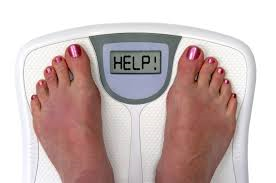
In the last decade, obesity has become what some would call an epidemic. There is no question about it, obesity rates are increasingly high with 34.9% of adults and 17% of children in the United States classified as obese.
Body Mass Index (BMI) is a person’s weight in kilograms divided by the square of height in meters. A high BMI can be an indicator of high body fatness. BMI is used as a screening tool, but cannot be used as a true diagnostic.
Adults:
Underweight range: BMI less than 18.5
Normal or healthy weight range: BMI between 18.5 and 24.9
Overweight range: BMI between 25 and 29.9
Obese range: BMI higher than 30
For children, the BMI is more complex as it depends on age and sex. A child’s weight status is determined using an age and sex specific percentile for BMI rather than the adult categories because children’s bodies vary as they age. The CDC Growth Chart is commonly used to measure the growth patterns of children in the United States.kid
What then can we do to change this startling statistic?
In some ways, our fast paced, convenience based culture is the blame. We spend more time rushing from one activity, event, or job to the next. We eat our meals in the car and they typically come out of a bag. Can we as a nation make a move from convenience to healthy?
Eating healthy is important to remaining a healthy weight, however it has become increasingly difficult to buy and prepare healthy foods. When I go to the grocery store, I usually spend between 20-40 dollars on the healthy stuff. I will buy fresh and frozen fruits and vegetables as well as whole grain breads. Granted I only cook for myself so my healthy foods last for a while and I am able to enjoy them all. That is not the case for a lot of families who seem to never have full cupboards.
Exercising is another important component to remaining a healthy weight. I am in the “overweight” category and I don’t know about you, but I hate exercising in public. Gyms are full of people who look better than me. It’s a self-confidence thing. How can I convince myself to walk into a fitness center and start working out when I look the way I do? I would hope and assume that there are many out there that feel the same way.
Weight and shape has become so important in our culture. We see all the models and celebrities who have the perfect body yet we also see all the ‘love your body’ campaigns on TV. How can I suddenly change my perspective from “I want to look skinny” to “I want to look healthy?” It will be difficult but I think I am up for the challenge.
To be a healthy individual you have to:
Feel healthy
Eat healthy
Exercise
And recognize that you are not the only one
 
Sources:
https://www.healthsourcechiro.com/contents.aspx?id=Healthy-Children-Childhood-Obesity
cdc.gov
 

I waited 3.5 years for this…and it wasn’t as special as I expected: my capstone experience

I first heard about the Neurochemisty capstone course as a freshman here at Concordia College. I signed up for the Neuroscience minor, and like the nerd that I am, immediately looked through all my course options. Neurochemisty caught my eye. It looked challenging and fascinating and from then on it was a goal. A race to the finish. I heard from upperclassmen how different it was as a class. I heard what a good experience it was. But let me tell you, Neurochemistry wasn’t everything everyone hyped it up to be.
Now let me explain…it wasn’t the class itself, or the content, or the professor that ruined Neurochemistry for me. It was Concordia College as a whole.
You see, here at Concordia, I was able to experience many different learning-teaching styles early in my academic career. As a college, Concordia is a proponent of real world discussions, becoming responsibly engaged in the world (BREW anyone?), and interdisciplinary learning. And accordingly, Concordia requires something called a “capstone” which is the type of class that Neurochem is.
The capstone is supposed to focus on the “Goals for Liberal Learning,” have a writing emphasis, and experiential learning. The “Goals for Liberal Learning” include: a love of learning, development of foundational skills and transferable intellectual capacities, understanding and integration of multiple perspectives, examination of cultural, ethical, and spiritual self-understanding, and responsible participation in local, national, and global communities. And Neurochem as a class did achieve all of these things as I look back over the semester. I loved learning through discussions of scientific issues incorporated with ethical and political aspects of the problem. I was able to hone my scientific paper writing skills which I hope to use in my future endeavors and practice writing on scientific topics to a general audience. I was able to [try to] twist my mind around the complexities of a science that incorporates every other science imaginable plus most of the humanities. I learned how to make a PSA.
But you have to be kidding me to think that in my senior year, a capstone course is the first times I’ve don’t any of these things.
Concordia College ruined my capstone experience by exposing me to all of those “Goals for Liberal Learning” and experiential learning far before my senior year. My school has allowed me the amazing opportunity to get to a class that is supposed to be so different and look back, reflect, and realize that really, it’s the school that is so different. I love being able to have a liberal arts education, where, in a day, I might have classes in four completely unrelated areas and then realize as I’m doing my homework how similar they all really are. I love that so many of the classes are discussion based. I love that the professors at Concordia are some of the best mentors imaginable and have believed in me and pushed me out of the Concordia bubble and into the real world where I’ve had amazing experiential learning opportunities at multiple nationally and internationally renowned hospitals and universities.
All in the 3.5 years before I took my capstone…while I thought I was waiting.
My capstone experience may have been ruined, but it was for the best reasons. Sure, it was a great time. There were a lot of laughs, a lot of learning together, and a lot of introspection as we covered topics that often centered around death and dying. I enjoyed going to class. I enjoyed Dr. Mach as a professor. I enjoyed lively discussions with my 17 other classmates. But ask any student at Concordia—those things are not unique to a capstone course.
My capstone experience may have been ruined, but I wouldn’t have it any other way.

Bulimia and Body Image

Growing up in society today is not for the faint of heart.  The pressure to succeed in school, be involved in extra-curriculars, and maintain a normal social life can be overwhelming.  However, some would argue that the pressure to be skinny or look “good” is the largest of all.  The constant struggle with body image many children face today while growing up has been a major factor in contributing to the increase of eating disorders.  More children are “dieting” today and nearly 25% of pathological dieters eventually progress to an actual eating disorder(http://www.nationaleatingdisorders.org/factors-may-contribute-eating-disorders).  The fact that children are dieting or being told to diet should be a red flag to everyone that our obsession with body image has gotten out of control.
Ridiculous standards are being set by the media and everywhere around us.  As adults, more people realize that these standards are not realistic, however almost 60% of middle age citizens in America are still unsatisfied with their body (http://www.nationaleatingdisorders.org/factors-may-contribute-eating-disorders).  This is alarming.  What is even scarier is that children are more susceptible to the media’s portrayal of body image.  A recent study found that 42% of 1st-3rd graders want to be thinner and 81% of 10 year olds are afraid of being fat (http://www.nationaleatingdisorders.org/factors-may-contribute-eating-disorders.  At that young age, there is no reason for a child to be thinking about and judging their own body.
Children need to be somehow educated at a younger age on how to eat properly.  Eating properly is not dieting.  Dieting has very negative connotations, because it implies that there is something currently wrong with your body.  I believe if children are taught to enjoy real, healthy food; they will not only be physically healthier, but mentally healthier as well.  I believe this would decrease the amount of eating disorders present in people, especially adolescents.

Neurochemistry at Concordia: A New of Learning

Being that I am a chemistry major at Concordia, I have taken my fair share of chemistry courses, none of which are anything like my experience of taking this Neurochemistry class. This course is a capstone course, meaning that it is a writing intensive course designed to be a final experience prior to graduation where one can apply everything they have learned in one course.
Although this course was far different from any other class I have taken at Concordia, it was a nice change of pace.  It allowed me to learn material in a different way, by struggling alongside my peers in order to decipher the material we encountered each week.
The group discussion portion of the class was a great way to end the week and it was beneficial to have time set aside to discuss pressing issues with my peers. In this day and age more things are discussed over social media, so it was refreshing to have face-to-face interactions.  I feel that it is important to be open about our opinions, and everyone brought their own experiences to the table.  This allowed me to think deeper about the issues at hand and consider views that differed from my own.
The writing portion of this course allowed me to develop skills in communicating science to the public.  This is an essential skill for anyone who is heading into a career path related to science. Science seems pointless if we are unable to communicate it to the general public.
I have had previous classes with every single person in this class, but I really got to know them through one-on-one interactions with them on a weekly basis. I have established friendships from taking this class, and I owe that all to Concordia for bringing together such a fantastic student body, and I will be forever thankful for the friendships I have developed here!
As a parting remark, I would like to thank everyone who has read my blogs, and I hope you enjoyed reading each week about the new material we encountered!
cobber C

Bulimia: what's the cause?

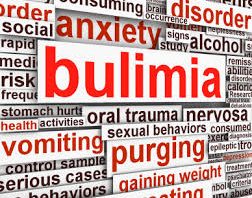
Bulimia nervosa, BN, is a mental disorder that is characterized by binge eating and behaviors such as excessive exercise, self-induced vomiting, and laxative abuse.
One of the telltale signs of Bulimia is seen by looking at the teeth, meaning that it is often detected by a Dentist. The self-induced vomiting causes an erosion of the enamel on the back of the front upper teeth.
The science behind bulimia reveals that serotonin and estrogen play a role in its development. Specifically, there is a decrease in the signaling of estrogen within the brain that leads to decreased signaling of serotonin within the brain. Estrogen deactivates the serotonin 1A receptor, which leads to more release of serotonin but with a dysregulation in estrogen there is a decreased release of serotonin.
The decreased estrogen function explains the “out of control” feelings associated with BN. Decreased serotonin signaling leads to feelings of anxiety and impulsive behaviors, both characteristics of bulimia.
It is hypothesized that bulimia begins with a mood disorder. Decreased serotonin levels in the brain can lead to depression, which explains the presence of a mood disorder in individuals with bulimia.
But what’s the initial cause of bulimia? As mentioned above, there is a dysregulation of estrogen and serotonin signaling in the brain, but what is the media’s role in bulimia. Bulimia develops most often during puberty.  If teenagers are constantly being told by the media that they need to be skinny, then it seems logical that bulimia would develop in today’s youth.

Capstone Reflection

At Concordia, it is always emphasized that we BREW, become responsibly engaged in the world.  Neurochemistry, as a capstone course is a class in which one could BREW quite a bit, maybe in the way of just having a different perspective about certain things in today’s society, like bulimia, obesity, autism and other disorders or diseases that can affect the brain.  After taking this capstone, I feel I know a little bit more about these diseases or disorders than I did previously, and have a new view of regarding certain aspects of them, like how the brain works differently when it encounters high fat r high sugar diets, or how much can happen to the brain during development in the womb.
My capstone experience has also given me skills in being able to figure out how to read difficult articles with a lot of unknown topics in them and still get something out of what the article was trying to say.  It is a skill that will be useful in the future, as I am a student that wishes to continue on in my education in science and being able to tackle these articles will assist me further down the road.  It will enable me to learn on my own no longer needing to rely on teachers and assignments to learn.
This capstone course was very outside of the box for a science class, involving many other topics of discussion that were all interrelated to science, like debates in the sports world about concussions or legalization of cannabinoids for either medical or recreational use.  We covered topics that are prevalent to topics in the new.  Instead of covering some material and then there will be a test to regurgitate it all, we learned science gradually and hand in hand with the real consequences of this science if it is not working properly.
Neurochemistry was a class where the students taught each other a lot of the times, which was helpful to my learning it better if I was teaching it, or my understanding it better if it was being explained to me in terms that most all of my peers could understand. By learning in this way, we were all accountable for doing our work on time, for if not then others would not get the information they needed, thus it was an effective way to ensure that work was being done in the course without the necessity of turning in a worksheet every day.
Concordia has truly helped instill a love of learning within me, I enjoy going to classes in my majors and am excited to see what more I can learn before I leave.  While neurochemistry was not the subject that I am most interested in within chemistry, I still found that it helped grow my love of learning.  It gave me the tools that I need to keep learning on my own past college, as I now feel more confident in researching online and learning about science through methods other than a textbook or a lecture.

Capping Off the Concordia Experience

Initially coming to Concordia, I had no idea what to expect. The institution said that it would “instill a love of education” and at the time, all I could think is “oh boy…”. I can’t claim that I was the most studious high school student.. In fact, I don’t recall one time that I had to actually sit down and study for an exam. Except for a select few teachers, I feel like I was never truly challenged in high school. That all changed once I came to Concordia.
Reflecting on the past three and a half years, I firmly believe that attending Concordia was one of the best decisions I have ever made. Initially, I carried over some of those non-existent “study habits” that I had in high school, which really kicked me in the ass my first semester of freshman year. I wasn’t used to not getting all A’s.. and so that actually made me quite mad with myself. That semester was extremely humbling in that I realized I wasn’t currently that good of a student. It’s all different now.
I believe that my capstone course (Neurochemistry) has fully incorporated what it means to be a good student. Instead of just listening to a professor speak and jotting down notes, I felt like I was fully engaged in discussion all the time. Because of this engagement, a lot was required of me. It took extensive research on topics out of class time. Not all of the research I did was mandatory, however. There were nights where I was genuinely curious about what was going on in our minds (and what a wondrous, yet confusing thing it is!). This course has thus taught me how to love my education. This curiosity will travel with me into my career as well. I aim to go into the dental practice with the hopes of becoming an oral surgeon someday. It is a high goal, but also one that is very feasible for me if I consistently am engaged like I was for this class.
Thankfully (actually, not always thankful), this was not my only class this semester. I was taking 2 other chemistry classes, our extremely demanding human anatomy and physiology course, and a 300-level history course on modern east-asia (which required grueling amounts of reading). I say thankfully because all of my classes (besides the history course) intertwined in content at one point or another. I feel that this intertwining was a result of having this capstone course. Whether the content was actually required of the course, or whether the content was brought up in Friday discussions, relevant perspectives of different cultures and what other people were educating themselves on were represented. This engagement from my fellow peers played a massive role on my self-actualization and understanding. I cannot begin to thank the professor, Dr. Julie Mach, and my fellow classmates enough for the benefits that they have unknowingly contributed to my education and my love for learning.
Overall, I am very glad capstone courses are required of the students here at Concordia. Although seeming like they require a lot of discipline and dedication to the coursework, which they do, it is extremely important to instilling what this college is all about.

Is Obesity a Choice?

If you actually know me, you would know I can come across as a “health nut” and I am proud of that. I wasn’t always this way though.. Up until about my junior year of high school I was always that kid other kids called “fatty” or “chunky”, and it’s true.. I was, in fact, overweight.
I remember getting the call from my mother on the way to school. My grandpa had passed. I was still pretty young at this time, and I never got to see him much, and unfortunately, what I do recall of this man was that he was always suffering from his diabetes. He wasn’t necessarily the most self-conscious about his health and I remembered that I didn’t want my future grandchildren to remember me in the same way, so I changed my habits and started being conscious about what I was putting into my body. The summer following my junior year I started exercising and subsequently went from weighing about 210 lbs to about 165 lbs. Words cannot describe how proud I was of myself for turning my life around like that; which gave me a new reason to remember my grandpa by. In my case, getting in shape was a choice, and I encourage others to be active each and every day, because turns out: once obesity is onset, it becomes harder to “cure” it.
In a study we read for neurochemistry, hypertensive rats were given the choice between a high-fat diet and a “regular chow”. Not only did they increase their body weight in choosing the high-fat diet over the other, but they also displayed leptin and insulin resistance and further increased blood pressure. We don’t know why, but it is hypothesized that with an increase in obesity, there is a biological mechanism saying “eat more” of these fatty consumables.
Individually, I looked into the role the circadian rhythm has on obesity. Turns out, everyone is right in saying that YOU NEED SLEEP. Altering the circadian rhythm by not getting enough sleep is one of many side-effects of not eating or exercising healthily. This then starts a vicious cycle of negatively impacting your sleep schedule. You eat unhealthy, you maybe get a worse night’s sleep, then you throw off your circadian rhythm, altering your eating habits for the worse the next day, then you sleep worse the next day and so on… It seems as if our bodies are constantly combating the ability to stay fit, and you WILL have to put in a lot of effort if you are already facing obesity, but I am here to say from experience that it WILL be worth it.
I firmly believe in fighting obesity before it becomes an actual debilitating disease. Because of the biology behind it, some refer to it as a “biological trap” which becomes increasingly more difficult as it progresses. Kick it in the butt now, before you can’t.

Spam prevention powered by Akismet