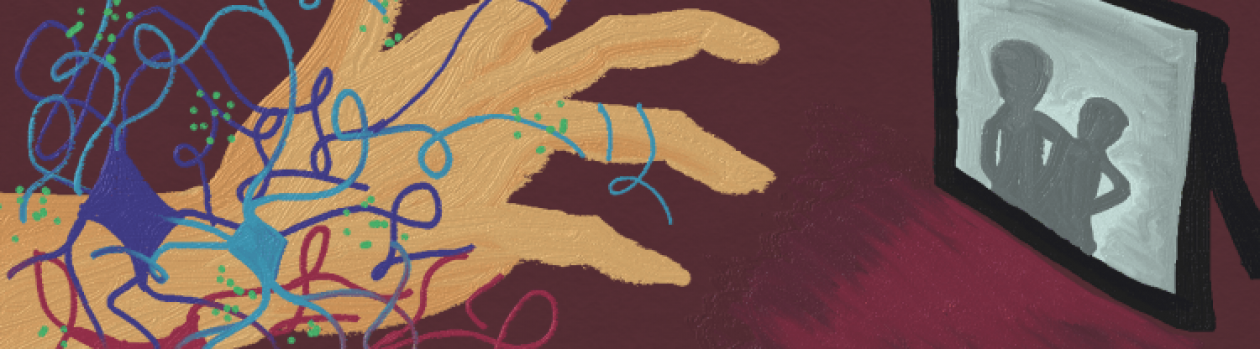

One thing to know before you dive into anything on this blog. This stuff is very complicated. This weeks article in particular was very scientifically based and dense to get through. Not even science students who have been in college classes for nearly 4 years, nor their professors, completely understand everything that’s going on. The brain is an extremely complicated organ. Our goal here is to give the science in more simplistic terms, and more than that, explain what this means for us living in our society. Why should we care about this stuff?
Many of the complicated terms discussed in Neurochemistry articles are not terms that the public is familiar with. One term that is familiar to most is dopamine. Dopamine is an important neurotransmitter found in the brain, sending signals from one nerve cell to another, which in turn controls physical movement, memory, alertness, attention, emotions, and perceptions. In order to work, dopamine binds to receptors, not-so-surprisingly called dopamine receptors. There are multiple kinds of dopamine receptors and the one that this article focuses on are D2 dopamine receptors. Recently, these receptors have been noted as acting in a certain pathway, and the effects of this pathway on different brain disorders were noted.
The pathway that this article focuses on is the Akt/GSK3 signaling cascade. Like most other things in the brain, it is vital that this pathway is functioning at the right levels, having enough signaling, but not too much. Now, I could bore you with the nitty gritty, science-y details of what’s really going on here, but I’m not sure how helpful that would be. What is important to understand here is that this signaling cascade starts because dopamine binds to a D2 receptor. If levels of dopamine are off, or something goes wrong in this pathway, we are left with brain disorders such as schizophrenia, bipolar disorder, and Parkinson’s disease. This is why we care. The implication that disruptions in this pathway lead to these disorders is fairly new research, and by understanding exactly how this pathway works may lead scientists to discover helpful treatments.
Scientists are far from understanding everything about dopamine and the Akt/GSK3 pathway, but what is important to know is that current research is helping us get there. The complications come in when you realize that both dopamine and the Akt/GSK3 pathway do MANY things throughout the brain besides act in ways that affect these disorders. Thus if you are trying to target something in this pathway to help a specific aspect of a certain disorder, this could cause many unwanted side affects. The field of science and medicine has come a long way, but it has a long way to go! It is exciting to know that we understand more and more every day and this knowledge is helping discover new treatments of neuropsychiatric disorders.
Breaking the Stigma: Marijuana and the Endocannabinoid System
A couple of weeks ago I was talking to my parents and they asked me about classes and how they were going. I began to tell them about what I’m studying and began to talk a bit about neurochemistry. I told them about how we read an article each week and really break it down in order to fully understand what the article is talking about. I told them about how we’ve talked about insulin, dopamine and even endocannabinoids. Jokingly, my dad immediately asked,
“Endocannabinoids? You’re not going to start smoking pot are you?”
Although I know my dad was only kidding, his quick response when I said I was learning about endocannabinoids was not surprising. Although marijuana is associated with sitting on the coach, playing video games and raiding the house for food, there are enormous benefits to the drug that it seems few recognize, or at least take seriously. Cannabis has become an increasingly popular topic in today’s society, especially since there are states that have begun to legalize it for medicinal use, and for good reason.
I’m sure many of you have heard of THC, the main psychoactive ingredient in marijuana. But what I do not believe many know is that our bodies create similar molecules known as endocannabinoids. The two most important are anandamide (AEA) and N-arachidonoyldopamine (2-AG). These endocannabinoids do not have the same psychoactive effects, but do have very positive influences on our bodies.
The endocannabinoid pathway is very unique because it works backwards. Other pathways work from a pre-synaptic cell (cell sending the signal) to the post-synaptic cell (cell receiving the signal). The endocannabinoid pathway works instead from post-synaptic to pre-synaptic. This process is called retrograde signaling. Retrograde signaling is a feedback mechanism used to regulate chemical neurotransmission.
Manipulation of the cannabinoid pathway may provide treatment for those suffering from Alzheimer’s disease (AD). Cannabinoids have been seen to reduce oxidative stress, neuroinflammation and apoptosis (cell death) that are evoked by β-amyloid, which is involved in AD. Cannabinoids also may have the ability to promote repair mechanisms within the brain. Manipulating the endocannabinoid system in AD patients may offer a better substitute for current treatments that often have unwanted side effects such as liver damage and gastrointestinal disturbances.
More and more people are becoming aware of the positive effects of marijuana. But the main issue for many is its psychoactive side effects. Now researchers are working on ways to extract THC and use it in clinical trials. Scientists are also working on ways to decrease those psychoactive side effects in order to provide a more ethical way to administer treatment with the use of cannabinoids.
I understand why it is so difficult to accept that marijuana is good for you, especially with its psychoactive effects and the stigma that has been pressed upon it. However, with new methods of research and the vast amount of information there is out there, it is hard to ignore the facts. There is little evidence that smoking weed is bad for you. In fact, there is more evidence that consuming alcohol is more detrimental to our brains than getting high!
Now, I don’t mean that we should all start getting high while listening to the newest Arctic Monkeys album, but rather to open our minds to the reality that Cannabis can be good for the body. It can be beneficial for those suffering from Alzheimer’s, Multiple Sclerosis, severe pain, Tourette’s syndrome, seizures, migraines; the list goes on and on. Hopefully, as time proceeds others will begin to recognize its benefits, and work to focus on finding a way to harness its helpful properties.
Why are we a little shaky on Parkinson's disease?
Parkinson’s disease (PD) is a degenerative disease of the central nervous system that affect an estimated one million individuals in the united states. It has extremely visible characteristics such as uncontrollable shaking, rigidity, and impaired motor skills. PD is primarily a result of the death of dopamine producing cells in the brain. A protein called alpha-synuclin that normally mediates cell death is disrupted and leads to Lewey body formation in the brain.
There are several current treatments that attempt to counteract the effects exhibited by an individual with PD, but none fully rid the individual of the disease. The role of iron homeostasis in the brain in relation to the development to Parkinson’s disease has been under more and more investigation in recent studies of the disease.
Iron is carefully regulated in the brain and the imbalance of iron can lead to very disruptive consequences the central nervous system. Specifically, the role of iron chelators have been examined as a potential treatment for PD. Iron chelators work to bind iron and remove them from your system. A patient with PD exhibits elevated accumulation of alpha-synuclin as well as increased oxidative stress. Oxidative stress greatly contributes to mitochondrial dysfunction and neuronal death. These iron chelators have been found to inhibit these harmful processes from occurring. In particular, a drug named M30 is being studied as a potential treatment for PD. However, you can find sources of iron chelators in naturally occurring substances as well, such as green tea. Epigallocatechin gallate (EGCG) is abundant in green tea can help alleviate problems caused by increased iron overload as well as acting as an effective antioxidant to deal with the oxidative stress caused by PD.
Although there is no one-stop-cure-all method to preventing or treating Parkinson’s disease, there are things we know about the pathology that may provide useful insight in helping prevent the disease. The accumulation of iron and the resulting oxidative stress in your cells has been shown to contribute to PD. So taking healthy supplements that have antioxidative characteristics is extremely healthy (antioxidants play a role in a variety of diseases), as well as watching your iron intake and being mindful of what you’re ingesting into your body. Time and time again, diet seems to play a crucial role in our health and the prevention of a variety of different diseases.
Searching for a Solution

Lithium has been used to help treat a variety of mental disorders. The pathway lithium takes to help keep cells from undergoing apoptosis involves many factors. The involvement of lithium has a positive influence for diseases such as Alzheimer’s, Parkinson’s disease, as well as schizophrenia, bipolar, and depression. However, lithium is used differently in certain types of neurodegenerative diseases. For bipolar disease it is used to help with the manic stages, and with diseases such as schizophrenia, it helps with the depressive side of the illness. I found this to be particularly interesting in that it can help with both extreme mental stages, and helps to return the brain to a “normal” functioning level. Also, for many of these illnesses, when taking lithium as a medication, it is used in conjunction with other pharmaceutical drugs. I would assume this is to keep patients from over compensating in one direction, and if lithium is taken for depression, without other drugs it may cause the patient to have manic episodes.
As many drugs do, lithium is involved in deactivating the GSK-3 pathway. As we have learned before, this pathway is involved in so many functions within the brain. My thought is that there has to be some reason the GSK-3 pathway is in our brain, and even if we keep targeting it, there is bound to be some not so good side-effects from these drugs. There has to be a reason why lithium is not naturally made within the body, and that goes for many of the other pharmaceuticals that are prescribed. Yes, the GSK-3 activated pathway leads to apoptosis, or cell death, but it has to be involved in something that benefits our brain, or else it would not have been made. Same goes for p53. It helps keep cancer cells from forming, and by using lithium, p53 is essentially deactivated via the GSK-3 pathway.
The scientists who are involved in all of these long term studies for many of the medication for neurodegenerative diseases, I believe at least, are going to be finding some very interesting information. With all the unnatural things we put into our body, it is bound to backfire at least a little bit. When we evolved into what we are today, there has to be a purpose for whatever is in us, or at least there was, and if we keep adding substances that are not natural, the findings are going to be very interesting.
I believe that lithium is a wonderful treatment for people who are willing to try anything to help them feel better now, and are not concerned about the later (for some people there might not be a later if the now isn’t fixed promptly). We can only test, retest, and test again to see how our hypotheses actually affect people, and until we are certain how different chemicals act within our body, I believe it is only a measure that should be taken in desperate measures. As I have said before, we have become a society that just wants to have everything fixed right now, but what if we were to take the time to actually look at what is cause the diseases in the first place instead of always looking for a cure?
Parkinsons… iron chelators… green tea??? (I promise they're all connected)
Parkinson’s disease, iron, and green tea hardly seem like they could be related; however, by reading “Targeting dysregulation of brain iron homeostasis in Parkinson’s disease by iron chelators” I now believe they can all be connected. Parkinson’s disease is a well-known neurodegenerative disease. While many can identify symptoms of the disease, including tremor and muscle stiffness, the mechanism of pathology has yet to be understood completely. Scientists have been able to identify a loss of dopaminergic neurons in a region of the brain known as the substantia nigra pars compacta. The decrease in these neurons causes a decrease in the release of dopamine into the striatum. The loss of these neurons occurs as a result of the formation of Lewy bodies. While there are many substances that found in Lewy bodies, it is primarily the aggregation of a protein called alpha-synuclein that causes the formation of Lewy bodies. So how do iron and green tea fit into this picture? Elevated iron levels have been noted in the brains of Parkinson’s patients. Scientists believe that elevated iron levels may cause the generation and buildup of reactive oxygen species as well as intracellular alpha-synuclein. In addition, iron is able to increase the expression of alpha-synuclein and stabilize it as it aggregates. Free radicals allow for the protein to aggregate. Elevated iron levels seem to be an explanation behind Parkinson’s disease, so how should we deal with this?
Researchers are starting to look into drugs known as iron-chelators. These drugs aim to regulate iron levels in the brain, thus decreasing the pathological process described above. While some pharmaceuticals have had some success, there are some natural solutions that may prove to be very powerful. The paper discussed the benefits of a molecule known as EGCG that can be found in green tea. EGCG has been shown to act as an antioxidant as well as have the potential to bind excess iron to allow for its disposal. If iron plays a role in the pathology of Parkinson’s disease, the effects of EGCG and green tea seem promising. While pharmaceutical iron-chelators have shown promise as well, there is much to be said about utilizing natural substances rather than chemicals with unknown short-term and long-term effects. Regardless of natural methods or pharmaceutical methods, iron chelators seem to be a promising treatment for Parkinson’s.
Concussion Discussion
The topic of discussion in class this week was concussions as we dove into the article “The molecular Pathophysiology of Concussive Brain Injury.” Before we even began to consider the scientific aspects of concussion, I first paused to consider how prevalent concussions are today. It is almost certain that an individual or somebody that they know have had at least one concussion in their lifetime. According to the paper, approximately 1.6 to 3.8 million athletes suffer from a concussion each year. Also known as mild traumatic brain injury, concussions drastically alter brain function. So why is it that concussions have become so common? Have we become apathetic to their effects, focusing rather on the pleasure we gain from sports? What measures should we take to better protect from and screen for concussions? While we certainly did not answer all of these questions as a class, we did discuss some interesting ideas.
In addressing concussions, it is important to first understand the mechanism by which they occur. A concussion is initiated by a mechanical trauma. This trauma causes the neuronal cell membranes to be disrupted and axons to stretch, allowing for ions to freely flow. Indiscriminant ion flow allows for the disruption of many cellular processes (nonspecific depolarization, release of excitatory neurotransmitters, potassium efflux, increased activity of membrane ionic pumps, hyperglycolysis, lactate accumulation, calcium influx, decreased ATP production, initiation of apoptosis). Although the exact mechanism may not be interesting to everybody, the most important thing to understand is that the cells of the brain are firing at random, working extra hard, using extra energy, and may be damaged beyond repair.
Symptoms of a concussion include behavioral changes, memory and attention impairment, headache, and unsteadiness, among many other possible symptoms. Early on, an individual can expect to suffer from headaches, dizziness, nausea, vomiting, and lack of awareness. As time progresses, individuals can suffer from persistent headaches, sleep disturbance, diminished concentration and attention, memory dysfunction, and lack of awareness. Depending on the severity of the trauma, severe brain injury can be sustained. In terms of treating a concussion, there’s not much that can be done. It is imperative that an individual suffering from a concussion takes the time to allow his or her body to heal. This includes proper rest, not engaging in strenuous activity (both physical and mental) and eating a nutrient rich diet. Some research has shown that a ketogenic diet may be the best diet after a concussion has been sustained. Ketone bodies have been found to improve mitochondrial function as well as regulate the expression of genes related to apoptosis, inflammation, neurotrophins and molecular chaperones.
With the effects of a concussion being so clear, are we taking the proper precautions to prevent them? The NFL has been taking steps to decrease the incidence of riskier hits, including stronger enforcement of helmet to helmet collisions. While this is great, should we be doing more? I am by no means an expert on the topic, but I still think there are improvements that can be made. One of the biggest topics of our discussion was how concussions are handled in college. While it is important that students have the proper amount of time to rest and heal, the rate at which college classes move makes it nearly impossible to return to the classroom after a concussion. With many student athletes at Concordia, this could drastically affect their college career. We discussed the need to implement a system that aids students that have suffered a concussion so that they may more easily return to the classroom. While I certainly do not have the answers to this problem, I believe it is important that better screening is implemented to check for concussions. In addition, I believe it is important to allow for proper healing time. By making some changes in how concussions are handled, hopefully we will be able to decrease the incidence of lasting brain damage.
Dopamine and the Akt/GSK3 Pathway
If there is one thing I’ve learned after reading scientific articles it is that there is always something more I need to learn. Especially after reading the article “Beyond cAMP: The regulation of Akt and GSK3 by Dopamine Receptors”. The article was so thick it was like swimming in a pool of jell-o. But luckily, with some handy tips that my science classes have taught me throughout my years at Concordia, I’ve learned that the only way to eat an elephant is one bite at a time.
Recently, my neurochemistry class read an article about the importance of dopamine and its receptors within a signaling pathway called the Akt/GSK3 pathway. This pathway is involved in all sorts of things such as glucose metabolism, apoptosis, and cell proliferation, transcription and migration.
There are many different kinds of receptors, and the ones most important within the Akt/GSK pathway are the D2 receptors. D2 receptors are a sub family of the dopamine receptors that activate other molecules that eventually inhibit the production of cAMP, an important second messenger molecule involved in many biological processes, and inhibit Akt phosphorylation of GSK3.
Once the D2 receptors are activated, they also inhibit the activation of Akt kinase, which allows the GSK3 kinase to proceed. This is done by the D2 receptors activating a complex, or group of molecules, to form together. This inhibits Akt activation, which means Akt cannot phosphorylate and causes GSK3 to activate.
In certain mood disorders, such as schizophrenia and bipolar disorder, there is an imbalance of dopamine within the brain. Many antipsychotic drugs are used to help this imbalance by working through the Akt/GSK3 pathway. These drugs act as antagonists on the D2 receptors, which causes an increase in Akt activation by not allowing the formation of the inhibitory complex, which in turn decreases GSK3 activity. Thus, too much activation of GSK3 can lead to negative side effects and have been seen to be a possible cause for these disorders.
It’s a lot to understand, especially after tearing the article apart only to simplify it to knowing simple mechanisms when there is so much more going on. But one thing is for sure, the brain is complex and there is always more to learn about it!
Why are Men more likely to get Parkinson’s disease?
Parkinson’s disease is a degenerative disorder of the central nervous system. The symptoms are caused by the death of dopamine generating cells in the brain. Symptoms of the disease are shaking, rigidity, and movement along with mental symptoms such as thinking and dementia. Resent research shows that men are more likely to get the disease than women. The question is why does this occur? One reason behind this is due to the different life styles between the genders. Men tend to have jobs that expose them to toxic chemicals which have been linked to causing PD. MPTP is a chemical which has been shown to cause Parkinson’s like symptoms and is now used to cause the disease in rats for testing. Men are also more likely to get a head injury severe enough to cause damage which later on could lead to PD. Another fact could be the types of hormones men and women produce. Research has shown estrogen may have protective effects against the formation of the disease. Men tend to have a higher level of iron in their body than women. This is a problem because research shows that the accumulation of iron in the brain is another possible factor for PD. However, the research at this time is inconclusive if this maybe another factor to why men are more like to develop PD.
Concussions and their effects on sports
Concussions or mild traumatic brain injury (mTBI) is a head injury that consists of temporary loss of brain function. Symptoms can manifest in a variety of physical, cognitive and emotional. A person whole receives an mTBI can show signs of temporary motor loss, memory loss and in some causes mood changes such as depression. To this day the best treatment for mTBIs is still to get plenty of rest and avoid physical and mental excursion like sports and school. 1.6-3.8 million athletes suffer from concussions yearly. These concussions are most commonly found in contact sports like football and boxing. Due to the serious nature of these injuries many have questioned the actions in these sports. Football on all levels has been brought under the microscope on this topic extensively in the last decade. Before this football has had an almost violent nature to it. Some would even say there was even a promotion of this violent nature by certain parties and individuals. However, the cover ups about the long term effects of concussions could no longer stay hidden which is why most recently those parties and individuals have changed them game. Main rules have changed to reduce the number of concussions all the way from little league to the NFL. However, some of these changes have made some parts of the game worthless. Most noticeable is the kick off in football. The caliber of kickers in the NFL are so high that main of them can kick the ball out the back of the end-zone without even trying. This simple change of moving the football up 5 yards practically eliminates the kick off as a whole. It has also eliminated a lot of big hits from the game even though some are just good defensive tackles. The fear of being ejected or fined for performing well dwells in the back of players mines. This is not saying that these rules do not have their place in the game. The main reason for they are there is to insure the safe of the players, but how far is too far? Has safety gone too far already or has it not gone far enough? These are the big questions that have not been answered yet.
Dazed and confused: where should we stand on medicinal marijuana?

“I swear officer, that’s not mine” seems to invoke the image of some punk teenager getting busted with pot or perhaps a scene from the movie Pineapple Express (pictured above). That image also usually carries a certain stigma with it. I would say this stigma is certainly warranted, but what if marijuana could be used in a healthy fashion? Could rolling up a doobie from time to time really improve your health?
This last week we explored a review article on the endocannabinoid system, Endogenous cannabinoids revisited: A biochemistry perspective. I had always heard that marijuana had medicinal uses, but I had never really known what those were or how much truth they held.
The human body produces two primary endogenous cannabinoids: anandamide (AEA) and 2-arachidonoylglycerol (2-AG). They are modulators of a variety of physiological functions throughout a diverse array of systems in the body, including the central and autonomic nervous system, the immune system, endocrine network, and reproductive system. They are involved in anti-inflammatory actions, analgesia, and feeding behavior, as well as a number of other biological effects.
Now for the interesting part: marijuana contains a cannabinoid called tetrahydrocannabinol, or THC for short. This is the chemical that is primarily responsible for the psychoactive effects that an individual experiences after smoking marijuana. It binds to the same receptor that AEA and 2-AG bind to and consequently produces many of the same effects, especially analgesia and altered feeding behavior, also known as “the munchies.” Extensive research has been carried out to assess the question as to whether or not marijuana holds any medicinal value, and the results suggest there are many practical uses for it. Recent evidence suggests that THC may play a helpful role in the control of cell death/survival. Among other uses, marijuana has been shown to be tremendously beneficial to those who suffer from chronic pain.


Whether or not marijuana had medicinal value is not the question. It does, and there is very little evidence against its practicality and usefulness in a variety of different areas of medicine. The question is how to go about deciding whether or not to use it for medicinal purposes. If there is an abundance of positive uses of marijuana, how can we justify not using it as medicine? Can it be regulated? Who can even regulate it?
Used in the right way, medicinal marijuana would undoubtedly prove to be useful for a variety of patients needing medication due to anything from the side effects of chemotherapy to the treatment of MS. But how do we do this?