
Nootropics
Nootropics are defined as molecules that aim to improve cognitive functions. You may have heard of them being referred to brain supplements or enhancers. There are several natural and synthetic molecules on the market that claim to have brain enhancing effects. But in order to talk about these nootropics we first need to understand what cognition is, and what it means to have enhanced cognition.
What Is Cognitive Function?
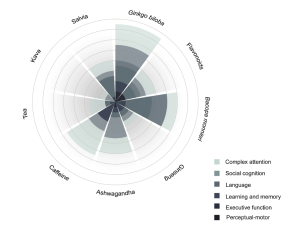
Cognitive function is a term used to describe someone’s ability to perform a variety of social and intellectual functions. There are 6 neurocognitive domains that the Diagnostic and Statistical Manual of Mental Disorders (DSM-5) defines (1):
- Perceptual and Motor Function: one’s ability to coordinate their bodies movements in response to their environment, and ability to interact with the environment.
- Language: the ability to communicate through writing or speaking, our grasp on grammar and appropriate speech patterns.
- Learning and Memory: the ability to record and recall information from the past. This involves many subdomains like working memory, and short term and long term memory.
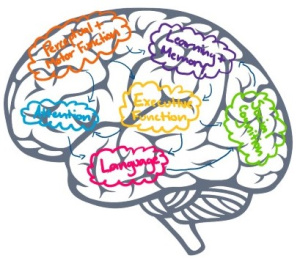
The neurocognitive domains, artstract by Toni Baynes - Social Cognition: the ability to processes, remember, and use information in social contexts to explain our own behavior; or to predict the behavior of others. Recognizing social cues and understanding facial expressions are good examples.
- Attention: ability to focus on multiple things at once, as well as the ability to prioritize what to pay attention to.
- Executive Function: higher level functions that allow us to plan and organize tasks, as well as make decisions and respond to our environment.
Many intellectual disabilities are characterized by a reduced ability to perform some or all of these cognitive functions. Research into nootropics to enhance these functions could potentially be used as as a way to combat intellectual disabilities.
Natural Nootropics
L-Theanine
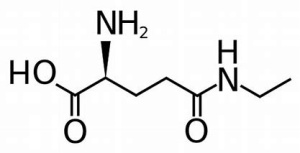
L-theanine is an amino acid that is found in green tea but can also be bought in capsule or pill form as a supplement. L-theanine when taken on its own has been shown to improve self-reported relaxation, and induce a state of calmness with a dosage of 200mg (2).
Caffeine

Caffeine has long been known to decrease drowsiness, due to its ability to bind to adenosine receptors in the body. However it’s also been shown that caffeine can improve performance during long lasting cognitive tasks at doses of 40mg (2).
When taken together L-theanine and caffeine improved performance in attention-switching tasks and in alertness (3). However these are ‘moment of’ improvements, as I like to call them. They will improve function when taking them, but there aren’t any long term effects these compounds have in the body that will improve cognitive function in the long run or permanently.
Synthetic Nootropics
Ampakines
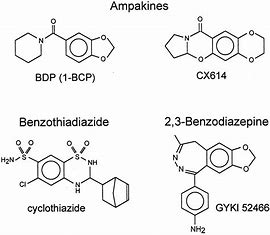
Ampakines are a group of drugs that increase excitatory synaptic responses in the brain. Because of this effect they facilitate long-term potentiation (learning), and induce the production of a family of molecules called neurotrophic factors, which help improve various brain functions and growth (4).
Modafinil
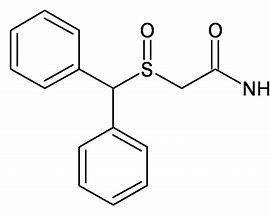
Modafinil is a prescription drug that is often used to treat narcolepsy. Tt has stimulating effects similar to amphetamines, though it has a lower risk of addiction. Modafinil has been shown to improve reaction time, logical reasoning, and short term-memory when compared to a placebo (5). The exact mechanisms of how modafinil enhances these cognitive functions is unknown, however.
References
-
https://altoida.com/blog/defining-the-6-key-domains-of-cognitive-function/#:~:text=Defining%20the%20Six%20Key%20Domains%20of%20Cognitive%20Function,of%20Neurocognitive%20Function%20to%20Improve%20Disease%20Diagnostics%20
-
Effects of Green Tea Phytochemicals on Mood and Cognition, https://pubmed.ncbi.nlm.nih.gov/28056735/
-
https://www.healthline.com/nutrition/nootropics#12.-Modafinil-(Provigil)
-
Ampakines and the Threefold Path to Cognitive Enhancement, https://pubmed.ncbi.nlm.nih.gov/16890999/
-
Modafinil, D-Amphetamine, and Placebo During 48 Hours of Sustained Mental Work, https://pubmed.ncbi.nlm.nih.gov/16890999/







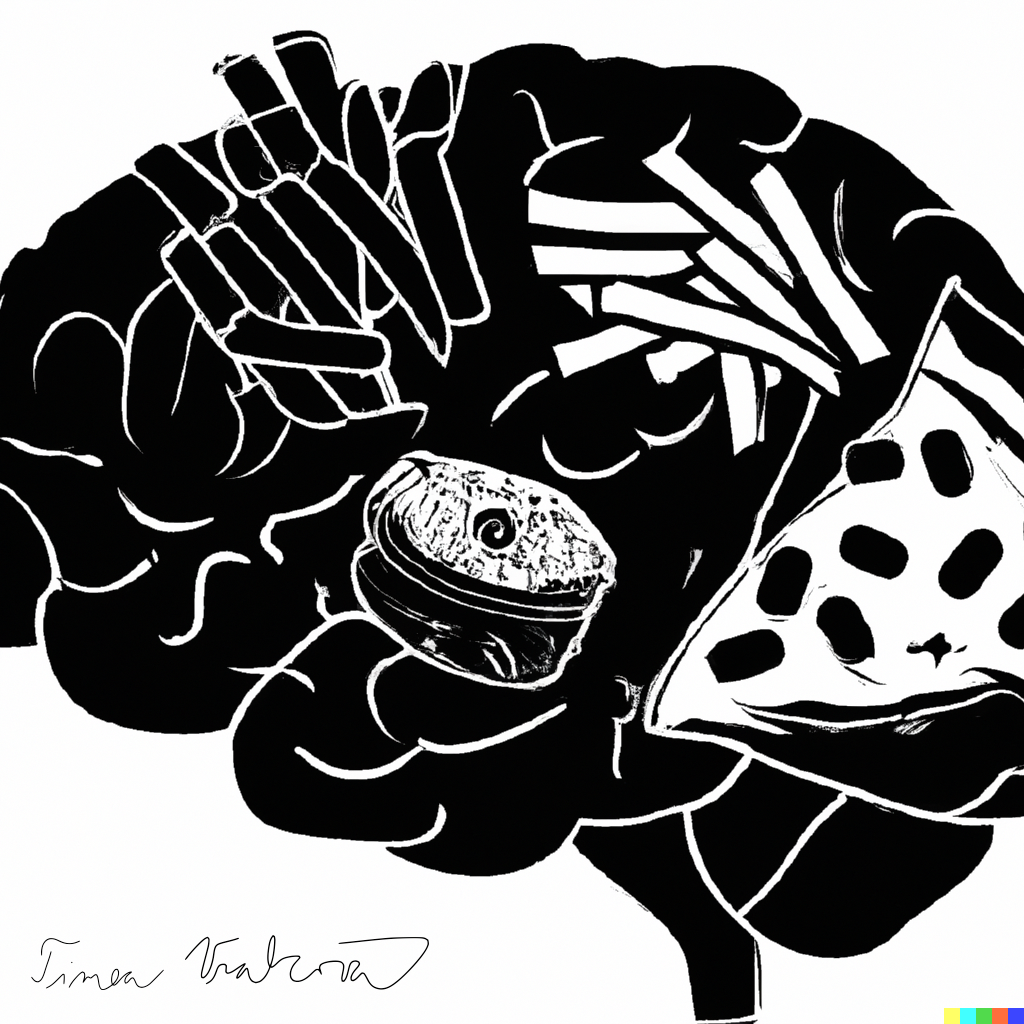 Artstract on DALL.E