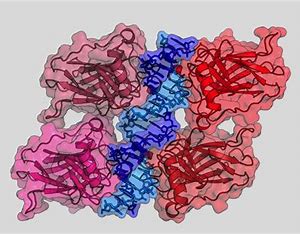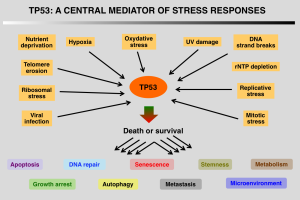

Tumor protein 53 (TP53) is a regulatory protein that helps regulate the progression through the cell cycle, apoptosis (cell death), and the stability of the genome. It does this through a few different ways:
When noticing DNA damage, it activates DNA repair proteins. This is important in a lot of functions to do with aging.
It can stop the cell cycle when DNA damage occurs, which allows DNA repair proteins to fix the damage, then will stimulate the cell to continue through its growth cycle.
It will initiate apoptosis when DNA damage is irreparable
TP53 is often regarded as the ‘guardian of the genome‘ for it’s role in preventing mutations and conserving stability. Specifically in vertebrates (like humans) this protein prevents cancer formation.
How Does It Work?
TP53 acts a cellular distress sensor, normally kept at low levels. TP53 is activated when there is cellular stress such as DNA damage (caused by UV or IR radiation, or chemical agents), or oxidative stress. This activation causes 2 major things:
The half-life of TP53 is greatly increased, which leads to a quick accumulation in stressed cells
TP53 undergoes a structural change that allows it to act as a transcription regulator in the stressed cells
The transcription regulating characteristic of activated TP53 allows it to convert DNA to RNA, which will go on to create cellular responses to the stress that is happening. To link it to TP53s main ways of regulating cells, the RNA can code for DNA repair proteins, or proteins that will initiate apoptosis if the cell damage is irreparable.
Role in Cancer
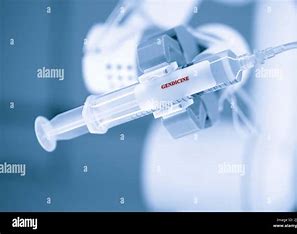
TP53 is mutated or deleted from the genome in over 50% of all human tumors. When the TP53 gene is damaged tumor suppression is compromised, are people with this are likely to develop tumors in early adulthood. Well maybe increasing levels of TP53 can be a good solution to preventing tumors or the spread of tumors. While this has been researched, this can cause early aging in a person, which is something that not a lot of people are too keen about. However research has been done in aiding to restore functionality of already existing TP53 in order to treat cancer. In 2003 a gene therapy called Gendicine was approved in China for the treatment of head and neck squamous cell carcinoma caner.
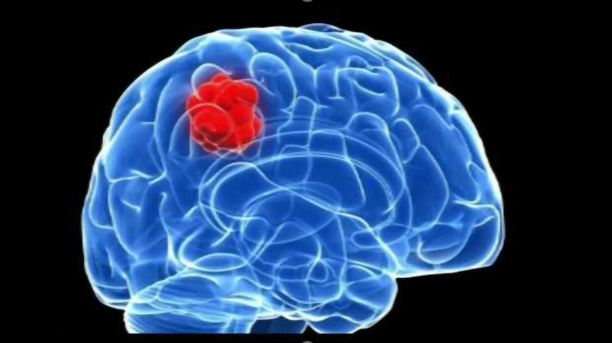
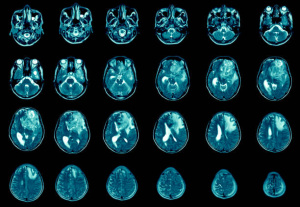
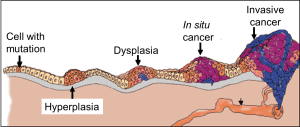
In short, glioblastoma (GBM) is brain cancer. More specifically, it is a very lethal brain tumor, sometimes becoming invasive to other parts of the body, such as the spine. There are two different forms that GBM can take: primary and secondary. In their article, Understanding and exploiting cell signaling convergence nodes and pathway crosstalk in malignant brain cancer, Fang and associates define these two types of brain tumor. Primary tumors develop quite fast, most of the time without any symptoms that show the development of the tumor. Secondary tumors grow from smaller tumors until they become malignant. In Figure 1, it can be seen how primary tumors just “show up” with no warning, and secondary tumors grow and grow.
Figure 1. The development of primary and secondary tumors in the brain.
GBM biology
GBM can be classified into two main groups, primary and secondary, but those groups can also be divided into four subtypes. These four subtypes are classified as Classical GBM, Mesenchymal GBM, Proneural GBM, and Neural GBM. These tumors are classified into these one of these four groups based on their transcription factors. Understanding the tumor type of each patient could lead to therapeutic techniques and precise target treatments. Figure 2, pictured below, details each of the four subtypes of GBM. There are different categories for how each subtype is categorized. For example, prognosis for each, different genomic alterations, as well as what proteins may influence these tumors.
Figure 2. Four different subtypes of GBM. Each is classified by their own genomic alterations, and transcription factors.
Why is it so hard to fight tumors?
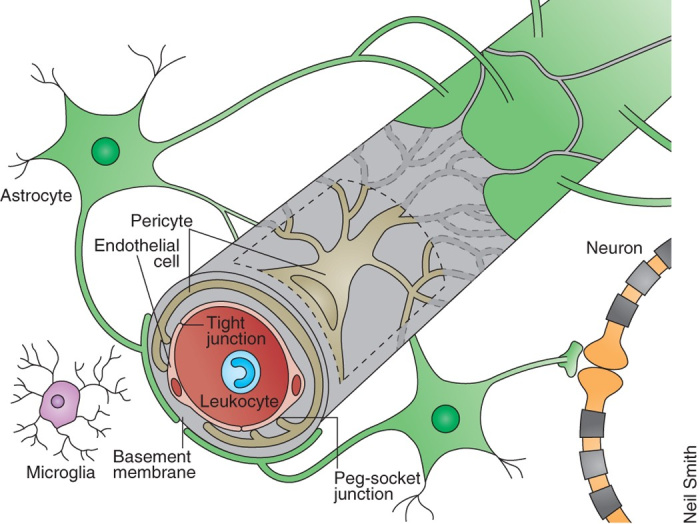
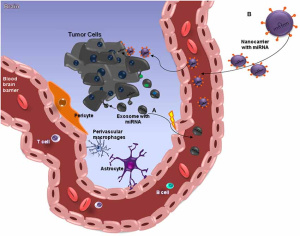
Tumors, and cancer in general, can be hard to fight. One of the main reasons GBM is so resistant to therapy is because of the impenetrable blood brain barrier (BBB). The BBB is the brains filtering mechanism, allowing for certain chemicals to pass to and from the BBB, it protects the brain from the bloodstream environment, and provides nutrients that is required for normal functioning. The BBB is composed of cells that are fit tightly together, allowing for some, but not all substances to pass through. To deliver therapeutic drugs to the brain, they need to pass through the BBB. And, if the BBB cannot be penetrated by these drugs, they are not going to be effective. There are many researchers who are trying to address this problem. Many methods have been developed to try and improve permeability of the BBB. Author Quanguo Ho and associates go into detail about these methods in their article, Towards Improvements for Penetrating the Blood-Brain Barrier- Recent Progress from a Material and Pharmaceutical Perspective.
Figure 3. The Blood Brain Barrier (BBB) schematic.
What is a tumor made of?
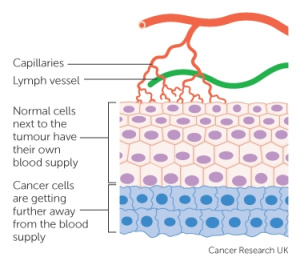
Tumors consist of a microenvironment, the small-scale environment of an organism. In this make up are T-cells, tumor-infiltrating dendritic cells, tumor-associated macrophages, and other complex components. Each environment is heterogenous, or diverse, in its own way. There are no two environments for a tumor that are the same. Each component of these microenvironments acts on each other in different ways. So, tumor survival depends a lot on what is involved in the environment. Figure 4 shows an example of these microenvironments and what is all at play.
Figure 4. Microenvironment of a tumor.
Molecular Pathways of a tumor
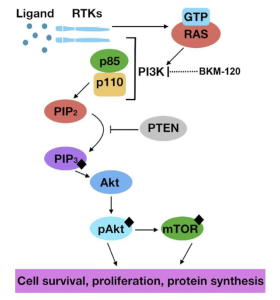
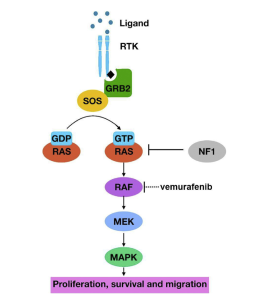
There are three main molecular pathways that tumors thrive on. All three will be shown below in more detail. These pathways include cAMP, MAPK, and PI3K. Everyone has these pathways in their body, but if something goes wrong, it allows tumors to prosper. For example, if the MAPK pathway becomes phosphorylated, or hyperactive, there is poor patient survival in those with GBM. The PI3K pathway regulates multiple cellular functions within the body. Shown in Figure 6 and Figure 5, there are intricate details to how the pathways operate.
Figure 5. MAPK pathway.Figure 6. PI3K pathway.
Unlike the MAPK pathway, cAMP and Pi3K are hypoactive. It has been hypothesized that there is most likely a mutation or amplification that occurs on the EGFR protein. This mutation activates other mutations in the pathway which eventually leads to the inactivation of the tumor suppressor gene, PTEN.
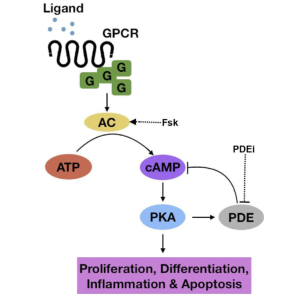
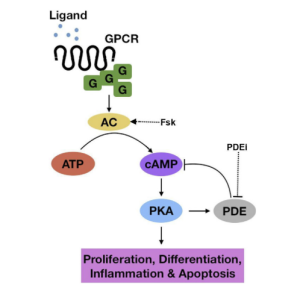
The last pathway, pictured in Figure 7, is the cAMP pathway. The two pathways mentioned above regulate multiple cellular functions, cAMP does that as well. However, the cAMP pathway has been studied less than the other two because it seems to be less prominent in tumors. There is a significant reduction in cAMP signaling which may be the reason for tumor production and growth. Figures 5 through 7 show a greater in depth explanation of the three pathways.
Figure 7. cAMP signaling.
So, what?
With all this information, why should you care? Understanding how these pathways lead to tumor growth is just one way to fight GBM. Specific drugs are able to target different aspects involved in these pathways. But, like mentioned before, the main issue here is the BBB and whether or not the drug can penetrate it. It has been researched that if a specific portion of one pathway is inhibited which results in tumor suppression. However, sometimes the tumor will just migrate and hinder another pathway to help itself grow.
Understanding the mechanism of these pathways and how they and tumors interact with one another will lead to further research in finding a cure for GBM.
References
DeCordova, S., Shastri, A., Tsolaki, A., Yasmin, H., Klein, L., Singh, S., & Kishore, U. (2020, June 01). Molecular heterogeneity and immunosuppressive microenvironment in glioblastoma. Retrieved March 22, 2023, from https://www.frontiersin.org/articles/10.3389/fimmu.2020.01402/full
He, Q., Liu, J., Liang, J., Liu, X., Li, W., Liu, Z., . . . Tuo, D. (2018, March 23). Towards improvements for penetrating the blood-brain barrier-recent progress from a material and pharmaceutical perspective. Retrieved March 22, 2023, from https://www.ncbi.nlm.nih.gov/pmc/articles/PMC5946101/
Fung NH;Grima CA;Widodo SS;Kaye AH;Whitehead CA;Stylli SS;Mantamadiotis T;. (n.d.). Understanding and exploiting cell signalling convergence nodes and pathway cross-talk in malignant brain cancer. Retrieved March 22, 2023, from https://pubmed.ncbi.nlm.nih.gov/30710631/
Glioblastoma is a brain cancer that happens in astrocytes. Astrocytes are a type of glial cells, the most abundant cells in the CNS. According to the National Brain Tumor Society, 13,000 Americans get diagnosed with GBM. Their next factoid is that 10,000 Americans “succumb” to Glioblastoma each year. Succumb really sticks out for a Medical National Society to use. With GBM’s current treatment plans and outlook, it is very fitting. Even in today’s day and age, treatment is very limited. Surgery, radiation, and chemotherapy have been the only approved treatment. Yet survival rates are trending up. Although the extension of 2-4 years may not be ideal, it is something. Especially for the diagnosis.
Why is it so limited?
The human body is just amazing and so complex. It almost has its own security or fail-safe plans. When everything is going as planned it is wonderful. When things aren’t, our body’s own security systems may interfere with external care that needs to happen.
Glioblastoma is very difficult to treat. Functions of glial cells are to maintain (promote formation of blood vessels for nutrition) and add structure to neurons in the CNS. Their spider web shape allows for them intwine in the brain to deliver proper nutrients. Which are vital for survival. Yet when cancer happens in these cells, the natural functions aids for this cancer be so aggressive and resilient. The shape of the tumors makes clean safe surgical removal of the tumor toilsome and dangerous. A 2021 article done by Stanford’s Neurology and Oncology departments found that there is a correlation between size of tumor removed to length of survival. The extent of surgical possibilities must be uniquely planed out. Glioblastomas are surrounded by brain matter patients physical or cognitive functions may be a risk.
The blood brain barrier is like a filtration system which allows only small fat-soluble molecules or ones that can bind to membrane proteins can bind. Transportation is only limited to certain areas of the brain. It is a great defense system, it’s your brain. You don’t want just anything to be able to get into your brain. Unless you have cancer and need treatment. Temozolomide is a very common medication the treat GBM, is it small and has fat like properties. TMZ targets the cancers DNA and adds a methyl group to DNA’s bases which stops its ability to replicate. Radiation is also used to disrupt the DNA and can shrink the tumors.
Ongoing Plans
Yet there is hope, many clinical trials are happening as we speak. According to a 2022 article, there hasn’t been a new drug approved as treatment since 2009. This article used ClinicalTrials.gov to find at the time 157 clinical trials. Currently in the US there are 231 studies happening right now focusing on glioblastoma from just over the 25,000 clinical trials currently happening. Medical treatment advances do still happen, but we are starting to catch up with our capabilities in this technology era. Over the last 10 years, success rates of clinical trials have dropped. Why you might ask. Well without more major advances, only certain minor advancements can happen. I kind of like to think of it like when the first microscope was created, I believe in the 1600s. There was only a limited things we can learn (at the time they were huge advancements.) Yes, it opened doors and caused a cascade allowing technology and science to be what it is today. In a way there is always a fluctuating limit of what we can advance at a given time. Still it is happening it just may need a miraculous discovery first to help. New clinical trials for treatments are looking into Nano therapy, inhibitor therapy, and immunotherapy. A neurosurgeon believes that the “groundbreaking” discoveries in treatment will be with immunotherapy
Glioblastoma (GBM) is the rapid overgrowth of cells in the brain or spinal cord. These brain tumors affect around 12,000 American citizens per year and are incredibly difficult to treat. Treatment options such as chemotherapy and radiation do not cure this form of cancer, but can help to slow the growth of the tumor and invasive surgery is often required. GBM is highly invasive to neighboring brain tissue, but is unlikely to metastasize beyond the brain or central nervous system.
Tumor Development
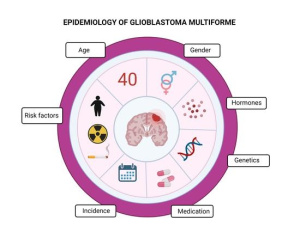
Cancerous, or malignant, tumors can develop from genetic disorders, age, irritants (smoking, radiation), or environmental factors. Once a mutation is created in a cell from one of these factors, the cell is triggered to divide and multiply at a rapid rate. Additional mutations may occur, in which we see metastasis or the bodywide spread of tumors.
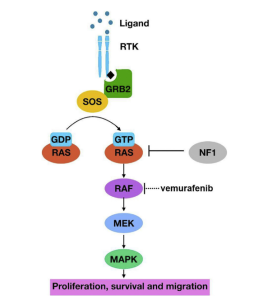
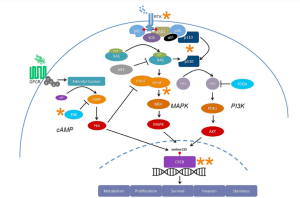
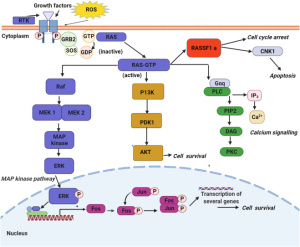
The MAPK pathway is activated by the binding of growth factor ligands to their corresponding receptor tyrosine kinase (RTK) receptor. When the ligand binds, the RTK is dimerized and autophosphorylates which leads to recruitment of adaptor proteins to the receptor which begins an activating cascade of Ras, then RAF, MEK, and finally MAPK is activated. MAPK contributes to cell proliferation and survival. In GBM, MAPK signaling is over-activated.
PI3K
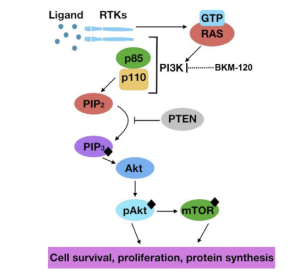
The PI3K pathway is activated by ligand binding to its corresponding RTK, the receptor is dimerized and phosphorylated. PI3K is then recruited to the receptor. A receptor subunit converts PIP2 to PIP3 which causes AKT to be phosphorylated and promote cell survival and proliferation. In GBM, PI3K signaling is over-active.
cAMP
cAMP signaling begins with the binding of a ligand to a G-protein coupled receptor (GPCR). This causes the alpha subunit of the G-protein to activate adenylyl cyclase which converts ATP to cAMP. cAMP signaling interacts with MAPK by the activation of protein kinase A (PKA) which inhibits the MAPK pathway, and PI3K pathways previously mentioned. This convergence is shown below.
Convergence of MAPK, PI3K, and cAMP signaling pathways
cAMP levels and tumor malignancy have an inverse relationship, meaning that cAMP levels are low in GBM. It is shown that increasing cAMP levels can inhibit growth and differentiation and promote apoptosis in GBM cells.
Treatment
Recalling that MAPK and PI3K signaling is elevated in GBM, it can be concluded that inhibiting these pathways can be a great start in treating GBM. Increasing cAMP is one way, since, as previously stated, PKA inhibits MAPK signaling. Buparlisib is a PI3K inhibitor that is currently used to treat breast cancer and GBM, and Venurafenib is a MAPK inhibitor that is currently used to treat late-stage melanoma. However, GBM is incredibly prone to drug resistance due to the multiple signaling pathways it utilizes – when one pathway is blocked, the cancer finds a way around it. Combining drugs can prevent this circumvention by inhibiting multiple pathways at once. Consequently, toxicity can occur with such combination, so it must be researched and monitored thoroughly.
There is hope for patients diagnosed with GBM. Understanding these signaling pathways is a big leap in the future treatment of this cancer, and hopefully this knowledge is enough to improve the outcome of those affected by this disease.
Glioblastoma is an aggressive, fast-growing malignant brain tumor. It has a very low survival rate. Only 5% of those with Glioblastoma will live past 5 years. Treatment usually consists of surgery, radiation, and chemotherapy.1
Primary Glioblastoma effects elderly people and represents around 90% of Glioblastoma cases. This is characterized by EGFR amplification and is fast growing and very aggressive. EGFR is epidermal growth factor receptor. Overexpression allows for continual cell growth.
Secondary Glioblastoma effects younger people. First signs of this appears in childhood prior to puberty. Children will often experience excessive headaches. Once children reach puberty, the tumors will die out. Unfortunately, these tumors come back later, prior to 50 years of age. Secondary Glioblastoma has a better response to chemo than primary due to a genetic component that shuts off DNA repair that occurs after damage done by chemo treatment. This allows the tumors to die.
Pathways Involved
In Glioblastoma there are a few things that go wrong in signaling. As discussed previously, EGFR is amplified in Glioblastoma. This leads excess cellular signaling to produce new cells. Some pathways included in this are cAMP, MAPK, and PI3K.
When a ligand like epidermal growth factor bind to the RTK receptor, signaling occurs that activates RAS. In turn, RAS activates RAF, MEF, and then MAPK. MAPK then activates CREB to lead to cell production. In Glioblastoma, MAPK becomes hyperactivated which leads to increased cell production.
When a growth factor binds to the RTK receptor. PI3K is recruited to the receptor and allows for cellular signaling in the cell that leads to CREB becoming activated. In Glioblastoma PI3K amplified and CREB is hyperactivation causes increased cell production.
When a ligand binds to the G-coupled protein receptor, adenylyl cyclase converts ATP to cAMP. cAMP activates PKA which inhibits tumor growth by activating gene transcription. cAMP is lower in Glioblastoma and cannot activate PKA. PDE degrades cAMP in Glioblastoma and tumor growth is not inhibited.1
Each of these pathways can be targeted for the treatment of Glioblastoma. This figure shows how each pathway is involved in gene transcription and how different medications may effect these pathways.
Possible Treatments
Two major factors involved in increased cell production in Glioblastoma is EGFR amplification and CREB hyperactivation.
EGFR gene amplification is also found in other cancers. Unfortunately, targeting EGFR in cancer treatment has not shown to be effective against Glioblastoma. EGFR inhibitors have helped with other cancers, but trials with Glioblastoma have not shown promise. A specific genetic variant of EGFR, ΔEGFR, is specific to tumors. Treatment with a ΔEGFR monoclonal antibody has shown to decrease tumor growth and increase cell death.2
CREB inhibition on the other hand shows more promise. Other medications that inhibit signaling in RTK receptors leads to decreased CREB activation. This was shown to decrease tumor cells. CREB inhibitors are currently in pre-clinical trials for the treatment of cancer and could be a potential treatment of Glioblastoma.3
Glioblastoma is a very aggressive and difficult disease to treat. Exploring the different pathways involved in Glioblastoma can provide new solutions to treatment. Targeting EGFR and CREB has shown some promise, but different aspects of these pathways need additional discovery.
Glioblastoma (GBM) is a fast-growing and aggressive malignant brain tumor. It is a very invasive form of cancer which means it has one of the worst survival rates across all types of cancer. GBM accounts for about 50% of all malignant cancers and the 5-year survival rate is around 6%. It is also estimated that almost 10,000 Americans will succumb to GBM every single year.
The symptoms of GBM can include things like headaches that keep getting worse, seizures, nausea, changes in personality, weakness in one side of body, memory loss and speech difficulty. These symptoms can be seen in MANY other diseases, which makes GBM hard to discover and diagnose. The median amount of time before discovery of the tumor is around 330 days, which allows a lot of time for the tumor to grow to nearby cells of the brain.
Subtypes of GBM?
There are four subtypes of GBM that have been discovered and researched.
Classical
Over expression of epidermal growth factor receptors and responds best to aggressive treatment.
Mesenchymal
Over expression of regulatory components of MAPK and PI3K pathways. Responds best to aggressive treatment.
Proneural
Occurs in younger patients and has an over expression on chromosome 4q12. Less responsive to aggressive treatment, but has longer survival time.
Neural
No obvious pattern of over expression or mutation. Worst survival rate and no improvement with aggressive treatment.
What is Going Wrong?
MAPK Pathway:
This pathway is activated by a ligand binding to its receptor tyrosine kinase (RTK) which results in a cascade of activation and phosphorylation. RAS activates RAF which activates MEK which activates ERK/MAPK. In GBM, NF1 is being over expressed which is inhibited the activation of RAS, which stops the activation of the molecules after that.
PI3K Pathway:
This pathway is activated by a ligand binding to its receptor tyrosine kinase (RTK) which results in a cascade of activation and phosphorylation. PI3K is recruited to the RTK by the p85 subunit which then activates another subunit p110. The p110 subunit converts PIP2 to PIP3, and PIP3 activates AKT which then activates mTOR, promoting cell survival. In GBM, PTEN inhibits the conversion of PIP2 to PIP3, which stops the activation after that.
cAMP Pathway:
This pathway is activated by aa ligand binding to G-Protein Coupled Receptors (GPCR). Adenylyl Cyclase converts ATP to cAMP which in turn activates PKA to inhibit tumors. In GBM, PDE is inhibiting this pathway meaning it is under expressed, which results in tumor growth.
There are three different pathways involved in GBM, which makes treating it extremely difficult. These pathways are over and under expressed so finding the ‘sweet spot’ for each pathway is a difficult task. These pathways can also cross over into each other adding more confusion when trying to treat GBM.
GBM Treatment:
Because of the complexity of GBM, finding the proper treatment is just as complex. Treatment options include surgery, radiation therapy, chemotherapy, and antibody therapy.
Antibody therapy uses the immune system to help attack cancer cells. Monoclonal antibodies are made in the lab to mimic the bodies natural antibodies. They are infused into the body and are made to attack cancer cells, disrupt the cell membrane of cancer cells, and help T-cells kill cancer cells.
While there are many treatment options to choose from when dealing with GBM, it can can cost a lot of money as well as take an emotional and physical toll on the body. There are many natural ways to try and treat cancer without having to spend most of the time in a hospital bed. Things such as acupuncture, exercise, meditation, cognitive behavior therapy, and music therapies are just a few ways to naturally treat cancer. It is important for the person diagnosed with these types of diseases to consider the ways they want to spend their limited amount of days. Some people may want to try every medical advancement to treat themselves while others may want to find natural ways to spend the rest of their days at peace with themselves. Either way, it is important to understand the statistics of GBM, what is happening in the body, and the options for treatment.
Addiction is defined as having a craving or dependence to a substance, thing, or activity. Addiction can be tied to a natural reward such as sleep, food, etc. whereas it can also be tied to an unnatural reward such as substances. Unnatural addictions such as drugs or alcohol can be life threatening at times and turn into a horrific cycling pattern if trying to withdraw and stop usage.
In the brain there are three areas of the brain an addiction behavior can go through:
The first is the basal ganglia, the portion of the brain that controls the reward response to the substance use and helps to form the habits around substance use.
The second is the extended amygdala that associates with the feelings of discomfort, anxiety, stress that usually follows substance withdrawal.
The third is the prefrontal cortex which controls the ability to have control over the substance usage.
Figure 1: The different areas of the brain affected by addiction. https://www.ncbi.nlm.nih.gov/books/NBK424849/
The overwhelming effects of addiction occurs when this cycle repeats itself and the addiction grows stronger after making those rewarding affects attainable with the substance rather than without.
Studies suggest that individuals with an addiction to substances have a reduction in sensitivity for the brain’s reward system (brain circuits with dopamine receptors). Therefore, once pleasurable or stimulating activities no longer have the same effect as they once did, an individual going through withdrawal symptoms will want to regain the same pleasurable feelings the reward system once provided but only be able to do this through the substance.
At the more neuronal level, during the withdrawal stage there is an activation of the stress neurotransmitters in the extended amygdala. These NTs include corticotrophin-releasing factor (CRF), norepinephrine, and dynorphin. These neurotransmitters have been shown to play a key role in negative feelings associated with withdrawal. Therefore, to get rid of the negative emotions from withdrawal a lot of individuals tend to use the substance again. In other words, the individual is experiencing negative reinforcement every time they use the substance again to rid themselves of the negative emotions and this is how the cycle continues.
Taking a closer look at the brain it is important to understand the difference between an addicted brain versus an unaddicted brain to a substance. In the control brain, VTA dopaminergic neurons project to NAc whereas with the addicted brain neurons there is an increase of dopamine in NAc (Nucleus accumbens) leading to tolerance, sensitization, and adaptation to the substance. In the addicted brain, the VTA neuron appears smaller as the NAc portion is larger in size with more branching, leading to the effects of becoming addicted to a substance and unable to stop.
Figure 2: Image of neurons in the brain from Nestler article (2005).
Overall, addiction starts as a choice and turns into a gray area where the choice of using a substance is no longer there. As there has been some controversy on whether addiction is a disease, in the future when we learn more about addiction and what more is happening in the brain can we decipher if the individual has a choice or if that choice is no longer there once the brain creates tolerance, sensitization, and adaptation to the substance.
References:
Substance Abuse and Mental Health Services Administration (US), Office of the Surgeon General (US), and US Department of Health and Human Services. 2016. Facing Addiction in America: The Surgeon General’s Report on Alcohol, Drugs, and Health. National Library of Medicine. https://www.ncbi.nlm.nih.gov/books/NBK424849/
Nestler, Eric. 2005. Is there a common molecular pathway for addiction? Nature Neuroscience: Neurobiology of Addiction.
Leyton, Marco. 2013. Are addictions diseases or choices? Journal of Psychiatry & Neuroscience. https://www.ncbi.nlm.nih.gov/pmc/articles/PMC3692718/
Addiction is a significant issue in today’s society. Addiction is defined as a compulsive and persistent dependence on a substance or behavior that has negative consequences. Some of the most common types of addiction are substance addiction (addiction to drugs, alcohol, and tobacco), natural addiction (addiction to food, binge eating disorder) and behavioral addiction (addiction to gambling, video games, and social media).
Addiction can have a significant impact on an individual’s life as well as the lives of those close to them. It can result in physical and mental health issues, financial difficulties, social isolation, and legal complications. Addiction can also have a negative impact on the larger community by causing crime, violence, and other social problems.
Addiction is particularly problematic in today’s society due to a number of factors. For starters, addictive substances and behaviors are more widely available, thanks to the proliferation of online gaming and social media platforms. Second, there is less social stigma attached to addiction, which may make it easier for people to engage in addictive behaviors without fear of being judged. Finally, many people lack access to effective addiction treatment and support services, making it difficult for them to overcome their addiction and live a healthy life.
Actions of Drugs of Abuse in the Brain
Drug abuse can activate several signaling pathways in the brain, leading to the development of addiction. The following are some of the most common signaling pathways involved in drug abuse:
Dopamine pathway: The mesolimbic dopamine pathway, which is a circuit of brain regions involved in reward and motivation, is one of the key pathways identified by Dr. Nestler and his colleagues. This pathway is activated when a person engages in rewarding behavior or takes an addictive drug, and dopamine is released in the nucleus accumbens, a key region of the brain’s reward circuitry. This dopamine release reinforces and motivates the individual to repeat the behavior.
Glutamate pathway: The glutamate pathway is responsible for learning and memory. Drugs of abuse can activate this pathway, leading to changes in synaptic plasticity, which can lead to drug cravings and addiction.
GABA pathway: The gamma-aminobutyric acid (GABA) pathway is responsible for the brain’s inhibitory system. Drugs of abuse can disrupt the balance of GABA signaling, leading to an increase in excitatory signaling, which can lead to drug cravings and addiction.
Endocannabinoid pathway: The endocannabinoid system is responsible for regulating appetite, pain, and mood. Drugs of abuse can activate the endocannabinoid pathway, leading to changes in appetite and mood.
Moreover, repeated drug use or addictive behavior causes the brain to adapt, resulting in long-term changes in gene expression and synaptic plasticity. Dr. Nestler has identified a number of specific molecular pathways involved in these adaptations, such as changes in gene expression of various transcription factors, epigenetic DNA modifications, and changes in synaptic plasticity and neuroplasticity.
While there may not be a single common molecular pathway for addiction, Dr. Nestler’s research has contributed to the identification of some of the key molecular and cellular mechanisms that underpin addictive behavior. This understanding is critical for the development of new treatments and interventions to assist individuals in overcoming addiction and leading healthy, fulfilling lives.
Opioid addiction is a major problem in the US. According to the CDC overdose deaths involving opioids have increased by over 8 times since 1999. In 2020 an estimated 69,000 people died of opioid overdose. The start of these addictions can vary, often it starts with a prescription for opioids as a pain relief, and will spiral from there into a serious problem.
All drugs with potential for addiction work by activating the brains natural reward system, and eventually will rewire that reward system to be preferential to the drug of choice. The mesolimbic dopamine pathway has long been regarded as the reward pathway, and is what is most affected during addiction. Drugs will activate dopamine neurons in this pathway, and with enough use the circuit will adapt to these levels of activation. This adaptation will make natural rewards (food, sex, social interaction, etc.) less rewarding, and the person will seek drug use in order to feel a reward.
Effects of Addiction
With addiction and the changes in the reward pathway comes with it comes something called tolerance and withdrawal. Tolerance in defined as “reduce response to a drug with repeated use” by the CDC. With chronic drug use, over time the brain will adapt its reward system to the amount of drug being taken, and less of an effect will occur. With a dysfunctional reward system a person is driven to take a larger amount of their drug of choice in order to feel a reward, since natural rewards are no longer creating that effect in the brain. Withdrawal is the effects that are felt when there is no drug of choice in the body. Typically the symptoms are opposite of the ‘high’ that the drug causes. Withdrawal often drives people to continue taking the drug, and further the addiction.
How Do We Treat Addiction?
There’s a few ways to go about treating addiction, and often multiple different methods are used together to create an effective plan. Therapy is the most common, to treat the psychological factors of addiction. It is often used with medications to treat the biological factors of addiction discussed above. Medications to treat opioid addiction bind to the same receptors that opioids do in the brain, which can have a few benefits. First it blocks opioids from binding and causing dopamine activation in the reward system. Secondly, binding to these receptors can have relieving effects for cravings and symptoms of withdrawal from opioids. Since they bind to the same receptors, they produce the same effects in the brain.
But wait, isn’t that a bad thing?
Yes and no. It’s not ideal since this is what leads to these medications to also have potential for abuse and addiction. However there are benefits to these medications that make them effective at treating addiction. There are 3 medications that are currently FDA approved: methadone, buprenorphine, and naloxone.
This medication is not used very commonly anymore as it is a full receptor agonist, meaning it produces an effect just as strong as opioids. As you can imagine this is not ideal, and is also highly addictive. The benefit to methadone compared to opioids is that people developed a tolerance to methadone much slower, and the detoxification process from it seemed to be less harsh compared to opioids.
Buprenorphine:
This medication is often prescribed as a combination tablet or dissolvable film with naloxone. It is much more commonly used to relieve cravings and withdrawal symptoms, as it is a partial agonist to the opioid receptor. This means it produces a much weaker effect compared to opioids when bound to the receptor. This makes it less addictive, though there is still a slight potential for abuse. Overdose of buprenorphine is also very difficult to happen and rare to occur, as the drug produces a much smaller effect.
Naloxone:
The third FDA approved drug to treat addiction, and it works in the opposite way that buprenorphine and methadone. Naloxone is an opioid receptor antagonist, meaning when it’s bound it produces the opposite effect, or it stops the effect or opioids. It is used mainly as an antidote for opioid overdose, as it will flood the brain and block all opioid receptors to stop the drug from having an effect.
The simplest definition of addiction: a relationship between a person and an activity they do or substance they take that they find themselves losing their self-control over. Most common addictions that seem to cause the most harm are different types of drugs and alcohol. This doesn’t mean that there are not natural addictions as well such as to sugar, exercise, eating, sex, etc. Drugs are, however, the most common and dangerous type of addiction found in the U.S with
This data represents 2023 drug usership. (1)
overdose deaths affecting over 700,000 people in the US since 2000 (National Center for Drug Abuse Statistics). In either case, it is the pleasure that helps drive the need for our brains to keep that relationship strong.
What happens when you want to break up with addiction?
Withdrawal. It is not easy for one to break the relationship they have with a substance they are addicted to. An absence of the substance will cause the person to experience negative emotions as the stress neurotransmitters-CRF, norepinephrine, and dynorphin- in the amygdala begin to get activated. The lack of drugs in the brain can also drop dopamine levels, a major component of the reward system. These changes in the brain result in psychological, physical, and behavioral symptoms. Symptoms may include difficulty sleeping, irritability, mood changes, depression, cravings, tiredness, etc. These withdrawal symptoms are not very easy to live with, making the road to quitting an addiction a very difficult one to take.
Why so attached? LTP & LTD.
If these substances are so toxic, why are you so attached to them? What is one of the major aspects of your brain that keeps you so engaged in this toxic relationship? Long-term potentiation and depression. Long-term potentiation is commonly found in memory formation as your neurons learn and grow and permanently begin changing. That is fine with making new memories, but with addictions, it plays a major role in the formation of reward-related contextual memories. Long-term potentiation is a process involving persistent strengthening of synapses that leads to a long-lasting increase in signal transmission between neurons. Increased depolarization increases the activity of the post-synaptic neuron. To summarize how: post-synaptic activation leads to a calcium influx, and that calcium causes CaMK11 activation to bring AMPA receptors into the post-synaptic membrane. When there are more AMPA receptors inserted into the membrane, the receptor responsiveness increases. Therefore, LTP would cause sensitized behavioral responses.
On the other hand, long-term depression is just the opposite. Synaptic strength is decreased in long term depression as AMPA receptors get removed from the membrane through dephosphorylation. With the removal of these AMPA receptors, the cell becomes less responsive to glutamate. With the lack of receptors, it makes sense that responsiveness would become reduced; hence, the effects of tolerance are seen. It takes more of the drugs to cause the same feeling.
(2)
Both changes over time will begin creating very permanent changes in an individual’s brain, which is what makes addiction so difficult to reverse. When this synaptic plasticity changes, it creates long term problems with the brain having new expectations for the receptor activity set by their drug addiction. These long-term changes makes the relationship with drug abuse so difficult to break apart.
Illustration of how long term changes can cause neuronal development not easy to reverse. (3)