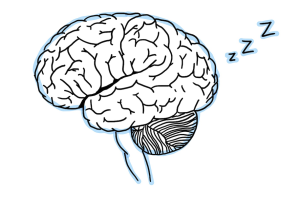
We all know what sleep is and what it looks like, but what goes on in the brain during sleep? You may have heard that it’s good for you; that it helps heal your brain. But how does it do this? What are dreams? You may have also heard that sleeping helps improve you memory, how does that work?
Phases
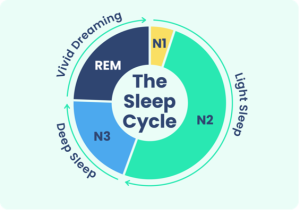
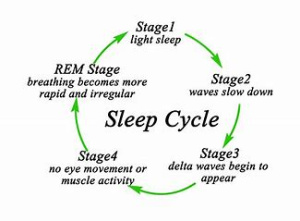
Sleeping is a repetitive cycle of varying brain activity. In a typical night the average person will go through 4-6 of these cycles.
Stage 1: NREM (non-rapid eye movement) 1, this stage typically lasts 1-7 minutes and is really just the beginning of when you fall asleep. The body is not fully relaxed, but brain and body activities start to decrease.
Stage2: NREM2, this typically lasts 10-25 minutes during the first cycle. The body drop sin temperature, and breathing and heart rate will slow down. Brain activity also starts to decrease.
Stage 3: NREM3, this is known as deep sleep or slow-wave sleep. Muscle tone, breathing, and heart rate decrease greatly in this stage. Brain activity takes on large, and ‘slow-moving’ waves known as delta waves.
Stage 4: REM (rapid eye movement). Brain activity during this stage mimics activity while awake, and muscle paralysis will set in. Even though the eyes remain closed they are moving quickly
REM Sleep
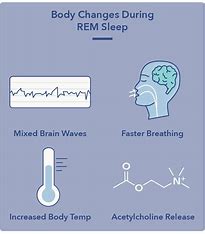
Schematic depicting the physiological changes that occur during REM sleep
REM sleep is often regarded as the stage where a lot of the benefits of sleep occur. EEG analysis shows that memory consolidation pathways are activated during REM sleep. The more you learn throughout the day increased the amount of REM sleep during that night, indicating that REM sleep is important for learning and memory formation. You can read more about sleep cycles and REM here.
Pull an All-Nighter or Sleep?
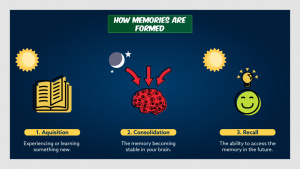
Image showing memory formation corresponding to daylight cycles. Notice how consolidation aligns with night and sleep.
Given the research showing that REM sleep can help consolidate memories, is it better to spend more time studying? Or is it better to study what you need then sleep on it? A lot of benefit can come from sleeping rather that studying all night long.
References
Stages of sleep: What happens in a sleep cycle. Sleep Foundation. (2023, March 2). Retrieved March 29, 2023
ScienceDaily. (2020, June 5). Memory consolidation during REM sleep. ScienceDaily. Retrieved March 29, 2023
Since elementary school, I recall being told to get a “good night’s sleep” before tests – I, along with many other kids, did not take this seriously. In college, I finally discovered the importance of sleep, especially in organic chemistry when every night I was dreaming about SN2 and Grignard reaction mechanisms, waking up to a greater understanding and solidification of these concepts. Too often, I hear my fellow students talking about studying all night before exams as if it is going to help them – it does not! It is actually detrimental to their exam performance. Studies have found that fewer than 10% of college students sleep the recommended 7-8 hours at night during finals. How detrimental is this really? What does the lack of sleep really do? It has been shown that sleep, particularly REM sleep, is crucial for memory consolidation and long term memory formation.
Sleep
The sleep cycle is broken into NREM (non-rapid eye movement) and REM (rapid eye movement) sleep.NREM sleep consists of three stages in which the body repairs tissues and strengthens the immune system.REM sleep happens about 90 minutes after falling asleep and is important in the stimulation of the regions of the brain important for learning and protein production. REM sleep brain activity waves are comparable to waves seen during wakefulness and alertness. The stages of NREM and REM sleep are depicted below.
Hormones and Clock Proteins
Melatonin and cortisol are the primary circadian hormones and they are both produced in the pineal gland and released according to lightness or darkness. The retina at the back of the eye has photoreceptors called rods and cones that respond to light and darkness, and they have signaling attachments to the optic nerve which connects to the pineal gland. With darkness, melatonin is released and from the morning light, cortisol is released to wake us up. Melatonin increases the expression of the clock protein, PER1. This protein is of the period gene which encodes circadian rhythms of locomotion, metabolism, and behavior. Since melatonin increases this expression, it is concluded that PER1 plays the largest role in our decreased locomotion and metabolic rate in our sleep.
Memory Consolidation and Sleep
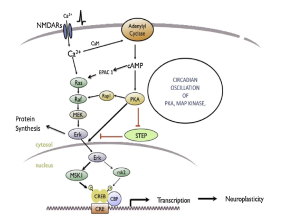
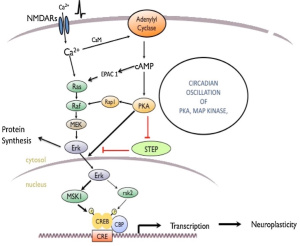
It has long been proposed that memories are consolidated in our sleep by, for example, dreaming of our awake experiences (like organic chemistry). However, the biological reasoning was lacking – until now! It has been found that the cAMP/MAPK/CRE-mediated transcription pathway, a key memory consolidation pathway, reaches a maximum during REM sleep. In individuals with dysfunction of this pathway, perhaps a sleep deprived individual, long term memory formation is blocked. In order for memories to be consolidated, there must be repeated reactivation of these signals to maintain required protein levels for persistence of these memories. This repetition actually occurs in our sleep! The suprachiasmatic nucleus is the “circadian pacemaker” of the brain, and it also controls the oscillation of cAMP, MAPK, and CREB levels. It has been found that this oscillation reaches maximum activity of these pathways during REM sleep!
In summary, during REM sleep a crucial memory consolidation and neuroplasticity pathway is at its highest activity, consolidating awake moments into long term memories. So, sleep the night before exams! If you study during the day, these concepts will replay during REM sleep and turn into a long term memory, maybe even making more sense when you wake up!
Sleep, is potentially one of the most important things in our lives. According to John Hopkins’ website we spend around a quarter to a third of our life sleeping. If you’re a person like me, who wishes there was more hours in the day. It seems like a lot of time wasted or that could be used else where. With 8 hours being the recommendation obviously it must be important that we do get proper sleep. Yet, what is really happening during this time that makes it more valuable than staying up?
Sleep plays a role in neural plasticity, rest of the body, circadian rhythm, memory, and so much more. I like to think the sleep is like writing a summary of your day but in your brain. It is the time where everything is devoted to recapping, resetting, and segmenting for a new day. Of the many factors can disrupt sleep. Things like physical comfort, uneasiness, diet etc. can all disrupt sleep. Emotional memory and emotional state can alter sleep and can be altered by sleep.
What is emotional memory?
Emotional memory is our ability to consciously remember our experiences. Every emotional event that happens to us needs to be encoded into our memory during our sleep. In a 2011 article on Emotional memory processing talked about an “affective tone” theory. That each night our brain needs time to process the “tone” of how this event occurred. Meaning our brain tries to make sense of the event. If it was negative, positive, what did we learn from it. The more complex it is to understand the longer it takes our brain to break it down and store it properly. It can take multiple nights, but once our brain concludes the core memory is finally stored. This also leads to the reasoning why major events get stored in long term memory or short.
A study tested the storing and recall of positive negative and neutral memories, or in the study they used pictures instead of memories. They found that positive images had a better recall compared to negative. They also had participants go through a fMRI which showed that when thinking of the positive memories they were stored during REM (rapid eye movement) sleep. The negative images were stored in SWS (slow wave sleep). During REM sleep the brain moves memories from short term to long term memory. The adrenergic system in the brain is used during SWS as the brain leaves REM sleep. Memories that are more stimulating are easier to recall. These memories also make the adrenergic system to work more.
Lack of sleep, or sleep deprivation lowers the function of temporal memory. Temporal memory is often referred to as out short-term memory. If the structures responsible for short term memory storage is thrown off due to lack of sleep. It can cause a change in the normal cascade of all memory storage. If memories aren’t stored in the short term. How can they be properly stored in our long-term memory. Lack of sleep can also throw off each night’s sleep cycle through the different stages of sleep. This means since different brain functions during sleep are dependent on each sleep cycle. Lack of sleep doesn’t allow to brain to decompress how it properly needs to.
In the most simplest terms, memory consolidation is the process of converting a short term memory into a more stable, long-term memory. Memory formation typically occurs in three different stages: encoding, storage, and retrieval. Encoding is the sensory inputs that have to be transformed into storable memory inputs. Storage then is how that encoded information is then transferred to the sense organs and retained. Finally, retrieval is how one can get access to the actual memory stores in the brain when wanting to recover information. The biology of how conscious memory is stored is that it is dependent on storage in the hippocampus and neocortex. The information is first stored in the hippocampus, known for its fast-learning system. Next, it is trained in the slow learning system of the neocortex. Memory consolidation is strengthened through this process by potentiation-a process requiring conduction of information from neuron to neuron to create a strong synaptic workforce. The more signals that pass through the synapse from one to neuron to the next, the more potentiation is built.
This is the simplest diagram of how memory consolidation works. Consolidation is the transfer of memory from short term to long term, which can be strengthened through rehearsal. (1)
However, how does sleep play a role in this potentiation? REM sleep. That is the key stage of sleep that seems to have the greatest impact in strengthening potentiation. REM sleep is known as active sleep, which elicits neuronal activity in the brain through neuronal plasticity. The promotion of neuronal activity during REM sleep can therefore help consolidate memories and information a person stored during the day.1
An illustration of how memory from the day is consolidated during sleep for best retrieval the next day. (4)
Environmental Impacts
Proper REM sleep is vital in making short term memories more long term. The network of information that the active neurons build during REM sleep can impact overall memory. One issue greatly disturbing this sleep is the environment that people live in. Those living in poverty or a dangerous neighborhood with high crime rates may experience more difficulties getting proper sleep in all stages of the cycle. Imagine living in a neighborhood with gangs venturing outside your door. Imagine living by train tracks with a train that speeds by every night. Perhaps you live in a city that never sleeps. These interruptions can disrupt a person’s sleep cycle, having negative implications on the ability of their neurons to strengthen that synaptic plasticity during REM sleep. A sleep environment should be a dark, cool, and quiet place; this is not necessarily easy for most of the population to check off before going to bed.2 There are over 648 million people in the world that live in extreme poverty, and even more that live in poor conditions comparable to that.3 That is a lot of people likely not getting the proper sleep due to their living conditions being in poor environments. Even cities with poorly insulated apartments can result in noises from neighbors that can disrupt sleep. The number of environmental reasons for sleep disruption is unbelievable.
Conclusion
Sleep is so important in the development of synaptic plasticity and memory consolidation through potentiation. While of course awake repetition of the learned information to transition the short term memory into a long one is important as well, sleep is a push towards really solidifying that memory without actively studying. In a sense, it almost feels like magic in how the mind works to build stronger neuron connections while we peacefully sleep. Of course, peaceful sleep is not a privilege everyone has and is a difficult issue to solve because of all the different factors contributing to the disruption.
Citations:
Memory consolidation. (2020, August 28). Ian. https://human-memory.net/memory-consolidation/#Basics_of_Memory_Consolidation
Schoch, M., Baah, S. K. T., Lakner, C., & Friedman, J. (n.d.). Half of the global population lives on less than US$6.85 per person per day. World Bank Blogs. Retrieved March 28, 2023, from https://blogs.worldbank.org/developmenttalk/half-global-population-lives-less-us685-person-day
Feld, G. B., & Diekelmann, S. (2020). Building the Bridge: Outlining steps toward an applied sleep-and-memory research program. Current Directions in Psychological Science, 29(6), 554–562. https://doi.org/10.1177/0963721420964171
There are four different sleep stages that are identified by the type of brain waves present during each stage (Patel, Reddy, Shumway, & Araujo, 2022). These brain waves range from high frequency to lower frequencies. The highest frequency wave is called the beta waves with the next highest being alpha waves. These waves are both present during wakefulness.
Stage 1 of sleep, also know as non-REM 1, is the lightest stage of sleep and is marked by starting as alpha waves and moving into low voltage theta waves. During this stage there is still muscle tone and regular breathing rates.
Stage 2 of sleep is non-REM 2 and is a deeper sleep than non-REM1. Theta waves are the predominant brain wave during this stage. There are also sleep spindles and K complexes present during this stage. Sleep spindles are short bursts of neurons firing that possibly play a role in memory consolidation. K Complexes are brief delta waves, the longest of the brain waves, that are associated with maintaining sleep.
Stage 3 of sleep is the deepest stage of non-REM sleep. During this stage there are Delta waves which are the lowest frequency of the brain waves. During this stage the body can repair tissue and strengthen its immune system. This is also the most difficult stage to awaken from, and when people are awakened during this stage they experience a state of mental grogginess.
REM sleep stands for Rapid Eye Movement and is very different from the other stages of sleep. During REM sleep beta waves are present and is therefore not considered to be a restful stage of sleep. However, this is the stage where dreams occur. During this stage the muscles are paralyzed except for the eyes and diaphragm breathing muscles (Patel, et. al., 2022).
Why is sleep important
Sleep plays several functions in the overall health of the body. It gives the body a chance to rest and heal from the past day. But sleep also gives the brain a chance to sort through all the new memories that it has experienced and prepare for the new experiences of tomorrow. REM sleep and the deep stages of non-REM sleep seem to be the most important for consolidating the memories of that day (Wein, 2017). This is the time where the hippocampus (which is the part of your brain in charge of memory) is working to connect all of these memories together and get them stored permanently (Xia & Storm, 2017). Specifically, it seems that certain pathways inside the cells of the hippocampus are important for the formation of new proteins related to these old memories, which is how the memories seem to outlive the original proteins they were connected to. Pathways such as the MAPK cascade are activated by calcium (Ca) dependent NMDA receptors, which allow Ca to enter the cell when activated. As Ca enters into the cell through these receptors it depolarizes the cell which starts the MAPK pathway. As the cell depolarizes, or gains a more positive charge, this starts a series of reactions. Protein kinases, which are just enzymes, start to phosphorylate (or add a phosphorus molecule) to other protein kinases called Ras, Raf, MEK, and ERK. The phosphorylation of these enzymes causes them to change shape to activate each other, in the final step is the phosphorylation of a transcription factor called CREB. CREB can then enter into the nucleus and start gene transcription to make a new protein. This protein is then associated with a memory because it is from the hippocampus (Xia & Storm, 2017).
Xia, Z., & Storm, D. (2017). Role of circadian rhythm and REM sleep for memory consolidation. Elsevier: Neuroscience Research 118. 13-20. http://dx.doi.org/10.1016/j.neures.2017.04.011.
Though the light stages of non-REM sleep also play an important role (Wein, 2017). These stages seem to be most connected to getting the brain ready to receive new information when it wakes up. When these stages are cut short the brain not only doesn’t have enough time to consolidate the old memories, it also doesn’t have time to prepare to receive the new information. This can drastically reduce your ability to retain information the following day, which is a big problem for students (Wein, 2017).
How can you improve your sleep
The best way to improve your quality of sleep and the amount of sleep you get is to maintain good sleep hygiene (Hershner & Shaikh, 2021). Sleep hygiene is just a term used to describe healthy sleep habits. It is important that you get enough sleep every night, while the exact amount of sleep varies from person to person it’s generally best to get 7-8 hours of sleep per night. It’s also important to remain consistent with your sleep schedule every single day. Try to go to bed and get up at the same times, even for the weekends and on vacation. If you have trouble falling asleep it may help to not have any caffeine after 12 pm and to turn off all your electronics 20 minutes before actually going to bed. Another thing you can do is to have an established bedtime routine that you do every single night. This will help to signal to your brain that it’s time for sleep, and it can start releasing hormones such as melatonin to make you sleepy (Hershner & Shaikh, 2021).
There of course are many more things you can try to help you improve your sleep quality, but the tips listed above can be a good place to start. It can by really hard to change your sleepy habits, especially when it comes to using electronics and staying up to late. But by sticking with a regular routine your brain will eventually become acclimated and it will become easier to get more higher quality sleep.
Patel, A. K., Reddy, V., Shumway, K. R., & Araujo, J. F. (2022, September 7). Physiology, sleep stages – statpearls – NCBI bookshelf. Retrieved March 28, 2023, from https://www.ncbi.nlm.nih.gov/books/NBK526132/
Xia, Z., & Storm, D. (2017). Role of circadian rhythm and REM sleep for memory consolidation. Elsevier: Neuroscience Research 118. 13-20. http://dx.doi.org/10.1016/j.neures.2017.04.011.
The specific region of the brain that helps to form new memories is called the hippocampus. Most memories formed here will be lost during the day, but sleep allows for memories to become more stable. During sleep, the brain cycles through different levels of sleep. These levels will be covered more in depth later. Dr. Robert Stickgold of Harvard Medical School says that ‘sleep seems to be a privileged time when the brain goes back through recent memories and decides both what to keep and what not to keep.” In Figure 1, it is noted that the hippocampus has less brain activity when a person is sleep deprived. On the other hand, hippocampus activity is much higher in those who are well rested.
Figure 1. Hippocampus activity based on sleep.
Stages of sleep
The stages of sleep that we cycle through are categorized as non-REM and REM sleep. REM stands for rapid eye movement, and this stage is where dreaming most often happens. On the other hand, non-REM sleep is thought to prime the brain for new learning. Like mentioned before, the hippocampus is important for making new memories. And, when a person is deprived of sleep, the hippocampus is negatively affected, making it hard to form new memories. Sleep scientist Dr. Walker says that “you can’t pull an all nighter and still learn effectively.” New memories are formed while we’re awake, and are strengthened as we sleep.
Rapid eye movement (REM) sleep- rapid, low voltage theta waves, muscle atone
Non-REM sleep- slow wave, low frequency, large amplitude delta waves
Figure 2. Sleep stages.
The science of sleep
Memory consolidation depends on Ca2+ activation of the cAMP/MAPK/CRE-mediated transcriptional pathway and protein synthesis. This pathway, as well as protein synthesis, undergoes a circadian cycle, a 24-hr cycle that responds to light and dark. If this process is disrupted in any way, memory formation decreases. REM sleep also activates this pathway which goes hand and hand with circadian cycles. Memories formed with the help of the hippocampus are maintained by reactivation of CREB-mediated transcription and protein synthesis during circadian cycles that occur during REM sleep. These events are all made possible by cAMP activation of the MAPK pathway. This pathway is pictured in the figure below and can be referenced more in depth in the article Role of circadian rhythm and REM sleep for memory consolidation.
After reading this post, you may ask yourself what you can do to get better sleep? The answer is that there isn’t an exact answer, but there are plenty of things that can be done. Better sleep is correlated with better eating habits, and better physical health. The CDC has a great schematic for how much sleep a person needs based on their age. They also mention multiple tips for improving sleep; go to bed at the same time each night and wake up each morning at the same time, keep your room dark and quiet, avoid alcohol and caffeine before bedtime, and be physically active every day.
Glioblastoma is a type of cancer that starts with abnormal growth of cells in the brain or spinal cord that eventually turns into a tumor. Glioblastoma can occur at any age and symptoms may range from headaches, nausea and vomiting, blurred or double vision, and seizures. To test for glioblastoma certain tests can be performed such as a neurological exam, imaging tests like a positron emission tomography (PET), computed tomography (CT), or magnetic resonance imaging (MRI) scan, or performing a biopsy by removing a sample of the tumor tissue for testing.
Malignant brain tumor treatment could include surgery, radiotherapy, or intake of temozolamide (TMZ). Temozolamide works by crossing the Blood brain barrier, blocking DNA replication and cell proliferation, and functionally is an alkylating agent used to methylate DNA on the sixth position of guanine. For clarification malignant is not the same as bening, malignant is a cancerous faster growth that can reach the bloodstream to spread and wreak havoc on the body. Whereas, bening is a non cancerous slow growth that covers normal cells and doesn’t spread quickly to other parts of the body.
Pathway talk:
Figure 1 looks at the cAMP pathway which functions to regulate multiple cellular functions. To function a ligand binds to a G-protein coupled receptor (GPCR) activating the enzyme adenylyl cyclase to convert ATP to cAMP. cAMP then activates protein kinase A (PKA) to inhibit tumor growth. This pathway may also be activated via Phosphodiesterase inhibitors (PDEi) to promote apoptosis.
Figure 2 focuses on the PI3K pathway functions to regulate cell differentiation, adhesion, motility, invasion, proliferation, and survival. This pathway is activated by binding the ligand to the RTK receptor causing dimerization and phosphorylation of RTK. Then PI3K is recruited to RTK via regulatory subunit p85 and activates p110. Then this subunit p110 converts PIP2 to PIP3, which is regulated by PTEN, PIP3 activates AKT so AKT can undergo phosphorylation and activation. AKT signals to other portions of the pathway such as mTOR to complete the functions listed above.
The last figure, figure 3, is the MAPK pathway the molecule binds to an RTK receptor which then goes to GRB2 and SOS, converting GDP on RAS to GTP on RAS ultimately leading to cell proliferation, survival, and migration. As seen in figure 3 NF1 functions to regulate the pathway by converting GTP to GDP and inactivating RAS.
In a new research study malignant tumor growth, also known as glioblastoma, impacts multiple signaling pathways such as MAPK, PI3K, and cAMP pathways. In tumor growth there is hyperactivation of MAPK and PI3K pathways well there is hyporegulation of cAMP pathways. Drug treatments that have been studied in the past target single pathways, however cross talk of pathways combination drug treatments should be the new focus for treatment of glioblastoma. There have also been studies focusing on convergence of CREB and how that could impact tumor growth. While glioblastoma is a treacherous disease to combat there has been more research to look at other possible solutions.
The blood-brain barrier (BBB) is a highly selective and specialized membrane that separates circulating blood from the brain extracellular fluid (BECF) in the central nervous system (CNS). It is composed of tightly-packed endothelial cells lining the capillaries in the brain, as well as surrounding astrocyte cells, pericytes, and basal lamina.
The BBB plays a critical role in maintaining the homeostasis of the brain microenvironment by preventing the entry of many substances from the bloodstream into the brain, including toxins, pathogens, and most drugs.
In glioblastoma, the BBB becomes disrupted and leaky due to the formation of new blood vessels in the tumor, a process known as angiogenesis. The endothelial cells that make up the BBB become damaged and lose their tight junctions, allowing larger molecules to enter the brain. However, the tumor cells themselves can also actively modulate the BBB by secreting various factors that increase its permeability.
The disrupted BBB in glioblastoma can have both positive and negative effects on treatment outcomes. On the one hand, it allows certain therapeutic agents to cross the BBB and reach the tumor, which can improve treatment efficacy. And on the other hand, it allows the tumor cells to evade the immune system and promotes tumor growth in other body parts.
Researchers are actively studying ways to exploit the leaky BBB in glioblastoma to improve treatment outcomes. One approach involves using drugs that can selectively target the tumor cells while minimizing damage to healthy brain tissue. Another approach involves using nanoparticles that can bypass the BBB and deliver therapeutic agents directly to the tumor cells.
Nanocarriers have a wide range of applications. One example is their use in transporting small non coding mRNA molecules that target brain tumor tissue and stop proliferation. The nano carriers protect the RNA from nuclease degradation and promote effective regulation of target genes, especially in brain tumors such as glioblastomas (GBMs) that are somehow protected from chemotherapeutic drugs by the blood–brain barrier (BBB).
Nano carriers crossing the BBB (Dubois 2014)
This image attempts to clarify the action of miRNAs in brain-cancer cells, through nano carriers capable of crossing through the BBB.
A question that was brought up in class on Wednesday was whether or not this drug delivery technique is specific to the tumor cells, and does not damage other cells in the immediate vicinity of the tumor, and the answer to that I found in a research study that reviewed the use of CDs, nano particles in drug delivery. The review article reported that the over-expression of transferrin receptors on both tumor cells and the BBB’s endothelial cells allows CDs to be specifically targeted to cancerous cells when conjugated with transferrin.
The authors supported this by referencing Hettiarachchi et al, who designed a triple-conjugated CD-based nano carrier (DDS) that targeted glioblastoma with transferrin, epirubicin, and temozolomide. The results showed that a much lower concentration of the triple-conjugated system (C-dots-transferrin-epirubicin-temozolomide (C-DT)) was required to reduce tumor cell viability compared to non-transferrin systems (NT) and dual-conjugated systems, namely CDs-transferrin-temozolomide (C-TT) and CDs-transferrin-epirubicin (C-ET). These findings suggest that CDs can be loaded with multiple therapeutic agents, resulting in a synergistic effect on antitumor efficiency.
The ideal method for transporting drugs across the BBB would be controllable and not damage the barrier. Among the various presently available approaches, nano-biotechnology-based delivery methods are the most promising .
References:
Dubois et al. Researchgate.net. Retrieved March 24, 2023, from https://www.researchgate.net/publication/273138648_Gliomas_and_the_vascular_fragility_of_the_blood_brain_barrier
Obermeier, B., Daneman, R. & Ransohoff, R. Development, maintenance and disruption of the blood-brain barrier. Nat Med19, 1584–1596 (2013). https://doi.org/10.1038/nm.3407
Qian, Z. M., Li, H., Sun, H., & Ho, K. (2002). Targeted drug delivery via the transferrin receptor-mediated endocytosis pathway. Pharmacological Reviews, 54(4), 561–587. https://doi.org/10.1124/pr.54.4.561
Zhang, W., Sigdel, G., Mintz, K. J., Seven, E. S., Zhou, Y., Wang, C., & Leblanc, R. M. (2021). Carbon dots: A future blood-brain barrier penetrating nanomedicine and drug nanocarrier. International Journal of Nanomedicine, 16, 5003–5016. https://doi.org/10.2147/IJN.S318732
Glioblastomas (GBMs) are an invasive and aggressive form of malignant brain cancer that are treatment resistant due to the inability of treatments to pass through the blood brain barrier (BBB). GBM formation is either primary or secondary and is classified as four different subtypes. Primary formation occurs de novo, rapidly, and without pre-existing symptoms whereas, secondary GBM develop from low grade glioma tumors. The classification of the four subtypes of GBMs are:
Classical: Amplification of the epidermal growth factor receptor (EGFR) gene and point mutations.
Mesenchymal: Increased rate of neurofibromin 1 (NF1) and phosphatase and tensin homolog (PTEN) mutations.
Proneural: High expression of platelet derived growth factor receptor alpha (PDGFRA) and isocitrate dehydrogenase 1 (IDH1) and TP53 mutations.
Neural: No notable gene amplifications or mutations.
Pathways
MAPK
Hyperactivation of MAPK through epidermal growth factor (EGF) binding to the respective tyrosine kinase receptor (RTK). The increase activation of the pathway leads to cell proliferation, cell survival, and metastasis resulting in poor patient survival. The hyperactivation of the MAPK pathway results from the inactivation of the NF1 regulator gene.
Figure 1. MAPK pathway
PI3K
PI3K is made up of two subunits, p110 and p85 and is activated by growth factor stimulation of RTKs. The hyperactivation of the PI3K pathway leads to cell invasion, adhesion, and proliferation. PTEN is used to suppress the PI3K pathway which is mutated.
Figure 2. PI3K pathway
cAMP
In GBMs cAMP is hypoactivated. cAMP activates PKA which goes and inhibits Raf, ultimately increasing MAPK signaling. The lowered expression of cAMP is a result of altered adenylyl cyclase and PDE expression. Therefore, elevating cAMP via PDE inhibition has been linked to a decrease in tumor growth and promotes GMB cell apoptosis.
Figure 3. cAMP pathway
Pathway crosstalk
PI3K and MAPK pathways cross regulate each other by both being activated by RTKs and MAPKs proteins Ras and GRB can activate PI3K. Therefore, if only one pathway was targeted to treat the GBM to tumor could manipulate the pathway and continue metastasizing.
Figure 4. Crosstalk between
MAPK, PI3K, and cAMP pathways.
MMPs
Matric metalloproteinases (MMPs) are zinc dependent proteolytic enzymes that are upregulated in the brain in the presences of glioblastomas. Gelatinase MMPs 2 and 9 degrade denatured collagen in result in the degradation of the tight junctions in the BBB, leading to leaking of the BBB. MMP-9 results in tumor growth and both MMP-2/9 are responsible for blood vessel growth. In GBMs blood vessel growth is a negative factor because the tumor redirects blood flow to itself and allows it to continue to grow in size. MMPs are expressed in healthy individuals but are broken down by tissue inhibitors of metalloproteinases (TIMPs).
Treatments
A potential target for treatment would be CREB, since the MAPK, PI3K, and cAMP pathways all converge on CREB. Since CREB is responsible for cell survival, invasion, and proliferation targeting this site may stop tumor cell growth. This target may also lessen the effect of drug resistance since the tumor cannot begin utilizing another pathway to get to CREB. Additionally, CREB is an ideal target because there is less risk for toxicity to occur. However, CREB targeted treatments may still need to be paired with surgery, chemotherapy, or radiation therapy to give the patient the best hope for survival.
Conclusion
Glioblastomas are aggressive and invasive malignant brain tumors that can form as primary of secondary tumors and devastate individuals lives. Since current treatments have been shown to be ineffective at riding the brain of glioblastomas the various pathways involved in GBMs were investigated. The primary pathways are MAPK, PI3K, and cAMP which all converge at CREB. Therefore, targeting CREB may slow tumor growth and spread and give the individual a chance at survival.
References
Fung, Nok Him; Grima, Corrina A.; Widodo, Samuel S.; Kaye, Andrew H.; Whitehead, Clarissa A.; Stylli, Stanley S.; Mantamadiotis, Theo. Understanding and exploiting cell signaling convergence nodes and pathway cross-talk in malignant brain cancer. Elsevier, 2019.
Magnetic resonance imaging Finding 5 cm isodense mass with ill-defined margin and surrounding edema at Left frontal lobe. Glioblastoma, brain metastasis.science and education mri brain background. [1]Glioblastoma, a highly aggressive type of brain cancer, can have a significant impact on cognitive function and mental health. The location of the tumor and the treatments used to combat it can affect brain function, leading to problems with memory, attention, and other cognitive abilities. Additionally, the diagnosis of glioblastoma can have a profound psychological impact on patients and their families, leading to depression, anxiety, and other mental health challenges. Understanding and addressing the cognitive and mental health effects of glioblastoma is crucial for providing holistic care to patients and improving their quality of life throughout the course of their treatment and beyond. This may involve a range of interventions, including supportive therapy, rehabilitation, and medication management.
How do cancers get bigger?
Cancer cells stay in the specific body tissue from which they have developed. Cancer cells grow and divide to create more cells and create a tumor that can consist of millions of cancer cells. Cancer cells can stay within the membrane of a specific body tissue, or it can be invasive (breaks through the membrane). As the tumor gets bigger the center of it gets further away from the blood vessels which means it has less oxygen and nutrients. Without a blood supply tumor can’t grow bigger than a pin head. Cancer cells send signals, called angiogenic factors that stimulate 100s of new small blood vessels that allow tumors to continue growing.
The MAPK, PI3K, and cAMP pathways [4] play important roles in the development and progression of glioblastoma. The MAPK pathway is involved in cell growth and survival, and mutations in this pathway have been identified in a significant proportion of glioblastoma cases. The PI3K pathway is also important in cell growth and survival and is frequently activated in glioblastoma. In addition, the cAMP pathway has been shown to play a role in regulating glioblastoma cell proliferation and differentiation. Targeting these pathways with specific inhibitors has shown promise as a potential therapeutic approach for glioblastoma treatment, and research in this area is ongoing.
Glioblastoma treatment depends on various factors such as the age and health of the patient, the size and location of the tumor, and whether the tumor has spread to other parts of the brain. The current standard treatment for glioblastoma usually involves a combination of surgery, radiation therapy, and chemotherapy.
Surgery: Surgery is the first line of treatment for glioblastoma, and the goal is to remove as much of the tumor as possible without causing damage to the surrounding healthy brain tissue.
Radiation Therapy: Radiation therapy uses high-energy X-rays or other types of radiation to kill cancer cells and shrink tumors. It is often given after surgery to destroy any remaining cancer cells.
Chemotherapy: Chemotherapy uses drugs to kill cancer cells. It can be given orally or intravenously, and it is often used in combination with radiation therapy.
Tumor Treating Fields: Tumor Treating Fields (TTFields) is a new treatment option that involves using electric fields to disrupt the division of cancer cells. This treatment is usually used in combination with chemotherapy.
Immunotherapy: Immunotherapy is a type of treatment that helps the immune system fight cancer. It is still being studied for its effectiveness in treating glioblastoma.
Clinical Trials: Clinical trials are research studies that test new treatments for glioblastoma. Patients who participate in clinical trials may have access to new treatments that are not yet available to the general public.
Alternative medicine
Alternative medicine has been explored as a potential adjunct therapy in the treatment of glioblastoma. Some alternative therapies, such as meditation and acupuncture, may help manage symptoms such as pain, nausea, and anxiety. Others, like herbal supplements and dietary modifications, may have potential as adjuvant therapies, though more research is needed to establish their efficacy and safety. While alternative medicine should not be used as a substitute for conventional medical treatments, integrating complementary therapies into a comprehensive treatment plan may improve quality of life for glioblastoma patients and may help support their overall health and well-being.
There is ongoing research exploring the potential role of environmental factors in the development of glioblastoma. Exposure to certain chemicals, such as pesticides and industrial solvents, has been linked to an increased risk of developing brain tumors, including glioblastoma. Additionally, some studies have suggested that radiation exposure, particularly during childhood, may also increase the risk of developing glioblastoma later in life. While the link between environmental factors and glioblastoma is not fully understood, these findings highlight the importance of understanding the potential risk factors associated with this disease and taking steps to minimize exposure to harmful substances.
[1] Kasa, T. (n.d.). Magnetic resonance imaging finding 5 cm isodense mass with… iStock. Retrieved March 22, 2023, from https://www.istockphoto.com/photo/magnetic-resonance-imaging-finding-5-cm-isodense-mass-with-ill-defined-margin-and-gm1339217716-419614241?utm_campaign=srp_photos_noresults&utm_content=https%3A%2F%2Fwww.pexels.com%2Fsearch%2Fglioblastoma%2F&utm_medium=affiliate&utm_source=pexels&utm_term=glioblastoma
[2]Brain tumor development. Brainlab.org. (n.d.). Retrieved March 22, 2023, from https://www.brainlab.org/get-educated/brain-tumors/learn-brain-anatomy-basics/brain-tumor-development/
[3]How cancers grow. Cancer Research UK. (2021, February 8). Retrieved March 22, 2023, from https://www.cancerresearchuk.org/about-cancer/what-is-cancer/how-cancers-grow
[4] Daniel, P. M., Ebert, P. J. R., Massard, C., Shankar, D. B., Dworkin, S., Sengupta, R., Butcher, R. W., Fonseca, B. D., Carriere, A., Yu, C. F., Maehama, T., Alessi, D. R., Kleber, S., Chuang, C. F., Okada, S., Chiu, W.-T., Brown, C. K., Stylli, S. S., Verhaak, R. G. W., … Network, C. G. A. R. (2019, January 30). Understanding and exploiting cell signalling convergence nodes and pathway cross-talk in malignant brain cancer. Cellular Signalling. Retrieved March 22, 2023, from https://www.sciencedirect.com/science/article/pii/S0898656819300208?via%3Dihub
[5] Elsevier Masson. (2021, July 19). Natural bioactive molecules: An alternative approach to the treatment and control of glioblastoma multiforme. Biomedicine & Pharmacotherapy. Retrieved March 22, 2023, from https://www.sciencedirect.com/science/article/pii/S0753332221007101
[6]Glioblastoma multiforme. AANS. (n.d.). Retrieved March 22, 2023, from https://www.aans.org/en/Patients/Neurosurgical-Conditions-and-Treatments/Glioblastoma-Multiforme
[7] Grochans, S., Cybulska, A. M., Simińska, D., Korbecki, J., Kojder, K., Chlubek, D., & Baranowska-Bosiacka, I. (2022, May 13). Epidemiology of glioblastoma multiforme–literature review. MDPI. Retrieved March 22, 2023, from https://www.mdpi.com/2072-6694/14/10/2412