Is Fat Bad? Exploring the Ketogenic Diet and Obesity

One thing’s for certain in the world of nutrition and food lifestyle, it’s complicated. There are myriad, wildly different diets, many claiming fantastic results if you “just buy their product” that may or may not offer any clinical evidence to support their claims. In order not to be another flashy voice “selling a product” I aim to briefly cover the ketogenic diet, how it changes brain chemistry, and what this may mean for obesity and other health concerns.

First, what is the ketogenic diet?

http://perfectketo.com/wp-content/uploads/2017/03/Screen-Shot-2017-04-12-at-12.05.02-PM.png

Distinct from the typical U.S.A high carb diet, the ketogenic diet is high-fat and low carb, which shifts the body from using carbohydrates as the primary fuel to using ketone bodies as fuel source #1. You might be asking, what are ketone bodies? Ketone bodies are small intermediates in fat metabolism that can be used by the brain as an energy source! Historically, the keto diet has been used as an epilepsy treatment (for about a century) and is experiencing a medical renaissance, being looked at as a treatment for Alzheimer’s Disease, Multiple Sclerosis, Cancer, Parkinson’s Disease, and Autism Spectrum Disorder!

With so much work being done across various diseases, key questions are how does the ketogenic diet impact brain chemistry, and (for our purposes) how these changes might be useful in the context of obesity.

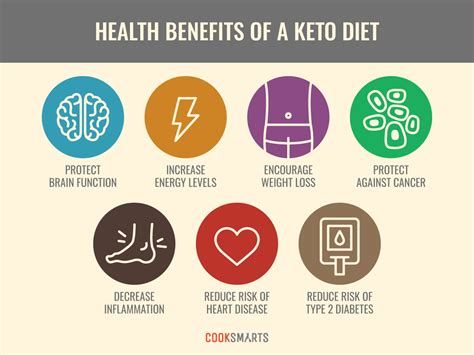
The ketogenic diet has been shown to 1) reduce hunger and 2) increase fatty acid oxidative metabolism—which both converge to overall decreases in body fat. This intuitively makes sense; if I’m less hungry and eating fewer calories while also burning more fat (and burning it more efficiently) I’m going to lose fat mass compared to my baseline.

What is sometimes harder to grasp is how eating fat can decrease fat—doesn’t fat make people fat? The trick is, in the context of the ketogenic diet, because carb intake is so low the body shifts into ketosis—where fats are the primary source of energy, not carbs. Typically, the brain loves sugar (glucose) as the preferred energy source. So when I eat a high-fat, high-carb diet the carbs are immediately metabolized into energy while the denser, more energy-rich fats are sent to storage in adipocytes (fat cells). When we were hunter/gatherers this made sense, store as much energy as possible because who knows when the next meal will come. In today’s hyper-modern world where those not experiencing food insecurity have easy access to cheap, calorie-dense food (think fast food), the body consuming many more calories than it can burn and stores the energy as fat.

This means that while in ketosis, I don’t have access to any glucose, therefore fats are the next most readily available fuel. This is why people can live healthily and decrease body fat while eating a high-fat, low-carb diet.

https://1m8t7f33dnra3sfk6v2rjurs-wpengine.netdna-ssl.com/wp-content/uploads/2018/05/Keto-Health-Benefits_BlogPhoto_R-1200×900.png

The ketogenic diet does not stop here, there are other neural consequences(think neuroinflammation) that come from removing carbs from the diet. First, scientific evidence has shown that a typical high-fat diet can trigger neuroinflammation by increasing pro-inflammatory cytokines (especially IL-1β and TNFα). These cytokines further trigger signaling cascades that result in insulin resistance, which dysregulates signaling pathways that make you feel “full”. This is bad news. Here’s the interesting thing though, other studies suggest that the ketogenic diet actually lowers neuroinflammation by decreasing concentrations of IL-1β and TNFα! What are we to make of this contradictory evidence?

https://onlinelibrary.wiley.com/doi/full/10.1111/epi.13038

One suggestion I have is that a high-fat diet, while harmful when coupled with high carbs, is beneficial in the context of a very low-carb lifestyle. Here’s the reason. The types of saturated fatty acids that trigger neuroinflammation only stick around too long in the bloodstream because the body is busy metabolizing glucose. During ketosis, those saturated fatty acids are more quickly broken down into ketone bodies, which are directly used by the brain and do not (to the best of my understanding) trigger neuroinflammation like saturated fatty acids.

The take-home messages are first, fats are not “evil”, they’re a fuel source—just like carbohydrates and protein. Second, the role of fats in health and disease ranges widely based on several factors, one of which is what other energy sources are available at a given time. Thirdly, the ketogenic diet has the potential for treating many diseases and as a key tool in situations of morbid obesity to increase fat oxidation. Finally, wrestling with both sides of the harmful/helpful fat debate illustrates that science can be controversial and that critical thinking skills are needed to make sense of contradictory evidence!

Your Weight Is Completely Under Your Control: The Sneaky Myth Linking Obesity and Moral Failure

Susan Greenhalgh’s 2015 book Fat Talk Nation: The Human Costs of America’s War on Fat, identifies the idea that “Weight is under individual control; virtually everyone can lose weight and keep it off through diet and exercise. Weight-loss treatments work; if they don’t, it’s due to lack of willpower on the part of the dieter,” as a key myth implicitly linking moral failure to obesity and underlying the burgeoning social, political, and economic effort to fight growing obesity rates in American citizens (30). Greenhalgh argues that this myth perpetuates and underpins many of the negative psychological and social consequences that people of a non-standard body size endure (31). Globally, 1.9 billion adults are overweight and, of these, 650 million were obese according to 2016 data from the World Health Organization. Therefore, the question of how and why obesity is linked to moral failure is highly relevant and has real consequences for many people. In fact, a 2012 study from the University of Minnesota found that 50% of people identifying as female and 38% of people identifying as male engage in unhealthy weight control behaviors. These harmful behaviors include things like skipping meals, fasting, smoking cigarettes, binge eating & purging, using laxatives or diuretics, and taking diet pills. Clearly, the link between obesity and moral failure has real, non-trivial consequences for individuals seeking a lower body size.

However, some key factors impacting your weight really aren’t subject to your conscious decision-making processes. Nothing in obesity makes sense except in light of dysregulated hormone balance. Let’s dive into the neuroscience behind hunger and obesity to explore how hormone balance in the hypothalamus regulates feelings of hunger and satiety.

Inside the Brain.

Ghrelin, Leptin, and Insulin are three key hormones that create the balance between hunger and satiety that tell your body when you need to eat, and when you’re feeling full. It’s complicated, so let’s use a graphic to break it down.

Fig 1: https://www.ncbi.nlm.nih.gov/pmc/articles/PMC5199695/

Ghrelin (not pictured on the graphic) signals to the brain that there is not enough available energy in the body and increases food intake by creating the feeling of hunger in the hypothalamus. Since Ghrelin and Leptin have opposite effects, it’s logical that they work through different mechanisms as well. Leptin (Fig 1: purple receptor, middle top of graphic) works in the opposite fashion by telling the brain that you have enough energy stored, creating feelings of satiety via a JAK-STAT signaling cascade. Insulin, like leptin, responds to energy stores but works in a slightly different way. Insulin will actually interact directly with the Leptin pathway via a protein signaling cascade that results in FOXO1 inhibition of STAT3, leading to satiety (Figure 1).

So how does this relate to the myth of control and the link between moral failure and obesity?

The balance between Leptin, Ghrelin, and Insulin is actually quite precarious. Any change in the relative levels of these hormones can lead to decreased feelings of satiety, increased eating, and obesity or, conversely, to increased feelings of satiety, decreased eating behavior, and symptoms of anorexia. Specifically, increased inflammation in the hypothalamus can lead to decreased leptin & insulin signaling, leading to increased eating and, potentially, obesity. So, clearly, every factor that forms an individual’s weight is not under their explicit, conscious control.

Conclusion

The vast majority of messages people receive surrounding weight and body size either explicitly or implicitly punish fat people. Greenhalgh identifies both critical (“if you don’t stop eating, you’ll look like that fat person”) and, often well-intentioned, complimentary examples (“Wow, you’ve lost weight; you look fantastic”) of what she calls “Biopedagogical fat-talk” as unnecessary and harmful to people’s self-conception and body image (35). Therefore, be kind to others and yourself, and remove comments about body size and appearance from your dialogues. Instead, seek a deeper connection in your conversations and move the focus away from appearances.


Obesity and the Brain; What’s the Connection?

Obesity and cognitive decline; how closely related could they be really?  As it turns out, the connection between these two can be mediated by one step.  Insulin Resistance.    A high fat diet leads to an increase in meta-inflammation, and if this inflammation becomes chronic, we see the development of Insulin Resistance, then ultimately Type 2 Diabetes.  Now certainly obesity and diabetes are no small factors in one’s life.  But what if I told you that’s not where it stops?  The insulin resistance caused from a fatty diet and/or obesity, is also believed to be a major underlying cause of Alzheimer’s disease.  Researchers have shown that obesity nearly doubles the risk of Alzheimer’s disease in later life, and even if remaining healthy, obesity has been related to an increase in risk of Mild Cognitive Impairment, regardless of age. These findings have also been recreated in animal models.

Now when you think of insulin, I’m sure most people will think of the same things, diabetes, blood sugar, released by the pancreas.  Now take a look at this figure.

At a cellular level, insulin does so much more than just that!  Even outside of AD specifically, researchers have shown that those with an increased BMI, and type 2 diabetes, had more atrophy in the frontal, temporal, and subcortical parts of the brain, which are all typically associated with learning and memory.  The reasoning behind the obesity/insulin resistance connection, is that obesity and it’s increase in adipose tissue results in a low level metabolic inflammation. This inflammation releases cytokines, and by looking at the figure below, you will see that the products of these inflammatory cytokines binding, actually inhibits the actions of insulin and insulin binding.

Finally, moving into Alzheimer’s and Dementia.  Studies have shown that elderly people with morbid obesity had a higher level of hippocampal markers that are associated with β-amyloid

Plaques, as well as tau protein accumulations, along with a decreased hippocampal volume.  The hippocampus is important in the formation of long-term memories, and between the appearance of plaques, and neurofibrillary tau tangles, along with a decrease in the hippocampus itself, we see the building blocks of AD.  For so long, when looking at obesity it was always “heart health” and that was the major focus, I think it now may be important to reference the risks associated with the mental well-being of individuals as well.  On the flip-side, It should be noted that not all obesity’s are made the same.  The major difference is metabolically healthy, vs unhealthy.  Metabolically unhealthy, means insulin pathways have already been damaged, and changed (i.e. Type 2 Diabetes). This can be treated, but ultimately not cured.  Metabolically healthy means that although the diet has increased inflammation, and begun to exhibit somewhat insulin resistant effects, it is not ‘chronic’, and the insulin pathway is still ‘rescuable’.  That means that although it is problematic, if a proper diet, is instituted, and the person can get back to a healthy body composition, the long-lasting effects of this inflammation will be less serious, and they would no longer be within the realms of major obesity related risk factors.  As we learn more about the interrelation of these conditions, it is important to recognize the longer-reaching issues that they may present down the road.  I believe the more people know about the dangers they are presenting to their bodies, the better the chance they will take the necessary steps to maintain their bodies adequately.

Alzheimers Disease – Initial Connections for Future Answers

While we have made numerous advancements in the past few decades, there is likely much more we don’t know, let alone understand, about the human brain than what we do. The field of neuroscience was not well established until the 1960s, and though we have made exponential leaps in knowledge of the brain since then, new discoveries often expose more gaps in knowledge. As one neuroscientist, Tom Sudhof, MD, PHD, has put it, “we are still in need of an understanding of the fundamentals” in order to understand elusive phenomena such as consciousness. “There is never a single discovery that changes science… science works as a process that extends over decades.”

A fundamental finding made in 1978 was the presence of insulin receptors in the brain, but it was not until the early 2000s that the role of insulin in the brain became a focus of research. In fact, the brain was classically thought to be insulin-insensitive (not affected by insulin), even after insulin receptors in the CNS were discovered. It’s fairly common knowledge that insulin plays an important role in PNS glucose regulation, but insulin is now understood to be involved in a wide variety of brain mechanisms as well, such as regulation of energy homeostasis in the brain, feeding behaviors, mood, and neuroprotection.

Another prominent role of insulin lies within learning and memory. These two phenomena within the brain are thought to be largely facilitated by a mechanism called synaptic plasticity, and insulin has been shown to interact with this process in a couple of different ways. Some studies have found that insulin can induce Long-Term Depression (LTD), which weakens synaptic strength based on its level of activity, through internalization of a type of glutamate receptors called AMPA receptors. Others show that administration of insulin enhances NMDA receptor glutamatergic transmission (associated with Long-Term Potentiation (LTP), which enhances synaptic strength also based on level of activity. These two components of synaptic plasticity have opposite effects, but they work together to process and store information in the brain. Which aspect insulin modulates may just depend on what subtype of receptor it interacts with.

When insulin in the body doesn’t function correctly, diabetes can result; when insulin signaling in the brain is impaired; several lines of evidence indicate that this may contribute to Alheimer’s disease. Interestingly, the two diseases may be connected, with Type 2 diabetes increasing risk for developing Alzheimer’s disease. As a brief overview, there are many ‘pieces to the puzzle’ for the etiology of Alzheimer’s, but they seem to all center around insulin resistance, which occurs when cells don’t respond properly to insulin. This insulin resistance, then, is hypothesized to be a significant contributor to not only diabetes, but Alzheimer’s as well, serving as a possible link between them.

The article Connecting Alzheimer’s disease to diabetes: Underlying mechanisms and potential therapeutic targets (2018) summarizes the many possible contributors to Alzheimer’s development. Three of these aspects are ABOs, gangliosides, and inflammation. ABOs are oligomers of the AB peptide, and function as toxins in the brain when they accumulate. When ABOs phosphorylate IRS-1, part of the insulin pathway needed for proper brain signaling, it becomes inhibited and the signal can’t be properly passed on.

Gangliosides also disrupt insulin signaling, but through different mechanisms than ABO’s. One way is by a type of ganglioside called GM3 disrupting interaction between the insulin receptor (IR) and cav-1, a protein that connects the IR with another substrate necessary for proper insulin signaling. The ganglioside GM1 may also promote insulin resistance by allowing ABO’s to bind to it, resulting in aggregation of these toxins into toxic amyloid structures. Finally, low grade yet chronic inflammation has been seen in brains with Alzheimer’s disease, suggesting that inflammation-mediating cellular pathways and the pro-inflammatory molecules they produce may be involved in Alzheimer development. 

We still don’t know exactly how all of these mechanisms fit together, but we are starting to find connections between them that explain how insulin resistance may arise. ABOs activate inflammation signaling, and gangliosides support production and clustering of ABOs, for example. In addition, Inflammation in the form of TNF-a production may perpetuate ABO development. On a broader scale, insulin resistance provides a key link between Alzheimer’s disease, Type 2 diabetes, and metabolic syndrome as well. Understanding this mechanism of pathogenesis does not make these diseases seem any less daunting or complex, but continuing research of and increasing awareness for different factors that contribute to insulin resistance  may help society take them more head-on. Perhaps, someday we might be able to prevent them from even occurring at all. 

The Representation of Obesity in Society: Neurochemical Basis

Worth my Weight…

Over the years, society’s vision of ideal beauty and weight has evolved. In the Renaissance era, a heavier weight was viewed as the optimum form of beauty and attraction as it implied that someone was of higher economic standing. In the 1960s, Twiggy hit the model scene, and a thin, petite body type was seen as desirable. Today, in-shape and curvy female models and male models with abs are plastered across shopping malls and clothing magazines. Whatever the year, society’s envied body type results in many people feeling like their weight/shape isn’t being represented or is a taboo subject. In 2016 alone, approximately 1.9 billion adults were considered overweight, and 650 million of those were diagnosed as obese. Part of the reason these topics are so taboo is because people struggle to understand it. How does obesity actually work in the brain? Is it a mental disorder? Is it genetic or environmental? There are so many complex questions on the topic of obesity, but the neurochemical basis allows a deeper insight to these.

Inside the Brain

A key area in the brain that is involved in obesity is the hypothalamus. The hypothalamus is involved in a variety of neuroendocrine functions and works to maintain the body’s energy balance, feeding behavior, and can respond to stress levels. It’s suggested that inflammation of the hypothalamus could be related to major changes in these areas. The hypothalamus keeps metabolic homeostasis by balancing how much energy is expended and the level of food intake.

Three hormones, leptin, ghrelin, and insulin are involved in creating a balance between stimulating hunger and feeling full through signaling cascades. Leptin, is a starvation hormone, and tells the brain when there is enough energy stored and you are full; this lowers food intake. Ghrelin, is a hunger hormone, which signals when there is not enough energy and increases food intake. Leptin works through a JAK-STAT pathway; the hormone leptin binds to a leptin receptor in the brain and activates STAT, which is involved in protein transcription. STAT can stimulate the POMC protein, which suppresses hunger, or it can inhibit the AgRP protein, which increases hunger. Ghrelin works in the opposite way and stimulates AgRP to create that same feeling of hunger.

Hypothalamic inflammation in obesity and metabolic disease. - Abstract - Europe PMChttps://www.ncbi.nlm.nih.gov/pmc/articles/PMC5199695/

So, where does insulin come into this? When the insulin hormone binds to the the insulin receptor and activates the proteins IRS1, Grb2, SOS, PI3K, and Akt. Akt goes on to stimulate FOXO1 and this directly interacts with the leptin signaling cascade by inhibiting STAT so the body can feel satiety. In obesity though, when the hypothalamus is inflamed, FOXO1 is phosphorylated by Akt and is kicked out of the nucleus, meaning it can’t inhibit STAT. This means that food intake is increased and that feeling of satiety is lost.

Preventative Measures

Now that we know how inflammation of the hypothalamus leads to overweight or obesity through the neurochemical pathways, can this be prevented? There is a lot of research surrounding the relationship between high-fat diets and inflammation, even during pregnancy. This begs the question, can pregnant mothers maintain a lower-fat diet to decrease the chance of an inflamed hypothalamus in their children? Recent research on preventing or managing weight loss has also brought up the idea of dietary supplements, specifically Whey Protein Isolate. These supplements work to lower body weight and manage a lower weight by simulating a feeling of fullness through activation of the leptin hormone and inhibition of the ghrelin hormone. The Whey Protein Isolate showed significantly reduced levels of proinflammatory cytokines, decreasing the inflammation in the hypothalamus. These are all relatively recent research studies but the expanding knowledge on the obesity topic suggests society is headed in the right direction to understanding more about how weight is controlled neurochemically.

References:

https://www.ncbi.nlm.nih.gov/pmc/articles/PMC3393628/#:~:text=Moreover%2C%20whey%20protein%20assures%20a,orexigenic%20hormone%2C%20ghrelin%3B%20and%20reduction

https://www.ncbi.nlm.nih.gov/pmc/articles/PMC5199695/

Did You Skip Breakfast This Morning? That Might Be Helping Your Brain

I am sure if you go around asking individuals what they think the most important meal of the day is, more than likely they will say Breakfast. However, some neuroscientists are beginning to suggest skipping breakfast 2 times a week to give your brain an extra kick. This “meal-skipping” is a form of intermittent fasting that has been a long-standing practice in many athletes and in religious practices. Though, this concept of intermittent fasting is not new, it is only starting to be examined as a treatment for obesity and reduction of hypothalamic inflammation.

One reason obesity is believed to occur is by signaling dysfunction of insulin and leptin receptors. If someone continues to eat saturated fatty acids, this may trigger a receptor called TLR4, which is activates inflammatory signaling cascades. This begins a cascade to trigger IKK which inhibits IKba. This inhibition allows for NFKbeta to enter the nucleus and release SOCS. This molecule inhibits the leptin receptor. This leptin receptor is responsible for releasing STAT into the nucleus causing activation of POMC and inhibition of AGrP to cause the body to tell the brain the body is full and stop-eating. Also, if the insulin receptor is inhibited in any way, such as the TNFalpha phosphorylating the IRS-1 molecule. This inhibition of IRS-1 causes a cascade to inhibit Akt from kicking FOXO out of the nucleus. If FOXO is not kicked out of the nucleus, FOXO will inhibit STAT and will not signal the brain that it is full.

There are multiple ways for someone to intermittent fast. One way is to do a caloric restriction of total calorie intake by 20-40%. If you sustain caloric restriction for several months to years, researchers have begun to notice several benefits, such as:

  • Increased longevity
  • Decrease in resting heart rate and blood pressure
  • Increase in heart rate variability
  • Increased insulin sensitivity
  • Lower incidence of diabetes
  • Decrease of body fat percentage

Another way to intermittent fast is do alternate day fasting (ADF) which consists of a 24-hour period of fasting and a 24-hour period of feasting. This has begun to show benefits such as:

  • Extended lifespan in rat models
  • Delay or prevention of cardiovascular disease, kidney disease, cancer, and diabetes
  • Increased BDNF
  • Decreased heart rate and blood pressure
  • Improved insulin sensitivity in men ONLY
  • Impaired glucose tolerance in women ONLY

Once the body has burned through the glucose in the liver, the body will begin to burn through ketone bodies and other fatty acids in the body. These ketone bodies are believed to be associated with health and aging. If this idea of intermittent fasting is sustained through multiple months or years, it is believed to improve memory, executive function, and cognition. This has also been seen to suppress inflammation and reduce risk of onset of neurodegenerative diseases, such as Alzheimer’s.

To put this in perspective, let us look at common religious practices. In Ramadan, a month-long Islamic practice, individuals will fast during daylight hours and join in a feast with family once the sun has set.  In Jainism, monks and nuns will attempt to reduce their negative karma by not preparing food themselves and by only eating once a day. Some individuals may think of both these practices being extreme, however some researchers may think this as a positive practice. Though both these traditions cannot be generalizable to the general public due to the short duration of Ramadan and the vast differences in lifestyle in Jain monks and nuns.

Even if this benefits seem to be amazing, word of caution that you should be relatively well on emotional health and have a healthy diet. So, if you want to start, take it slow and safely.

Obesity: What is the Role of Cannabis?

As cannabis is becoming legal throughout most of the USA, this makes researchers wonder what role cannabis plays in obesity. Obesity is a complex disease that involves an excessive about of body fat. There are many reasons why someone may become obese. But no matter why or how someone became obese, it still has the same end result, and can increase the risk of other diseases and health concerns. So what is going on in the brain that might be a cause of obesity?

Normal Functioning Pathway

To start off, there are two key players in the brain that control appetite in the pathway that we will be focusing on. These are the hormones leptin and insulin. First, lets talk about leptin. Leptin is released from brain cells after food is consumed, this then binds to and activates leptin receptors on other brain cells. The activated leptin receptor then activates proteins called Janus kinases (JAK) which in turn activate signal transducer and activator of transcription (STAT) proteins. STAT enters the brain cell’s nucleus and causes certain portions of DNA to be transcribed into proteins. These proteins transfer signals to brain cells in the hypothalamus. The hypothalamus is a central brain region that controls thirst and hunger among other things. These signals inhibit the orexigenic pathway, which lets you know that you are hungry. Or activates the anorexigenic pathway, which tells you that you are full. Overall, leptin regulates fat storage in the body by letting you know when you are hungry or full.

Now, let’s talk about insulin. Insulin is released from brain cells after food is consumed. Insulin then binds to and activates insulin receptors on the outside of other brain cells. The insulin receptors activate a protein called IRS1, which in turn activates a many other proteins ending in protein kinase B (Akt). Akt enters the brain cell’s nucleus and causes protein FOXO1 to leave the nucleus. When FOXO1 leaves the nucleus, STAT activity is activated by proteins. This in turn helps you feel full. Overall, insulin helps you feel full, but if there is not enough insulin, this can lead to overeating.

High-Fat Diet

High saturated fatty acid diets negatively affects the way the brain controls appetite. First, saturated fatty acids (SFAs) enter the brain and bind to TLR receptors. These receptors then become activated which in turn activates a protein called IKK. IKK then releases NF-κB which enters the nucleus. NF-κB causes SOCS3 proteins to inhibit the insulin and leptin signaling pathways described previously. Overall, stopping your brain from letting you know that you are full even if you have been eating. This is an issue because it results in overeating.

A high fat diet also leads to inflammation in the brain. This happens because consumption of high fat foods release proinflammatory cytokines such as TNF-α which then bind to TNF receptors. These receptors activate protein JNK which then inhibits IRS1. IRS1 prevents insulin signaling which in return causes more hunger. Therefore, high fat diets cause bodily inflammation, as well as insulin and leptin resistance. Ultimately, preventing the feeling of being full, resulting in weight gain. So what role does cannabis play in obesity?

Photo courtesy of http://hometestingblog.testcountry.com/?p=6071

Cannabis and Obesity

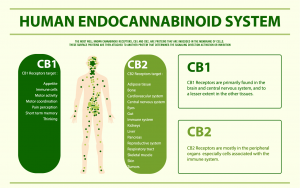
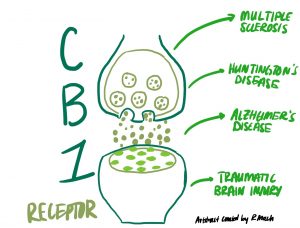
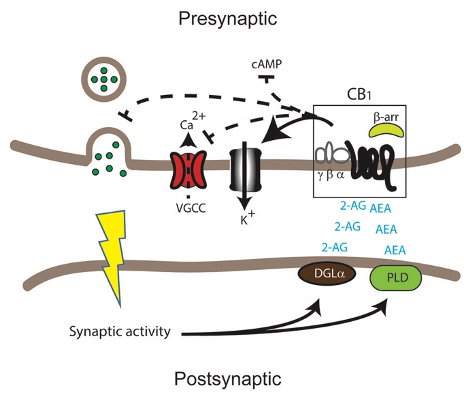
First, most people know that exposure to cannabis produces an increase of appetite, commonly known as the “munchies”. This led to one study where researchers explored the role of the brains natural endocannabinoid system in the regulation of obesity. They ended up developing a successful therapeutic for obesity by blocking the cannabinoid CB1 receptors using ligands, such as Rimonabant, to produce weight loss. Although this approach worked, Rimonabant was associated with increased rates of depression and anxiety and therefore removed from the market.

Recently, it was also discovered that obesity is ironically much lower in cannabis users as compared to non-users. Therefore, although cannabis can cause the munchies, it can also lower body fat. So, the researchers propose that tetrahydrocannabinol (THC) or a THC/cannabidiol combination drug may produce weight loss, and may be useful for the treatment of obesity. Further research is needed to show exactly why cannabis is causing this paradoxical outcome.


ASD, and Neural Connectivity as a Biomarker

In the world of modern science, we get a lot of absolutes. Something is or it isn’t, it works, or it doesn’t.  Unfortunately, in the absence of these absolutes, there is preliminary research, or new findings that often contradict each other. Such was this case concerning this foray into autism and neural connectivity.  The connection between neural connection, coined, “functional connectivity” and ASD has been examined frequently throughout the last decade.  This connectivity is measured using fMRI to examine the brains activity, and patterns of connectivity.  These bio-markers if found could do wonders in the way of diagnosing and treating autism, earlier and more specifically than previously. This is important as the current methods of diagnosis are the Autism Diagnostic Observation Schedule, and the Autism Diagnostic Interview.  While these have proven effective, diagnosis can be a long process due to lack of proper resources, and properly trained clinical staff.


These fMRI’s have shown multiple contradictory results, and while that may seem somewhat dark, there may be a reason for that.  Autism at its core is an individualistic ailment, and each person, and where they may or may not place on the Autism Spectrum is truly unique.  Each individual’s combination of various experiences and genetic makeup could certainly be to blame for the vast differences in connectivity patterns.  One manner of thinking is that maybe, autism is just a deviation from the typical pattern of brain activity, while exactly what that deviation may be is yet to be fully understood.


In terms of connectivity itself, some work shows this deviation from “normal” as an underconnectivity between distant brain regions, as well as an overconnectivity in those nearby.  The weakened signal from those distant regions, in turn with the interference due to the over-connection of adjacent results in these issues. Researchers mentioned “noisier patterns of connectivity” in brains of people with autism than in controls.  The more severe the deviation that was seen from this control, the more severely a person’s symptoms presented.   From this, we can see that while we cannot currently say if this is an over-connectivity or under-connectivity issue, it is certainly conceivable from the information gathered that there is an impairment of neural connectivity in ASD.


While each individual’s unique place on the Autism Spectrum is just that, unique, already we have separated the spectrum into several different ailments.  If it is found there is a similarity in functional connectivity between individuals in similar areas on the spectrum, that could be a major breakthrough for ASD.  Developing biomarkers that are repeatable may help a lot of children get the treatment, and progression they personally need much earlier in their life!  With many of these studies seemingly contradictory, it’s important to recognize that while different, they may all be correct. Autism and its impacts are unique in nearly every aspect for the individual. Why would the connections within their brains be any different?

The Inflammation Station

All aboard! All aboard! You’ve just purchased your ticket on the Obesity Train, and you have no idea what to expect. Still, you keep a positive outlook, hoping that this train ride will tell you all you need to know about the neurochemistry of obesity. Next stop, the inflammation station!

The Hypothalamus

You’ve just arrived at the train, and it’s time to get your ticket taken. The nametag of the person taking your ticket is “hypothalamus.” You think it’s odd, but you decide to listen to what it has to say. The hypothalamus mentions that it has a vital role in many metabolic and homeostatic functions, including the ever-so important melanocortin system, which binds hormones and controls food intake and energy expenditure. There needs to be a proper balance between food intake and energy expenditure, but this balance is tipped in individuals who are obese. The hypothalamus also tells you that one of its components is UDP, which is able to activate AgRP neurons. In obesity, these UDP levels are elevated, meaning a higher activation of AgRP neurons. This is not ideal, as those neurons will positively regulate feeding behavior. The hypothalamus has one more thing to tell you, which is that it hates inflammation. Hypothalamic inflammatory responses occur in two phases, both of which have harmful effects on the brain and body.

High Fat Diet

You finally reach your seat, thinking of the odd conversation you just had with Hypothalamus. Kind of an interesting character, but it gave you good information nonetheless. Your seat neighbor, though, also seems like a talker. It says its name is “high fat diet” and it wants to tell you about its effects on the body. You decide to hear it out, because what could it hurt at this point! High fat diet (HFD) tells you that the people who succumb to its pressure definitely feel the consequences. An HFD means that the brain has a tougher time telling you when to stop eating, almost constantly craving high-fat foods. This is somewhat of a habit, as once your brain gets used to an HFD, it will not like if you try to go off of it. HFD explains this to you saying it’s a likeable character, but you have a hard time believing it. This does not sound like something you’d want to get yourself into. The HFD wraps up its spiel to you by telling you why it’s on this train—heading to the inflammation station of course! A high fat diet causes activation of proinflammatory cytokines and inflammatory pathways in the hypothalamus. Not exactly good news!

Leptin & Insulin

You head down to the snack bar (in the “basement” of the train – how cool!), trying to escape these odd passengers you’ve talked to so far. There are two little kids in the snack bar, and they tell you their names are Leptin and Insulin. They’re cute kids, but they look very sick. When you ask if they’re feeling okay, they say no. They tell you that typically, they are able to effectively share with one another (suggesting a good balance between the two), but lately they’ve been unable to do so. Considering you’re on the train to the inflammation station, this makes you very nervous. They tell you that they too are not a fan of inflammation, as it causes a disruption in the signaling of Leptin and Insulin. Both of these hormones have crucial signaling pathways, so inflammation is quite detrimental to normal food intake and regulation, which is why it is such an important factor leading to obesity. The figure shown here helps give a visual of the balance between insulin and leptin and what is going wrong.

Last Stop: The Inflammation Station

When you reach the final destination, you come to the realization that inflammation is such a key player in obesity. Each character you talked to had a poor relationship with inflammation, demonstrating that it has widespread negative effects. Still, you feel as though this train ride has given you much to think about and has given you good information on obesity in the brain and body.

Second-Order-What? Is This Causing My Weight Gain?

Each year this seems to continue to be a “hot topic” as well as on the forefront of many American’s mind. Something that, statistically, seems to be increasing as in years past and remains a challenging matter to talk to anyone about, family or patient. This is obesity. What causes it? It seems as of late, there has been an increased focus on the hypothalamus and inflammation. Could there be such a pathway that outlines the “need” we feel to eat just one more candy bar or plate of food at the buffet?

Bain and Body communication 101

So, how does our body communicate with our brain and vice versa? Mainly through the use of neurons, cells that transfer information between our brain and the environment around us. Generally, we can think of these neurons communicating body wide, with first-order neurons receiving the signals from our limbs and ultimately transferring them up to the brain with the help of second motor neurons that act as an “intermediate”, running the signal up the spinal cord and to the brain before sending the message to another neuron.


Remember these “second-order neurons” as it will come back into the picture soon!


From Adipose to Brain

What gets the ball rolling exactly? Hormones such as leptin will be released from adipose tissues in the body and travel through the bloodstream until reaching the brain, specifically the hypothalamus. Here, it will trigger the activation of a neuron in the area of the hypothalamus known as the arcuate nucleus (ARC) that will, for our purpose, travel specifically to the paraventricular nucleus (PVN). These neurons will then pass their messages on to second-order neurons (as represented by the dotted line in the image below), which in turn will make their way to the brainstem where it will inform the body to continue eating.

More information can be found regarding the specifics of signaling and activation/inhibitions of proteins and pathways here. Of course, there are more pathways and functions that get carried out by each of the structures listed above, but what if an area of this pathway, let’s say the pathway of the second-order neurons, is damaged or gets out of whack? What then could happen? Damages to the PVN or just the pathway these neurons take to inform the brainstem of continual eating will be unable to function properly and may lead to issues such as overeating or even undereating. The damage or loss of these second-order neurons may even impact some of the inflammation regulator proteins such as CCKs that plays a role in feeding behavior.

Looking Ahead

This raises questions beyond the role that second-order neurons play within the brain and body, as in if this is what initially causes obesity to start occurring or if it is a side product of something larger. Is it and/or should it start being considered more of a mental illness under categories such as addiction? Are there true relationships between obesity and other areas of health such as Alzheimer’s disease or Type 2 Diabetes? With many additional aspects and environmental factors, it remains a challenge to determine what the “main contributor” could be for such a topic. This is why continual research is needed as well as the spread of information to the general public as a whole.

Spam prevention powered by Akismet