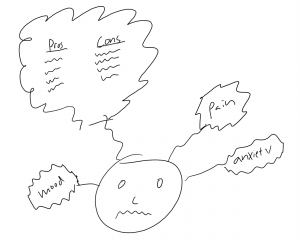

Miracle Drug?


Your family might not be like my family. At Thanksgiving, In between the catching up on how school and work is, an interesting conversation came up between us. My Aunt and Uncle began talking about CBD, and how it’s helped them for a variety of ailments, including one specific issue they’d been having. Turns out their dog has an intense fear of storms, and CBD lotion seems to alleviate that fear. I personally couldn’t imagine giving my dog CBD, but this example does speak to just how wide a range for use the general public see for CBD. Indeed, it has been suggested that CBD and medical marijuana can offer help in a variety of conditions, all the way from anxiety to pain.

Neurochemical Mechanisms

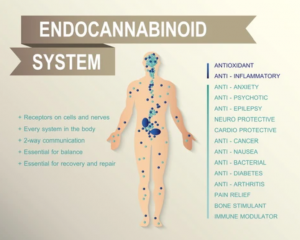
As it turns out, there is specific neurochemical evidence to support that the human endocannabinoid system, which is stimulated by things like medical marijuana and CBD, can be leveraged to alleviate all types of distressing symptoms. This is due, in part, to the fact that the endocannabinoid system is self-regulating. As a certain signal increases, pain for example, a neuron that receiving excessive pain signals, can signal to the neuron that sent the initial signal to just chill just a bit. This method of self-regulation can be extremely helpful, especially in situation where excessive cell signaling is taking place such as in anxiety and pain. The way this retroactive signaling takes place is only somewhat understood. We know the endocannabinoid systems activates a vast array of downstream signaling cascades within cells, but not all their functions are fully understood. Considering both the function and widespread availability of endocannabinoids, the science supports the proposed healing effects put forth by an abundance of experimental and anecdotal evidence. In fact, the CB1 endocannabinoid receptor is one of the most largely expressed in the entire central nervous system! It makes sense that it could help a variety of ailments, even those that seem they couldn’t possibly be related.

Miracle Drug?

When considering CBD and medical marijuana, I have even heard the term “miracle drug” thrown around due to both it’s efficacy, and range in use. Now, for the rest of this blog, I will make no attempt to hide my own biases and opinions. I’m a psych guy. I tend to view issues through a psychological perspective, one which involves avoiding the use of pharmacological options until it is absolutely clear their benefit outweighs their risk. Indeed, every intervention, in my opinion, should be viewed in this way. A provider should only pull out the pen to write the script when the dangers/discomfort of an ailment clearly less of a risk than the condition itself. Any pill or injection is an unnatural means for chemical agents to enter the body. Regarding taking Ibuprofen for a headache, the risk is low and the benefit can be great, so taking it makes all the sense in the world. When issuing chemotherapy for cancer, the risk of cancer far outweighs that of chemo in nearly all scenarios, despite the brutal side effects.  Now, the water begins to get murky when thinking of diseases typically associated with the treatment of medical marijuana and CBD. For the sake of this blog, I am going to focus on chronic pain and anxiety.

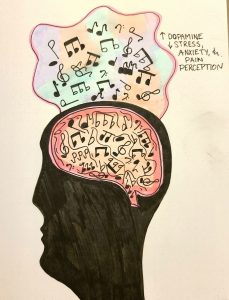
Artstract by Ben Swanson

As a society, we tend to look for the next drug to alleviate suffering, almost as if it is the only option. Alleviating suffering is indeed a positive thing, and every opportunity to research CBD and medical marijuana should be taken because the opportunities for replacing opioids and benzodiazepines for treatments are impressive. However, as with chronic pain and anxiety, and other disorders CBD and medical marijuana is typically used for, these things usually aren’t going to do serious bodily harm. Cause distress? Absolutely. Impact quality of life? Certainly. These things should certainly be addressed, but they should be done so when looking at the risks and benefits of taking CBD and weed. Now I can guess what you’re thinking…

”Come on Ben, this is a natural substance that comes from plants. This is a lot safer than other stuff we put in our bodies that get prescribed. You’re fear mongering about a relatively harmless drug that millions have found helpful.”

Word of Caution

What I would say is this; we don’t really know that. On initial inspection, it sure seems that way when CBD and marijuana is less harmful compared to other drugs used to treat anxiety and pain. However, the reality is that we do not have the scientific data to support that assumption. The exact mechanisms for CBD are not well understood, and because it is so widespread in the CNS, I fear we have jumped the gun on CBD and medical marijuana. What is someone going to look like after 20 years of taking CBD? What kind of effects will this have in the CNS and it’s ability to regulate itself? Could CBD be addictive long term? The fact is, there are no answers to these questions because the research does not yet exist. Should it exist? Absolutely. There will be a flood of research in coming years examining these very questions. But without this research, I hope providers and consumers alike are weighing the risk benefit of CBD and medical marijuana. I hope people ask themselves, is this something I really NEED? Or is this something that I think I need. Do the risks of not fully understanding this drug, truly outweigh the treatment benefits? The possibilities behind medical marijuana and CBD are exciting, and I’m going to be thrilled if they truly are a less harmful substituted for some common ailments. However, right now I am cautiously optimistic, and believe more research is needed before we can coin this the “miracle drug”.

How Endocannabinoids Change Your Brain: The Sneaky Role of Beta Arrestin

The first thing many people think of when someone starts talking about cannabinoid signaling likely isn’t how cannabinoid exposure can change how your brain processes signals by directly modulating the number of receptors on neurons but likely has something to do with how recreational marijuana has been talked about in media or in pop culture. While there’s certainly nothing wrong with thinking of marijuana’s recreational uses first, cannabinoids do so much more for the human brain than create the ‘high’ associated with recreational marijuana use. Cannabinoids, a wide family of molecules, have been used to treat pain, muscle aches, anxiety, and even reduce the risks of addiction development when used in place of opiate pain medications. However, I’m most fascinated by how they directly change the number of receptors present on individual axons, leading to the formation of drug tolerance.

This is where beta-arrestin comes in. Let’s dive inside the brain.

Inside the brain: How beta-arrestin alters receptor concentration on post-synaptic neurons


Figure 1. Graphic showing GPCR activation and eventual endocytosis via beta-arrestin signaling. (Ma L, Pei G. 2007. β-arrestin signaling and regulation of transcription. Journal of Cell Science. doi:10.1242/jcs.03338.)

Let’s break it down. First, a ligand (a small signaling molecule) will bind to the GPCR on the extracellular (outside) part of the neuron. This is what tells the GPCR to activate. Once the ligand binds, the g protein dissociates from the GPCR and its alpha subunit, an effector protein, goes off to trigger the response. After the alpha subunit leaves the GPCR, GRK2 binds to the beta-gamma subunits of the GPCR and removes them, phosphorylating the GPCR’s tail in the process. This leaves the phosphorylated tail open for beta-arrestin to bind to it. Once beta-arrestin binds to the tail of the GPCR, it triggers endocytosis, bringing the entire GPCR into the cell in a small bubble of the cell membrane. This leads to desensitization by reducing the number of receptors available to respond to a given signal.

“That’s great,” you might say, “I now understand beta arrestin’s impacts on GPCRs, but how do endocannabinoids activate beta-arrestin?”

Great question. I’m glad you asked it. Let’s talk about it.

It’s actually pretty simple. Repeated exposure to cannabinoids that function as ligands for CB1 receptors increases GRK2 activity, thereby also increasing both beta-arrestin signaling, and GPCR endocytosis. This helps explain why some individuals who use cannabinoids repeatedly build up a tolerance, requiring more of the cannabinoid to achieve the same feeling. For example, THC, the cannabinoid found in recreational marijuana responsible for the “high” associated with its use, is likely the most well-known example of this effect.

Conclusion

In closing, there are two things I think you should take from this.

  • Endocannabinoid signaling can be complicated. Beta arrestin’s role in changing receptor concentrations was only discovered in the last 20 years and its stimulation by endocannabinoids is still being understood.
  • There’s still so much that science does not understand about how the brain works. It’s both a daunting and highly exciting prospect.


The Widespread Wonders of the Endocannabinoid System

The endocannabinoid system (ECS) has proven itself to be a vital player in many central nervous system functions, potentially serving as a new therapeutic mechanism for many neurodegenerative disorders such as multiple sclerosis (MS), Huntington’s disease (HD), Alzheimer’s disease (AD), and traumatic brain injury (TBI). There is currently a movement towards uncovering more information about this relatively new system, with considerable research being conducted on the ECS. Because of this additional research, we know more about the ECS than ever before. Let’s dive into more of the details of this incredibly powerful system.

ENDOCANNABINOIDS & THEIR RECEPTORS

The endocannabinoid system has two receptors named CB1 and CB2. Both of these serve vital roles, but they are certainly different. The CB1 receptor is highly abundant throughout the central nervous system (CNS), with particularly high levels in the neocortex, hippocampus, basal ganglia, cerebellum, and brainstem. The CB1 receptor binds THC, the active ingredient in marijuana (that many of us have likely heard of). The CB2 receptor is involved most predominantly in the immune system, allowing them to control synaptic function and be involved in synaptic plasticity in response to drugs of abuse. These two receptors work independently to modulate inhibitory plasticity, but both serve important roles in the overall functioning of the ECS.

The molecules that bind to these receptors are just as important as the receptors themselves. They are called endocannabinoids, and our bodies naturally make these molecules in order to activate the ECS receptors. The two most well-known endocannabinoids are anandamide (AEA) and 2-arachidonoylglycerol (2-AG). They are synthesized on-demand, and thus they have a short window of activity before they are broken down by an enzyme. Interestingly, both of these molecules bind the CB1 receptors with higher affinity than the CB2 receptors.

IN THE BODY

Now that we have some background information on the receptors of the ECS, it’s time to look more deeply into what they are doing in the body—specifically, in the central nervous system. The ECS has widespread roles identified, such as in mood regulation, pain perception, and learning and memory, for example. A unique component of endocannabinoids is that they are retrograde messengers: they send their signals “backwards!” Activation of the CB1 receptor causes changes in potassium ion flow and decreases in calcium ion channel conductance. Interestingly, it also means less endocannabinoid production. Because of these inhibitory effects, there is a decrease of neurotransmitter release seen after activation of the ECS, which is why the ECS plays such a crucial role in mediating synaptic plasticity.

ROLE IN NEURODEGENERATIVE DISEASES 

We’ve looked more deeply into how the endocannabinoid system works in our body, but it’s also important to highlight the roles it has in CNS disorders, specifically in MS, HD, AD, and TBI. For multiple sclerosis, endocannabinoids have already been identified as effective treatment options for muscle spasms and pain. It is thought that this is due to an increased activation of both CB1 and CB2 receptors by agonists at the molecular level. The increased activation leads to the dual-inflammatory and neuroprotective effects of endocannabinoids. Because receptor agonists have therapeutic effects, it is hypothesized that CB1 and CB2 may be impaired in patients with MS, eliminating their neuroprotective roles.

For Huntington’s, there is a reduced expression of the CB1 receptor, resulting in decreased motor performance. CB1 receptors importantly activate growth factors, so when there is a decrease in receptors, the patient won’t have enough growth factor expression.

The main takeaway in Alzheimer’s is that the ECS receptors could have anti-inflammatory effects, leading to lower levels of amyloid-beta plaques and neurofibrillary tangles. This means that the ECS could be an effective treatment method in reducing those inflammatory issues seen in AD. Also noteworthy, CBD has been shown to reduce Tau protein phosphorylation, which would also be an effective treatment for AD patients.

Finally, in traumatic brain injury, it is hypothesized that 2-AG levels increase following the injury, and the signal to synthesize more endocannabinoids has been shown to reduce brain inflammation. CB1 and CB2 receptor agonists have also been known to demonstrate neuroprotection, so this would be effective in treating TBI as well.

It is clear that the endocannabinoid system is wildly important, and I’m sure our knowledge will only continue to grow on the subject – who knows what else we’ll discover about the ECS!


Endocannabinoids and Reduced Inflammation


If I asked you to name an organ system in the human body, which one would you pick? The cardiovascular or nervous system, due to the well known and fascinating heart and brain? Maybe the respiratory system? What I am guessing you did not choose was the endocannabinoid system (if you did, nice! If you are sitting here wondering if I just made up a system, keep reading below!). What I am also guessing you probably are not aware of, is how close researchers are getting to developing therapies for a variety of central nervous system (CNS) disorders that I bet you were not even aware are associated with this system! These include multiple sclerosis, Huntington’s disease, and Alzheimer’s. If that wasn’t good enough, there also seems to be a strong relationship between this system’s ability to lower inflammation within the body, which can be a precursor for some of these nervous system diseases. Find out more below!

Inside the brain

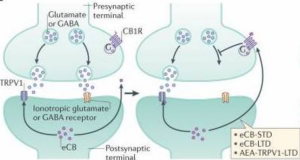
As to date, two of the most common receptors found within the body are the CB1 and CB2 receptors, which are both G-protein coupled receptors (GPCR), meaning that a ligand binds to these receptors in order to start a chain of events that lead to their specific function within the body. Anandamide (AEA) and 2-Arachidonylglycerol (2-AG) are two of the main endocannabinoids that act as these ligands that bind to the CB1 receptor. This process is outlined in the image below and can be explored to further depth here. As shown, once the GPCR is activated, it inhibits cAMP, voltage-gated calcium ion channels, and the release of neurotransmitters from the presynaptic neuron, while allowing potassium ions to rush out of the presynaptic cell and into the synaptic cleft.

The CB2 receptor has been targeted largely for the effects it has on the immune system and inflammation within the body, but as we will see below, there may be more of this system included than just that receptor. Overall, the endocannabinoid system (eCBs) in involved in a myriad of events within the body, ranging from memory to pain to mood.

eCBs and Inflammation

Recent studies seem to show both ligands and receptors as being key regulators of the immune system and inflammation in the body. There are a range of functionsthat are influenced by the eCBs, with just a few listed below:

  • Leukocyte functions with regard to B and T cell differentiation
  • Macrophages ability to inhibit pro-inflammatory cytokines
  • Apoptotic functions of immune cells
  • Receptors such as GPR55 that ultimately downregulate inflammatory cells

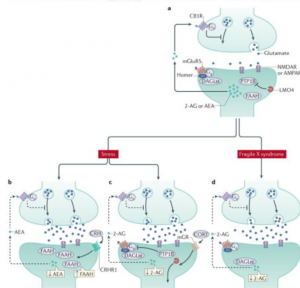
Researchers are trying to see exactly how these modulations take place from the eCBs and are doing so in three different ways. The first being to increase levels of 2-AG and AEA inhibitors, the second being to administer self-made endocannabinoids/cannabinoids, and thirdly to disrupt CB1 and CB2 receptors genetically or pharmacologically. The image shown on the left represents how ligands such as AEA and 2-AG may have the majority of the modulatory ability and may have more to do with inflammation than just the CB2 receptor. These two ligands lead to the activation of the two CB receptors, however, actions such as hydrolysis from enzymes shown in red may lead to different receptors (in green) and thus impacting the role of how many CB receptors are available/present in a particular area in the body and lead to it being more susceptible to inflammation.

Future Implications

There has been much discovery and hope for the eCBs acting as a future therapy option for many CNS diseases, but clearly remains a large amount of research to be continued due to the vast amount of involvement this system in particular has within the body. It still remains largely unknown as to how the body can differentiate the pro- and anti- inflammatory cytokines. Possibly examining further into a variety of ligands/receptors for inflammation control has the ability to start a pinball effect that will lead researchers onto the right path of understanding and developing new ways to treat a variety of conditions in a not-so distant future.

Understanding Autism, Neurochemically and Beyond

Rates of Autism Spectrum Disorder (ASD) are rising in the U.S., and as a result, scientists are scrambling to figure out what is behind this increase and what we should do about it. A neurological disorder that varies widely in presentation and severity, Autism is broadly defined by the CDC as a disability “that can cause significant social, communication and behavioral challenges.” Since the 1990’s, autism prevalence has shifted from 1 in 150 children to 1 in 69. This may be caused by changes in diagnostic practices, such as the inclusion of Asperger’s into the Autism spectrum and looser diagnostic criteria, but a variety of other factors have been proposed as well.

Neurochemically, there are many proposed mechanisms that lead to the development of ASD. One of the most prominent hypotheses of pathophysiology involves abnormal neuroconnectivity, where neurons are overconnected within local circuits but underconnected across brain regions further apart, possibly due to an initial misplacement and impaired removal of unneccesary neurons during development. An imbalance of glutamate and GABA may also be involved, resulting in a net overexcitation of certain brain areas that would help explain the repetitive behaviors, seizures, sensory processing difficulties and social impairments commonly seen in Autism. Genetics, environmental factors and neuroinflammation, along with  components, are additional aspects of autism development that have been demonstrated through research.

People with Autism often experience life differently from neurotypical individuals, but to what degree does this warrant treatment or interventions? A fairly convincing argument has even been made by some that the occurrence of ASD within a population provides evolutionary benefits, with common autistic qualities such as enhanced memory and heightened perception contributing to the specialization of roles that further society. However, I have worked with several dozen teens and adults with Autism at a therapeutic recreation program, many of whom on the more severe end of the spectrum are unable to independently care for themselves or communicate verbally. Especially without the right type of support system, challenges like these can make it difficult to connect with others.

I am by no means an expert on ASD treatment, but my view is this: we should help individuals with ASD foster skills that will directly improve their quality of life, such as communicating their needs and thoughts they want to express to others. However, we should spend just as much energy toward creating an environment where they feel free to be authentically themselves. This is both by helping those around them learn how to best support their needs, but also by teaching society to accept and integrate individuals with ASD into their community. 

When it comes down to actual treatment decisions, things can get tricky. Do therapies such as Applied Behavior Analysis (ABA) help children with Autism “overcome” their symptoms? Or are there aspects of ABA that force children with Autism to assimilate to societal expectations in ways they may not need to? Different medications/therapies may pose similar ethical dilemmas. Given the wide range of symptom presentation and severity, it may be best to have a variety of treatment routes and options as well. I don’t have the answers to questions like these, but I hope that someday we will. In the meantime, we each play a part in creating a world where anyone can thrive.

Medical Marijuana Decreases Drug Abuse

The endocannabinoid system is a naturally occurring system within the brain. Researchers have been looking at CBD and THC, which can both be extracted from cannabis, as therapeutics. CBD and THC are chemically similar to the body’s endogenous (natural) endocannabinoids. Research has shown promising results, so doctors have been starting to prescribe medical marijuana to patients instead of alternative drugs. So how has this impacted drug abuse?

From: http://mjnewsnetwork.com/legal/medical-marijuana/medical-marijuana-id-card-applications-top-2000/

In The Brain

First, it is important to understand the endocannabinoid system (ECS) in the brain. The ECS has retrograde signaling and involves several receptors and ligands. Two of the major endogenous endocannabinoids (eCB) are Anandamide (AEA) and 2-Arachidonoylglycerol (2-AG). Also, the CB1 and CB2 receptors are the most prevalent receptors in this system. Both receptors are G-protein coupled receptors (GPCRs). This means that when a ligand binds, G-proteins are activated.

Activated CB1 and CB2 receptors result in a signaling cascade that releases neurotransmitters from the postsynaptic neuron which travels back to the presynaptic neuron. These signals then modulate the presynaptic neuron’s signaling, effecting all signaling done by the presynaptic neuron. The two major endocannabinoids, along with exogenous cannabinoids CBD and THC, bind to the cannabinoid 1 (CB1) receptor. The CB1 receptor is located on presynaptic neurons and mediates the central nervous system’s (CNS) effects. AEA and 2-AG activate the CB1 receptor, which regulates adenylate cyclase activity and inhibits cAMP, voltage-gated potassium channels, calcium channels, and neurotransmitter release.

Next is the cannabinoid 2 (CB2) receptor. The CB2 receptor is mainly found on microglia and is involved with the immune system, including inflammation. AEA and 2-AG are agonists for the cannabinoid receptors and are triggered by an influx of calcium at postsynaptic sites after synaptic activity. Overall, the eCB system mediates a variety of events including synaptic plasticity, learning and memory, pain perception, neuroprotection, inflammation and mood.

Artstract created by H.Pfau

Medical Marijuana and Drug Abuse

As medical marijuana is becoming legal, doctors are switching to marijuana or CBD as a therapeutic in replacement of other medications. This is significantly decreasing the amount of addictions and overdoses for several reasons. First, the majority of people who get addicted to opiates were once prescribed them. So, instead of prescribing opiates for pain management, doctors are prescribing medical marijuana or CBD. Second, people who are already addicted to opiates are willingly switching to marijuana, therefore reducing the amount of addictions and overdoses. Same goes for anxiety prescriptions. Since marijuana and CBD have been shown to reduce anxiety, people are using it as a therapeutic instead of other medication that pertain to anxiety, such as Xanax. Further, showing a third way medical marijuana is reducing drug abuse. Lastly, marijuana has been shown to induce a “forgetting effect” by stimulating the part of the brain that controls memory. This can be helpful for people who are struggling with addiction by reducing cravings and reducing the memory related to drug use. Potentially, resulting in a fourth way medical marijuana is reducing drug abuse. 


Using the Gut to Treat Depression through Endocannabinoids

Your brain controls everything in your body right? Well, somewhat. In the case of some reflexes, the signal to pull your hand back from something hot may not have actually traveled to your brain until you’ve already completed the motion. On another level, there is evidence that the gut may also function somewhat independently, and actually communicate much more with the brain than previously thought. In some ways we already know this is true. When you’re standing in line for a roller coaster, you might feel a little nervous, and your stomach starts to turn. This is your brain and gut communicating, and this talk is a two way street. Both affect each other heavily, which can be positive or negative, depending on the situation. 

If the gut microbiome is disturbed (reasons can include stress, low fiber, sleep disturbances, etc.), this appears to not be great for our overall health. These disturbances typically lead to a low grade, local inflammation of the gut, which then turns systemic. Because of the gut-brain connection, systemic inflammation becomes neuroinflammation, or inflammation of the brain’s tissue. This can have all kinds of adverse effects that can show themselves behaviorally, or change the way the brain functions. Since the gut can affect the brain negatively like this, there are also positives that can occur. One of the major upsides that research is looking into is that we may be able to address and treat issues that are commonly associated with the brain, such as anxiety and depression, through the gut.

When the gut is inflamed, it has been found that endocannabinoid signalling is lower than it should be (and yes, endocannabinoids relate to cannabis). It makes sense then that restoring proper levels of endocannabinoids would help to treat inflammation. Using neuroinflammation as an example, restoring this endocannabinoid signalling to the gut relieves neuroinflammation as well, helping to make the entire body work more smoothly. As talked about in my obesity blog post (shameless plug), inflammation can perpetuate and worsen obesity, which can increase insulin resistance, which, as talked about in my Alzheimer’s post, can lead to neurodegenerative diseases such as Alzheimer’s disease or Parkinson’s. Basically, inflammation is really not great, and can cause a cascade of negative effects that can happen over a period of decades. The good news though, is that inflammation can be treated using endocannabinoids, but that also doesn’t mean we shouldn’t try to prevent inflammation in the first place. 

Something interesting that has been found in this gut-brain link is the ability for the gut to moderate pain and how we perceive it. Chronic pain that doesn’t have a reason to be painful (as in there isn’t any reason for pain to occur), also called neuropathic pain, is a common thing among Americans. Endocannabinoids moderate this pain, and so if someone is struggling with chronic pain of this sort, increasing their endocannabinoid levels can help alleviate pain (along with inflammation that can go along with the pain!).

With all this being said, it’s important to do what your grandma probably told you, eat well, do things you like to do, and sleep well and often, and your endocannabinoid levels and gut will thank you for it. Ok, she might not have said that last part, but I bet she was thinking it.


The Endocannabinoid System’s Role in Therapeutics

artstract by C. Eisenschenk

When the endocannabinoid system is mentioned, most people generally infer that it has something to do with cannabis, more commonly known as marijuana. What most don’t realize is that the endocannabinoid system is a natural occurring system within the body and has cannabinoid receptors to bind with endogenous ligands (endocannabinoids (eCB)). This system plays a prominent role in synaptic plasticity and homeostatic processes and has garnered quite a bit of research in the therapeutics department. CBD and THC, which can both be extracted from cannabis, are chemically similar to the body’s natural endocannabinoids. Using forms of CBD, THC, and arachidonic acid-derived endocannabinoids, Anandamide (AEA) and 2-Arachidonylglycerol (2-AG) have shown to have neuroprotective effects and pain reduction. So how exactly does the endocannabinoid system do this?

What is the Endocannabinoid System?

https://www.frontiersin.org/articles/10.3389/fncel.2016.00294/full

As previously stated, AEA and 2-AG are two of the major endocannabinoids expressed within the body. These, along with CBD and THC, bind to the cannabinoid 1 receptor (CB1) receptor. The CB1 receptor is a G protein-coupled receptor located on presynaptic neurons and mediates the CNS effects of the endocannabinoids. AEA and 2-AG are produced by the enzymes diacylglycerol lipase (DAGL) and phospholipase D (PLD) and then activate the CB1 receptor, which regulates adenylate cyclase activity and inhibits cAMP, voltage-gated calcium channels, potassium channels, and neurotransmitter release. There is also the CB2 receptor, which is more concerned with the immune system as it is largely associated with inflammation and localized to microglia. AEA and 2-AG are agonists for the cannabinoid receptors and are triggered by an influx of calcium at postsynaptic sites after synaptic activity. The endocannabinoid system works to regulate a variety of events including pain perception, neuroprotection, learning, memory, and mood.

The Endocannabinoid System’s Role in Therapeutics

The use of endocannabinoids in therapeutics has increased greatly in the past few years with CBD pop-up stores and the legalization of marijuana in a handful of states. To read more on CBD for pain relief, read here: https://www.healthline.com/health/cbd-oil-for-pain#arthritis-pain-relief. The endocannabinoid system though has garnered quite a bit of attention in research by being linked to a variety of CNS diseases like Multiple Sclerosis, Alzheimer’s Disease, Huntington’s Disease, and Traumatic Brain Injuries (TBIs). In TBIs specifically, it’s been found that the endocannabinoid 2-AG and endothelin (ET-1) induced vasoconstriction, which constricts blood vessels and lessens blood flow) both form after a TBI. The balance of the two is what determines how bad in jury may be.

2-AG activates the CB1, CB2, and TRPV1 receptors to counteract the ET-1 response and dilates the blood vessels, decreasing the injury severity. This means that the endocannabinoid system is exerting a neuroprotective effect and has also been shown to lower the expression of proinflammatory cytokines in the early stages of a TBI, lowering the severity of the injury in the long haul. You can read more on the effects of the endocannabinoid system and TBI here: https://link.springer.com/article/10.1007/s12035-007-8008-6

Increasing endocannabinoids by injecting synthetic 2-AG or AEA to relieve pain and decrease disease/injury severity still requires more research but is looking to be a promising avenue in therapeutics. Currently, use of CBD and THC derivatives in different treatment forms, whether it be gummies, pills, or smoking, all seem to be beneficial ways to relieve pain, especially chronic forms. Hopefully research will continue on the use of endocannabinoid system’s role in neuroprotection and pain perception to increase the therapy for these disorders and pain management options.

Endocannabinoids and Alzheimer’s Disease

If you’ve done any research on the neurochemistry of Alzheimer’s Disease (AD), you’ve probably run into a few of the same molecular players like β-amyloid plaques and tau tangles that are present in the disorder. However, despite promising strides in AD research, fundamental questions about the disease still remain unclear, like why these plaques and tangles form, causing AD to happen to certain people and not others, or how best to treat the disease. Recently, a new player in the development of AD has been discovered: the endocannabinoid system. Let’s take a look at what this system is and how preliminary research has implicated its role in AD.

The Endocannabinoid System

The endocannabinoid system (ECS) involves several receptors and ligands (molecules that bind to receptors) in the brain. The CB1 and CB2 receptors are the most prevalent in this system. Both are G-protein coupled receptors (GPCRs), meaning that when the ligand binds, G-proteins associated with the receptors are activated. There are two categories of ligands for these receptors: endogenous endocannabinoids (those that are naturally produced in the brain) and exogenous cannabinoids (external ones that have been ingested, like cannabis). We will be focusing on the endogenous system for this post. The two main endogenous ligands in the ECS are the molecules AEA and 2-AG.

The ECS has a unique modulatory function in the brain because, once activated, it affects the presynaptic neuron. The synapse is the space between neurons (brain cells). Typically, signals are released from presynaptic neurons in the form of neurotransmitters that cross the synapse and serve as ligands for receptors on the postsynaptic neuron. However, the endocannabinoid system signals in the opposite direction in a phenomenon known as retrograde signaling. Activated CB1 and CB2 receptors cause a signaling cascade that releases neurotransmitter from the postsynaptic neuron that travels back to the presynaptic neuron. These signals then modulate the presynaptic neuron’s signaling, which allows the ECS to have broad effects on all signaling done by the presynaptic neuron.

Endocannabinoid signaling helps mediate synaptic plasticity, the ability of a synapse to change in response to signaling activity, which is an important process in learning and memory. The ECS is also important in pain perception, mood regulation, as well as in protection from neurodegeneration and in reducing inflammation in the brain.

Role of ECS in Alzheimer’s Disease

Because the endocannabinoid system assists with memory, reduction of inflammation, and protection from neurodegeneration, it makes sense that dysregulation of the system could play a role in Alzheimer’s Disease. Evidence also supports a role of the system: levels of key molecules are off in AD brains and CB1 and CB2 receptors are correlated with tau tangles and other hallmarks of AD.

Unfortunately, because much about AD remains unknown and researchers still lack a holistic animal model (laboratory animals modified to simulate a disorder; for example, mice whose genome has been edited to cause an autism-like state) for the disorder, few conclusions have been reached about the role of the ECS. Let’s take a look at cursory research that has been done.

  • The role of the ECS in AD seems to be similar its role in other neurodegenerative diseases about which more is known, like MS. In these disorders, the role of the endogenous system counteracts the “neurochemical and inflammatory consequences of β-amyloid-induced tau protein hyperactivity”. This means that the ECS protects the brain from negative effects of tau tangles in the brain that lead to development of AD.
  • As mentioned above, different levels of key molecules in the ECS have been found in AD brains.
    • In AD, there is an elevated number of CB2 receptors in the hippocampus. This is correlated with amyloid plaque, tau tangle levels, and levels of activated microglia (other brain cells that act on neurons).
    • There is reduced methylation (addition of meythl groups that prevent a gene from being transcribed and expressed) at the FAAH gene locus in AD. This leads to reduced levels of AEA in temporal and mid-frontal cortex in AD brains, an important ligand in the ECS.
    • 2-AG. the other major endogenous endocannabinoid ligand, exists at a potentially elevated level in AD.

Since research is still in its preliminary stages, a clear picture of the role of the ECS in AD remains evasive. Research is contradictory about points as basic as whether ECS signaling is overactive or underactive in AD brains. However, the ECS remains a promising route for future AD research, and CB receptor agonists like exogenous cannabinoids such as CBD have been proposed as potential treatments for AD.

The Universal Therapeutic Target’s New Competition: Huntington’s Disease

Let us take a quick look at what the endocannabinoid system actually is. There are two major endocannabinoids in the body, specifically the brain: Anandamide (AEA) and 2-Aracidonoglycerol (2-AG). These molecules are considered to be lipophilic signaling molecule which can be released into the CNS via intracellular Ca2+ levels increasing or activation of metabotropic receptors. When endocannabinoid molecules are released into the post synapse of the neuron, it will activate the CB1 receptor as well as other GPCRs. The CB1 receptor is considered to target motor activity, appetite, immune cells, short-term memory, and pain perception. However, there is another receptor, the CB2 receptor, that is activated in a similar manner. This receptor is more associated with the peripheral nervous system and the immune system. The CB2 receptor targets areas, such as the kidneys, liver, eyes, gut, skin, reproductive system, and the cardiovascular system. Once these receptors have activated their appropriate cascade, then the endocannabinoid may be broken down via hydrolytic bond cleavage or by enzyme breakdown. Enzymes that help break down AEA and 2-AG include lipoxygenases and cytochrome P450.

Looking from the above mechanism, it seems that endocannabinoids play a relatively large role in everyday functioning. In terms of pain perception, activation of the endocannabinoid system helps to inhibit the pain cascade and can mitigate pain symptoms. Other studies have begun looking at using the activation of CB1 to increase appetite and combat certain eating disorders. Activation of the endocannabinoid system can sometimes mean using an exogenous source, such as ingesting marijuana in some manner. CBD is a naturally producing chemical in the body, and it is the influx that begins to show therapeutic treatment. However, the efficacy and ethicality of medical uses of marijuana is a conversation for another blog post.

One disease however seems to defy the beneficial therapeutics of medical intervention of the endocannabinoid system. Huntington’s Disease (HD) is a genetic mutation of the IT-15 gene causing an abnormal number of nucleotide repeats. These nucleotide repeats, often called polyglutamine (PolyQ) stretches can promote cell death and aggregation. When these PolyQ stretches continue to grow in size, the more likely the stretch to form a beta sheet. When a beta sheet is formed, chaperone proteins label it as misfolded and cause aggregation, which can be cytotoxic in nature. Early symptoms of HD include stumbling, difficulty concentrating, depression, and memory lapses. Further progression of the disease can lead to severe motor dysfunction, such as fidgety movements, trouble breathing, difficulty speaking, and/or trouble swallowing.

There is little to no possible therapeutics for HD at the moment, slightly due to the unknown diversity in size and cytotoxicity levels of the aggregates. One study by Xi et al. (2016) did examine activating CB1 receptors to alleviate symptoms. They noticed a decrease in HD-induced cell death, but the total number of aggregates increased significantly. This was also seen for increasing cAMP. However, another study by Xie et al. (2010) showed that forced influx of BDNF in the striatum has been shown to prevent cell death and prevent some of the motor dysfunction symptoms.  It was also shown to reverse decreased dendritic spine density and decrease abnormal spine morphology commonly seen in HD.

In conclusion, maybe Huntington’s can not be treated via the endocannabinoid system, but there are promising outcomes if CB1 receptors are activated. If the nature of the HD aggregates could be made soluble, then CB1 activation could be used as a therapeutic intervention in conjunction with other therapeutics.


Photo Sourced From: https://www.science.org.au/curious/people-medicine/huntingtons-disease

Spam prevention powered by Akismet