
 As a capstone to my Neuroscience major at Concordia College, Neurochemistry has addressed all five of the college goals for liberal learning. As a course, I believe we have discussed as many diverse topics as possible and related them to the topic of the course, neurochemistry. We learned about and discussed everything from Alzheimer’s Disease to medical marijuana, while also addressing each topic from our unique perspectives. Within the course, we had psychology students, neuroscience students, chemistry students, biology students, pre-pharmacy students, pre-medical students, musicians, athletes, student leaders, and a whole gambit of personal experiences to draw from.
The way the course was designed allowed us all the opportunity to share our perspectives in the academic environment. Each week, we read a research article on the neurochemistry of a different topic. During discussion and recap of the article on Monday, students would ask and choose questions to research for the next class period. On Wednesdays, students brought what they found to class and shared it in a “speed-dating” format. After addressing multiple different aspects of each topic, we all participated and led large class discussions on Fridays. Following discussion, we took our new insights and formed our complete understanding of each topic into a blog post to share our knowledge to those around us.
 Instill a love of learning. The course material and the way in which the course was designed and implemented contributed to students meeting the goals of liberal learning. The first goal of liberal learning, as identified by Concordia, is to “instill a love of learning.” Neurochemistry easily accomplished this first goal. It is not hard to get excited about discussing the mysteries of the brain, especially when the discussion relates to hot topics such as mental illness and addiction. Likewise, the topics discussed in this course all affect us in different ways, making them interesting to study. Gaining understanding to the neural mechanisms of issues that are present in society only excites me more about continuing my education in neuropsychology.
Develop foundational skills and transferable intellectual capabilities. The second goal of liberal learning, “developing foundational skills and transferable intellectual capabilities,” was accomplished by this course through the design of the course. Reading a neurochemically-based research article each weeks helps students fine tune their ability to read and comprehend dense literature. Likewise, the community outreach project portion of this course taught us how to address the needs of issues within the community while collaborating with our peers.
Develop an understanding of disciplinary, interdisciplinary, and intercultural perspectives. The third goal of liberal learning as defined by the college, “developing an understanding of disciplinary, interdisciplinary and intercultural perspectives and their connections,” reached success through discussion of our different backgrounds and personal experiences. As addressed earlier, the students in this class were not from many different disciplines and personal experiences or identities.
BREW. In the same way, the fourth goal of liberal learning was addressed, “cultivate an examined cultural, ethical, physical and spiritual self-understanding.” Likewise, this goal was reached by our discussion of different perspectives and populations within the topics we researched each week. Socioeconomic status, religion, and race were all common themes brought up in group discussions.
 The fifth and final goal of liberal learning, “encourage responsible participation in the world,” came through in not only our class discussions, but our community action projects. As an aspect of the course, we worked in groups to address an issue within the community related to mental illness, PTSD, Alzheimer’s Disease, or Autism Spectrum Disorder. The community action project that the group I was part of addressed the stigma of mental health on campus. At Concordia, there is a pressure to identify as a “Happy Cobber.” The phrase is well-known among students and distressful to many. Additionally, the college Instagram account at the beginning of the year posted a photo of Kernel, the school mascot, leaning against the words, “NO BAD DAYS.” Within a few hours, the post was deleted due to the backlash of students who thought it was wrong for the college to insinuate that students cannot have bad days or that the statement was invalidating the experience of many Cobbers with mental health conditions. Knowing these things, the goal of our project was to raise awareness of the realness of mental health on campus through a social media takeover on Concordia’s official Instagram page. We addressed the “Happy Cobber” and proposed the “Real Cobber.” I recorded and edited videos of students, faculty, and community resources discussing the stigma of mental health on campus, the resources available to students on and off campus, and the message that participants had for individuals struggling with mental health. All of these videos were posted on the college Instagram story, and for the first time, a discussion of mental health was coming from the official Concordia social media profile. Likewise, we tabled during Mental Health Awareness week as a group to raise advocate against the stigma of mental health, raise awareness of the neurochemistry behind mental illness, and provide information regarding on and off campus resources. Due to its impact and originality, this community action project was likely my favorite way that I have became responsibly engaged in the world for a class project during my time at Concordia.
Neurochemistry is a successful capstone experience because it not only provides new information and pushes students academically, but it also relies on the previous experiences and perspectives of students while encouraging them to become responsibly engaged in the world around them.



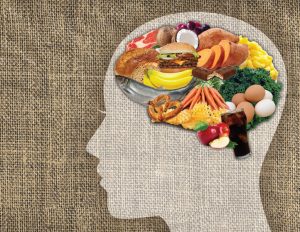 Discussing obesity becomes difficult when considering every side of the “argument.” Between social advocacy to the neurochemistry of weight, many perspectives have to be considered. Body positivity has been a growing concept within society over the past decade, and I would argue that this is a good thing. Often, body image is a socially derived concept and is not just the individual’s physical appearance, but how the individual perceives themselves. In many cases, due to societal pressures, people perceive themselves as heavier than they actually are. These perceptions may lead to mental health concerns, primarily the development of eating disorders. Reward related brain areas are involved in eating disorders. Specifically, in bulimia nervosa, bingeing on foods that taste good leads to the release of dopamine, while the purging of food reduces the signal or effectiveness of acetylcholine. Acetylcholine signaling normally indicates when an individual is full or nutritionally satisfied. In anorexia nervosa, research has suggested that food intake following periods of starvation increases the amount and effect of dopamine within the reward pathway. In cases of anorexia, individuals tend to have a variant of the 5HT2A serotonin receptor responsible for releasing too much serotonin during non-starvation periods. Researchers hypothesize that an individual with anorexia may feel better during a starvation period because it reduces the amount of serotonin. In contrast, individuals with bulimia and binge eating disorder experience lower-than-normal levels of serotonin. In these cases, the individual tends to excessively eat in order to increase serotonin and decrease depressed mood.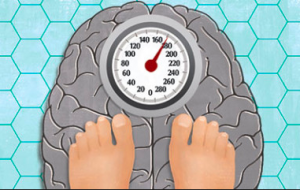
 Although we understand the issue of obesity from a medical perspective, the social aspect must also be considered. In many cases, individuals who are deemed overweight by physicians do not receive proper medical care. Likewise, individuals of a higher BMI are less likely to seek medical advice, typically due to stigma and the fear of being judged. As someone who has worked in a hospital, I have seen these tendencies first-hand. I have heard nurses comment about a patient’s weight in a derogatory manner, often blaming the patient for their health concerns. As many of us prepare to enter the medical field in some way, we need to consider all aspects of someone’s condition, not just their weight. People are more than their BMI, and typically, weight is a genetically-determined factor within the whole scheme of an individual’s wellness.








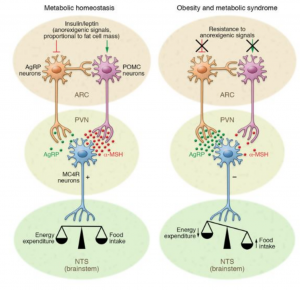
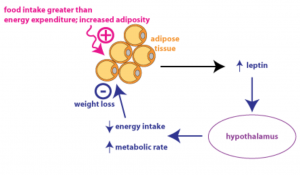
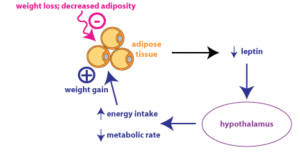
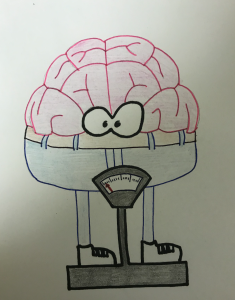 Obesity is becoming more and more prevalent, as rates climb throughout both adult and youth populations. Around 40% of adults (over 20 years of age) are obese, as well as 20% of children. In the last 15 years alone these rates have shown a great increase. Obesity leads to the development of many serious health issues such as type 2 diabetes, hypertension, steatohepatitis, heart disease, stroke, cancer, depression, sleep apnea… the list goes on and on. To many people who are not obese, it seems as if there should be an easy fix to the obesity epidemic sweeping the nation: eat healthy and exercise. But what if I told you it is not as simple as that? What if I said that obesity can actually be classified as a neurological disorder? Because sometimes, there isn’t a simple answer to losing weight and keeping it off.