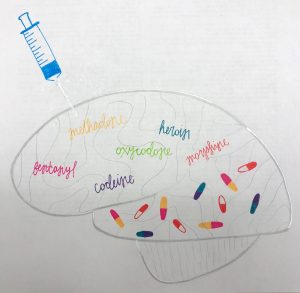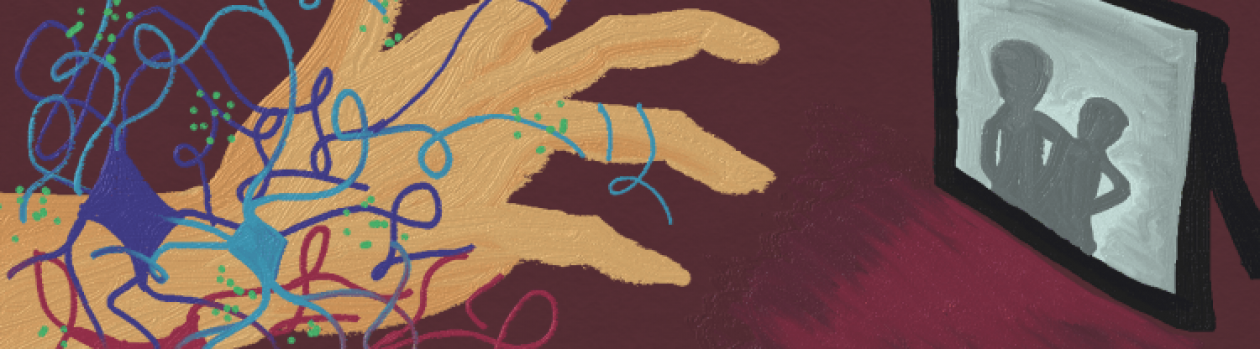
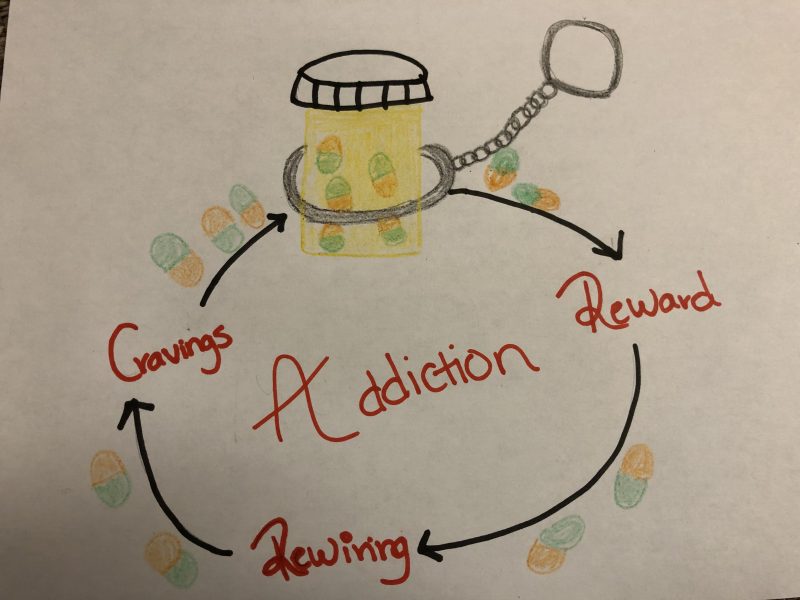
Addiction, a topic that is not always heavily discussed, yet more likely than not most people reading this know someone who deals with addiction. Many people believe that addiction is a choice, and not a disease, but what if I told you that addiction changes the wiring in the brain. That’s right, when you use a drug it changes neuroplasticity, and that change leads to the user craving the drug more. While this sounds scary, which it is, it is important to learn the science behind the epidemic plaguing society, so we can help those who are struggling.
From a young age we are taught, DON’T DO DRUGS. From our teachers, to our parents, and even commercials on T.V. the world told us that if we tried drugs it would RUIN our lives. These constant reminders, and scare tactics lead to the stereotypical image we hold of a drug addict.
Most people, think a drug addict is…
- A criminal
- A liar
- A low life
And, that drug addicts look…
- Dirty
- Have yellow or missing teeth
- Have scabbed or scarred skin
You look at yourself in the mirror, and think well I don’t fit those characteristics. I will NEVER become addicted. I’M NOT THAT TYPE OF PERSON. I hate to break it to you, but ANYONE can become addicted to drugs.
What do drugs do to your brain?
Today, many people see addiction as a choice, and not a disease. The scary true is that when you try an addictive drug your brain begins to RE-WIRE itself. Also, most people don’t realize that a person’s genetics makes up 50% of their risk of becoming an addict, and the other 50% is made up of environmental factors. While many people believe addiction won’t happen to them, the truth is you don’t know how drugs will affect you until you try, and for many this simple one time trial leads to addiction.
Why is it so hard to quit?.
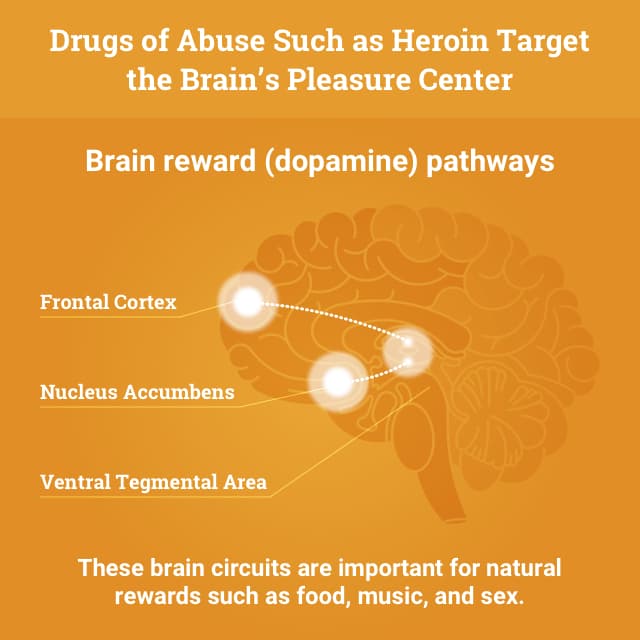
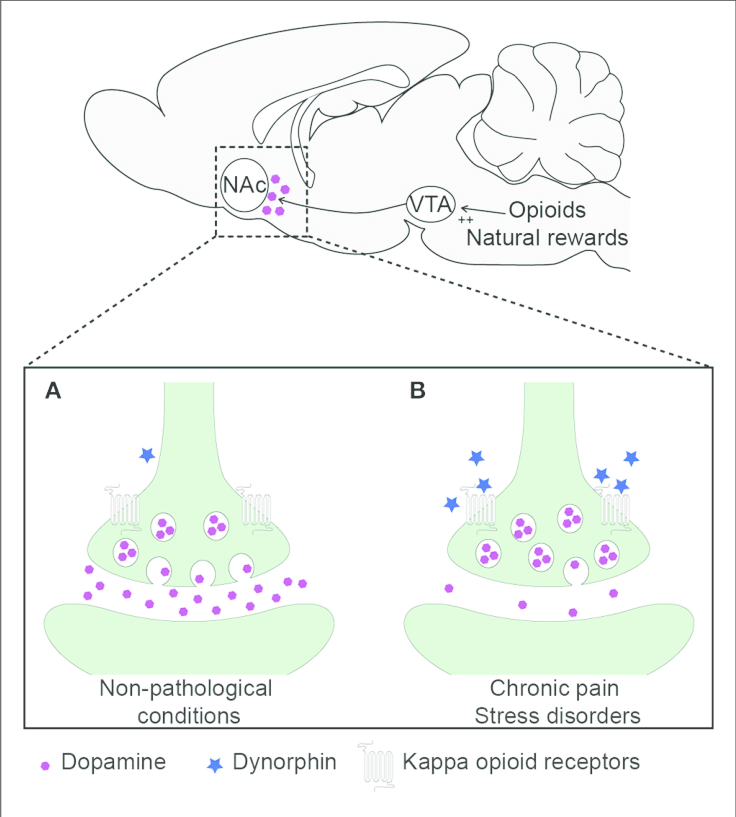
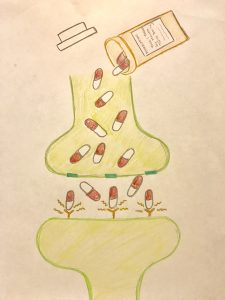
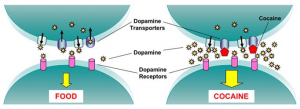
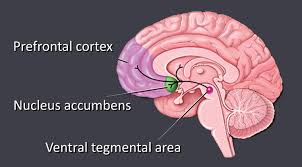
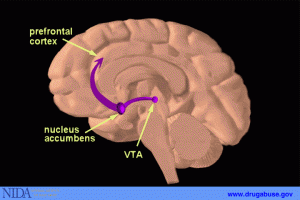
Besides rewiring the brain, drugs act on the mesolimbic pathway which is involved with the feelings associated with the reward given off by the neurotransmitter, dopamine. When an individual experiences a reward the concentration of 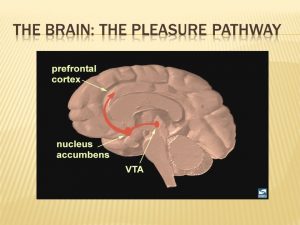 dopamine in the frontal cortex, the nucleus accumbens, and ventral tegmental area increase, and give the person a sense of euphoria. Drugs of abuse have a way of making this euphoria or “high” last for a prolonged time. Cocaine, for example, blocks dopamine re-uptake thus causing the reward to stay in a person’s system for longer. When a drug of abuse is taken for a long time the amount of dopamine decreases, and the “high” decreases. The individual will begin to crave their drug of choice, and if they are unable to gain access to that drug they will begin to experience withdrawal. To satisfy their cravings, due to the rewiring in the brain, a person will take more of their drug of abuse in order to experience a high, and without even noticing the person has become ADDICTED.
What can you do?
If you are an addict…
- Seek treatment. Please know that people do truly care for you, and want to see you succeed.
- Don’t be afraid to ask for help.
If a loved one is addict….
- Be there for that person
- Be supportive
- Provide a safe space, and a listening ear
- Do not judge that person. Remember addiction is a DISEASE not a choice.
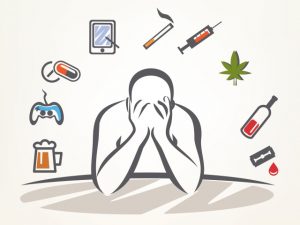
Image 1: https://www.therecoveryvillage.com/family-friend-portal/how-to-understand-a-drug-addict-signs-symptoms-and-behaviors/#gref
Image 2: https://slideplayer.com/slide/4334071/
Image 3: https://alteristic.org/hope-new-year/
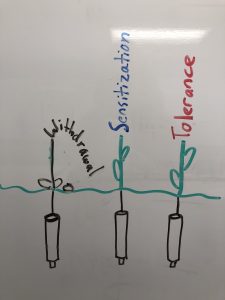
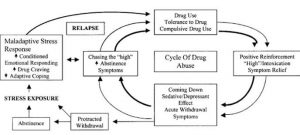

 Addiction occurs when a person is physically and mentally dependent on a specific substance. Most the time, the substance is a drug. Drug addiction has always been depicted as a choice. From the outside, it has always seemed that getting rid of an addiction should be as easy as stopping the intake of the drug. However, research into drug addiction has shown that it is actually a disease of the brain. Drugs alter a very important pathway in the brain called the reward pathway by blocking the reuptake of signaling molecules, thus increasing reward signaling. Altering this pathway creates long lasting changes in the addict’s brain, which makes it very difficult for addict’s to stop their drug intake.
 Dopamine binds to dopamine receptors in the synaptic space, which stimulates the neuron, creating the pleasurable sensation. Once the action potential that releases the dopamine is over, dopamine is removed from the synaptic space back into the transmitting neuron via a dopamine transporter. This ensures that the reward is cognitively linked to the stimulus.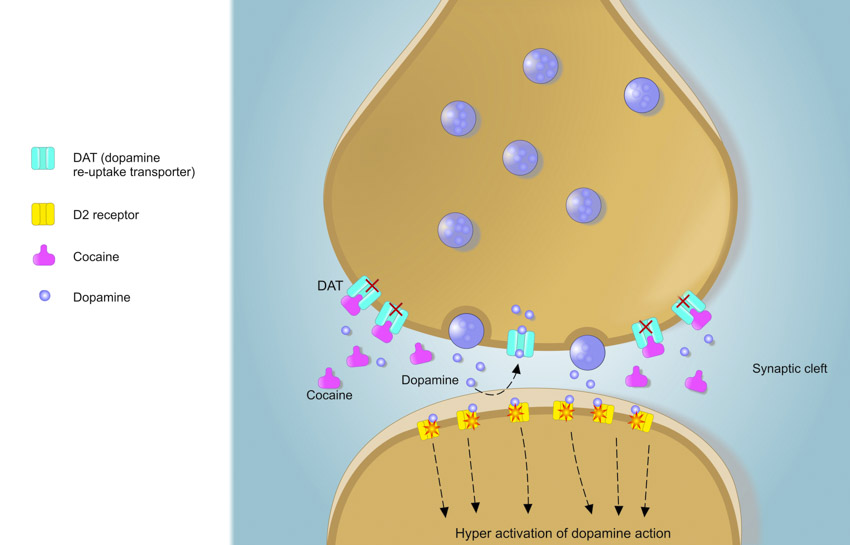
 drug addiction, you, like many other people, would create the image of a “junkie” in your mind. This is part of the problem with addiction, one of many problems that will be discussed later. Many people believe that addiction is a choice; little do they know that drugs have the ability to rewire a brain, forcing people to seek those drugs above all else.
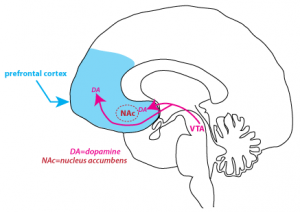 D2 receptors creating the rewarding effects of drugs or natural rewards. Under normal conditions, the reward pathway controls an individual’s responses to natural rewards, such as food, sex, and social interactions1. This pathway is important in determining an individual’s motivation and their incentive drive1. Stimulation of the reward pathway tells the individual to repeat what it just did to get that reward1.