Imagine yourself surrounded by a group of people wanting to try drugs in order to “fit in” and “be cool.” They ask if you want to try some and you feel pressured into saying yes because you keep thinking “I won’t get addicted” or “I’m going to try it just this once.” The next thing you know your body starts to feel different and you notice many changes in how you feel after taking the drug. You feel the need to constantly want more and the next time you get together with those friends who pressured you into trying the drug in the first place, you notice they don’t seem they need as much of the drug as you do to feel the “high.” This is addiction, and your life will forever be changed.

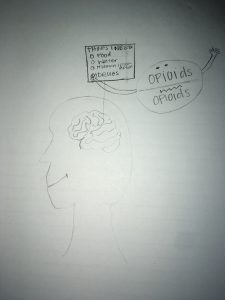
Figure 1.
Your Brain on Drugs
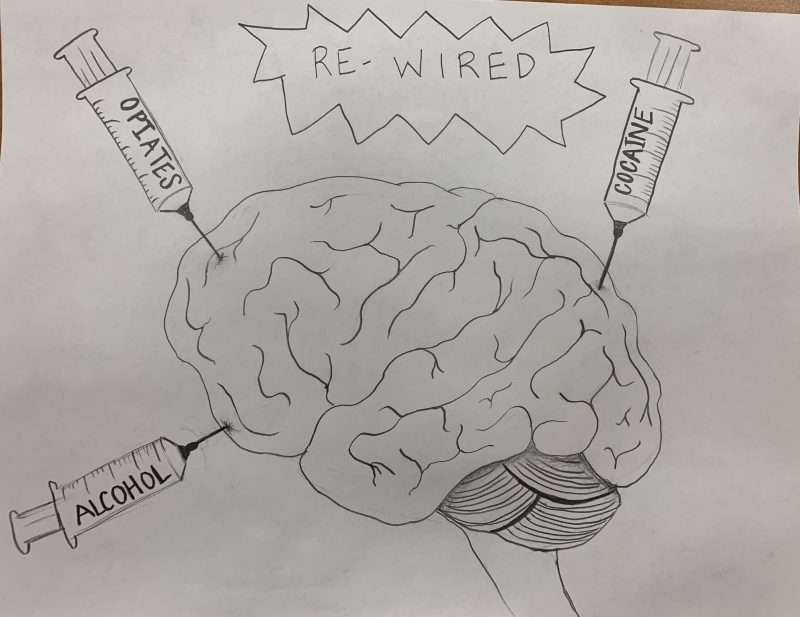
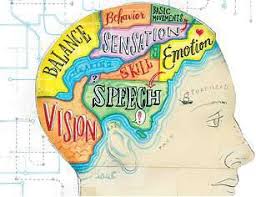
Often times in our society, the media portrays those who have an addiction as “junkies” or “low lives” and many people have the mentality towards addicts as “why can’t they just stop using drugs, it can’t be that hard to quit, it’s a personal choice” and the like. What many people don’t understand or realize is that the brain re-wires itself when in contact with drugs of addiction. The onset of addiction is also characterized by 50% genetic predisposition and 50% environmental factors so in the example above, you likely got addicted after your first exposure to the drug and your friends didn’t because of genetics or family history. Some of those friends may never form an addiction even after using multiple times. So yes, addiction could happen to anyone.
Reward Pathway
Dopamine is a neurotransmitter involved in the brain’s reward and motivation pathway. This neurotransmitter is released when we find something pleasurable such as drugs, alcohol, or food. There are two dopamine receptors that are very important to the addiction story: D1 and D2 receptors. D1 receptors are involved with direct activation of the reward pathway and have a lower binding affinity for dopamine, whereas D2 receptors are involved with indirect punishment and pathway inhibition and have a higher binding affinity for dopamine.
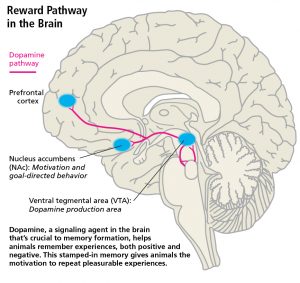
Figure 2.
Furthermore, there are important brain regions involved in the reward pathway and dopamine, namely the nucleus accumbens (NAc) and the ventral tegmental area (VTA). When you put drugs into your body, neurons in the VTA increase dopamine release from the NAc, which causes the activation of D1 and D2 receptors and gives you the “high” or euphoria feeling. Over a period of time, there is over-activation of dopamine and stimulation of the receptors involved which impairs the regulatory responses your brain is responsible for. Due to this impairment, your brain creates and strengthens the circuitry involved with other brain regions such as the hippocampus and amygdala that makes it nearly impossible to stop using the drugs. The results from these stronger neural circuits cause the brain to form behavioral memories that are associated with the drug use and pleasure that came with using those drugs. Therefore, the next time that you used drugs, your brain remembers when you took that drug before, where you took it, and this brings up more cravings for that drug.
 Figure 3.
So, the next time you are surrounded with a group of people and they try pressuring you into taking something in which you do not know how your body will react physiologically, don’t fall victim to the “just this once” mentality and resist the pressure. It may be one of the hardest things you have to do, but your brain will thank you for it later.
Image 1: https://www.longevitylive.com/anti-aging-beauty/the-effects-of-addiction-explored/
Image 2: http://discovermagazine.com/2015/may/17-resetting-the-addictive-brain
Image 3: https://www.drugfoundation.org.nz/matters-of-substance/november-2014/ageing-out-of-addiction/
 games, gambling and many other things of that nature. When one becomes addicted to drugs or any activity, the reward pathways in their brain are being altered which is when the addiction sets in.
 longer sensitive to the everyday stimuli leading to the drug being the only stimulus to create this feeling of pleasure. The drug then eventually becomes less effective in creating this pleasure feeling and higher doses are needed to achieve the same feeling which can lead to overdose.
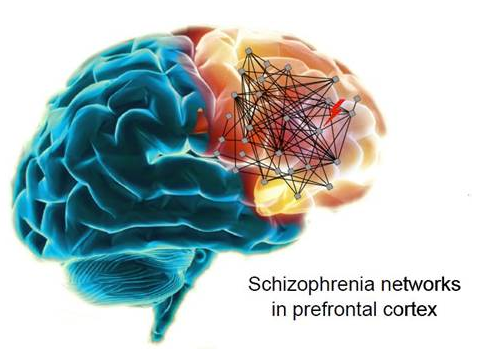


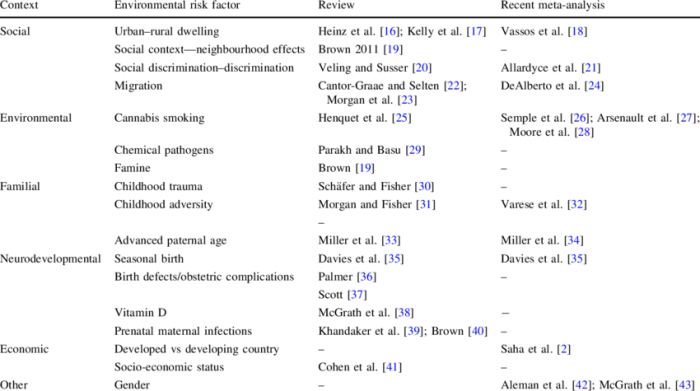
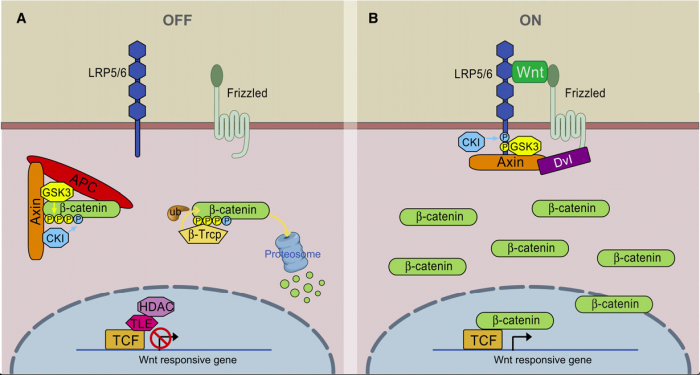
 Another problem is that schizophrenia is usually not diagnosed until the late teens to early twenties making it impossible to catch the disease early. Many of schizophrenia’s positive symptoms, including delusions and hallucinations, can be attributed to normal childhood behavior like imaginary friends and make-believe games. Then in the teenage years, most parents and doctors correlate symptoms to hormone imbalances and puberty. There is also a lot of maturing and development that occurs during this time so many doctors don’t want to diagnose a patient prematurely.
 Let’s be honest, the most information the general population receives regarding schizophrenia comes from movies, TV shows, and other forms of media. While these can be very entertaining, they do not often show the true story behind schizophrenia and how it can affect someone’s daily life. So let’s break it down: we will get a quick overview of what schizophrenia is before discovering what is causing schizophrenia in the brain and what it means to live with schizophrenia.
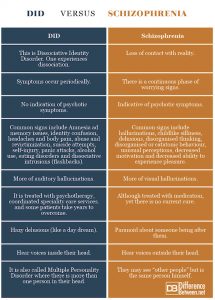


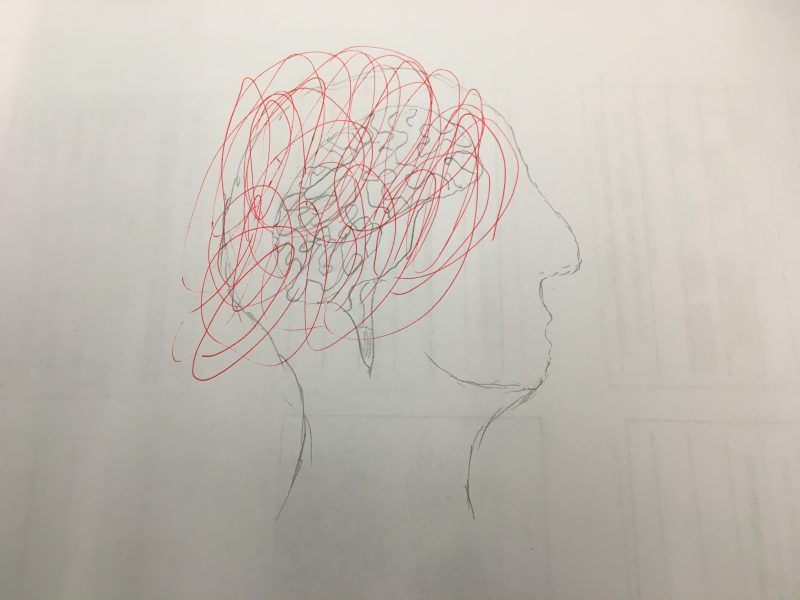
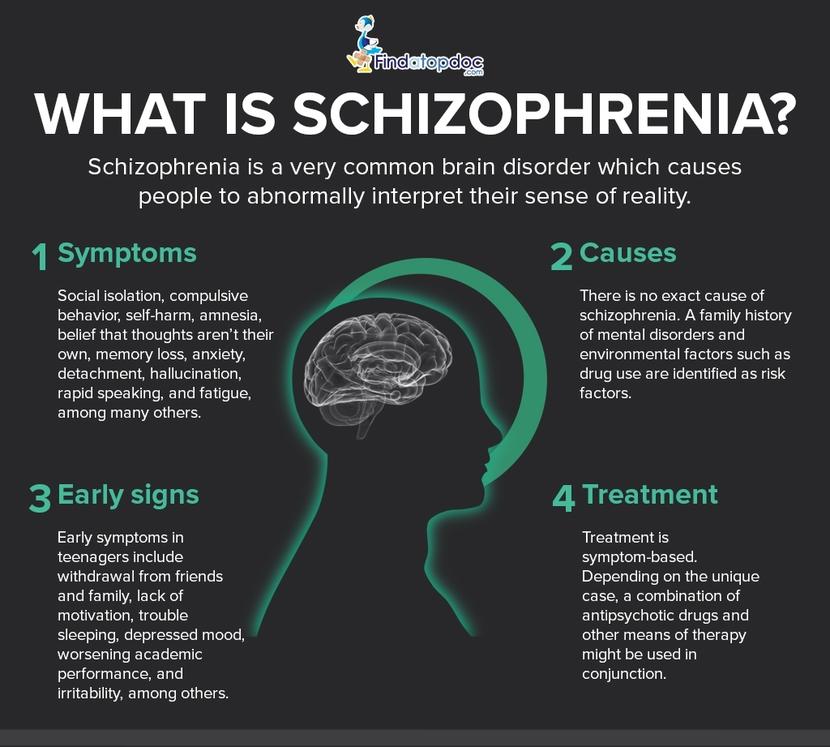 Until learning about the disease in depth, I previously believed that schizophrenia was interchangeable with multiple personalities disease. Rather, schizophrenia occurs when a person hears or sees things that are not truly real. They may appear to be disorganized and confused in their thoughts and conversations. Media and society has influences us to believe that schizophrenic people are violent and harmful to the outside world. However, that is a misconception. Very few schizophrenics are violent, and the ones who are, tend to have only random episodes of violence, not a constant state.