Rodent Models for Autism Spectrum Disorder

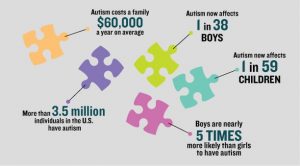
Autism is defined by a set of symptoms which includes impaired social interactions, repetitive or restrictive behaviors, and language abnormalities. According to the CDC, in 2014 1 in 59 children was identified as having autism spectrum disorder (ASD), a 250% increase from a similar survey done in 2000.

ASD poses an issue for society, “The total costs per year for children with ASD in the United States were estimated to be between $11.5 billion – $60.9 billion (2011 US dollars). This significant economic burden represents a variety of direct and in-direct costs, from medical care to special education to lost parental productivity” (cdc.gov). The total cost per year is projected to increase as cases of ASD increases.

Autism Spectrum Disorder: The Basics

ASD is very complicated (for further details, check out other blog posts on this site!) and has many moving parts already, and scientists do not even know the entire story yet. But here are some factors that are linked to autism:

Connectivity of Neurons
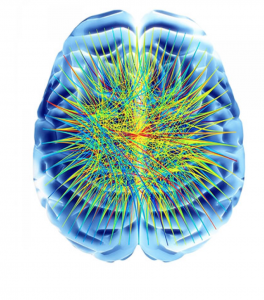
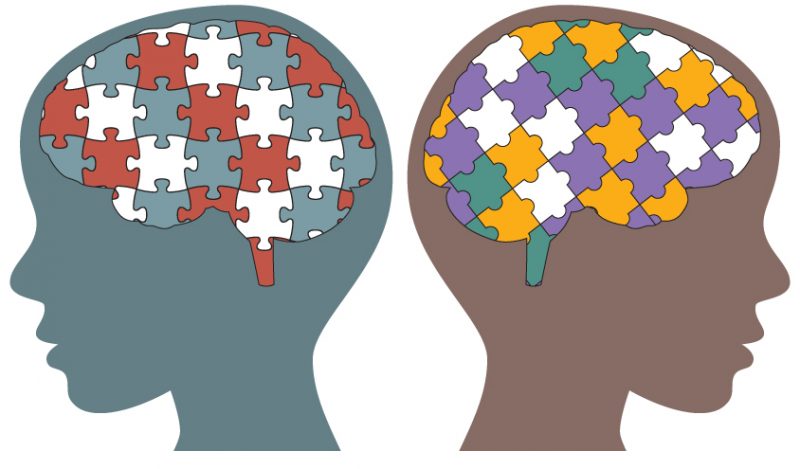
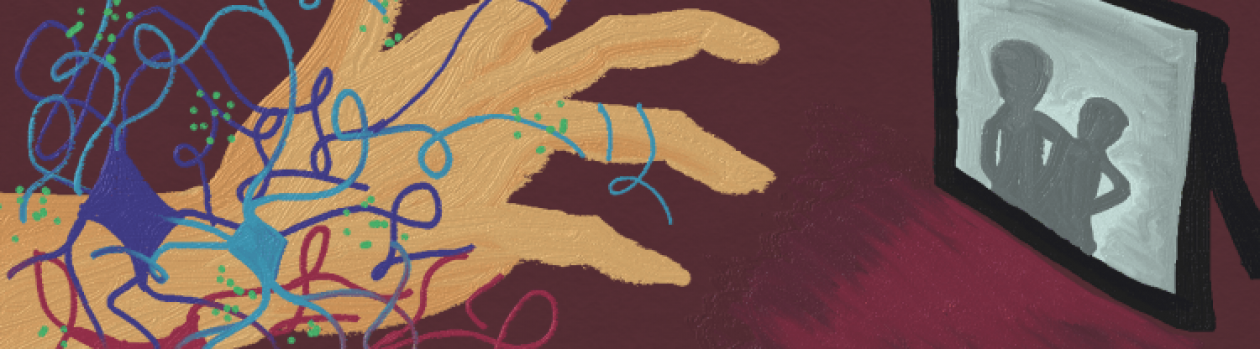
The brain is commonly likened to a circuit: neurons are wires and the chemicals are like electricity flowing through the wires. But a neuron is a wire that makes connections to more than one output. In autism, many neurons are not making good connections to their target outputs. Individuals with autism have too many possible outputs on the neuron which gets in the way of sending a clear message; this is a result of improper synaptic pruning. This essentially causes noise in the circuit by allocating the signal to the incorrect neurons thereby dampening the signal to the target output.

 Immunity
The immune system is extremely important in keeping us healthy by fighting off germs and diseases. However, when the immune system is active when we are not sick, that poses problems for our bodies. Our immune system releases chemicals that tell our bodies there is something off about the environment, and those messages trigger a larger response. A common characterization of that response is inflammation, which in turn causes an entire cascade of biological responses.

During or before fetal development, a mother can contract an infection and the immune response of the mother can have an impact on the developing fetus. The mother’s immune can trigger a subsequent inflammatory response in the fetus, initiating a cascade of biological responses as a result.

Due to the complexity and prevalence of ASD, much more research should be done to better characterize it and to find possible treatments. Unfortunately, this is easier said than done, largely as a result of the complexity and unknown factors of ASD.

Animal Models

Current rodent models are models of autism, not for autism, meaning current models mimic symptoms of autism, but do not contain the entire picture of the disorder. Therefore, there are several animal models to attempt to cover as much of the disorder as possible. Typically, the models can be grouped into several categories:

Environmentally Induced
This mirrors maternal infection that leads to immune dysregulation. This can be done using chemicals found in the body (such as chemicals used in immune response), or other chemicals known to induce ASD-like symptoms.

Physical Damage
Physical damage or lesions seek to target a specific area of the brain to learn more about which structures in the brain are most vital for the development of ASD. However, when the brain is damaged, it takes measures to heal itself, notably neurons moving to fill the space of the damaged area. This makes it difficult to say for-certain damage to one area caused a specific behavior as presented in autism.

Genetic Modifications
Studying ASD with genetic modifications is very difficult because ASD is not caused by a single gene, but rather many genes functioning and influencing each other. However, by studying other diseases that share ASD pathology and that are impacted by a single gene; scientists can better study the complicated behavioral factors of autism through different diseases. Genetic modifications do not supply a model that presents with the same physical issues present in individuals with ASD, such as neuronal wiring discussed earlier.

There are limitations to any model, but there are large limitations with the available models for autism. State of the art behavioral software recently has been developed to a level that would prove useful for disorders as complicated as ASD, which will aid in the validity of studies, but as mentioned there is not a single model we can rely on to study autism. We must take a holistic approach and try to piece information learned from various models together to get a more complete picture of autism spectrum disorder.

Sources:
https://www.cdc.gov/ncbddd/autism/data.html
https://www.ncbi.nlm.nih.gov/pmc/articles/PMC5137861/pdf/fso-01-63.pdf
https://www.ncbi.nlm.nih.gov/pubmed/28499914
The Many Levels and Factors of Autism

Autism spectrum disorders, or ASD, are unlike other disorders in that there is no single gene or factor that cause them. Rather, numerous scientific studies suggest that there are several factors that play a role. Of the several causes, two main issues are problems with the immune response and maternal infection.

The immune system plays a substantial role in developing our nervous system and shaping neurons in a healthy individual. One common feature that is seen in most ASD patients is inflammation of the brain (neuroinflammation). The molecules that cause this inflammation are known as cytokines. Cytokines are released as an immune defense response, and in most people, they are at the appropriate level. In autistic people, however, they are elevated in number and depending on the number, can indicate the severity of the disorder (the more cytokines, the more severe form of autism). From this neuroinflammation, the connections between neurons and neurons themselves are destroyed. There are ongoing efforts to discover drugs that combat cytokines and the damage they cause; to this point, there has been moderate success in clinical trials for similar neurological disorders.

Another major cause of autism is maternal infection. Studies have shown that mothers who suffer from infections (such as urinary tract infections, UTIs) are more likely to have children with autism than those without infections. Mothers that have multiple infections or infections closer to conception show an elevated risk of having an autistic child. One reason experts think this is the case is due to the mothers immune response releasing the previously discussed cytokines. They believe it could the mothers cytokines crossing over in the placenta to the fetus, or the mother’s immune response causing the fetus to release its own cytokines.

The Spectrum

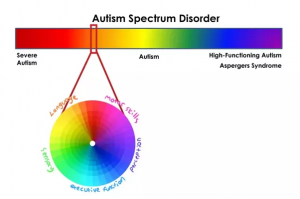
Even though you can’t point to just one thing as the cause, there are a few common symptoms, including oddities in behavior, social interactions, and communication. However, the severity of these abnormalities varies case to case and leads to the formation of a spectrum, with symptoms ranging from mild to severe. On this spectrum, the disorders include autism, Asperger syndrome, pervasive developmental disorder not otherwise specified (PDD-NOS), and childhood disintegrative disorder (CDD).

Autism

Parents of children with autism will notice signs within the first few years of life. They will show repetitive behaviors, whether it be body movements, routines that must be done, or self-harming. Difficulties with communicating include avoidance of eye contact, issues starting and keeping a conversation going, and repetitive speech. Additionally, patients often have trouble sharing experiences or expressing emotions in social situations such as empathy.

Asperger’s Syndrome

People with Asperger’s will typically show signs at or a little before two years old and will last throughout his or her life. They will experience similar symptoms as autism, but on a milder scale. Like autism, people with Asperger’s will exhibit repetitive behaviors and interest in very specific areas that are pursued thoroughly. They will also show a lack of empathy and eye contact, as seen in autism, but will not be withdrawn from a conversation. Language and speech are usually quite normal and are not delayed in their abilities at a young age.

Childhood Disintegrative Disorder (CDD)

Children with CDD will develop normally for their first few years of life, but will almost completely lose skills they have learned before the age of 10. These severely lost skills include speech, listening ability, social skills, motor skills, and control over their bowels.

PDD-NOS

PDD-NOS is the diagnosis when patients don’t fully exhibit the characteristics for another one of the disorders; this could mean late onset age or unique symptoms that don’t fit the other conditions. Symptoms for individuals with PDD-NOS will exhibit similar difficulties as the other disorders, including in communication and in social behavior. PDD-NOS is typically milder, but can also be more severe.

While multiple factors cause ASD and play a role in the development of the disorder, two of the biggest pieces are undoubtedly issues in the immune response and maternal infection, both of which leading to neuroinflammation. Not only is it the prevalence of cytokines in the brain, but the level of cytokines can determine the severity of ASD and where one may land on the spectrum, from mild to sever symptoms and anything in between. Better understanding of the entire spectrum will lead to better specialized treatment in every situation, as no one case is the same.

Sources:

https://www.frontiersin.org/articles/10.3389/fncel.2015.00519/full

https://moodle.cord.edu/pluginfile.php/723245/mod_resource/content/0/pathophys%20of%20ASD%202017.pdf

https://www.ncbi.nlm.nih.gov/pmc/articles/PMC2801483/

Image 1: http://www.tesidea.com/autism-signs-symptoms-and-diagnosis/

Image 2: http://www.thepipettepen.com/tag/autism-spectrum/

Picking Apart the Spectrum

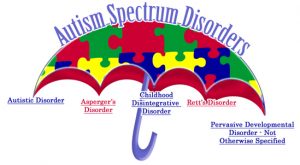
The number of Autism Spectrum Disorder or ASD cases is on the rise. Today the percentage of children with ASD is roughly 2.4% whereas in 2010 the percent was 1.47%. With such a rampant rise in cases it is important to break down the diseases associated with ASD, and the three levels of the Autism spectrum to help better understand what is encompassed by the “umbrella” of ASD.

Let’s talk about the disorders on the spectrum. Many people have heard of Autistic Disorder and Asperger’s, but fewer have heard of Rett’s Syndrome, Childhood Disintegrative Disorder, and PDD-NOS (Pervasive Development Disorder-Not Otherwise Specified).

Autistic Disorder often appears by the age of three through apparent developmental delays. Children with this disorder tend to have trouble with nonverbal behaviors, relationships, sharing enjoyment with others, and empathy. Autistic children tend to have problems with language usage, especially with sustaining conversations, imitative play, and repetitive use of language. Some of the common behaviors associated with Autism are preoccupation, rituals, and repetitive motor mannerisms.

Rett’s is appears anywhere from 5 to 48 months and is often characterized as a deceleration. Children with Rett’s experience loss of social skills, impaired expressive and receptive language, and loss of acquired movements. Rett’s only affects girls as it is found the X chromosome. If a baby boy is born with Rett’s he normally dies before or shortly after birth. This is because boys only have one X chromosome and if there is a defect on that one chromosome it can overtake the body. Since girls have two, the healthy X chromosome helps protect the body against Rett’s Syndrome.

Unlike the previously discussed disorders, Asperger’s does not have a significant delay in childhood development. Many of their niches with social interactions are the same as a child with Autistic Disorder. Like childhood development, Asperger’s does not have significant delays in language. Children with Asperger’s experience behavioral problems much like a child with Autistic Disorder.

Kids with Childhood Disintegrative Disorder start off their lives with normal development up until the age of 2. Then these children lose these acquired skills by the age of 10. Picking this apart even more these children experience the same loss of social skills experienced by children with Autism and lose their expressive language skills. Along with these symptoms these children lose control of their bladders, and motor skills.

PDD-NOS is solely used for children who have an apparent impairment, but they do not meet the criteria for a specific disorder.

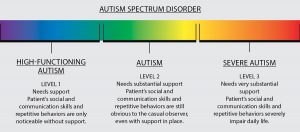
Now that we’ve broken down the characteristics of the five disorders on the Autism Spectrum let’s talk about the three levels of the spectrum.

The first level is known as High Functioning Autism. A person who is in this level needs support, but their symptoms are only noticeable if they do not have support.

The second level is called Autism. These people need more support and their behaviors are still observable even with support.

The final level is Severe Autism. A person with level three Autism needs substantial support, and their behavioral problems, and social skills cause problems and or impair everyday life.

Having five disorders under the ASD umbrella and three levels to the spectrum may make a diagnosis seem “nice and neat”. However, not everyone with ASD will fall into a “perfect” diagnosis. It is important to remember that ASD is a SPECTRUM and each case is UNIQUE!

Image 1: http://www.myaspergerschild.com/2011/08/autism-spectrum-disorders-everything.html

Image 2: http://discovermagazine.com/2017/jul-aug/autism-spectrum-disorder

What is going on with Autism?

Autism spectrum disorders (ASD) are one of the most prevalent disorders in the world, as 1 in 68 children have been diagnosed. As the number of cases increase, the scientific community has brought forth many theories to explain the cause of ASD. The broadness of the spectrum and the complexity of the brain allow for a variety models to be carefully researched.

Neuron Connections

Neural connectivity is the theory at the forefront of explaining the development of ASD. Autistic patients have an increased number of neurons. This means the useful neuron connections cannot be as well developed because the unnecessary neurons have not been removed. The overgrowth of neurons creates a brain with a large amount of short distance interactions that disrupt the long distance interactions. This creates issues with lateralization, how the two hemispheres of the brain communicate with each other, which can be seen in language impediments in autistic individuals.

Overgrowth of neurons also increases the density of minicolumns and macrocolumns.  These columns play a key role in receptive fields in the brain. They are important for the brain’s ability to perceive something, integrate the important information, and then produce a behavioral response. The increased density of these columns creates a “noisy” circuit in the brain, thus decreasing the brain’s ability to adequately process the information and create a response.

Broken Mirror Theory

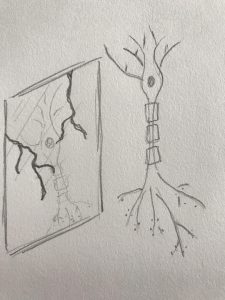
 Mirror neurons in the brain are involved in the processes of learning through imitation and help develop other neurons. Humans learn through the observation of others. When someone’s actions and emotions are observed by another, neurons are activated in the observer when they recognize and understand the action, intention, and emotion of the person being observed. This activation creates neuron networks to help people understand mental states. Children with ASD have a delay in their development of mirror neurons, so they have difficulty with emotion recognition and social understanding.

Genetic Disorder

 While there is not a single “autism gene”, researching various genes with related functions can aid in the search for the cause of autism. Scientists are looking at these related genes which are also associated with single gene disorders. When these genes are mutated or altered, their expression can cause autistic symptoms. These genes are grouped into three types:

  1. Synaptic transmission supporting system

Mutations in these genes change how neurons connect to each other, thus altering how signals are transmitted. This leads to slower mental development, a common symptom of autism or Asperger syndrome.

  1. Abnormal cellular/synaptic growth rate

These genes are in charge of regulating the growth of neurons during development. A mutation in these genes would cause the overgrowth of neurons, resulting in the symptoms from the abundance of neuron connections mentioned previously.

  1. Gene transcription and translation

If the genes that control transcription and translation are altered, the ability to control protein synthesis can be lost. This can lead to problems in multiple different development mechanisms, which may eventually lead to autism since there is no regulation of what genes are being translated.

This was only a brief explanation of three of the models being researched to find the cause of autism. There are still many more theories out in various pieces of scientific literature. While all of these theories are different, it is a general consensus that not one theory works alone as the source of this disorder. Autism is complex and many theories work together to try to explain its pathology.

https://moodle.cord.edu/pluginfile.php/723245/mod_resource/content/0/pathophys%20of%20ASD%202017.pdf


Autism: Can There Be Too Many Neurons?

Usually, people associate more neurons or more brain activity with positive outcomes such as being smarter.  This is a theme commonly portrayed in Hollywood especially in the movie Limitless. The sad relativity is that our brains are intricately made to have the perfect number of neurons with too many or too few causing serious detrimental effects. During development, normal brains undergo neuronal pruning which is the process of destroying unnecessary neurons that clog up signaling pathways. This can involve the destruction of an entire brain cell or just the elimination of cell connections called synapses. A synapse is a place where an axon, or end of one neuron, comes into contact with a dendritic spine, or small projection, on another as seen in Fig 1.

Image result for neuron synapseFig. 1. An axon

Neuronal pruning is crucial for proper brain operation and is unfortunately dysfunctional in people with autism spectrum disorders (ASD). Without pruning, ASD patients have an overabundance of the number neurons and their synapses which leads to cortical thickening and interferences in cell to cell communication. This leads to detrimental effects for learning social behaviors and inefficient processing of external stimuli. But what causes this dysfunction? While the symptoms have been thoroughly examined, the direct causes of autism are still not completely understood. However, multiple mechanisms and defective neuronal pathways have been identified and have made monumental progress in the past decade. The most relevant theories for why neuronal pruning/neuron communication is dysfunctional in ASD patients are autophagy and the mTOR pathway and neuroinflammation.

Autophagy and mTOR Pathway:

Autophagy is literally translated as “self-eat” and is the process in which cells degrade excess or damaged intracellular material. Autophagy is responsible for the degradation of excess synapses in neuronal pruning and is inhibited by the mTOR pathway. In ASD patients the mTOR pathway is abnormally overactive leading to the suppression of autophagy and the continued survival of unnecessary synapses. The direct cause of why the mTOR pathway is overactive is not completely known but it can be correlated to neuroinflammation.

Neuroinflammation:

Up to 60% of people with ASD have a systemic immune dysfunction meaning that immune regulation and neuronal communication are closely intertwined. Glial cells and astrocytes are two common cells found in the Central nervous system that also have various immune system functions. It has been noted that these cells have an increased neuro-inflammation activity in ASD brains contributing to the disruption of neuronal communication.  Helper T-cells are also abnormally low in quantity making it hard for the brain to understand when to stop an immune response, like inflammation in the brain. The two processes of chronic inflammation and the inhibition of Autophagy are two major causes of ineffective brain communication.

The Importance of Correct Brain Communication:

The brain has an incredible ability to physically change its neuronal connections in order to induce learning, this is called synaptic plasticity. If a certain pathway in the brain is being used frequently, the brain will enhance its synapses and make the neurons more sensitive to stimulation. On the other hand, if a pathway is not being used, it will degrade the connections and make room for the creation of new pathways. This process is what is being disrupted in ASD creating a stress on the brain when located in new environments, locations, or situations.

These dysfunctional pathways are also more abundant in the frontal cortex which means that behavior and decision making would be the most affected. This gives rise to the common symptoms of ASD such as learning disabilities, inability to read others emotions, and compulsive behavior. In recap, more is not always beneficial when it comes to brain functioning. Also, autophagy and neuroinflammation are crucial components of the ASD pathology and are directly related to the overabundance of neural connections. Future research and investigation into these processes hold promise for the future of ASD.

Sources:

https://www.sciencedirect.com/science/article/pii/S0898656814002848

https://www.biooncology.com/pathways/cancer-tumor-targets/pi3k/mtor.html

https://moodle.cord.edu/pluginfile.php/723245/mod_resource/content/0/pathophys%20of%20ASD%202017.pdf


Understanding Autism: From Brain to Behavior

https://essenceofwellness.com/autismsupplementation/

Since the 1970’s the number of Autism Spectrum Disorder (ASD) diagnosis have greatly increased. This leaves people to wonder whether either the people have changed or if doctors have become more adept in classifying understanding ASD. In 2013 the Diagnostic and Statistical Manual of Mental Disorders, Fifth edition (DSM-5) reclassified not only the criteria for ASD but the disorder as a whole. Previously, there were five subdivisions of what we now consider ASD. Some scientists urge doctors not to hold the DSM-5 standards paramount, however, as the severity of ASD varies from individual to individual.  

Brain:

A large contributor to the variety of symptoms and there degree to which they are observed is the neurological component to ASD. It is well established that ASD is a neurological disorder but the exact cause remains unknown. Scientists have several theories, some having more evidence and weight than others, of mechanisms in the brain that may contribute or even in some way cause ASD. Several of these theories include:

Broken Mirror Theory

Mirror neurons are specialized neurons in the brain that are largely responsible for a phenomenon regarded as the Chameleon Effect. This effect states that humans tend to mimic or copy another individual. This can be seen most prevalently seen in yawning. These neurons are often responsible for reflected social behaviors and tend to be the cause of why you begin to take on the personality of the people who you spend the most time with. In ASD, it is observed that part of this pathway is missing and often gives rise to the impairments in social interactions. Mirror neurons are also sometimes linked with empathy and having malfunctioning cells could cause an inability to perceive the emotion of others, a symptom that is one of the pillars of ASD diagnosis.

Immune Response

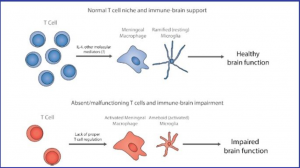
Perhaps the most interesting theory to explain ASD and also the one with the most support. It is seen in some individuals with ASD that they have a weaker immune system and are more susceptible to disease. In addition to this, there appears to be a decrease of T-cells in the brain in patient with ASD. T-cells are the immune system cells that release a chemical signal called cytokines which are essential in regulating the immune response and inflammation. The lack of T-cell volume results in less cytokines, which is cause of the neural inflammation that is observed in ASD. There was one study that was conducted with laboratory mice and investigated the effect of an induced immune response to offspring that had ASD like behaviors. In this study, the mother was infected thirty days before conception and the offspring were observed that ASD like behavior symptoms. This is what gave scientists the biggest clue that immune response played a key role in the development of ASD.

Figure 1: This picture demonstrates the difference between normal and abnormal T-cell functioning in the brain. It is seen the more T-cells present, the higher the amount of cytokines which are important in the inflammatory response. When there are less cytokines microglia are activated and can be responsible for the abnormal brain function seen in ASD. https://www.moriahus.org/us/study-may-shed-light-on-autism-and-brain-inflammation/

Faulty Synapses

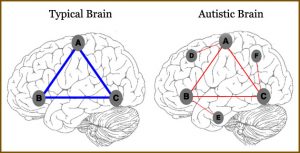
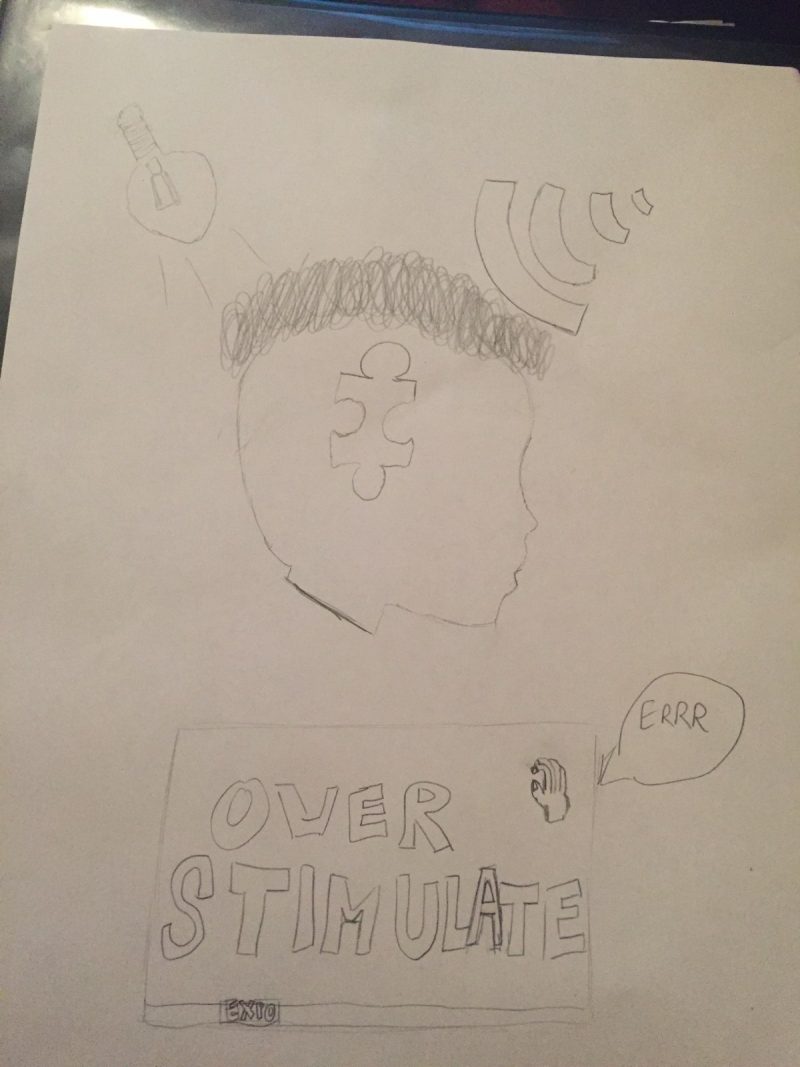
A second major player that scientists believe plays a role in ASD in the misfiring of neurons due in one way or another to faulty synapses. Synapses are the communication space between neurons. Researchers see synapses in ASD brains being altered in several ways but the main outcome is there tends to be overcrowding in the brain. The pathway the deals with removing neurons when they are no longer needed is inhibited and causes a high concentration of neurons in the brain. The neurons cannot communicate effectively with each due to the there being too many. In ASD this can be seen with being overstimulated, there are just too many neurons in one area all firing at once it overwhelms the individual.

Figure 2:  A drawing of an ASD brain (right) and normal brain (left) shows the increased amount of connections observed in patients in ASD which leads to overstimulation of the brain and gives an overwhelmed feeling in response. http://newscenter.sdsu.edu/sdsu_newscenter/news_story.aspx?sid=73005

There is also an altered shape and orientation of the synapse, which causes the neurons to be unable to properly send messages. Sometimes this is seen in ASD being the cause of unable to response in the normal way to events.

Behavior:

Of course understanding the brain is important when thinking about ASD but there is another component that may be overlooked when thinking about the disorder (hint: read the header of the section). Behavior is the ongoing result of the differences in the brain compared to the normal brain. Those with ASD have altered behavior, that has been clear since it was first discovered. Many of the behaviors that are associated with ASD are only detected in childhood while several continue to be present throughout life. Social isolation and loss of language skills are the two most prevalent throughout life. After the initial diagnosis, an individual can also be placed into categories which classify the severity of ASD.

Average to Severe ASD

As stated above, the two most common ways to identify ASD are delays in language development coupled with social impairments. ASD is typically arranged into three different levels, titled one to three. One states that an individual requires support and have noticeable social impairments as well as inflexible behavior. Many of the behaviors below are often exhibited with this level but not to the degree that is observed in others. Level two, “requires substantial support”, usually some language can be observed in this stage but tends to be limited. Social issues are more prevalent, as most communication is nonverbal, with difficulty coping with change, and inability to focus which often manifests in ADD or ADHD. The third level is most severe, not exchanging rarely any words if ever speaking. This makes social situations even more difficult and is marked occasionally by aggressive behavior. The behavior issues that are observed at the previous two levels are also seen here but at higher degrees.

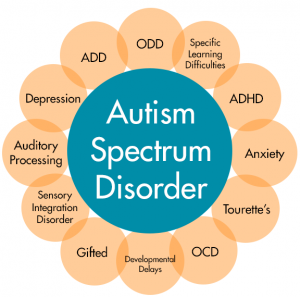
Figure 3: Several disorders and symptoms surround ASD and overlap with each other to give rise to the behavior that is commonly seen. http://www.adoptontario.ca/autism

High Functioning ASD or “Aspergers”

Although there is not a DSM-5 diagnostic criteria for Aspergers anymore, the term is still used frequently today often to describe high functioning cases. The main difference between what people considers Aspergers and average ASD is there is language develops normally in an individual with Aspergers. The symptoms presented tend to be more mild as well. The social component of ASD is what is most commonly reflected in Aspergers because someone with this variation of the disorder could want to make friends but be unsure of how to do so. Social awkwardness very common. It is not the lack of empathy that categorizes Aspergers but rather being incapable of processing the emotion that the other person is feeling. As seen in the figure above, individuals with Aspergers often display many of the behavioral effects that are seen with ASD. Most prevalent are OCD, ADHD, ADD, repetitive behaviors, anxiety, and even more listed above. The degree to which they are experienced however is what varies from case to case. There is no one way put ASD or Asperger’s into a box and that is why is it essential to understand the link between the mechanisms in the brain and what is seen by the public.


The Link Between the Two

When looking at disorders such as ASD is important to note both the underlying cause as well as the behaviors that are exhibited for everyone to see. Brain and behavior are connected on the most basic level, one giving rise to another, and the understanding of both together is what leads to the acceptance. Research for both fields brings to light more ways to understand individuals with ASD and provide possible treatment, whether it be therapy or medicine based. ASD is a complex disorder to say the least but through learning more, the world as a community not only becomes more educated about causes of disorders but accepting toward those who are affected.

http://www.autism-society.org/living-with-autism/autism-and-your-family/

http://2018neurochem.pbworks.com/w/page/128912631/Advances%20in%20understanding%20the%20pathophysiology%20of%20autism%20spectrum%20disorders

Autism Spectrum Disorder and the Mirrors of the Brain

What is Autism Spectrum Disorder?

Autism Spectrum Disorder (ASD) is characterized by numerous behavioral symptoms and varying neurological abnormalities. Due to the diversity among individuals on the Autism spectrum, a single “cause” of the development cannot be determined. Unlike many other conditions, a single gene cannot be linked to Autism. In cases where one specific gene can be associated with a condition, the condition manifests in a similar way every time. In ASD, the symptoms–both behavioral and neurological–are unpredictable. Even so, one common factor among cases of Autism is a dysfunctional immune system. Without a proper immune system, proper development does not occur and neurological pathways do not function as they should.

Social-Behavioral Symptoms & Mirror Neurons
Given ASD’s complexity, conceptualizing the condition as a whole can begin by assessing each symptom and its potential neurological correlates. When characterizing the behavioral symptoms of ASD, many tend to manifest in social interactions. Many individuals with ASD experience difficulty expressing emotion, empathizing, and theory of mind. This behavioral symptom likely stems from the lack of mirror neuron network that many individuals with ASD experience. Mirror neurons are responsible for the Chameleon Effect, a psychological phenomenon in which individuals copy one another–especially when mutually admired. An individual is more likely to unconsciously copy another’s behavior if they have a fondness for that person. This can be seen in the “contagiousness” of yawning, foot wiggling, sniffling, etc. The Chameleon Effect stems from the evolutionary advantage of fitting in with society. As the influencers of the Chameleon Effect, mirror neurons are responsible for human imitation. These mirror networks are composed of visuospatial neurons that fire when an individual observes the behavior of another individual. When this occurs, neurons fire in the same areas and patterns as they do when the individual themself is experiencing the movement/event. For example, when seeing someone in extreme pain, one can imagine how the injury would feel–almost as if they are feeling the pain themselves. In this instance, the brain would be firing in the individual observing the event the same way in would in the individual experiencing the pain. In humans, mirror neurons can show these firing patterns in the premotor cortex, the supplementary motor area, the primary somatosensory cortex, and the inferior parietal cortex.

In the case of ASD, where one symptom or neurological factor may lead to another, the lack of a fully developed mirror neuron network may be due to the dysfunctional immune system discussed earlier. Research has yet to discover the cause of the abnormal mirror neuron network in ASD, but studies have shown that the dysfunctional immune system common in people on the Autism spectrum can lead to improper neuronal development and interrupted neural pathways. Uncovering the full story of ASD development will likely occur by piecing together the common factors such as the social-behavioral symptoms, the abnormal mirror neuron network, and the dysfunctional immune system often observed in cases of ASD.

https://www.ncbi.nlm.nih.gov/pmc/articles/PMC3510904/

Debunking Myths about Autism


Debunking Myths about Autism

Autistic Spectrum Disorder (ASD)

Autistic Spectrum Disorder affects thousands of families all over the world. This disease does not have a cure or a reversal treatment but provides medications to help suppress the symptoms. Symptoms can range from impaired social interaction to repetitive activities and behaviors. The spectrum ranges and the severity of these symptoms can as well.
What causes ASD is an open-ended question. The cause changes from case to case from one simple malfunction to multiple impaired functions. A few possibilities outlined in “Advances in understanding the pathophysiology of autism spectrum disorders,” are: neural connectivity impairment, impaired neural migration, dendrite morphology, excitation-inhibition imbalance, impaired immunity, epigenetics, genes and finally, the broken mirror theory.

Autistic Individuals Can’t Learn

While most people can learn using 2-3 various styles most autistic individuals rely on one. These various learning styles are chosen from: auditory learner, visual learner, hands-on leaner, etc. Input is received from all senses in an environment that a person is in. In most schools, the requirement of reading a PowerPoint while simultaneously listening to a teacher is required. An autistic individual may only learn from hands-on experience, permitting them from learning properly in an educational system. Learning styles differ from person-to-person just as each autistic individual needs to be provided with their correct learning style to learn. They have the ability to learn, but might not be provided with the correct tools to learn.

Autistic Children Are Anti-Social

Individuals with autism can be very social and enjoy having relationships with other individuals. However, they may use other forms of communication and may not enjoy being in crowded, loud environments. This does not mean that the individual is anti-social, but rather that they enjoy a more comforting environment. Children with autism can be found to make good connections with individuals who are understanding and patient with the form of communication. Autistic individuals may seem anxious, misread social cues, and need support to communicate, but should not be misunderstood as anti-social personality disorder. In “Emotional Understanding, Cooperation, and Social Behavior in High-Functioning Children with Autism,” the article helps debunk the idea that children with autism are anti-social. They found evidence that children with autism may lack in appropriate behavior and reading of emotions but still have a social behavior just like any other human. With such a broad spectrum, what an autistic patient requires in a social environment changes and their ability to understand as well.

Vaccines Cause Autism

The first vaccination was given in 1796 in England. Centuries of vaccinations were provided before a young red-headed girl brought her case to court about Autism. In 2007, Hannah Poling received a settlement for acquiring autistic-like symptoms after being vaccinated with the MMR vaccine. MMR vaccine is found to fight against measles, mumps and rubella.  This vaccine has been vary controversial in the autism and vaccine theory. A study conducted by B. Taylor, E. Miller, C. Farrington, etc al. in took 498 autistic patients and debunked the connected between MMR vaccine and autism.Our analyses do not support a causal association between MMR vaccine and autism.” Repeated research has been testing the safety of vaccines. No scientific data concludes vaccines cause autism.
(For more information on the case: https://www.nejm.org/doi/full/10.1056/NEJMp0802904)


References:
 https://www.sciencedirect.com/science/article/pii/S0140673699012398
https://www.autism.com/understanding_learning
https://www.autistica.org.uk/what-is-autism/autism-myths-and-causes
https://link.springer.com/article/10.1007/s10803-004-5284-0
https://moodle.cord.edu/pluginfile.php/723477/mod_resource/content/0/2018%20AD%20and%20insulin%20signaling.pdf
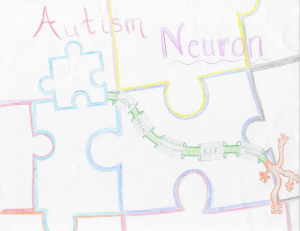
Autism Neuron: Drawn by Morgan Hluchy

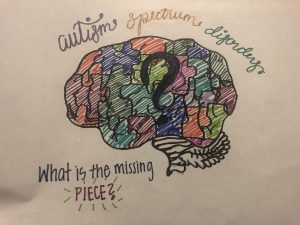
The Autism Spectrum Disorder Puzzle: Piecing it all Together

        It is believed that over 1.5 million people in the United States have Autism spectrum disorders (ASD). Individuals that have been diagnosed with ASD typically display symptoms of ritualistic or repetitive behaviors, have difficulty communicating with others, and often have unusual social interactions. As this disease continues to become more prevalent with no known explanation, researchers have begun to try and find a link that may combine the many different theories as to how ASDs develop.

The Puzzle Pieces (Theories):

Imagine the brain as a sophisticated computer complete with many delicate connections, wires, and an instruction manual so thick that it’s impossible to know all of its functions. 

“Faulty Wiring”

        It is believed that ASD may be the result of improper neuronal connection in the brain. If neurons are unable to connect to each other successfully, they will not be able to communicate properly. As seen in a computer, if the wiring is faulty, the device will not be able to carry out its desired function. This is exactly what occurs in the brains of individuals with ASD. This faulty wiring can happen in many ways:

(1). Too many neurons

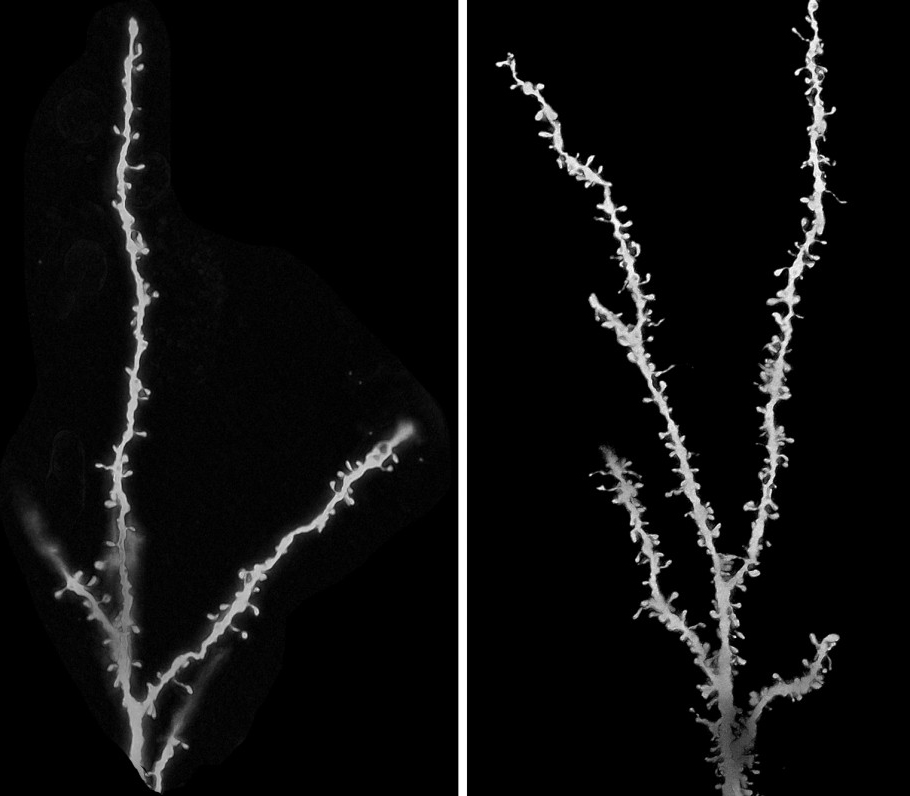
If there are too many “wires” in the circuit, it will not function properly due to excess “noise”. This is exactly what happens in brains that have too many neurons. The abundance of neurons impairs the proper functioning of the circuit, or in the case of the brain, the synapse. In a “normal” brain, excess neurons are removed through synaptic pruning, and the remaining neurons strengthen their connections with one another to improve communication via synaptic plasticity. In a brain with too many neurons, such as in ASD, these connections are unable to properly form and remain weak. 

Figure 1. The image on the left shows a brain unaffected by ASD, while the one on the right shows an increase in neurons found in an individual with ASD. This increase may be the result of the aforementioned failed synaptic pruning. (Credit: Guomei Tang, PhD and Mark S. Sonders, PhD/Columbia University Medical Center) http://www.kurzweilai.net/children-with-autism-have-extra-synapses-in-brain

(2). Neurons in the wrong place

It is believed that during development a mutation in the reelin gene (RELN), responsible for the proper placement of neurons, may lead to neurons developing in the wrong place. If neurons are in the wrong place, they are unable to communicate properly and functioning is impaired; this is the case in ASD. 

(3). Too many synapses

A mutation in the MeCP2 gene, a silencer of gene expression, leads to an inability of the brain to properly rid itself of excess synapses within the brain. In addition, an abundance of dendritic spines (the receivers of the message) resulting from defective pruning has also been shown to induce a hyperactivated mTOR pathway. The mTOR pathway inhibits autophagy. As autophagy is responsible for removing excess dendritic spines, synapses, and neurons, these structures remain in the brain and induce further faulty wiring, which inhibits proper communication. 


https://www.spectrumnews.org/features/deep-dive/the-brains-secret-gardeners/

“Defective ‘Current'”

(4). An imbalance of On/Off signals – Excitation and Inhibition

A balance between excitatory (glutamate) and inhibitory (GABA) neurotransmitters, the chemical messengers in the brain, is essential for proper communication. It is believed that this imbalance may be the result of gene mutations, a defective blood brain barrier (BBB), or neuroinflammation, which will be discussed later.  When this balance is not maintained, the neurons (wires) may die. This is often the result of excess glutamate in the brain. Under these exitotoxic conditions, further neuroinflammation may occur inducing more cell death. 

“Faulty Programming”

(5). Mirror neurons

Mirror neurons and the connections they form are responsible for one’s ability to learn from their environment through imitation. If an individual is unable to recognize, understand, and learn from the actions and emotions of those that they are in close contact with, it is impossible for them to understand how to act “normal” in social situations. Being that two of the main symptoms of ASD are problems with communication and difficulty behaving in social situations, it is believed that faulty mirror neurons may play a role in the development of ASD.

(6). Genes/Epigenetics

It is impossible for a computer to work properly if it is programmed incorrectly. This is exactly what occurs with mutated genes that may cause ASD. As there is no single gene responsible for ASD, through extensive research, scientists have been able to classify the defective genes into three main families:

  • Genes responsible involved in synaptic transmission
    • Ex: SHANK3, NXN1, NLGN3/4
  • Genes related to abnormal cellular/synaptic growth
    • Ex: Genes associated with autophagy/mTOR: TSC1/2, PTEN, NF1
  • Genes that control gene transcription and translation
    • Ex: FMR1 and MECP2

Continue reading →

Putting the Puzzle Pieces Together: How to Treat Autism

Autism is difficult to define, because it is such a spectrum. From mild to severe cases, every individual may experience different symptoms of the disease. However, the generic idea is that in people with autism experience a decrease in amount of neural communication. The communication error may be the result of three different issues that neuroscientists have looked at.


  • Neural Connectivity
    • In autism, the normal process of pruning the unnecessary neurons to promote stronger connections is vital in neural signaling. If there are too many neurons, the amount of low-level signaling is too high, causing “noise” in connectivity which then disables efficient processing of information.

Image result for neural connectivity


  • E/I Imbalances
    • In the brain, GABA is the substrate that inhibits activity, while glutamate is the molecule that excites the brain. The two work together to balance each other out to do the basic functions of the brain. This is all good and dandy until the balance gets out of whack. When the brain uses its spidey senses and detects something is wrong, it tries to fix it. The immune cells in the brain stimulate inflammation, which is great when there is actually something wrong in order to get rid of the “bad guys”. But in this case, there are no “bad guys” and the inflammation only contributes to the difficulty of neural connectivity.


  • Dendrite Morphogenesis
    • Remember about that inflammation causing trouble with signaling? That’s probably because the inflammation, during the developmental years (2-4 yrs old), creates little room for the neurons to expand and grow into the correct size and shape. With odd-looking neurons, signaling cannot go as planned.


So how do we fix it?

Unfortunately, there is no cure to autism, yet. Several labs are currently studying the ways that autism can be treated. However, with such a large spectrum, it is hard to find a cure for everyone. Right now, all we can do is treat the symptoms of autism. We can do this using treatments, medicine, or a combination of the two.

Treatments:

A commonly used treatment for autism is Applied Behavior Analysis (ABA). It is based on the idea of positive reinforcement in order to communicate goal behaviors. The person receives a reward when the goal behavior or skill is performed. It teaches the person that good things happen when that behavior is displayed.

Speech therapy is also very common with people with autism. For non-verbal, low-functioning autistic people, speech therapy can help with basic words and can even spend time working on the teaching of non-verbal communication. For high-functioning autistic people, speech therapy might just be a place where they learn about social and non-verbal cues that happen during conversations.

Both are good to help with interactions and communication.

Medicine:

It is necessary for medication to treat the three main symptoms of autism: communication difficulties, social interaction challenges, and repetitive behavior. Unfortunately, there isn’t a medication on the market that treat any of those things.

There are two main drugs commonly used by those who have autism: risperidone and aripiprazole. They both function by blocking dopamine and serotonin receptors in order to cut back on the “noise” that is being produced by the overactive neuron signaling.

Although not common, autism may be treated with naltrexone, which is an approved treatment for alcohol and opioid addictions. In the same way that it alleviates the addiction, naltrexone helps to disable repetitive and, sometimes, destructive behaviors that may occur with autism.

While not proven, many people with autism elect to take an SSRI, selective serotonin reuptake inhibitor. Some of which include: fluoxetine, escitalopram, and sertraline. It is said that these medications help with social interactions by alleviating anxiety and depression that may develop in autistic people.


That being said, it should be emphasized that AUTISM IS A SPECTRUM! Every person and their situation is unique. What may have worked for one person, may be harmful for another person. Talk to your doctor and see what option is best for you!


https://www.autismspeaks.org/medicines-treating-autisms-core-symptoms

https://moodle.cord.edu/pluginfile.php/723245/mod_resource/content/0/pathophys%20of%20ASD%202017.pdf

Spam prevention powered by Akismet