Autism: The Complex Puzzle in the Brain

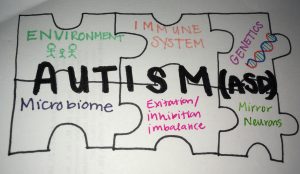
Autism Spectrum Disorder (ASD) is an extremely complicated and diverse disorder that presents itself in various ways. This disorder is somehow different in almost every single case, which is why the spectrum is useful in classifying the severity of the disorder. Unlike other diseases and disorders, Autism is not caused by one specific gene mutation or condition that leads to the development of the disorder. It is a combination of a variety of genetic and environmental factors that contribute in various ways to how the disorder is presented in those affected.

The two main themes found in most ASD cases are immune system abnormalities and a Zinc deficiency. Zinc is vital to the development and operation of a functional immune system. Many important enzymes and proteins in the immune system, and found at the excitatory synapses require zinc to function properly. Astrocytes are star-shaped glial cells that promote the recycling and re-uptake of neurotransmitters. They maintain a balance of excitation and inhibition signals in the brain. In patients with ASD, the GABA pathway was found to be one of the most affected pathways. Patients were found to have significantly decreased levels of GABA, an inhibitory neurotransmitter. When these levels are too low, there is not enough inhibitory signaling happening which leads to the overstimulation due to more excitatory signaling occurring. This could be linked to the symptoms experienced by people with ASD being overstimulated by their environment and not knowing how to process and appropriately respond to that stimulus.

In addition to this factor of the imbalance of excitation and inhibition signaling, there are many other factors that could possibly contribute to the development to Autism as well. One of these is the lack of pruning of unnecessary neurons which is called autophagy. In healthy brains, autophagy happens as the brain is developing, degrading the unneeded neurons while new ones develop. However, when this process does not go as it should, it leads to excess neurons which can also be a cause in the symptoms experienced in ASD.

Another common factor in patients with ASD is gastro-intestinal symptoms. The autistic brains were found to be correlated with a less diverse gut microbiome, specifically lacking carbohydrate and fermenting bacteria. It has also been shown that children who are born via C-section and who do not breastfeed are much more susceptible to a microbiota imbalance. In addition to this imbalance of microbiota, an increased permeability in the intestines is found to be common in individuals with ASD. This can be caused by a variety of factors including poor diet, chronic stress or bacterial imbalance. This condition allows unwanted macromolecules and bacteria to escape from the gut into the bloodstream and have the ability to cross the blood brain barrier which could contribute to the development of autism.

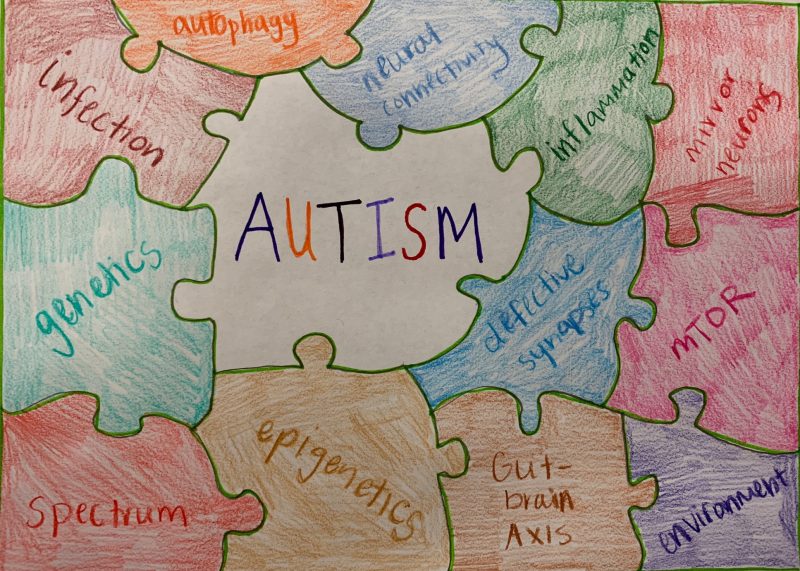
Autism is not a disorder with a single cause or treatment. Therefore, it is challenging to find the root of the problem occurring in the brain as each case is unique. It is a puzzle with many parts that come together to present the symptoms in an individual. These puzzle pieces can be any number of environmental and genetic factors that include and go beyond the factors previously mentioned. Autism Spectrum Disorder is extremely unique and difficult to research due to this aspect of the disorder. The spectrum can also be thought to include everyone. We are all on the spectrum somewhere, but the severity varies significantly depending on the symptoms that an individual displays. Each piece of the Autism puzzle comes together uniquely, and there is continuing research trying to solve more and more of this extremely complicated puzzle in the brains of people with ASD.
The Top 10 Things You Need to Know About Autism


Autism spectrum disorder, or ASD, is a neurodevelopmental disorder characterized by impaired communication, behavior, and social interactions. The name in it of itself brings us to the first thing you need to know about this disorder: it’s diagnosis and symptoms lie on a spectrum.


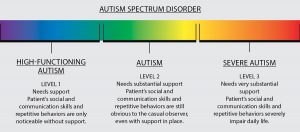
  1. Autism is a spectrum You may be asking yourself, what exactly does ‘spectrum’ mean in this case? I’m so glad you asked! With ASD, there are 3 known levels characterized by high functioning (level 1), autism (level 2), and severe autism (level3). The main differences across these levels include the support the person needs, the person’s communication and social skills, as well as their behavior (see image below). But again, remember, it is a spectrum disorder, which means it can be quite difficult to pinpoint which level any given individual might ‘fall into,’ considering their symptoms and how they behave change constantly. ASD is more fluid than most disorders because of this spectrum.
  2. One of the many causes of ASD has to do with neural connectivity. Essentially, what this means is there is an increased number of neurons in the brain, which decreases the connectivity and circuitry of neurons and synapses in the brain. In a normal brain, the number of neurons actually decreases over time, which strengthens the connectivity overall. This impairment in ASD patients has other cognitive effects and plays into other causes discussed further.
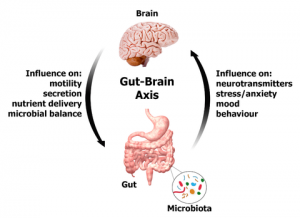
  3. The gut-brain axis is next. The gut-brain axis is how the gut, or the gastrointestinal tract, specifically communicates with the brain and CNS. There is still much unknown about the gut-brain pathway, but there has been research that shows that ASD individuals tend to have a less diverse gut microbiome (less carbs) and tend to have higher levels of “bad” bacteria. Along with this, there is also evidence for increased permeability in the intestines, which allow unwanted molecules to pass through the tight junctions. The GBA is so fascinating and plays a big role in epigenetic factors leading to Autism. 
  4. Hey, did somebody say epigenetics? The role of epigenetics is crucial to understanding more about ASD. This notion of changes in gene expression leads to interesting findings related to ASD. Rett syndrome is another genetic disorder that has been found to always produce symptoms characterized by ASD. Along with Rett syndrome, is fragile X syndrome, which has genes located on the X chromosome. This could potentially relate to the fact that we find a predominance of males with ASD!
  5. It’s also important to understand the environmental factors associated with ASD. Zinc deficiency and immune dysfunctions can ultimately imbalance the excitatory/inhibitory (E/I) signaling in the brain due to glutamate dsyregulation. These environmental factors lead us right into number 6.
  6. Maternal infection. Along with possible prenatal viral infections, prenatal and perinatal stress, toxins, the mother’s age, and postnatal risk factors, it is important to understand possible maternal infections linked with the onset of ASD among the infant. It has been found that mothers who had children diagnosed with ASD were more likely to have two or more infections during pregnancy, with bacterial infections also leading to a greater risk of ASD.
  7. Another factor that is important to discuss with ASD, especially when it comes to symptomology, is mirror neurons. Mirror neurons help to explain why an individual is more likely to unconsciously copy another individual’s behavior. Think of the common saying, “stop yawning, you’re going to make ME yawn.” That’s right, you probably will, because of mirror neurons! This helps wrap our heads around individuals with ASD and how they behave and act-something isn’t working with their mirror neurons as many lack empathy, or know how someone around them may be feeling.
  8. Defective synapses: oh no! As mentioned above, the increased number of neurons increases the number of synapses and actually the excitability of the synapse itself. Essentially this means something isn’t working quite right and leading to symptoms of ASD. Along with this, come genetic factors such as neurexin, neuroligin, and SHANK. Individuals with ASD may have genetic deletions of the protein neurexin, as well as incorrect linkages between neurexin and neuroligin proteins (causing something to go wrong with synaptic transmission). Finally, SHANK is a protein that regulates dendritic shape, and in ASD, could be disrupted. 
  9. It is known that there are elevated levels of cytokines in the brain that lead to inflammation. Cytokines are also linked with damage to the blood brain barrier and increased permeability. There have not been many studies on the link between inflammation and ASD, but it is critical to understand the role of cytokines and other neurochemical pathways outlined in ASD.
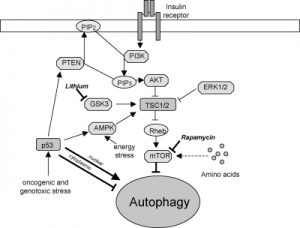
  10. Last, but not least, we have the mTOR pathway and autophagy. Critical to understanding ASD and putting the picture all together is the link between this pathway and autophagy. This pathway promotes cell growth and differentiation, however an overactive mTOR pathway leads to inhibition of normal autophagy degradation. Autophagy is the way the brain helps to degrade synapses and neurons, which means the brain is being poorly pruned, thus leading to ASD. Autophagy can also be related to the connectivity and defective synapses that are characteristic of ASD! 


Now you hopefully know 10 more things about Autism than you did before reading this post, and are better able to fit the puzzle pieces together for the causes that lead to the disorder.


Image 1: http://discovermagazine.com/2017/jul-aug/autism-spectrum-disorder

Image 2: https://blog.kettleandfire.com/gut-brain-axis/

Image 3: http://overthebrainbow.com/blog/2017/2/16/autism-and-the-brain

Image 4: https://www.researchgate.net/figure/mTOR-dependent-pathway-with-drugs-acting-at-distinct-stages-in-this-pathway-enhancing_fig1_41620806

Welcome!

Welcome to Cobbers on the Brain!  This blog is a compilation of student commentary on the scientific articles discussed each week in my CHEM/NEU 475 – Neurochemistry class at Concordia College.  Discussions are held each week regarding the scientific understanding of various neurological diseases, as well as the often muddy social, cultural, and ethical implications of this knowledge.  Alzheimer’s Disease, concussion, ALS, addiction, anxiety, bipolar disorder, autism and aging are just a few of the topics covered in the course.  We learn a lot, have much to say, but rarely have all the “answers” to our questions!  I hope you enjoy…

Once Hungry, Forever Eating: The Neurological Impacts of Poor Diet on Obesity

The Obesity Problem

According to the CDC, more than 1/3 of adults in the U.S. are obese. Why is this a problem? Why is obesity rising? Could we blame it on America’s fast-paced society and the growth of processed and fast foods? Sure we could, and those factors do play a role to some extent. Are people just not making conscious healthy decisions anymore? Of course not everyone makes healthy conscious decisions, but can we attribute that solely to the will of that individual? What if some people are not actually controlling their unhealthy decisions? What if their brain has been rewired in a way to promote their actions of unhealthy eating?
I hope you are not surprised when I say YES, scientists have been discovering that brain rewiring may be a huge factor in the obesity epidemic we have not yet considered.

Watching the Hips, Watching the Brain

Saturated fatty acids and other unhealthy components of processed food commonly consumed today pose a danger to the chemical signaling within our brain. These molecules are able to freely cross and accumulate within the brain tissue, leading to the activation of various inflammatory pathways within the brain. Over time, this over-activation of inflammatory pathways in the brain leads to insulin resistance and the inability of the body to properly utilize insulin for energy homeostasis maintenance. So my choice of chips over carrots at the grocery store is not only going to my hips, but is also negatively changing the chemical signaling within my brain that is responsible for regulating my energy and food intake. Awesome..

Obesity and Type 2 Diabetes

Insulin normally plays a role in the body to help store sugars (glucose) in the cells of the body after food consumption. This allows body cells to use that stored glucose for the body’s energy production of ATP, which powers our physical and mental actions, allowing us to go about our daily functioning. Diets high in sugar and simple carbohydrates (or simply just a high caloric diet) lead to insulin resistance because of the excess insulin released when you eat a lot of high-calorie foods. When too much food is consumed (high fat diet), the organelles in your cells become overwhelmed and stressed and inflammation ensues. The resulting activation of inflammatory pathways in the brain then lead to the inhibition of insulin receptors on body cells and ultimately insulin resistance. So, now when food is consumed, the body continues to release insulin, but the insulin receptors on body cells no longer respond to insulin’s binding, and glucose remains in the blood instead of being stored in body cells. Increased blood glucose levels over time is harmful to the body. This is also known as Type 2 Diabetes.
Insulin resistance also leads to the inhibition of POMC neurons in our body. This is of great concern because POMC neurons in our body are normally activated after food intake and tell us to stop eating. Inhibition of POMC neurons leads to the overeating often associated with obesity. Normally when we are hungry, AgRP neurons are activated that tell us to start eating so that we can gain more energy. The activation and inhibition of POMC and AgRP neurons are a vital component of our body’s ability to maintain energy homeostasis. Scientists have found an increased ratio of AgRP:POMC neurons in the brain of obese individuals, as well as an up regulation of inflammatory pathways discussed above.

Obesity is in the brain.


Finals week, Stress Eat

STRESS EATING IS REAL PEOPLE. And SURPRISE, it originates in the brain. So this is why I gain 5 pounds during finals week. When your body is stressed and then food is consumed, insulin is released and it increases the firing rate of dopamine neurons. The dopamine neurons then release a lot of dopamine, which is the molecule responsible for the reward pathway and the brain’s ability to make us experience “pleasure.” This is why you feel happy and satisfied after eating something yummy during finals week, like pizza. Over time, the brain starts to remember how satisfied you feel after stress eating, because your brain lays down information and forms memories more when the body is under stress. The next time you are under stress, the brain’s memory station, the hippocampus, and the reward system in the brain activate and have the ability to override any other signaling in the brain responsible for maintaining energy homeostasis. This is why we tend to stress eat, even when we are not hungry! So this brings up the question of whether or not people are actually responsible for the unhealthy decisions they make.

What do you think?


Goodbye Leptin, Hello Hunger

Normally leptin serves the function of telling the brain that it is not hungry and does not need any more food. However, as one consumes more food, body fat accumulates and leptin concentration increases in fat cells throughout the body. This disrupts proper leptin signaling and prevents leptin from telling the brain that it is not hungry anymore. Thus, the brain thinks it is starving, leading to increased food consumption and further body fat accumulation. This pathway continues to spiral out of control unless diet is altered.

Holiday Tips

With Christmas quickly approaching, one can only help but look forward to of all of the goodies to be eaten throughout the holiday season. I mean, you cannot resist eating all of the yummy food at family Christmas meals, right?  Take into consideration these few tips to help you and your loved ones to stay ON TRACK this holiday season:

  1. Keep in mind the holiday season is about BEING WITH FAMILY, not eating food
  2. Suggest bringing a healthier dish to meals (sweet mashed potatoes verses mashed potatoes)
  3. Help yourself to the yummy food of the holiday season, but in MODERATION (get your fruits in with breakfast and make sure vegetables have a place on your dinner plate)
  4. Have ONE cookie instead of FIVE cookies
  5. Drink 16 ounces of water before each meal (it will help you feel fuller and decrease your food intake)
  6. Get your daily workouts in (walk the dogs, family walk after dinner, family gym session)
  7. Take this time to CATCH UP on SLEEP


If you would like to learn more about obesity in the brain, please visit:
https://www.sciencedirect.com/science/article/pii/S1043276012002044
Images From:
http://diabetes.diabetesjournals.org/content/63/12/4016
https://www.menorahpark.org/
https://www.pinterest.com

The Obesity Epidemic: What’s Causing It?

Obesity and over-nutrition are two of the most prevalent health problems facing Americans today. Although more people in the United States are trying diets and exercise programs than ever before, the problem seems to be getting much worse. In fact, 86% of Americans are expected to be overweight by 2030 (1). With that staggering number, there must be more to this problem than what initially meets the eye.


Over-nutrition, which is the excessive consumption of food, can have a variety of effects on the human body on the cellular and neurological levels. For example, consistent over-nutrition over a long period of time can result with oxidative stress in the mitochondria of neurons, which can then promote pathways that lead to the expression of TNFa, a transcription factor associated with over-eating (2). TNFa can also promote ER stress and inflammation, leading to overeating, which can in turn lead to more oxidative stress in the mitochondria and start the cycle over again (2). This promotes a positive feedback cycle causing the person to keep on eating more and more.


Artstract depicting mitochondrial dysfunction and ROS.


Obesity can also lead to changes in the brain’s physiology, such as insulin and leptin resistance, both of which can further promote over-eating and inhibit the pathways in the brain associated with appetite suppression (3). The large amounts of nutrients consumed during over-eating can also stimulate the brain’s reward system and trigger a large release of dopamine, making the brain susceptible to an over-eating addiction over time (3).
 
However, over-nutrition alone cannot explain the rise in obesity. Food additives may also contribute to the obesity epidemic. Over the last century, about 4000 new artificial chemicals and substances have ended up in our food, and not enough research has been done on these substances to determine what effects they may have on human physiology and behavior (1). Examples of these additives are:

  • Artificial colors
  • Emulsifiers
  • Added sugars
  • Artificial sweeteners
  • Pesticides, which end up in our food unintentionally.

Some research has shown that many of these compounds can contribute to obesity and related health problems. For example, MSG, a common food additive, was found to promote fat accumulation in rodents, and some organopesticides have been associated with the onset of Type II diabetes, (1).
 
Obesity is one of America’s biggest health challenges, and if we don’t change what we’re putting into our food, then this problem won’t go away any time soon.
 
Sources:

  1. https://www.ncbi.nlm.nih.gov/pmc/articles/PMC4101898/
  2. https://www.ncbi.nlm.nih.gov/pubmed/22328600
  3. https://moodle.cord.edu/pluginfile.php/625315/mod_resource/content/0/2013%20CNS%20insulin.pdf

Image Credits

  1. http://costsectorcatering.co.uk/27-billion-adults-worldwide-will-be-overweight-2025-world-obesity-federation-suggests

2. http://roguehealthandfitness.com/category/obesity/?print=print-search

The Epidemic of Obesity

35% of adults age 20+ are obese. This is becoming a severe problem, especially in the United States. What is causing this spike in obesity? How does obesity become an issue in the body? I would like to discuss the background related to this topic.
Inflammation and obesity:
The issue with obesity usually begins with the body becoming insulin resistant. The resistance is caused by overnutrition. Overnutrition or overeating causes stress in the body, particularly in the organelles like the mitochondria and the endoplasmic reticulum which are devoted to breaking down the foods we eat and creating proteins in the body. In overnutrition, these organelles become overwhelmed which leads to activation of the JNK pathway. This is a pathway normally implicated in the stress response, therefore, it acts to inhibit the insulin receptor substrate and causes inflammation. This in turn leads to more inflammation and more shutting down of the insulin receptor and insulin receptor substrate.
Insulin Resistance:
The shutting down of the insulin receptor and insulin receptor substrate makes it increasingly hard for insulin in the body to do its job. Normally, when we eat food, insulin is released in the body and it signals POMC and AgRP neurons in the hypothalamus which tell the body to stop eating. However, in overnutrition the shutting down of receptors causes the body to not react to the insulin being released. The beta cells in the pancreas are responsible for making insulin and as insulin resistance begins they are able to make increasing amounts of insulin to try to combat the resistance. However, at some point a threshold is reached and the body cannot produce enough insulin. This leads to hyperinsulinemia and usually the onset of type 2 diabetes.
Onset of obesity:
Eventually, the insulin is not sufficient to produce a response in the body. Therefore, the body cannot recognize that you’re consuming too much food and will constantly signal to keep eating. The stress continues and just potentiates the problem and causes obesity. This is just some of the pathology behind obesity. With the excess of food and availability of food that we have now, it helps to explain the reason why obesity is such a problem right now. Finding a solution is increasingly important as obesity and type 2 diabetes have very negative impacts on the body.
Image result for insulin and obesity
Onset of Obesity from: http://www.life-enhancement.com/images/LEM1211chart211.gif
For more information about obesity and its pathology read:
https://moodle.cord.edu/pluginfile.php/625315/mod_resource/content/0/2013%20CNS%20insulin.pdf
Featured image from:
https://d2s9xe8pzxi1js.cloudfront.net/wordpress/wp-content/themes/Marks-Daily-Apple-Responsive/images/blog/obesitycrisis.jpg

Science & Stigma With Obesity

Obesity is a common and serious health issue in the United States. According to the CDC, more than 1/3 of US adults have obesity and it’s on the rise. Obesity puts someone at a higher risk of heart disease, stroke, type 2 diabetes, and certain types of cancer. So why is this such a rising issue and what is really happening biologically with obesity?


Obesity Science

Normally, when we eat food, there are two types on neurons in our brain that regulate our appetite. POMC-neurons tell us to stop eating and AgRP-neurons tell us to eat. Eating causes release of the hormone insulin, which activates POMC-neurons to get us to eventually stop eating. However, when obesity is present, we eat too much. This over eating causes our neurons to become stressed and overworked, which makes the normal insulin regulation work incorrectly. The POMC-neurons are unable to tell us to stop eating and the AgRP-neurons are over activated. This in combination with the reward system of our brain that responds positively to our favorite foods is no match for any sort of will power anyone may be able to muster.

Rethinking Obesity

Society paints this picture of obesity as this condition people have because they have no self-control around food and are lazy, living a sedentary life. This however isn’t the case for most people suffering from obesity. Obesity is a biological disease that effects how our brain functions. Take that in combination with many of the foods and food additives present in our society not being healthy and adding to the problem, basically a person is helpless against all odds. Treatment for obesity can be a lifestyle change, but also may require medication or surgery to reset the neurological imbalance that is present. As research into obesity continues, maybe we’ll be one step closer to finding effective treatments and even preventative treatments for obesity.
For more on the science behind obesity: www.sciencedirect.com/science/article/pii/S1043276012002044?via%3Dihub
Feature Image: https://www.medicalnewstoday.com/articles/317546.php
Obesity aspects image:  https://www.learnhowtobecome.org/make-a-difference-careers/obesity/
Food friends image: https://www.oyewiki.com/health/obesity-a-friend-or-an-enemy-6-9-2017

Why You Should Think Twice Before You Sign up for a Gastric Bypass

Gastric bypass has gotten very popular in the recent years since it promises easy results. Just like everything that comes easy, it has a price. The gastric bypass procedure was made for people who are extremely obese (BMI 40 and above) or have very complex weight related problems with a BMI of 35 or above.
 
BMI is used as a general guideline to see how people compare to people with similar sizes. For example:
 
Underweight, BMI 18.5
Healthy weight, BMI 18.5-24.9
Overweight, BMI 25-29.9
Obese, BMI 30 and above
 
Once a patient reaches the obese category, the patient has higher risk of diabetes, high blood pressure, and other cardiovascular problems. Gastric bypass was made to help patients in that situation to help get out of it, since the issue of over eating can tend to be due to a discrepancy within the neural pathway.
 
What is gastric bypass?
 
It is a procedure where the stomach is cut significantly smaller making less room for food and connected into the small intestine. So, for a patient to eat a full meal with a small stomach like that is difficult make the patient feel full faster causing them to lose weight. But this isn’t just solving the space issue within the stomach but also causing inhibitory signals to the brain to increase letting that person feel full faster. After a while the patients usually are able to eat a little more but the lower number of cravings and the small stomach space restricts them from over eating.
 
This does seem like a harmless and easy solution, but it should only be performed for patients who are at a very high risk of

The Other Side of Obesity You Did Not Know

If you went around asking people what they think the cause of obesity is, they will most certainly tell you it is overeating. Even though they are right, they usually ignore other factors that lead to obesity. The notion that obesity is a disease is still not well accepted by the public. In this blog I will try to demonstrate how other factors can put a person at a high risk of being obese.
But before we dig into the all sciencey stuff we have to understand what obesity is.
What is obesity?
Obesity is excess adipose (fat) tissue. What is this, you ask? So a fat cell is an endocrine cell and adipose tissue is an endocrine organ. Significantly, excess adiposity or obesity causes increased levels of circulating fatty acids and inflammation. You can look at obesity as excessive body fat.

So how do I know if am obese?
Excess fat tissues can be determined by the use of a Body Mass Index (BMI). BMI is a mathematical calculation involving height and weight, irrespective of family history, gender, age or race. BMI is calculated by dividing a person’s body weight in kilograms by their height in meters squared (weight [kg] height [m] ^2) or by using the conversion with pounds (lbs) and inches (in) squared.

Other factors to known.
Insulin:  we usually associate insulin with low blood sugar and diabetes. Most people know that the role of insulin is to regulate metabolic processes like glucose uptake and lipid synthesis. What they don’t know is that insulin and insulin signaling plays a big role in obesity. Insulin acts on two neurons in the brain.

  • The POMC neurons which signals us to stop eating
  • The AgRP neurons which signals us to eat

But what happens is

  • Over nutrition leads to
  • Hyperinsulinemia (too much insulin)
  • Which leads to insulin resistance
  • That causes inhibition of the POMC neurons that tell you to stop eating
  • Leaving the AgRP neurons that do not tell to stop eating so you over eat

Leptin: Leptin is a hormone that is produced by the fat cells in the body. Its main role is regulating how many calories we eat and burn, as well as how much fat we carry on our bodies. The more body fat they carry, the more leptin they produce. What happens is that,

  • Eating->Increased body fat->Increased leptin->Decreased appetite, increased energy expenditure

But in leptin resistance, leptin does not signal to the brain that we are full and so we keep eating.

  • Overeating ->increases body fat-> increased leptin( too much this time)-> blockage of signaling to the brain -> obesity

And just a reminder, obesity is not joke. It puts individuals at risk for more than 30 chronic health conditions. They include: type 2 diabetes, high cholesterol, hypertension, gallstones, heart disease, fatty liver disease, sleep apnea, GERD, stress incontinence, heart failure, degenerative joint disease, birth defects, miscarriages, asthma and other respiratory conditions, and numerous cancers. Think twice before you eat that box of pizza for a second time in a week.


Obesity: More Than Meets the Eye

Obesity rates are skyrocketing, and there is no denying that it is a large problem for our country. There are many contributing factors that lead to the development of obesity. As our diets has become more and more heavily composed of fat, sugar, and carbs, our bodies are undergoing changes that are leading to extreme health problems, including Type 2 diabetes and Obesity. Processed foods have become more addictive, because of the high amounts of fat, sugar, and additives they contain. These components in our food are altering the normal signaling within our bodies, leading to the development of chronic metabolic illnesses.
 
The Role of Insulin
Insulin is a key factor that our bodies use in maintaining energy homeostasis. Insulin is used to regulate the amount of energy your body needs and expends.
After we eat, insulin is released into the bloodstream, causing the food (glucose) that we consumed can be absorbed into our cells and used for energy. Insulin also acts in the brain where it binds to its receptors on neurons in the hypothalamus, causing an anorexigenic response. The anorexigenic response is one that lets you know you are full and should stop eating.
 
Insulin and Reward
Insulin also acts on dopaminergic neurons in the midbrain (involved in the reward pathway) The desire to eat is not only driven by the body’s current nutritional state, but also by the rewarding aspect of food. Reward- based eating behavior is likely linked strongly with obesity because the signaling in these circuits can eventually override the signaling in the hypothalamus. Insulin is able to change reward-related behavior by decreasing sucrose intake and conditioned preference for high-fat food. Therefore, insulin signaling is involved with the regulation of energy homeostasis and food intake in these neurons as well. When fed, insulin signals for you to stop eating for pleasure, and attempts to control your food intake.
 
Insulin Defects= Bad News
Eating a high saturated fat diet causes disruptions in the insulin signaling pathway, thus interfering with energy homeostasis and the sending of messages to stop eating. This leads to inflammation in the brain and causes lots of stress in the cells. A cascade of inflammation begins; making the insulin receptor unable to continue the cascade that is supposed to occur once insulin is bound. This particular problem is what is known to be Type 2 diabetes. Insulin is present, and so is its receptor, but the rest of the pathway is dysfunctional.
 
Effects of Processed Foods
Since processed foods contain fat and sugar than we are not meant to consume, when we them, we start to crave them because the chemicals, fats and sugars they contain are causing chemical changes in our brains. This can lead to insulin resistance and the dopamine reward pathway can eventually override the hypothalamus, since we develop such a strong desire to eat these foods. It is a cascade that can very quickly get out of control and manifest into what is essentially brain disease, presenting itself visually as obesity.
 
Treatment
Hedonic feeding, the term used to describe the drive to eat to obtain pleasure, without actually having an energy deficit, is the type of hunger that most weight-loss programs are targeting. They are focused on relieving cravings, instead of targeting the hypothalamus and the inflammation/stress that occurs there due to the insulin resistance that occurs. There are several different medications available that can be used to treat food cravings in order to lose weight. Gastric bypasses are also common and effective. They bypass most of the stomach so that the individual will feel full much faster and not physically be capable of eating any more.
 
Regulations?
Since it seems like the cause of this obesity problem all comes back to the ingredients in the food we are eating, shouldn’t there be more restrictions and regulations on what companies are allowed to put in processed foods? Other countries have more restrictions on certain food preservatives and contents that they are allowed to include, and overall this seems to be an intelligent, logical idea. Until any laws are passed, however; all that we can do to steer clear of Type 2 diabetes and obesity is to eat whole, nutritious foods and get plenty of exercise. Food companies can tempt us all they want with the high-fat, high-sugar foods they process, but we must look out for our health and do the best we can to resist these foods that will give us brain disease.
 
 
For more information related to insulin signaling, energy homeostasis, and glucose metabolism, please visit:
https://moodle.cord.edu/pluginfile.php/625315/mod_resource/content/0/2013%20CNS%20insulin.pdf


Spam prevention powered by Akismet