We have all heard about marijuana somewhere in our social realm. Whether it is recreational or medicinal use, we all know someone who uses marijuana and either benefits from it or just enjoys its “relaxing” effects. Articles flood Facebook, Twitter, our news feeds, TVs and we accumulate our own ideas about the illegal but maybe-beneficial-maybe-not drug. So, let’s get gritty about the real details behind the biochemistry of marijuana (cannabis) in our brains and bodies and see where that can take us.
Biochemistry of Weed
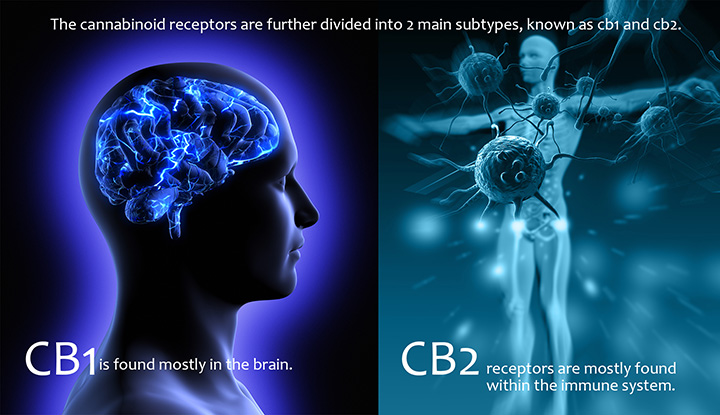
Our bodies naturally produce and metabolize dozens of endocannabinoids such as lipid-derived molecules, 2-AG and anandamide. These fat-like molecules move around in our bodies and brains and bind to receptors called CB1 and CB2 receptors. There are many classes of receptors that play different physiological roles in our bodies. The CB1 and CB2 receptors are called G-protein coupled receptors (GPCRs) and they have many long-term effects on the body most of which are stimulatory. When an endocannabinoid (made in our bodies) or a cannabinoid (found in marijuana) binds a receptor, the pathway that is normally activated in GPCRs is inhibited. Therefore, a stimulatory molecule, cAMP, is now rendered inactive. This causes many cellular changes such as overall less activity in our brains (relaxation) and apoptosis. Apoptosis is a fancy word for cell death. This process, induced by endocannabinoids and cannabinoids, alike is incredibly beneficial in cancer or tumor growth. Apoptosis occurs due to binding of the cannabinoid followed by an accumulation of ceramide synthesis which induces a stress response in the cell. The cellular stress response is to essentially kill itself. In cancers like breast and colon, direct cell death occurs. Apoptosis can greatly affect tumor growth due to cancerous cells. But, too much relaxation and the psychoactive effects of THC can be harmful to everyday activities.
Implications
Hopefully, when we listen to the morning news or scroll through our social media feeds, we can now know a little bit of the science behind cannabis. It really does have effects on the brain which can be bad for everyday use and everyday life. But, it also has beneficial effects on life threatening diseases such as cancer. Therefore, before we decide whether it should be legal or not, we should think about the certain cases that cannabis can be harmful or helpful. Obviously, there are many economic factors associated with drug use and cannabis requires much more research. Nonetheless, if we can understand a little more about the drug it may spark more conversation and maybe some drastic changes in one direction (research) or the other (legalization).
https://www.journals.elsevier.com/prostaglandins-and-other-lipid-mediators/
Legal Issues
It is tough to get a grip on any viable information in today’s world with all the hubbub that is going on. New discoveries here… Future research will be done there… This is what we found… The push for scientific discovery and importance has boomed within the last 20 or so years. What is happening today however, is instead of studying for answers, we are stretching for grey area results, especially when it comes to talks about cannabis.
I did not know much about the properties of cannabis, or its history, before reading and researching these subjects within the last week. With how much literature was found, I learned several things: Cannabis binds to receptors that our body already has, it used to be legalized before being outlawed due to racial conflicts, its healing properties have been substantially promising, and the shortage of research behind a drug that is legal.

Cannabis is a combination of roughly 400 chemical properties, which most people are only able to associate THC as one. The properties of this plant provide drug-like properties on your body. Your body itself has what is called endocannabinoids, which your body also produces. These endocannabinoids, also known as 2-AG and Anandamide, provide necessary functions inside your body. 2-AG and Anandamide bind to receptors on the outside of cells, and activate internal processes for cellular growth. Cannabis and its chemicals, bind to these same receptors internally, and essentially increase the effects of this pathway.
Cannabis, or Marijuana, or “Mary Jane” was first made illegal in order to keep it from coming out of Mexico during emigration. What was known and called by the native Mexican people at the time was Marijuana. This was thought to be a different drug entirely from Cannabis, but was actually not. This ignorance caused by the American people at that time, ended up hurting themselves since it was used for therapeutic purposes.

Today’s society heavily talks about Cannabis, both as a recreational and a therapeutic amenity. Its ability to stimulate appetite for eating disorders, to calm the seizures of epilepsy, and even to help people with their pain. Cancer has played a huge role in this, since Cannabis does both play a role in cell apoptosis and have pain relieving side effects. Despite it’s ever promising effects to do good for people, it is still relatively unknown the extent of its harmful properties.

It is exciting to see such promising results for a drug, but disappointing to understand what little we actually know. Let me rephrase, Little we CAN know. Cannabis is a schedule 1 type drug, which means that it is as hard to obtain for research as is cocaine. How is this possible when we have it legalized for recreational use? This fact absolutely astounds me. The fact that we as a society can use a drug for recreational purposes, without having it just as available, if not more available for research purposes baffles me. At this point, I don’t see a need for legalization of Marijuana, if the research has not been done. I’m not saying Marijuana is bad or good, it’s just plain unknown.
RESOURCES:
https://www.nature.com/articles/4401284
https://books.google.com/books?id=QwihCgAAQBAJ&pg=PA347&lpg=PA347&dq=FAAH+as+breakdown+of+eCBs+to+apoptosis&source=bl&ots=FMGjFvKRnE&sig=pQB3GVRKzdd4i3m26859mDa0FKw&hl=en&sa=X&ved=0ahUKEwjk28q227_XAhVM3GMKHc4sBTwQ6AEIODAC#v=onepage&q=FAAH%20as%20breakdown%20of%20eCBs%20to%20apoptosis&f=false
https://www.drugabuse.gov/about-nida/legislative-activities/testimony-to-congress/2016/biology-potential-therapeutic-effects-cannabidiol
http://molpharm.aspetjournals.org/content/molpharm/58/4/814.full.pdf
Cannabinoids in the Body
Legalize marijuana? Medicinal or recreational? Is marijuana good or bad for you? These are the questions our society is currently facing when discussing the legal stance on marijuana. Right now, the legal climate is fairly rocky as some states have decided to legalize this drug for recreational use. However, it is still currently illegal under the federal government. This is because we don’t fully understand the impacts and effects of cannabis on the brain/body and how this can effect us long term. The FDA classifies this drug as a schedule I drug which makes research on cannabis nearly impossible. This makes it extremely difficult to learn more about this potentially very beneficial drug. Here is what we do know about how the cannabinoids in our brain impact us right now:
Endocannabinoids:
Endocannabinoids (eCB’s) are the molecules that we find naturally occurring in the brain. The most abundant eCB’s in the brain are N-Arachidonoylethanolamine (anandamide, AEA) and 2-arachidonoylclycerol (2-AG). In the brain, these molecules bind to the CB1 and CB2 receptors. These are also the same receptors that we think exogenous cannabinoids bind to, like THC in marijuana. The CB1 receptor is a g-protein coupled receptor (GPCR) which is paired to a Gi protein. This means that when activated this molecule will decrease the activity of adenylyl cyclase which in turn leads to lower levels of cAMP and PKA which are important molecules for cell functioning and working memory. This pathway also has the ability to activate the ERK, JNK, FAK and p38 pathways along with the control of ceramide and ion concentrations within the cell. I would specifically like to talk about the role of the JNK pathway and the CB1 receptor.
JNK and CB1 activation:
The JNK pathway is normally turned on in response to stress which leads to DNA repair, transcription factor changes or even cell death in extreme cases. Due to the CB1 receptor being coupled to the Gi g-protein, the activation of this GPCR has the ability to turn on Ras (one of the first proteins involved in the activation of the JNK pathway). Ras activates Raf activates MEK activates MKK which activates JNK in the nucleus. All of these molecules phosphorylate the next protein in the chain leading to its activation. It is also interesting to note that MEK is responsible for activating the MAPK pathway and the MEKK pathway. Therefore, the activation of the CB1 receptors can have three different outcomes just from activating the Ras protein. JNK leads to DNA repair and cell apoptosis. This could explain some of the healing effects of marijuana. We see that it has the ability to aid in the decline of growth of cancer cells while also giving patients an appetite needed during treatment.

Figure shows the activation of CB1 which in turn activates the JNK pathway.
Legalize it?
Although we don’t necessarily have enough evidence telling us whether the extended use of medicinal marijuana is bad or good. It has been shown to have remarkable beneficial impacts on diseases like cancer, glaucoma and epilepsy (seizures). Cannabis definitely changes the chemical balances in the brain and can in some cases be seen as addictive which could lead to negative side effects in the future. However, it may be logical to use medical marijuana as a treatment for these diseases to give people pain relief, appetite and relaxation for now.
For more information about the role of eCBs in the body read:
https://moodle.cord.edu/pluginfile.php/625296/mod_resource/content/0/endocannabinoids.pdf
Figure from:
http://molpharm.aspetjournals.org/content/molpharm/58/4/814.full.pdf
Cover Photo from:
https://www.hcillinois.com/learn/endocannabinoid-system/
What’s the Hype With Medical Marijuana?
Why does it seem so difficult to make medical marijuana available to everyone who needs it? I mean after all we have all seen those videos online showing how medical marijuana is such a miracle drug.
Well things aren’t as simple as they seem. Medicine needs science to back it up before it can be used on patients. The problem with medical marijuana is that we don’t have enough research to show that the psychotic effects are worth the advantages of this medical treatment.
Marijuana has some side effects that can be dangerous to patients, here is why. The human body already contains what is called canaboid receptors which respond to the chemicals in marijuana. Our body naturally makes signals similar to those found in marijuana to regulate our body and that is why it works well in certain situations.
However, each different type of marijuana causes a different reaction in our bodies, some have chemicals that cause anti-anxiety effects some cause an anti-epileptic effect but most of these causeContinue reading →
Your Body’s Cannabinoid System: The Endocannabinoids
The Endogenous Cannabinoid System (ECS)
For medical marijuana to be so useful, your body must have a well-oiled system in place for it to act on, which is the ECS. This system is composed of your body’s cannabinoid receptor proteins, that are expressed throughout your central and peripheral nervous systems, and the endocannabinoids, which are lipid-based neurotransmitters. When the endocannabinoids bind to the cannabinoid receptors (which are G-protein coupled receptors) CB1 or CB2, calcium channels are blocked and the ERK and p38 pathways are activated.
The two main endocannabinoids are 2-arachidonoylglycerol (2-AG) and anandamide (AEA). 2-AG is synthesized from phosphoinositol, while AEA begins with phosphatidylethanolamine. Each synthesis requires its specific enzymes to cleave these membrane proteins into the endocannabinoids.


Effects in the Body
Medicinal marijuana effects include:
- Pain relief
- Cell apoptosis (death) – This is anti-cancer
- Stress relief
- Seizure treatment
Endocannabinoids are able to do these same things through binding to their CB1 or CB2 receptors, but CB1 is the most common receptor. The modulation done by endocannabinoids can increase appetite, directly cause cell apoptosis, can be anti-inflammatory, and can be inhibitory by keeping the cell signaling at appropriate levels.

Medical Marijuana Treatments
Medical marijuana is now legal in 29 states, as well as Washington D.C.
There are also 18 states that have specifically legalized medical cannabidiol (CBD), a non-psychoactive extract of marijuana.
Medical marijuana is used to treat:
- Terminal illness
- Glaucoma
- PTSD
- Seizures, including those characteristic of epilepsy
- Human Immunodeficiency Virus (HIV)
- Acquired Immune Deficiency Syndrome (AIDS)
- Tourette’s Syndrome
- Amyotrophic Lateral Sclerosis (ALS)
- Cancer, if the underlying condition or treatment produces one or more of the following:
- severe or chronic pain
- nausea or severe vomiting or
- cachexia or severe wasting
- Severe and persistent muscle spasms, including those characteristic of multiple sclerosis (MS)
- Inflammatory bowel disease
- Fibromyalgia
- Intractable pain
There is still much research needed to fully understand the ECS, as well as the benefits and dangers of medical and recreational marijuana, but much progress has been made in the last 10 years to this understanding.
Our Body’s “Chill Pill”
The endocannabinoid pathway is a pathway that the body does using naturally occurring endocannabinoids in the body. These endocannabinoids are neurotransmitters that are made out of lipids that are present in the central nervous system (CNS) of the human body.

Photo: https://elixinol.com/blog/what-is-the-endocannabinoid-system-and-how-it-works
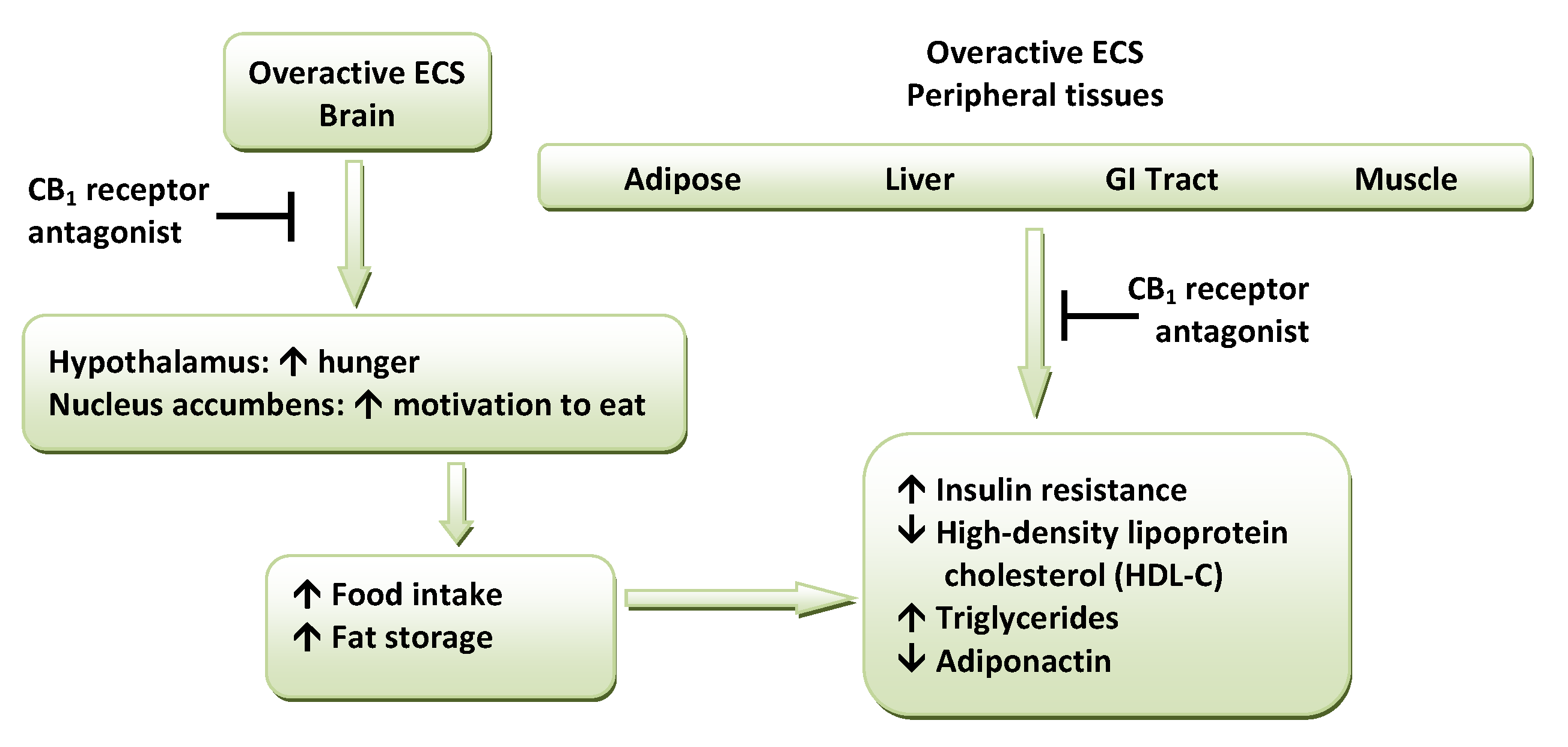
This system is important for energy intake, metabolism and nutrient transport. The receptor for this neurotransmitter is CB1 receptor. However these receptors are not on post synaptic membrane but instead work in a retrograde fashion. This means that the signal is sent from the postsynaptic membrane to the presynaptic membrane.

Photo: https://www.leafly.com/news/science-tech/is-your-endocannabinoid-system-in-balance
The endocannabinoids bind to receptor which in turn result in the decrease in neurotransmitter release due to a change in ion flow. After the endocannabinoids are broken down.

Photo: https://commons.wikimedia.org/wiki/File:Endocannabinoid.svg
This inhibitory process is what gives endocannabinoids their healing properties. It’s the body’s ability to tell the brain to “chill out” and stop sending so many signals. Although cannabinoids occur naturally in the body. Medical cannabis is sometimes used to increase the amount of cannabinoids in one’s body, increasing the inhibition of other neurotransmitters such as glutamate.
The two subspecies of Cannabis (Cannabis Indica and Cannabis Satvia) are very complicated with over 300 chemical compounds and about 15% of those be cannabinoids.
Some of the more well know chemicals are:

Photo: https://www.helmag.com/products/chemicals/
- Cannibinol is the byproduct of when THC is exposed to light and oxygen. It seems to aid THC in its psycho-active effects. This chemical is also known for it’s anti-epileptic properties as well as its ability to relieve intraocular pressure.
- Cannabidiol which is known for it’s anti-anxiety, anti-psychotic, anti-nausea and sedative properties
- Delta-9-tetrahydrocannabinol is know for its pshyo-active effects as well as its ability to relax an individual and treat pain.
- Cannabichromene which helps give Cannabis it’s is an anti-inflammatory and anti-viral effects). It also has the potential to block the growth of cancerous tumors.
For more reading on the the endocannabinoid system, please check out:
http://www.sciencedirect.com/science/journal/10988823
Feature Photo:
http://dailychillpill.com/Chill_Pill/chill_pill.html
For more reading on the chemicals in Cannabis, please check out:
https://unitedpatientsgroup.com/blog/2014/04/11/thc-thca-cbd-cbn-the-chemicals-in-cannabis
For a video on the human endocannabinoid system, please check out:
The Human Endocannabinoid System
Help Without the High: The Journey to the Legalization of Medical Marijuana
Recently there has been more and more talk about the legalization of medical marijuana. There is a push for it because it can be used to treat pain, and it is less addictive than opiates. The cannabis plant (marijuana) contains molecules called cannabinoids that have many health benefits, however, many people are still against the legalization of medical marijuana because of the psychoactive (mind-altering) effects that it has.
What are cannabinoids?
It is important to understand the role of cannabinoids in the body. Cannabinoids that are produced naturally within our bodies are referred to as endocannabinoids. Endocannabinoids are molecules synthesized from the phospholipids in the membranes of post-synaptic neurons in the central nervous system and the peripheral nervous system.
What do cannabinoids do in the body?
The two most common endocannabinoids are anadamide and 2- AG. Once they are synthesized, these endocannabinoids are released from the post-synaptic neuron and travel back to the pre-synaptic neuron to bind to their CB1 (in the brain) or CB2(other parts of the body) receptors and decrease the calcium influx into the pre-synaptic neuron. Blocking the influx of calcium inhibits the presynaptic neuron from releasing its neurotransmitters, thus preventing subsequent signaling.
Cannabinoids as treatment?
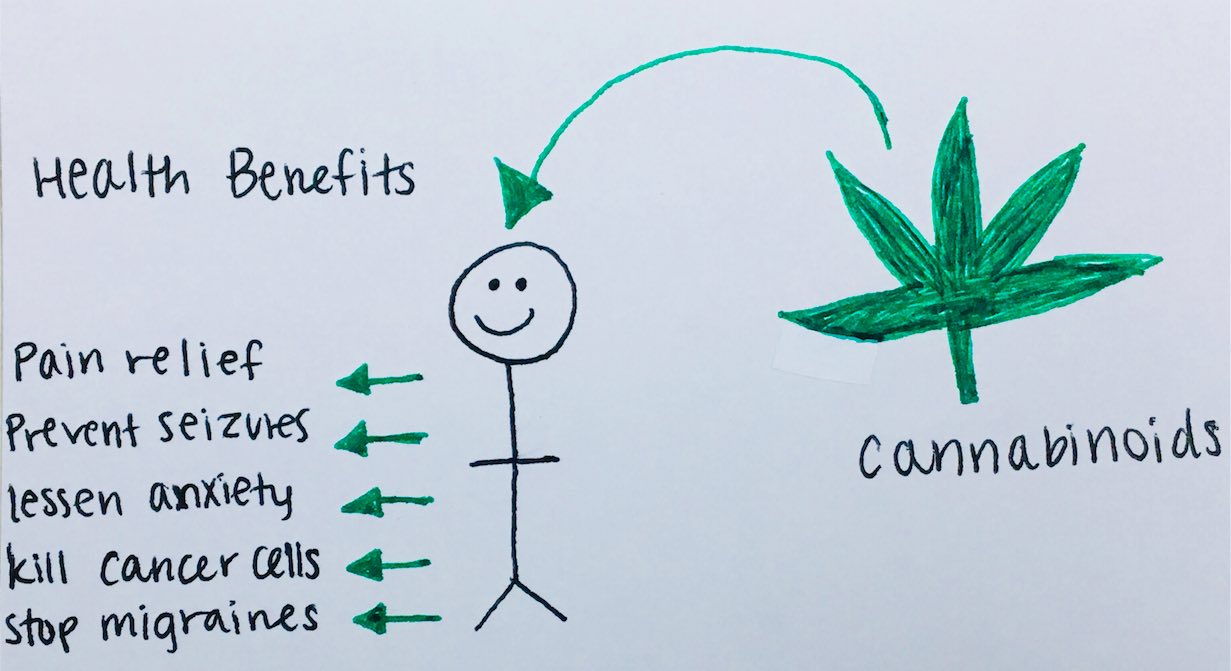
Endocannabinoids play a very important role in the inhibition of signaling throughout the body, and can therefore help do things like reduce pain, decrease anxiety, prevent seizures, stopping migraines and even killing cancer cells. Certain medications increase the effects of endocannabinoids by inhibiting the enzymes that degrade them. Other medications will target the reuptake receptors so that endocannabinoids will remain in the synaptic cleft for longer and their effects will last longer.
The role of marijuana
In addition to these medications, the cannabis plant (marijuana) could be used to increase the levels of cannabinoids in the body. The cannabis plant contains over 60 cannabinoids related to THC, including cannabidiol, cannabinol, and β-caryophyllene. Cannabinoids can be inhaled or ingested, and once in the body will bind to the endocannabinoid receptors in a similar fashion as the endocannabinoids. This leads to inhibition in the pre-synaptic neurons as well as the activation of pathways in the post-synaptic neurons.

Figure 1. Endocannabinoids, anadamide (AEA) and 2-AG, binding to the CB1 receptor on the pre-synaptic neuron and inhibiting the release of neurotransmitters into the synaptic cleft.

Figure 2. The health benefits of consuming exogenous cannabinoids such as THC and cannabidiol.
Medical marijuana?
Given this information, medical marijuana sounds like a great treatment option for many people dealing with chronic pain and other health problems. The only issue is that the current medical marijuana contains THC, the main active ingredient in marijuana. The cannabinoid THC has many health benefits, but it also produces psychoactive effects, which can prevent someone from going to work. There needs to be more research conducted to create a cannabinoid painkiller that doesn’t cause a high.
Improvements with treatment
There needs to be more research on finding a cannabinoid that has health benefits, but does not cause the psychoactive symptoms. Currently research is difficult for scientists because the regulations on marijuana are so strict that researchers have limited access to the plant. Marijuana is currently listed as a schedule 1 drug, along with other substances such as heroin, ecstasy and LSD, meaning it is a highly controlled substance.
Hope for cannabinoid medication
A better, safer form of medical marijuana needs to be developed so that the FDA will approve it and then medical insurance can cover it. Once it is safer to use, the access to it will also improve because more locations will be able to dispense it. The development and legalization of medical marijuana would be very beneficial to many people dealing with chronic pain, anxiety, migraines, seizures, and even cancer.
For more information on endogenous cannabinoids, please visit:
https://moodle.cord.edu/pluginfile.php/625296/mod_resource/content/0/endocannabinoids.pdf
Figure 1. Image address: https://resize.mantisadnetwork.com/mantis-ad-network/image/fetch/w_750,q_75,c_limit,f_jpg/http://uploads.medicaljane.com/wp-content/uploads/2015/06/health.png
Medical Marijuana: The Highs and Lows
Marijuana & the Brain
You’ve likely heard about the concept of medical marijuana and its accompanying politics, controversy, and potential benefits. Marijuana is a drug that contains a variety of compounds including THC, which is the part that causes the “high-effect” known of marijuana. In the brain THC, acts on receptors of the endocannabinoid system (ECS). The human body has THC-like compounds that are made naturally within the cell. When the ECS is activated it can cause various biological changes in the brain that cause things like apoptosis, inhibition, anti-inflammation, and increased appetite.

THC has various medical effects that it induces through the ECS. These are a variety of things that people are looking into acquiring marijuana to help them deal with. This includes pain management, stress relief, seizure treatment, and an anti-cancer treatment. People are even wondering if medical marijuana could be the answer to the rising opioid issue. With all of these benefits, why is marijuana so slow on being legalized? Why is it not being more extensively researched? Why does society think marijuana is such a big and bad deal? Why is simply being in possession of a substance that may have health benefits a felony that has a consequence of incarceration for years?

Current Research & Legal Status
According to the FDA, “23 states have statutes recognizing “medical marijuana”, 4 states and DC have approved recreational marijuana, and 13 states have statutes recognizing cannabidiol for medical use” as of March 2016. This appears to be steps being taken towards the decriminalization of marijuana, but movement is slow. Even if it becomes legal by state to use marijuana in either a medical or recreational form, it’s still a longways from marijuana to become fully accessible to all that would benefit. Marijuana is not approved by the FDA, so that makes obtaining it difficult. In order for a doctor to be able to prescribe it they have to have a special license and since it isn’t approved insurance doesn’t cover it.

In order for the FDA to recognize marijuana, more research needs to be completed. The FDA has marijuana regulated as a schedule 1 substance because it has high potential for abuse, no currently accepted medical use, and a lack of accepted safety for use under medical supervision. The different schedules are listed in a figure below. Due to this regulation, any clinical trials and research into marijuana requires special registration with the DEA, in addition to the numerous hoops already in place by any FDA approved clinical trial.

Marijuana hasn’t been accepted officially in medical use because there aren’t adequate and well-controlled studies proving its efficacy. But, how can marijuana become a medical treatment if research is so difficult to complete with all the regulations. Current research is working on two compounds, cannabidiol (CBD) and tetrahydrocannabinol (THC), and a couple drugs are also in clinical testing, Sativex for cancer pain/spasticity and Epidiolex for childhood seizures.
Going Forward
So, before marijuana is legalized in the U.S. more research needs to be done. More research into the compounds that make up marijuana might indicate a better compound to use for medical benefits without any of the other side effects. Also, looking into what method of administration would be best for achieving the benefits as well as being easily regulated is important. Then, there is of course the need to look into any adverse effects of even the medical compounds of marijuana. So, bottom line is…more research is needed before much more can happen.
For more about marijuana and the brain: https://www.researchgate.net/publication/235894864_Endogenous_cannabinoids_revisited_A_biochemistry_perspective
Feature image: http://alphanewsmn.com/lawmakers-think-high-time-medical-marijuana-legislation/
10 benefits image: http://dirtyworldnews.com/us-medical-marijuana-legalization/medical-and-health-benefits-of-marijuana-and-cannabis/
Legalization image: https://moneymorning.com/2016/11/09/map-states-legalizing-marijuana-in-2017/
FDA Schedule image & info: https://www.fda.gov/downloads/AboutFDA/CentersOffices/OfficeofMedicalProductsandTobacco/CDER/UCM498077.pdf
What You Need to Know About Concussions
What do concussions do to your brain?
One big reason concussions are so dangerous is that they cause an influx of ions going into your neurons. What does that mean? Ions are used by your neurons to send information from one area to another. Your brain uses a lot of its energy (ATP) to make a gradient of ions that allows information to travel quickly. So when you mess up the gradient of ions, your neurons cannot properly send information from one area to another. Because of that we see the decrease in attention, headache, and pain with light.

Which sports have the highest concussion cases?
- Cycling
- Football
- Baseball/softball
- Basketball
- Water sports
- Powered recreational vehicles
- Soccer
- Skateboarding
- Exercise
- Skiing, sledding, snowboarding
These rank the highest visits to the ER due to concussions, this does include doing the sports for recreation.
What should you do after a concussion?
- Avoid your triggers
- SLEEP
- Don’t think hard, study, or learn new material
- Take your time and DON’T rush your recovery
Measuring the Impact on the Brain: Concussions and How to Recover
Brain Injuries
Concussions are considered to be TBIs (traumatic brain injuries). Most concussions are mild, but they can scale up to severe depending on the intensity and symptoms of the injury. The impact of the brain on the skull causes membranes and axons to get stretchy, leading to a disruption of ion movement. This imbalance of ions, known as the energy crisis takes 7-10 days to return to normal, at which point it is typically considered safe to return to play for athletes. The increased ion flux also leads to migraines, often a symptom of concussion.

Energy Crisis
- This is the increased risk of subsequent concussions due to ion imbalance
- First 10 days post-injury are the greatest risk for permanent brain injury and subsequent concussions
- If subsequent mTBIs occur before full metabolic recovery, more severe hypometabolism and memory impairment
- Reduced glucose metabolism causes the increased risk
Concussion Horror Story: Chronic Traumatic Encephalopathy
Chronic Traumatic Encephalopathy is a degenerative brain disease that is most commonly found in athletes, veterans, and others with a history of brain trauma. CTE has gained attention due to the increasing publicity of NFL players suffering from this disease and its symptoms. Symptoms include: memory loss, confusion, impaired judgment, impulse control problems, aggression, depression, and paranoia. Cognitive symptoms tend to appear later than mood and behavioral symptoms, usually in the patient’s 40s or 50s.
In CTE, tau forms clumps due to impaired protein degradation mechanisms. These clumps spread throughout the brain, causing neuronal cell death. Hundreds to thousands of hits to the head cause this tau accumulation over time, with the best evidence pointing towards sub-concussive impacts rather than full-blown concussions. There are also several risk factors that make a person more susceptible to developing CTE, such as age of first exposure to head impacts and length of exposure to head impacts.
Diagnosing a Concussion
Immediate Post-Concussion Assessment and Cognitive Testing (ImPACT) is an online neurocognitive assessment with two components: a baseline test and post-injury testing. These are used together to assist in determining whether it is safe for a patient to return to an activity. This test measures key aspects of cognitive functioning such as memory, speed, and spatial span. The post-injury testing is used to help health care providers determine if it is safe to return to play.
The SCAT test is another diagnostic tool for concussions. It is very similar to the ImPACT test, although it is not administered online.
Safety Measures and Recovery
- Avoid too much cognitive stimulation
- Avoid contact activities that have a chance of receiving another concussive impact
- Do not take pain relievers, as these will mask symptoms, making health assessments inaccurate
- Be honest about symptoms, your brain is more important than playing in your next practice/game/match/contest
- Rest your brain and body
- Avoid driving too soon, your reaction time will be slower than usual