Artstract by A. Griffith – Created with OpenAi
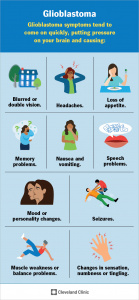
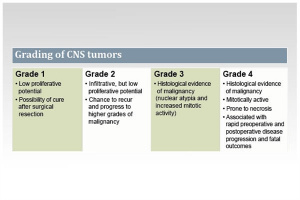
Glioblastoma (GBM) is an aggressive and malignant form of glioma tumors and has one of the worst cancer survival rates. [1] Glioma tumors include any brain tumors that derive from glial cells. They can also be classified as the specific type of glial cell the tumor arises from. Glioma tumors are the most common type, accounting for about 33% of brain tumors. [2] They can be malignant or benign and, like all brain tumors, are categorized into 4 grades of varying level (Figure 1). Glioblastoma is classified as the highest grade, “Grade 4,” which is characterized by quick division and growth that is very aggressive. [3,4]
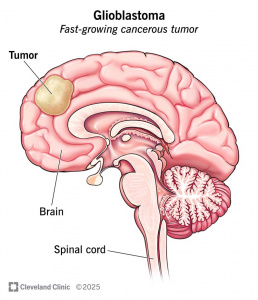
GBM is separated into four subtypes: classical GBM, mesenchymal GBM, proneural GBM, and neural GBM. Each subtype is connected to different gene mutations, except neural GBM which does not seem to have a consistent pattern of mutation and has the worst survival rate. GBM is extremely lethal, and new treatments are continuously being researched to potentially extend life and get rid of this cancer. Current treatments include radiotherapy, temozolomide, and surgery, but they are not very effective, and tumors almost always recur within six to nine months. [1]
Development of GBM
Complicated to Treat
Glioblastoma is difficult to treat for a variety of reasons. First, the blood brain barrier (BBB) prevents many treatments from being able to penetrate and get where they need to go to be effective. In addition, glioblastoma spreads very quickly, so even when treated, there are often cancer cells that have already gotten to neighboring areas that are left untreated. Another part of what makes glioblastoma so difficult to treat is the amount of signaling pathways that are involved. Studies have found that targeting one signaling is often not effective because the cancer can adapt to using the other signaling pathways even more. There are three primary pathways thought to be involved in GBM: PI3K, MAPK, and cAMP. [1]
PI3K and MAPK Pathway
The PI3K and mitogen activated protein kinase (MAPK) pathways are amplified in GBM. The PI3K pathway is involved in cell differentiation, adhesion, motility, invasion, proliferation, and survival. The MAPK pathway is involved in cell proliferation, cell survival, and metastasis. Therefore, hyper activation of these pathways lead to tumor growth and spread. Both pathways are involved in immunosuppression, implicating immunotherapy as a possible treatment approach. Additionally, these pathways help regulate one another, augmenting the problem as they both become altered and affect one another. [1]
cAMP Pathway
Unlike the other two signaling pathways mentioned above, there is a decrease in cAMP signaling seen in tumors. There is a correlation between the malignancy of the tumor and the decrease in signaling – GBM has one of the larges decreases in cAMP signaling. The decrease in cAMP signaling may be due to alterations in the expression of adenylyl cyclase and phosphodiesterase which are involved in this pathway. There is also a possibility that cAMP activation inhibits the MAPK pathway, connecting the decrease in cAMP and increase in MAPK signaling. [1]
In the article “Understanding and exploiting cell signalling convergence nodes and pathway cross-talk in malignant brain cancer” by Fung et al., treatment approaches targeting all three of the pathways discussed above are emphasized. Continued research is crucial for the prevention and treatment of this currently lethal cancer.
Footnotes
[1] Fung, N. H., Grima, C. A., Widodo, S. S., Kaye, A. H., Whitehead, C. A., Stylli, S. S., & Mantamadiotis, T. (2019). Understanding and exploiting cell signalling convergence nodes and pathway cross-talk in malignant brain cancer. Cellular Signalling, 57, 2–9. https://doi.org/10.1016/j.cellsig.2019.01.011
[2] Brain Tumor Types. (2021, November 8). https://www.hopkinsmedicine.org/health/conditions-and-diseases/brain-tumor/brain-tumor-types
[3] Gliomas | Loma Linda University Health. (n.d.). Retrieved April 22, 2026, from https://lluh.org/conditions/gliomas
[4] Brain Tumour Research | Together we will find a cure. (n.d.). Brain Tumour Research. Retrieved April 22, 2026, from https://braintumourresearch.org/
[5] What Is Glioblastoma (GBM)? (n.d.). Cleveland Clinic. Retrieved April 22, 2026, from https://my.clevelandclinic.org/health/diseases/17032-glioblastoma
[6] Gliomas. Cancer Therapy Advisor. (2013, June 11). https://www.cancertherapyadvisor.com/slideshow/slides/gliomas/
