Anxiety Disorder(AD) is more common than you think in today’s society. According to Anxiety & Depression Association of America(ADAA), anxiety is the most common mental illness & affects nearly 20% of adults in America (40 million). In my opinion, the way parenting is today and what is lost at the molecular level do to unlearned behaviors is detrimental to a normal healthy life. ADAA also supports my opinion with them stating that life events can cause AD to develop. Although many would argue that multiple issues can lead to signs of anxiety, I think life experiences and the brain chemistry that is built from that is what can help produce LTP or plasticity in the brain, but with the right balance of activity.
Now there are many types of anxiety, but to keep it simple and in a broader sense, anxiety disorder (AD) is how I will refer to it. For those of you that don’t know, there are multiple ways of treatment. Medication is one and there are a couple others, but I believe direct therapy like exposure therapy or cognitive-behavioral therapy is the best way to lessen or diminish AD. These therapies really work on the individual and puts them in charge. They get to learn skills that are important to life, and they practice them over and over again until they have nearly perfected them. More specifically, exposure therapy throws objects of fear into play and as this gradually happens, the sense of fear and anxiety a patient once had, diminishes, thus, altered brain chemistry or plasticity is created.
So we know some therapies to treating AD, but lets get back to how parenting can lead to an unhealthy life. Children need everything today. They want, want, want, and many times, they get! Children also get assistance easier whether that’s a quick phone call to their parents or just the fact that parents are more consumed now-a-days with their children and they are only a room away. Essentially, what I mean by this is children, as well as teenagers and even adults who have parental supervision, are over protected, and I have personal experiences to support it.
I grew up in a neighborhood full of children and teenagers, with my brother and I being some of the oldest on the block. We noticed which houses had parents that were more relaxed when it came to letting their children come and play baseball or ride bikes until it was dark. But we also noticed the kids that had to be home for dinner, and then stay in, or be home by 9pm with no exceptions. Sometimes some parents would even just say no to outside play time somedays (like why?). Now, of course, this wasn’t the case for my brother and I. We stayed out late, we got in trouble, we did some crazy things; we even attempted to start a mini fire in what looked like a fire pit, but it was in our local park (fire is awesome when you are a kid) near the playground and was simply just someone who dug up a small hole and put sticks and debris in it.
That day at the park, we got escorted back home by our local police (now we were maybe 10 and 12 years old) and with my parents, we all had a nice long talk. What did my brother and I learn? Well, next time we should have ran when we had the chance…KIDDING! No, we had our first in counter of doing something illegal at our city park as well as that fire isn’t something to mess around with! Now this is just one life experience, but it changed the way we both thought and lead to future ways of coping with certain decisions. It created dendritic growth (neuron growth) thus more plasticity/proper LTP in our brains—learned behavior. Experiences like these are needed in everyone today, and I think parenting is leading the wrong way just because they want to make sure their offspring aren’t hurt and are safe, but we all need to live a little (thanks mom and dad). Having life experiences outside your room and beyond your parents can help avoid Anxiety and its subtypes, and can lead to a healthy life that everyone wants to experience.
The Resilient Brain
We live in a world where tragic headlines cover the front page of every newspaper and early morning news segments are filled with stories of violence and hate. We live in a world of constant technological and scientific advancements that slowly pace ahead of us, where good is not good enough and perfection seems to be only temporary as we struggle to create more, do more, and be more. We live in a world where poverty and hunger seems to be the new normal, with more and more people every day careworn, unable to fulfill their basics needs of survival.
It should not be surprising then, to say that we live in a world full of stress.
Fortunately, we know that as humans, we have an innate psychological response to stress, helping us to survive and cope with the struggles that life hands us. However, while some people are able to adapt to particular stressors, others are unable. So, what makes one person more resilient to stress than another? Recent neuroscience research has pointed to brain.
Stress and Resilience Defined
According to Medscape Psychiatry, stress can be defined as the consequence of a physical, chemical, or emotional stressor that requires us to either adapt or suffer physical or mental strain or tension. Resilience then, is the quality that prevents specific individuals who are at risk for maladaptation and psychopathology from being affected by these problems.
An individual’s vulnerability to stress and capacity for resilience is complex, reflecting a variety of factors including the biological, genetic, and environmental risk/resilience factors.
Trauma and PTSD
Recent studies have used imaging techniques to peer inside the brains of trauma victims who experience PTSD, and those who have experienced trauma but not develop PTSD. These studies report that in people with PTSD, the hippocampus, a brain region important for memory, and the anterior cingulate cortex (ACC), a part of the prefrontal cortex that is involved in reasoning and decision-making, are sensitive to stress shrink.
On the other hand, people who have experienced trauma but do not develop PTSD, show more activity in the prefrontal cortex, and a stronger connection between the ACC and hippocampus. This has lead research to believe that resilience may be dependent on the communication between the reasoning circuitry in the cortex and the emotional circuitry in the limbic system.
(For more information on these studies, click here.)
Coping Mechanisms
Neuroimaging studies have also looked specifically at the coping mechanisms individuals use when subject to stress and how they relate to the brain. Research on this topic has found that people with more neuroplasticity and neuroflexibility in the ventral medial prefrontal cortex, a region of the brain involved in emotional regulation, were less likely to use negative coping strategies and respond to stress in emotionally destructive waves (e.g. binge drinking and overeating). The results suggest that this specific area in the brain is involved in wresting back control during times of stress – a key aspect of resilience.
Teaching Resilience
While efforts are being made to develop novel drugs for psychiatric illnesses such as anxiety, PTSD, and depression, in the meantime, it might be helpful to think about how we foster resilience in our youth in hopes of preventing future adverse reactions to increased stress or trauma.
Erasing Memory as Potential Treatment for Anxiety and PTSD
Should scientists be able to prevent memory formation? If you could have one of your memories erased, would you? Do you think that there is a place for this in a clinical setting? What about victims of rape and other crimes or soldiers with PTSD? Where do we draw the line?
Due to a recent discovery in a study by Madroñal et al., these are questions that we now need to ask ourselves. Their experiment hoped to bring to light the role that the dentate gyrus (DG), a region of the brain within the hippocampus, was thought to play in memory recall. Through their research they discovered that the dentate gyrus played a different, unexpected role. The scientists discovered that “inhibition of DG is associated with a rapid and persistent loss of memory.”
In a normally functioning brain, information received by the brain is relayed through the dentate gyrus to another region of the hippocampus, the CA3, where it is encoded. This information can then be retrieved as a memory through Schaffer collateral projections that link the CA3 to another region, the CA1. However, if the dentate gyrus is inhibited (Madroñal et al. used a specific serotonin receptor agonist) the information cannot be relayed to the CA3 and the memory is lost.
Based on this finding, the researchers concluded that, “our findings demonstrating generalization of DG inhibition-induced memory loss across tasks coupled with our identification of an endogenous pharmacological target that can induce similar memory loss raise the possibility that the novel memory mechanism we have uncovered may be useful for erasing unwanted memories in a clinical setting.”
Moving from blocking the formation of memories to erasing memories that have already formed may be quite a leap, but there is potential for it and the clinical applications would be numerous. A person with anxiety because of the traumatic experience he had in fifth grade could forget it and potentially lessen the anxiety. A victim of rape could forget about the experience completely and hopefully move on. A soldier with PTSD could live the rest of his life without memories of the horrors of war.
It is still unknown if these things are possible, but further research on the subject could reveal ways for it to happen. It would be a controversial treatment that could involve surgery or drug administration; however, the benefits have the potential to significantly outweigh the risks. It will be interesting to see what other discoveries will surface in the coming years.
As scientific research uncovers more about the inner workings of the brain and the rest of the body, we will encounter more ethical dilemmas like this one. Current and future physicians and policy makers will have to make some decisions on controversial matters that will change medicine.
Anxiety: What Can You Do?
According to the ADAA, anxiety disorders are the most common mental illnesses in the United States, affecting about 40 million adults. I commonly hear people talking about how their anxiety levels are “through the roof” due to school or other events that are going on at the time. Most of the time it is said in a joking manner through passing conversation, but it is important for people to recognize that anxiety is real and hits home for many people.
So, what can you do as an individual to help others experiencing anxiety?
Well, you can start off with learning the basics about the disorder.
Anxiety is defined as a feeling of worry, nervousness, or unease, typically about an imminent event or something with an uncertain outcome. Most people tend to worry, but individuals with anxiety excessively worry about many things at the same time. Anxiety does not come in one flavor, in fact there are many different types of anxiety that someone can experience, which all have their defining characteristics. A common anxiety disorder is generalized anxiety disorder (GAD), which is characterized by persistent, excessive, and unrealistic worry about everyday things. Another type is social anxiety disorder, which is the fear of being scrutinized and judged by others in social or performance situations. This is NOT just being shy, but much more so than that. Some other anxiety disorders worth mentioning are panic disorders, OCD, and PTSD. Anxiety disorders can develop from a complex set of risk factors, such as genetics, brain chemistry, and environmental factors.
Back to the real question then, what can you do to help someone experiencing anxiety?
Once you have recognized the prevalence of anxiety in a particular individual, find a way to approach them and let them know you are there to help. By giving
someone a safe space to talk and share feelings, it might serve as a much needed de-stressor that they did not know was available. Feeling that you are alone with a disorder like anxiety can just increase the negative effects on everyday life. If the person is not willing to talk, you could point out resources for them to access in order to get help with their disorder. For example, on college campuses, there are counselors who are more than willing to help struggling students. You could also recommend apps that they can download onto their phones that will take them through steps in order to decrease their feelings of anxiety (HelloMind and Anxiety Free are two options). This may be a good option since our world runs on technology now.
It is important to remember that everyone experiences anxiety differently, so your approach will need to be molded to the individual you are reaching out to. I hope with this tidbit of information you will be able to make a difference in someones life who is battling anxiety.
Connecting Stress, Inflammation, and Depression
Stress has been associated with Depression for a long time. The occurrence of major negative events over life, especially early life, has been shown to be strongly associated with developing Major Depressive Disorder. However, a mechanism explaining this connection has and continues to elude the scientific community. A recent review article titled From Stress to Inflammation and Major Depressive Disorder: A Social Signal Transduction Theory of Depression proposed A Social Signal Transduction Theory of Depression. Overall, this hypothesis connects stress to inflammation, and then inflammation to MDD. Detailing a mechanism provides a basis for future treatment and understanding of MDD and its development.
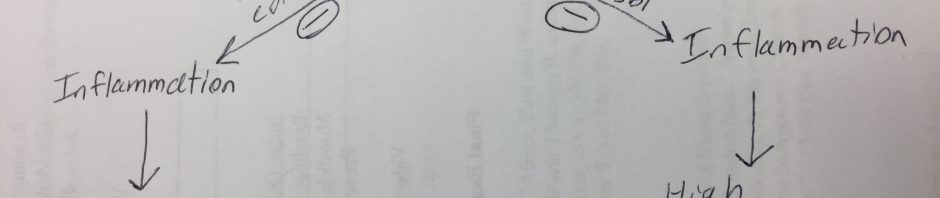
The overall goal of this paper was to show that stress can induce inflammation, which can then induce depression-like symptoms. First of all, what is inflammation? Inflammation is the body’s natural immune response in response to a pathogen, injury, or another external stimulus. Our body sends signals from the brain to our immune cells in order to modify protein production, transcription and translation, and create an inflammatory response. The response is the gathering of immune cells to an area and its eventual repair/disinfection. For our purposes, the stress response to major life events that are known to correlate with depression are important, like social exclusion, loss of job, loss or relationship, etc….What is supposed to happen is seen below, the brain perceives a threat, releases cortisol which prepares the body to deal with the threat by inducing that flight or fight response while at the same time depressing inflammation response. After the threat has been taken care of, the cortisol levels drop and cytokine levels rise (increased inflammation) to deal with the likely injury of said stressful event. What happens in the proposed hypothesis is that glucocorticoid resistance develops in the immune cells of the body. Like insulin resistance in Diabetes, glucocorticoid resistance leads to immune cells not responding to their signal. Effectively, this removes the suppression of inflammation from cortisol released during stressful events. This leads to elevated basal levels of inflammation markers in the body (simply meaning more overall inflammation) due to lack of suppression and can actually lead to increased levels of cortisol. This increase in cortisol has to happen so the body can still maintain the functionality of cortisol through the developing resistance. As you can see, this can turn into a snowball effect. Increased stress and cortisol lead to resistance, resistance leads to the need for higher amounts of cortisol, more resistance and it continues.

The pairing of inflammation and depression isn’t as straightforward. Because a simple, obvious mechanism of interaction isn’t easy to see, the connection must be shown through large studies and experimentation. The first body of evidence to jump out is that there are several inflammation-related disorders that co-occur with depression, including asthma, arthritis, metabolic syndrome and more. Secondly, elevated levels of inflammatory activity are seen in patients with depression. Certain cytokines present in an inflammatory response can reduce serotonin and other neurotransmitters by decreasing the availability of the precursor. The administration of certain inflammation agents into mice show the development of depression symptoms. Possibly the biggest piece of evidence for this connection is the effectiveness of anti-inflammatory agents in alleviating depression, like aspirin.

The article’s social signal transduction theory is depicted above. First, a social-environmental experience indicating a threat or adversity experience and processed in the brain. Then a brain signal goes out through the hypothalamic-pituitary-adrenal axis (2), sympathetic nervous system (3) and efferent vagus nerve (5).This leads to the production of glucocorticoids (cortisol), epinephrine, and acetylcholine respectively. Glucocorticoids and acetylcholine are anti-inflammatory, and epinephrine is pro. These effects are produced by transcription modification of immune response agents (6). Cytokines then pass through the blood-brain barrier at leaky spots (6). And then finally, cytokine stimulation of primary afferent nerve fibers to the vagus nerve relays info about mood, motor activity, motivation, and much more. This novel mechanism presents a better way of understanding depression, including its development, treatment, mechanism, and interaction with other diseases. Inflammation in the brain is a new topic that is involved in many other disorders beyond depression and further research detailing it and its effect on the brain may open the door for treatment of a variety of illnesses.
Exercise’s Influence on Anxiety
Exercise is a familiar phenomenon when it comes to living a healthy lifestyle. The general population understands the idea of exercising for 30 minutes per day along with eating healthy is recommended in order to live a healthy life. Much research and publicity have been put into the benefits of exercise. Some of the well-known benefits include, but are not limited to, mood improvement, an increase in energy, prevention of health problems, as well as memory improvement. With anxiety, exercise has been shown to reduce the perception of stress, be a coping mechanism, and improve mental health in general. Exercise is divided into three categories; aerobic, anaerobic, and flexibility. Each category is further divided into mild, moderate, and intense levels.
Some of the ways stress affect the brain is understood. Stress induces a high concentration of corticosterone hormone in order to decrease inflammation within immune cells in the brain. Within anxiety, however, resistance to corticosterone hormone can be seen within the immune cells in the brain resulting in a need for an even higher concentration in order for a decrease in inflammation. However, there are categories of exercise which have been shown to have different effects within human and animal studies on anxiety.
Mild/Moderate exercise counteracts stress behaviors by changing neural activity, however, the mechanism is not understood yet. This would include exercise like walking, jogging, swimming, lifting, etc. for a shorter period of time than intense exercise. Post-Traumatic Stress Disorder (PTSD) has been linked to reduced hippocampal volume whereas regular exercise has the opposing effect by increasing cognition, working memory, hippocampal neurogenesis, and an increase in BDNF. Military veterans suffering from PTSD show that the majority also have anxiety and/or depression. A barrier PTSD veterans face for treatment is the stigma, access, and cost for treatment, but an alternative treatment a study completed with veterans suggest exercise as a management option. Within nonveteran patients with PTSD, exercise was also shown to alleviate the symptoms of the disorders, including anxiety and depression.

Intense and/or forced exercise has been shown to have the adverse effect by increasing the stress level within animal studies. Chronic stress is reported to suppress neurogenesis and negatively impact hippocampal function. Stress may lead to stem cells being differentiated into astrocytes rather than neurons within the dentate gyrus of the hippocampus. Therefore, the rate of new neurons decreases. Intense exercise is defined as above lactate threshold. Lactate has shown a critical role in long-term memory by being involved in growth-factor signalings, such as BDNF, and expression of genes. Studies done with mice show exercise above the LT and exercise forced by shocks resulted in higher stress shown by an increase in corticosterone and adrenocorticotropic hormone concentration and produced lower results for hippocampal neurogenesis in mice. Stress from exercise indicates that exercise benefits have a lessened effect on the management of anxiety. Therefore, intense and/or forced exercise can be shown to lower hippocampal neurogenesis and not help in the management of anxiety through the stress that is caused by an intense and forced type of exercise.
The Stigma Surrounding Anxiety
What I see when I look at my daily schedule is a full day with a helping of fun, a dash of not so fun, a handful of hard and a sprinkle of stress. However, to others that sprinkle of stress can look like a 10 pound bag of sugar ready to crush them.
This week we learned about the pathways in the brain that make these strong associations with stress, and actually it has a lot to do with making memories.
Johannas Reul published a paper in 2014 about the epigenetics and signaling pathways in stressful events. He found that stressful events can lead down two different pathways. One side of the pathway being activated by corticosterone and one by glutamate, and both ending in transcription of genes that handle stress. The findings conclude that stress may lead to stronger memories and so a higher prevalence of anxiety.
Researchers are also learning that anxiety disorders run in families, and that they have a biological basis, much like allergies or diabetes and other disorders. Anxiety disorders may develop from a complex set of risk factors, including genetics, brain chemistry, personality, and life events.
The Stigma
A study performed in 2009 found that stigma surrounding mental health disorders significantly decreases willingness to seek treatment.
Why would people choose to suffer in silence when many can access treatment? Thanks to the stigma surrounding mental health, many people find it difficult—and even shameful—to acknowledge that they have a problems with their mental health. Although these stigmas prevail, overcoming them is not only possible but also critical to recovering from anxiety and mental health disorders.
One way to do this is to combat mental health myths with facts. People with high levels of anxiety are often told to ‘toughen up’ because their psychological condition is viewed as a character flaw instead of a mental health problem that deserves professional attention. Some of these myths are debunked in a great article on Everydayhealth.com, with a link attached so you can understand some of the facts and begin turn the stigma around.
Whether you suffer from mental health problems or not, being an advocate for those with anxiety disorders in your workplace and communities can make a big difference in combating anxiety stigma. This is why I created this anagram about what I think people with anxiety disorders should really be thought of as.

Breaking free from mental health stigma is the first step to managing your anxiety. Exploring therapy, finding a community of people with similar experiences, and speaking with an anxiety specialist and/or doctor can help shake some of the entrenched shame that results from social and self-inflicted stigma.
The Rise of Anxiety on College Campuses
While scrolling through social media there is a high chance a person will come across some information or a quote about anxiety. This prevalence online is not abnormal, because according to the Anxiety and Depression Association of America (ADAA) anxiety disorders are the most common mental illnesses affecting the population today.
In America alone, there are approximately 40 million people living with these debilitating illnesses. However, only about one-third of these people will seek help. (ADAA, 2016). Why do you think this is? Is it fear of judgement?
Causes of Anxiety
The brain pathways that are involved in anxiety have been extensively studied. A paper published in the journal of Frontiers in Psychiatry explains some of the neurochemistry behind this mental illness.
Many studies in this field have involved animals, such as mice. The experiments being done are trying to figure out the mechanism behind anxiety and learning. Researchers are looking at whether experiencing certain events can cause anxiety.
One of the major findings by Johannas Reul was that stress and histone modifications can cause changes in gene transcription. Gene transcription affects any processes in your body, including the formation of memories. This finding shows that stressful situations may lead to more memories, which may be a connection to anxiety.
Treatment
There are a variety of treatments for anxiety. A person could go into therapy, take medications, or try alternative treatments. Everyone responds differently to treatments, but with this array of options there is something for everyone.
One well-known form of therapy is cognitive behavioral therapy (CBT). CBT will help individuals identify the problem, understand it, and come up with new ways of thinking and behaving when the problem arises (Anxiety and Depression Association of America, 2016).
There are numerous medications that can be prescribed for anxiety disorders. If one type does not work for a patient then the doctor can try another. There can be adverse effects, but medication is still an option for those who are willing to try it.
If there are his many options for help, why are only one-third of people seeking a solution?
Anxiety on College Campuses
Surveys done by college campuses have shown that one of the top concerns in counseling centers is anxiety (American Psychiatric Association, 2016). College can be a very stressful time, so it is understandable that this is such a frequent issue.
There are programs on many campuses that try to deal with mental illnesses, such as Active Minds. Programs like these can help raise awareness of the problem and fight the stigma that is associated with mental illness diagnoses.
Anxiety can take many forms, ranging from general anxiety to social anxiety and panic disorders. A large part of college is meeting new people and being in social situations, which can seem impossible for some people.
Other students will suffer from test anxiety. A student may study and prepare for hours, but if they suffer from this type of anxiety the effort may not show. There are ways to try to manage this anxiety, but it can be debilitating.
These are only a couple of the numerous anxieties that college students will face. There is a clear difference between stress and anxiety, and many college students need to take the time to learn more about this so they can seek help if they need it.
‘Intruders’ in the Brain!!
In a book titled, Surviving Schizophrenia: A Manual for Families, Patients and Providers, Dr. Edwin. Fuller Torrey, M.D., expertly highlights the confusion and misinformation about Schizophrenia in the following excerpt:
“Your daughter has schizophrenia,” I told the woman. “Oh, my God, anything but that,” she replied. “Why couldn’t she have leukemia or some other disease instead?” “But if she had leukemia she might die,” I pointed out. “Schizophrenia is a much more treatable disease.” The woman looked sadly at me, then down at the floor. She spoke softly. “I would still prefer that my daughter had leukemia.”
Though this paragraph was first published along with his book in 1983 and we have made significant strides in treatment procedures, and minimizing stigma to some extent, there still remains negative connotations, stereotypes, and a lack in knowledge and therefore empathy with respect to this disorder. In this piece, I will seek to better characterize schizophrenia by playing a detective whose armed with a flashlight and sets of to search for these ‘intruders’ in the brain.
What is Schizophrenia and what causes it?
- Well, it is a common and chronic psychiatric disorder that is major cause of disability globally and that distorts cognitive function with respect to physical behavior, expression of emotions, relation to others, and one’s perception of reality.
- Schizophrenia is a complex and multi-factorial disease, however recent research has implicated disruptions in the signaling of several pathways in the etiology of this disease, one of which includes the Wnt pathway. Here the activity of one of the pathway’s components, glycogen synthase kinase 3 (GSK3), is increased resulting in lower levels of β-catenin and consequently, inhibition of transcription factor (TCF/LEF) mediated transcription.
- Some genetic risk factors such as Copy Number Variations (CNVs) and single genes such as DISC 1 have been associated with Schiz0phrenia, and research data supports the notion that they do through impacting β-catenin- TCF/LEF mediated transcription and/or impacting brain size in the case of CNVs.
Who gets Schizophrenia and what is its prevalence?
- Schizophrenia is most likely to first arise in early adulthood, although rare cases of children and older adults have been recorded.
- Its rate of diagnosis increases in the teen years, with the risk heightening between 16 and 25 years. Patterns of susceptibility differ by gender, with men experiencing a heightened risk of diagnosis between 18 and 25 years and females between 25 and 30, as well as around 40 years of age.
- Globally, about 1% of the world’s population are living with Schizophrenia (70 million) and about 3.2 million Americans are living with this disorder today, of which about 100,000 more will be diagnosed with it in the United States this year alone.
- Approximately 200,000 individuals with schizophrenia or manic-depressive illness are homeless, constituting one-third of the approximately 600,000 homeless population (as per the Department of Health and Human Services). In other words, the 200,000 individuals mentioned above rival more than the entire population of many U.S. cities, such as Hartford, Orlando, Winston Salem, Ann Arbor, and Topeka.
- Approximately 90,000 individuals with schizophrenia or manic-depressive illness are in hospitals receiving treatment for their disease, as per data obtained from the Treatment Advocacy Center
What are the symptoms?
- Symptoms of Schizophrenia can be grouped into three categories: positive, negative, and cognitive symptoms.
- Positive symptoms amplify otherwise normal behavior e.g. delusions (strange beliefs not based in reality), hallucinations (perceiving sensations that aren’t real), and catatonia (being physically fixed in a single position for a very long time).
- Negative symptoms reflect an absence of normal behavior e.g. exhibiting a lack or limited range of emotion, withdrawal from social interaction, lack of motivation, poor hygiene, and loss of pleasure or interest in life.
- Cognitive symptoms include poor executive function, trouble focusing, and trouble with working memory.
In Fuller’s book mentioned above, a Schizophrenic patient describes his symptoms saying,
“For about almost seven years—except during sleep. I have never had a single moment in which I did not hear voices. They accompany me to every place and at all times; they continue to sound even when I am in conversation with other people, they persist undeterred even when I concentrate on other things, for instance read a book or newspaper, play the piano, etc.; only when I am talking aloud to other people or to myself are they of course drowned by the stronger sound of the spoken word and therefore inaudible to me.” (p. 34)
How is it diagnosed?
- Schizophrenia is diagnosed by Psychiatric and psychological sub-specialists who evaluate the patient in question using specially designed interviews and assessment tools.
- The evaluation is based on the patient’s family history of mental illness symptoms and the specialists observation of the patient’s attitude and behavior.
- For a confirmed diagnosis of schizophrenia the patients must display characteristic symptoms that last for at least six months.
How is it treated?
- The most common type of medications for it are anti-psychotics, which not only treat acute psychosis but also reduce the risk of future psychotic episodes.
- The treatment of Schizophrenia thus has two main phases: an acute phase that is characterized by high doses to mitigate positive symptoms, followed by a maintenance phase, which is life-long and during which doses are reduced to the minimum necessary to prevent further episodes and control inter-episode symptoms.
- Antipsychotics used in Schizophrenia can be classified into two subtypes: 1st Generation, and 2nd Generation antipsychotics.
- 1st Generation (conventional or typical) antipsychotics, are strong D2 (Dopamine receptor) antagonists. However, the effects of the drugs in this class on other receptors such as serotonin type 2 (5-HT2), alpha 1, histaminic, and muscarinic receptors are variable. These drugs have a high rate of extrapyramidal side effects such as rigidity, tremors, and Tardive dyskinesia (TD)- involuntary movements in the face and extremities.
- 2nd Generation (novel or atypical) antipsychotics, with the exception of aripiprazole, are also dopamine D2 antagonists, but are associated with lower rates of extrapyramidal adverse effects than the 1st Generation ones. However, the have higher rates of metabolic side effects such as weight gain.
- Other methods of treatment include: Psychosocial therapy (e.g. Rehabilitation and cognitive remediation), Electroconvulsive therapy, and Psychosurgery (e.g. Deep Brain Stimulation surgery)
So what now?
Schizophrenia has been dubbed the most chronic, debilitating and costly mental illness, which in the U.S. presently consumes about $63 billion a year for direct treatment, societal and family costs. Richard Wyatt, M.D., chief of neuropsychiatry at the National Institutes of Mental Health, has said that nearly 30 percent ($19 billion) of schizophrenia’s cost involves direct treatment and the rest is absorbed by other factors (e.g. absences from work for patients and care givers). It is necessary to invest public and private funds into research for the development of more effective treatments that minimize side effects, and it is imperative that we continue to combat the fear and stigma that surrounds this disorder. It is my firm belief that pursing both of the latter in concert would reduce the need and dependency on costly long-term psychiatric institutions, opting for family and community settings that encourage Schizophrenic patients to consistently take their medications and thus, better manage their symptoms.
In case you were wondering who the other intruder in the brain was, a Schizophrenic patient describes his in Fuller’s book saying,
“My greatest fear is this brain of mine….The worst thing imaginable is to be terrified of one’s own mind, the very matter that controls all that we are and all that we do and feel.” (p. 2)
We have a two pronged enemy in this disorder, the disease itself and fear. While our medications may partly manage to reign in this disease, our will can totally crush the fear and negativity that surrounds it. Join me in fighting these intruders which ever way you can!

The Dangers of Misdiagnosis of Schizophrenia
Schizophrenia is a mysterious disease, and although we seem to gain deeper knowledge into its quirks and idiosyncrasies, this only seems to lead to more questions and more mystery.
Considering our lack of knowledge on the cause of this disease, as well as its wide variety of symptoms and levels of severity, it is no surprise that schizophrenia is one of the most commonly misdiagnosed diseases. Symptoms of schizophrenia are very similar to symptoms of other diseases: bipolar disorder, obsessive-compulsive disorder, depression, PTSD, personality disorder, substance abuse, and the list goes on. In many cases individuals with one or a combination of symptoms common to many of these diseases may be wrongly diagnosed with various levels of schizophrenia.
Some additional misdiagnoses of schizophrenia include:
- In many cases, individuals with brain lesions/brain tumors or temporal lobe seizures can be misdiagnosed
- Addison’s disease, a disorder of the adrenal glands, has various symptoms and is commonly misdiagnosed in early stages
- Hypothyroidism
- Cushing’s disease may also have schizophrenia-like symptoms such as paranoia and delusions, leading to a misdiagnosis
- Manic Depressive Disorder
- Epilepsy
- Elderly patients can be misdiagnosed owing to symptoms of paranoia, when the underlying cause is really simple hearing loss. Due to their inability to hear properly what people are saying, elderly patients can become more prone to paranoia, believing that people are “whispering” about them
- Diseases similar to schizophrenia such as schizotypal, schizoid or paranoid personality disorder
While misdiagnoses are understandable on occasion, in regards Schizophrenia, this seems to occur far too often. It’s almost as if Schizophrenia becomes a blanket diagnosis because it could potentially explain so many symptoms.
This misdiagnosis becomes even more severe when we consider the prescription medications that accompany it.
Most often, Schizophrenic patients are treated with antipsychotics, antidepressants, and/or mood stabilizers. All of these can have serious side effects, including but not limited to:
- Sedation
- Hypotension
- Anticholinergic Effects
- Extrapyramidal Symptoms (i.e.Pseudoparkinsinism, Tardive Dyskinesia)
- Hyperprolactinemia
- Sexual Dysfunction
- Agranulocytosis
- Cardiac Arrhythmias
- Seizures
- Metabolic Syndrome Issues
According to the American Academy of Family Physicians, the use of antipsychotic medications entails a difficult trade-off between the benefit of alleviating psychotic symptoms and the risk of troubling, sometimes life-shortening adverse effects.
Perhaps in the case of true Schizophrenic patients, the benefits outweigh the costs of such medications. For some, it is impossible to function or live their lives without them. However, in the case of misdiagnosed patients, we are not only introducing them to these harmful side effects, but we likely are not treating their true symptoms either.
So how do we prevent this misdiagnosis?
Physicians have a difficult line to walk. Early diagnosis of true Schizophrenia is important, and such antipsychotic medications can be highly beneficial for these patients. However, incorrect diagnosis in an attempt to be efficient can do much more harm than good, leaving a misdiagnosed patient untreated and at the mercy of harmful drugs.
To begin with, doctors must consider the patient as human and not a set of symptoms. When is a strongly held belief a full blown “delusion” rather than just a different point of view? Not everyone who is paranoid is necessarily suffering from schizophrenia and it is crucial not to jump to conclusions.
To aid in this, the DSM –IV has several other possible diagnoses listed for paranoid personality types. Additional lists elsewhere have several alternative diagnoses for Schizophrenia. It is important to consider all of these during the diagnostic process. If a patient presents with 85% symptoms that point to Schizophrenia, perhaps it is worth looking into the other 15% before wrongly diagnosing.
Additionally, more emphasis on psychotherapy or “talk therapy” may alleviate some of the severity of a misdiagnosis. While it is never “good” to misdiagnose a patient, at least if such a patient were suggested to psychotherapy rather than prescribed antipsychotics, there would not be such harmful affects.