The legalization of marijuana in Colorado shows a stark turnaround in the way our society views the smelly green Cannabis plant. That just goes to show how far Colorado has fallen from the country’s moral backbone, right? As a country we have always considered marijuana the gateway drug that leads to more hard-core drugs like heroin and meth, but times are changing and people are beginning to see why it is not so bad.
Marijuana is not any worse than our other legal “vices.”
What makes a substance considered bad for the body is somewhat arbitrary, mostly depending if you care about maintaining flawless health ever day of your life. The majority of people in the United States indulge in alcohol, which is well-known for causing overdose, deaths related to intoxicated people’s actions, and chronic (long term) use related to health problems like liver disease, addiction, and mental illness such as depression and dementia.1 The list goes on.
Smoking cigarettes is another vice that everybody accepts to be bad. According to the Centers for Disease Control and Prevention, “cigarette smoking is the leading preventable cause of death in the United States, causing more than 480,000 deaths each year in the United States.” This is approximately one in five deaths. We let people smoke because we respect the right to let people do what they want.
Marijuana has long term consequences is never overdosed, except in extremely rare circumstances. It causes paranoia, anxiety, dizziness and makes you hungry. Long term, it possibly causes mental health issues, but there is no evidence for it. However, it can make pre-existence mental health issues worse.3 It is a misconception that marijuana use causes lung cancer, but there is no known link between the two.4
All three of these things are used because they make people feel good (although marijuana is also used medically). Using an analogy to analyze these three common vices, long term heavy marijuana use is like a dent in a car, while cigarettes and alcohol are head-on collisions.


Cannabinoids, a class of chemicals such as THC, are used medically.
Cannabinoids are chemicals like THC that are also found in Cannabis, which gives these chemicals their name. They have various medical uses such as reducing chemotherapy-induced nausea, chronic pain, and possibly neurological disease treatment.
The discovery of THC and it’s effects on the brain in the past eventually led scientists to hypothesize that there is an analogous chemical naturally found in our bodies that THC mimics to produce its effects. They were right. With further research the discovery of two different endocannabinoids (cannabinoids found in the body) — 2-AG and anandamide — has let to the subsequent description of a complex endocannabinoid system in our brains. The endocannabinoids are signaling chemicals for different cells that are found in the body.
The receptors for these chemicals are known as the CB1 and CB2 receptors. CB1 is found extensively throughout the central nervous system, such as the brain. The CB2 receptors is found throughout the body and is involved in the body’s immune response. Activation of the CB1 receptors by cannabinoids causes neurons to prevent further release of neurotransmitters such as GABA, serotonin, dopamine, and norepinephrine.Thus, endocannabinoids are being shown to play a significant role in the way our brain functions, which is why the study of different cannabinoids can lead to new medical applications that just haven’t been discovered yet.

THC and Cannabidiol are the two most-used cannabinoids medically. With all of their potential medical uses, they are only two of over 60 cannabinoid chemicals that are found in marijuana. The effects of the others are not as well known, meaning there could be many more uses for isolated compounds within Cannabis that we just haven’t discovered yet. Additionally these compounds can allow us to further understand how the brain functions.
Unfortunately, due to Cannabis being a Schedule 1 drug (defined as drugs with no currently accepted medical use and a high potential for abuse), research extremely hard to do for the vast majority of researchers. The long term consequences will be discovered through legalization, ultimately allowing us to make more informed decisions about how Cannabis affects our bodies.
Concussions: Why It Matters
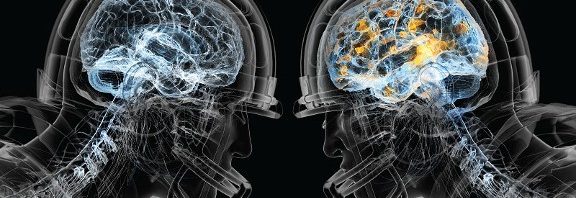
Concussion is a topic on the rise and with the increase in awareness by the movie Concussion with Will Smith. People need to realize a concussion is more than just getting a bump on the head. Rather it has other life-threatening effects too.
After receiving a head injury, membranes of neurons in the brain are subject to being broken and this causes an influx of calcium and sodium ions and an efflux of potassium ions. The increase of these ions causes an action potential to travel down the cell neuron and allow for calcium ions to enter the cell and release the neurotransmitter glutamate. To restore the neuron back to normal, the sodium/potassium pump kick into overdrive to restore normal ion concentrations in the neuron. The pump requires energy or ATP.

Energy Crisis
Since the sodium/potassium pump is in overdrive, it will consume more ATP than before causing hyperglycolysis. During this time ATP production is at an all-time high to provide energy for normal brain functioning as well as repairing itself. On average, it takes 7 to 10 days for an adult brain to heal itself. While it may take longer for younger brains.
The Key to Recovery
Rest is the key to recovering from a concussion.
Even if a concussed person feels fine after a few days at home. They are still susceptible to further concussions if they don’t wait for full 7 to 10 days.
While potassium, glutamate ions are back to normal concentrations within a day. Calcium ions are normal after 4 days, and glucose and cerebral blood flow are normal after 7 to 10 days. Cerebral blood flow is critical in supplying the brain with the right amount of blood.
Return to Play
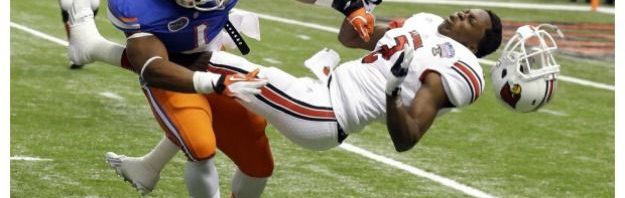
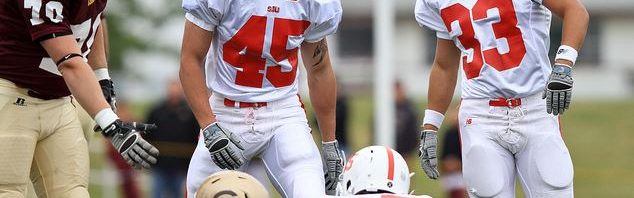
For athletes, it may be easy to get back on the field to help your team win and feed the desire for competition after receiving a hard hit and feeling a little dizzy. While the truth is they have a concussion. It takes 7 to 10 days for a concussion to pass, and going back on the field is more harmful than good. With the right steps, an athlete will return back onto the field, 100 percent both mentally and physically.
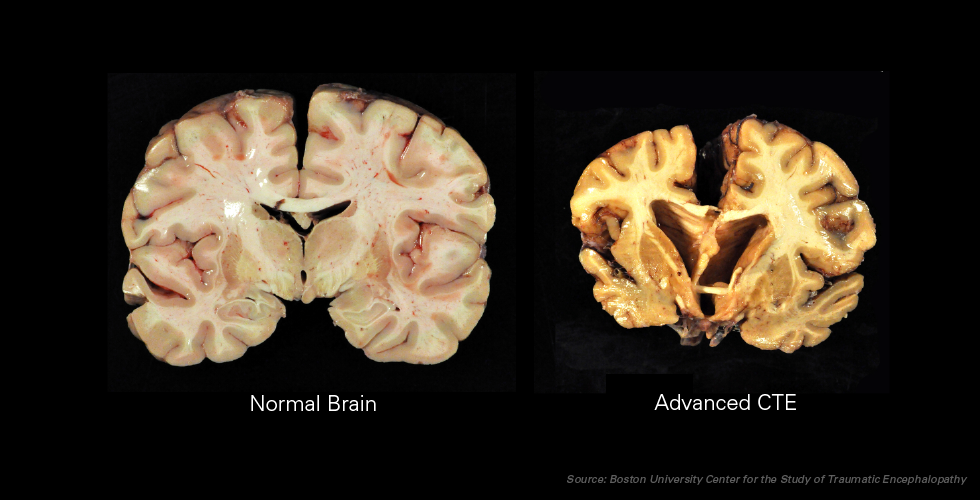
After receiving and recovering from a concussion, there’s still a sense to still being cautious about receiving concussions. Chronic traumatic encephalopathy (CTE), it is a degenerative disease of the brain found in people with a history of repetitive brain trauma. CTE is more serious than it sounds.
The symptoms of CTE include memory loss, confusion, impaired judgment, impulse control problems, aggression, depression, anxiety, suicidality, Parkinson and progressive dementia.

Image retrieved from: http://ami.org/meetings/2015/chronic-traumatic-encephalopathy/
Risk and Reward
Even though there are risks involved with impact sports. Kids or anyone in general, are encouraged to go outside and enjoy their time trying new activities. It’s better to know what can go wrong, and be knowledgeable when symptoms of a concussion arise to help protect kids and athletes. With better research and equipment in the future, it will help limit the problem of concussions from occurring.
Why are concussion so difficult to treat?
Concussions are not your typical sports injury
If a football player broke their arm or if a volleyball player sprained their ankle one part of the treatment is inevitably to rest. Really any injury should be followed by a resting period of that body part. If an athlete was to get a concussion treatment would, once again, call for rest. However, a concussion would call for the resting of the brain. If an athlete is on crutches or has an arm in a cast they still can talk to people, watch TV, get emotionally upset, read books, go to class and a number of other activities that will not lengthen their recovery time or hinder their ability to rest their injured body part. Concussions are a different story.
There is no cast for a “broken” brain
According to the Mayo Clinic, currently the best treatment of concussion is both physical and mental rest. They suggest to not do any type of physical activity or mental activity that requires concentration such as: playing video games, watching tv, schoolwork, texting and reading. The only treatment options in the form of drugs that the Mayo Clinic suggests is over the counter Acetaminophen (Tylenol) or Ibuprofen (Advil) for headaches following a concussion.
What it boils down to
Even though doing what the Mayo Clinic suggests has been shown to speed up recovery (compared to not doing what they suggest) actually resting the brain is much easier said than done. If a student athlete was to get a concussion how can you expect them to not text their friends, to not read a book, to not laugh at something funny or to not go to class. These are such regular occurrences throughout our daily lives and to completely stop can be very difficult for some people. What is takes is a dedication to the recovery and focused mind to simply rest. But don’t focus too hard!
Concussion: Prevention or Treatment?
Everyone already heard “Prevention is better than cure”. But when we are talking about concussion, things get more complicated.
First of all: What is concussion?
Concussion is a type of traumatic brain injury caused by a direct impact on the head. The impact initiates a series of chemical events inside the brain that leads the neurons (brain cells) to a “energy crisis”. First, the impact causes physical injury in the neurons, affecting the control of what comes in and what comes out of the cell. Then, with uncontrolled flux of chemicals, the cell goes down in an energy crisis. This energy crisis can lead to later impairment in cognitive functions as memory and learning. So, whenever you hit your head, you need to rest until your body restore the normal functioning of your neurons.
Researches have shown how repeated concussions are more harmful than a single concussion.

Due to that, much is said about playing Football, Hockey, and other sports that may lead to concussions. It is clear that these kind of sports can be violent and a lot of times harmful, but ending them will not end with concussions. People can have concussions in ANY situation: taking shower, walking in the snow, going down stairs, running, etc.
It is also important to highlight that sports are part of culture. Football is a great piece of American culture, and ending it to prevent concussions would not be effective and would be unfavorable to the whole culture.
So, in this case, would not be better to put efforts and to focus in the treatment of concussion, rather than the prevention?
A New NFL: Why Football Needs to Change
Anyone who’s a sports fan (or anyone who’s in touch with the news, for that matter) has heard of the current concussion issue in today’s sports. Whether it be football, boxing, or any other sport, there has been a dramatic increase in media attention towards brain injury. And that’s a good thing. It has now been demonstrated on multiple scientific platforms that repeated trauma to the brain can have severe long-term effects on mental health and stability. Most notably is Dr. Bennet Omalu’s findings in ex-NFL players’ brains after years of repeated concussions. Chronic traumatic encephalopathy, or CTE more commonly (pictured below), is the disease Dr. Omalu discovered in these brains, and it has been linked to the death of numerous players of various ages. This issue received so much attention that Dr. Omalu’s story was developed into a movie starring one of Hollywood’s biggest names Will Smith. So clearly, the safety of football players’ brains is a hot topic. The question then becomes, what can we do?
The answer is not to ban football. The answer will never be to ban football. Can you imagine America without the NFL? There would be extreme chaos on Sundays when football fans sit down to watch TV without knowing what to watch. However, there is a different approach the NFL and, really, all of football can take – change the game. Not even drastically, just enough to save the brains of the players. There have been some interesting ideas put forward since the dawning of the concussion issue, and I’m going to highlight two possible paths of change football can take: changing the style of play and changing the equipment players use.
Beginning with the idea of changing the style of play, I believe more issues are presented taking this route. I mean, changing a sport in today’s culture isn’t easy to begin with (as the NFL has realized), but to change the style of play altogether seems nearly impossible. However, I think an interesting route to take begins with the youth. When I see a young kid strap on pads and a helmet for the first time, I can see it in his eye that all he wants to do is hit another object, whatever that object may be. I don’t blame him either – he’s fully protected and has nothing to lose, right? But what if instead of having the luxury at that early age of being fully protected and given the opportunity to do basically whatever he wants with his
s body on the football field, he has to be more careful? What if, instead of ramming his head into the oncoming running back or linebacker, he has to think twice before doing so? What if (hear me out) he wasn’t wearing a helmet? It seems absurd, but think about it – the coaches are then given the opportunity to stress the importance of tackling form, not leading with the head, and looking out for your own safety at the same time. The game is played at such a slow pace compared to when the players get older that I think this would be an excellent chance to teach the younger kids how to properly and safely play the game. Then, when they reach the high school level, they’re given the helmet as simply a safety device instead of the weapon it is currently. Yes, it’s a risky idea and probably will not happen at this point in the evolution of modern football, but I think it’s worth thinking about.
The second option is to modify the equipment players use, and I think this route is much more practical. Already, the NFL is engineering new pads and helmets to save its players and their brains, but with the recent news of CTE emerging dramatically out of nowhere, I believe drastic equipment changes must be made. One really interesting idea is this helmet (pictured below), which is known as the “Inside Out Helmet.” Seriously, watch the attached video – it’s really cool what these engineers are doing to protect the brains of football players.

Here’s the deal with a helmet like that, however – concussions are going to happen. Always. As long as football is played, a wide receiver will run a slant across the middle of the field, get absolutely lit up by a linebacker, and end up with a concussion. Even if the tackle was perfectly clean and even if he was wearing an extremely protective helmet. People can’t get enough of those big hits. But as long as this player does not return to the game and gets adequate rest before returning to play, his brain should be fine in the long term. The players that are at most risk for developing long term disease such as CTE, actually, are the linemen. The guys that don’t get the attention or the spotlight. Their brains are more at risk because of the constant impact their heads take every play of every game. Although the impacts of these “sub-concussive” hits aren’t nearly as severe as the hits taken by players such as the aforementioned wide receiver, they are constant. They are chronic – thus, the name “chronic traumatic encephalopathy.” Therefore, with the implementation of an advanced helmet such as the Inside Out Helmet, I believe their brains will be significantly more protected, putting the linemen in far less risk of developing a serious disease down the road.
Whatever the case, it is clear football needs to change. Quickly. The issue of concussions and repeated brain trauma in players of all ages, especially in the NFL, is becoming so substantial that action must be taken right now. Don’t get me wrong, the NFL’s new concussion policy is a great first step and something that is undoubtedly necessary, but there needs to be more. There needs to be more protection, more education, and even more awareness. And I believe the two options I presented, although entirely speculative and absolutely unproven, could hold some weight in combatting this issue that our nation’s favorite sport faces.
Traumatic Brain Injury and Seizures
A very common problem after a traumatic brain injury (TBI) in an individual are seizures. Seizures are defined as uncontrolled electrical activity in the brain. Not all people who receive TBIs will receive a seizure, in fact, most people who have a TBI won’t have a resulting seizure at all. According to MSKTC only 1 in 10 people who are hospitalized for a TBI will receive a resulting seizure.
Still this has been a problem that has been continually brought to surface headlines for a variety of reasons. One main reason is the connection between seizures and concussions. With sports becoming more dangerous than they have ever been, concussions have been a hot topic in all contact sports. People are bigger, faster, and stronger than they have ever been and with better technology and knowledge of concussions we are figuring out just how dangerous concussions can be.
Hockey has made “concussion helmets” which are supposed to help prevent concussions. Football is looking at replacing the hard outer shell helmets with a soft shell. But with all these attempts to make sports safer, few effective changes have been made.
A majority of hockey helmets worn by the NHL, college and into high school and youth are considered unsafe. An independent study done by Virginia Tech ranked hockey helmets on a 5 star scale and all the helmets except one received a two star ranking or lower.
Football is also making headlines every week for the number of concussions being recorded. There have been ideas thrown around that maybe football will change to these softer helmets to help cushion the blows and also protect the other players from individuals using the helmets as a weapon. There have been ideas that maybe the players should play without helmets to teach people how to hit properly while protecting their heads.
Sports are changing game play to help prevent further TBIs from effecting people later in life. Seizures and TBIs are not entirely common, but when they d
o happen, it drastically increases the chance of receiving another later in life.


When a person receives a seizure within a week of a TBI such as a concession, it is called an early post-traumatic seizure. When this occurs a person has a 25% chance of receiving another seizure sometime in life. When the seizure occurs later than a week after a TBI, it is called a late post-traumatic seizure. If this is the case, the individual has an 80% chance of receiving a seizure later in life as a result.
Although it is not totally understood, early seizures are thought to occur because the force of the injury stimulates brain tissue that has a low threshold for seizures when stimulated.Late seizures are thought to be an occurrence as a result of damage to the cerebral cortex. The neuronal rewiring after the injury wires in a way that is more susceptible to further excitation resulting in excitotoxicity, and further seizures.
Seizures after TBIs are very underestimated. People don’t realize how dangerous TBIs can be. I’ve personally heard people brag about all the concussions they have received throughout their sports career and the stories that are attributed to them. Brain injuries are not like a broken arm that will fully heal in a few months. The damage can permanently affect your very personality. It can lead to a variety of horrible conditions and diseases and even early death.
Seizures are just one very dangerous result of TBIs, and education on the topic can help improve your health and others around you.
Image citations
https://en.wikipedia.org/wiki/Concussion
http://www.cbc.ca/sports/hockey/nhl/sabres-patrick-kaleta-suspended-5-games-by-nhl-1.1312315
http://qualitychoicedispensary.com/2015/10/27/epilepsy-how-cannabis-can-help/
Should football be banned from Children Athletics?
The question continues to arise, should children be able to play football with all of the knowledge we have on concussions? The long-term effects concussions and bumps to the head have on the brain may make you decide it’s something you don’t want your child to participate in.
When an individual is hit the membranes in the brain become disturbed and the neurotransmitter glutamate is released in high amounts, which goes hand in hand with an influx of calcium ions. Calcium helps with energy production and overall functions of the brain. When there is an increase of calcium from a blow to the head the brain is not properly able to function and an energy crisis occurs.
What’s actually occurring in the brain?
According to the literature the progression through an energy crisis begins with a hit to the head causing axons to be injured. Due to the damaged axons calcium floods into the cell and potassium escapes but the cells go into the energy crisis to try and pump the ions into their correct place. As the cell is working on pumping the ions back the mitochondria store the excess calcium but they are flooded with too many so they go into oxidative stress. The oxidative stress and continual pumping of ions back wears the cell down and it eventually undergoes apoptosis. In the long run repetitive concussions can lead to extreme cell death in the brain, which then comes the potential for CTE and CNI.
Knowing the cellular effects concussions have on the brain allows parents to make more informed decisions on whether or not they want their child to participate in football or other contact sports.
The Tough Questions
Although questions arise like how long can you shelter your child from the world? Are you going to keep your child from not participating in something they love because of the possible side effects? How do you know if your child actually has a concussion or if they just have a headache? Are we just setting children up for failure in the future by throwing them on the field to ram into each other? These are all very serious questions that need to be taken into consideration while making decisions about a child’s future sport career.
With no right or wrong answer it makes this an extremely hard decision for anyone to make.
Consequences of Repeated Concussions
A study done at UCLA recently overviewed the large cascade of neurological effects of concussions and specifically unveiled the real damage resulting from sustaining multiple concussions in a short period of time.
It all has to do with metabolism, and energy. When the brain sustains a concussion, it falls into an emergency mode, termed hyperglycolysis. Neurons in the brain, and elsewhere in the body are dependent on ion gradients internally and externally to the neuron. When a concussion occurs, membranes of neurons are shaken and broken, leaking ions in and out of the neuron, losing cell-dependent gradients of sodium, potassium, and calcium. Thus, the neuron loses function as membrane pumps fall into overdrive, consuming energy reserves exponentially. This increase in fuel demand results in a metabolic crisis, hyperglycolysis, in which cerebral blood flow isn’t efficient to produce enough energy, and lactate begins to accumulate in the brain. The degree of metabolic crisis comes to define the degree and extent of injury, and shows a mechanism to why the brain is so vulnerable following mild and severe concussions.
With ion concentrations in abnormal numbers in localized regions of the brain, this puts stress on the nervous system, shifting metabolic pathways that initiate long-lasting neuronal harm. This sets the stage for vulnerability for a repeated injury, which is easily applicable to the topic of sports-related concussion today.
After an initial time period of hyperglycolysis and generative damaging free radicals, glucose metabolic rates are impaired from 7 to 10 days in adult animals, and these impairments are correlated to losses in spatial learning. Although this recovery time differs with age, younger animals showing shorter times of impairment (3 days), this comes to show the irreversible damages that occur with second concussions during the period of vulnerability.
It has been clinically understood that the time period of greatest risk associated with concussions comes within the first 10 days of injury. However, researchers measured a metabolite NAA, N-acetylaspartate, in post-concussion humans, relative to normal controls. On average, NAA levels took 30 days to recover, with an exception to patients who sustained a concussion within the 30 days, those subjects didn’t fully recover until 45 days after the initial injury. These studies show the time period of metabolic recovery in the brain, however scientists are yet to correlate NAA levels with symptoms, thus connections between NAA levels and clinical use remain uncertain.
Animal research offered understanding in connecting markers of metabolic stress with losses in cognition. Repeated concussions in adult mice showed degradation of cognition and neuronal injury when incidents were spaced out by 3 to 5 days, and not when injuries were separated by 7 days. In another study involving adult rats, period of glucose metabolism following concussions was correlated with impairments in working memory and generally having the time span of 3 days. When a second injury occurred within this period of metabolic sensitivity, severity of hypometabolism and memory decline was significantly greater. However when the second injury occurred beyond the full metabolic recovery, 5 days, the 2 injuries acted like single, isolated events.
Overall, applications of metabolism-correlated recovery to humans and sports-related concussions are very evident. Indirectly, these studies support clinical procedures to allow recovery for athletes immediately following concussions. It is highly likely that recovery times are longer for humans in contrast to animals, so ultimately further work will decide a specific biomarker for time of recovery for individual patients when relating to traits including cognition, balance and reaction time.
The Scandal of Banning Football and the Inevitable Concussion
The Inevitable Problem
Concussions are inevitable. Regardless of the sport, concussions will always be a risk. The same can be said for everyday life. One can be walking along and slip on an icy sidewalk, or get into a car accident and hit their head.
In current discussion surrounding concussions and sports, the ever scandalous proposal of banning football often arises.
The question of whether we should ban football due to the incidence of concussion is an absurd suggestion, as a concussion can happen regardless of a person playing football.
The Truth in the Scandal
Banning football, however, becomes a more viable argument when put in the context of multiple concussions that players suffer without treatment, and in the cases emerging around chronic traumatic encephalopathy (CTE).
Thus, the root of saving football—which the multi-million-dollar beloved American sport is truthfully not in need of saving—is to confront these two issues.
Confronting Concussions
When the inevitable concussion occurs, the current problem lies in the fact that concussions are still in their infancy of research. There is little to no diagnostic procedures and the treatments available are very few.
The diagnostic problem lies in that most rely on self-reported injury. This self-reporting is problematic in that there is low incentive of players to report injury. The current treatment for concussions is rest—usually no less than a week.
This poses problems, as any player of competitive sports has little incentive to pull themselves out of the game—risking decreased playing time when they come back as others advance in wake of their recovery.
The treatments offered also greatly rely on display of symptoms. What we uncovered in our scientific study, is that some of the worst damage caused by concussions can happen asymptomatically.
The need for rest is largely due to the energy crisis that the brain suffers after a concussion. After the initial “bump” to the head, the brains membranes become leaky, and the chemistry of the brain is thrown for a loop.
Image from: http://rethinkconcussions.com/2014/10/energy-crisis-during-concussion/
This chemistry imbalance leads the brain to an energy crisis–a result of the lowered blood flow to the brain–in which the brain cannot produce enough ATP—the main source of energy in our bodies—to meet its needs for both normal functioning and repair of the injured brain.
This energy crisis usually lasts for a week, during which time, if another concussion occurs, there are going to be more serious effects and the recovery time could greatly increase.
The problem with the energy crisis is that it occurs at the cellular level. This means that the symptoms of the energy crisis could be mild to nonexistent—leaving the players feeling ready to play, but still in a very vulnerable state.
This is an immediate problem in football as the lack of incentive for players to report concussions, as well as a lack of good diagnostic procedures, results in players playing through concussions. Playing through the concussion greatly increases the risk of more severe symptoms and could cause an even longer recovery time of rest and no play.
The best way that the inevitable concussion can be addressed is through increased research into diagnostic techniques, implementation of diagnostic protocols, and an improved treatment plan, that would include treatments independent of symptoms.
This could also be improved by incentivizing the players to report concussions, and to create a monitoring system that allows for more accuracy in detecting concussed brains after a massive blow to the head occurs.
The Dangers of CTE
The other argument coming to light in the pro-banning football camps is the drastic effects of chronic traumatic encephalopathy (CTE).
CTE results in a dramatic degradation of brain tissue due to the buildup of toxic tau proteins. As can be seen in this picture–the increasing build up of the tau protein.
CTE often causes the development of anxiety, depression, other mood disorders, as well as motor neuron disorders such as Parkinson’s disease.
The most alarming part of CTE is that the disease is caused by repetitive sub-concussive blows to the head. The players very likely will not show symptoms of concussion, and will therefore not be treated.
If football is to be saved, this issue needs to be addressed. Such solutions that our team of neurochemistry students came up with are improved diagnostic techniques, improved helmets that allow for more force dispersion, and decreasing the amount of games per week—allowing for the brain to rest and recover before another week of head rammings.
Concussions are inevitable and very likely football isn’t going anywhere. The steps that need to be taken to address the alarming issues of both concussions and CTE lie in the diagnostic realm, with more research and awareness required.
The Hidden Danger of Concussions
Concussions are a solemn topic to every athlete. With as few as three concussions potentially ending a high school career, they’ve become the bogeymen of aspiring athletes. A sickening collision or jarring tackle can lead to dizziness, headaches, and nausea, but more serious complications can arise from these instances of traumatic brain injury (TBI) that have a lasting effect.

Recent news from the NFL has been filled with evidence of the lasting impact of concussions. Players suffering from neurological imbalances and disorders have called for the spotlight to be shone on the role that concussive and sub-concussive impacts have played in the development of their conditions.
This has prompted a complete overhaul of how head trauma is handled both on the field and the sidelines with strict rules regarding helmet to helmet contact and doctors immediately screening for symptoms of concussion. New helmets are also in development that serve to reduce the impact felt by the head and hopefully reduce the instance of injury.
Unfortunately, these measures might not be thorough enough. The latest research into concussion related injuries have concluded that even mild head trauma, usually called mild traumatic brain injury (mTBI), can develop into serious neurological disease. After experiencing a repetitive series of mTBI’s, a person could be at risk for developing Chronic Traumatic Encephalopathy (CTE) despite showing no classical symptoms of a concussion after any of their injuries.

So, what can be done? While the pros will have sophisticated means of protecting themselves from lasting damage, ultimately, the protection that we can offer those high school athletes comes from parents and coaches willing to educate themselves about the dangers of concussion. Know the symptoms and protocols of concussion, but most importantly let your athletes rest. A recent, comprehensive study of concussions has shown that a subsequent concussion within 7 days of the first significantly worsens the nerve damage suffered. In contrast, injuries after this time frame are not compounded and so cause less lasting damage than those that overlap with previous mTBI’s.
Educate yourself. Rest your athletes after an injury to make sure they keep the memories of their glory days.
Their present and future is in your hands.