What is NO, and is it harmful?

Nitric oxide, NO, is a free radical that consists of one nitrogen and one oxygen bound together via a double bond. It is called a free radical because it has an odd number of electrons. Because of the unpaired electron, NO is highly reactive.
NO
NO, with the electrons shown as dots.
 
NO is produced by enzymes (iNOS, eNOS and nNOS) from the amino acid L-arginine. One of the major players in the production of NO, are glial cells, which produce NO as a response to inflammatory signals. This is important, as it is a way for your body to appropriately respond to harmful stimuli. At low concentrations, NO has many physiological roles as a cellular signaling molecule, but in higher concentrations is associated with various neurodegenerative diseases, as well as multiple sclerosis and strokes. Glial cells overproduce NO in response to a variety of stimuli, such as environmental toxins, and neuronal damage/death products.
Too much NO has been associated with demyelination (removal of the protective and insulating myelin sheath from the axon of the neuron), permeability of the blood brain barrier, and interference with the transmission of the signal within the neuron. Overproduction of NO can also increase the production of more reactive oxygen species, which can wreak havoc on the cell. Such species include ONOO-, the most toxic of the reactive oxygen species. It has been implicated in cell stress, affecting mitochondrial function and a wide variety of vital proteins that help maintain neuronal health.
 
Researchers are looking at ways to target the signaling pathways that cause NO overproduction in glial cells as a way to prevent the neuronal cell injury/death that is associated with too much NO. Decreasing the expression of iNOS in glial cells is one way they are looking at reducing NO production. Because NO plays such an important role in the bodies cell signaling, completely inhibiting the production of NO via iNOS could even worsen the disease. Developing ways to selectively and partially inhibit the production of NO will be crucial to the success of treatments involving the overproduction of NO.  More research will help to elucidate the role of NO in diseases and possibly open new paths for effective inhibition in the body.
For more detailed information and the source of information for this blog, click here.

The Irrational Fear of Autism

Autism while not a positive thing to have it is also not as bad as some of the things that people avoid in order to not contract autism.  There are many various environmental factors that have been linked with autism.  There is correlation of autism occurring in the children of mothers who have diabetes, stress, exposure to toxins, or encounter diabetes while pregnant.  Largely, the paper we studied this week found that “synaptopathy is the underlying mechanism for autism and focusing on the two central environment factors ‘immune system abnormalities’ and ‘zinc deficiency,’ similarities can be found influencing synaptic function and plasticity.” (Environmental Factors in autism, Grabrucker) Many different factors can lead to these environmental factors, including exposure to toxins, poor nutrition (pica), heavy metal poisoning, copper overload, stomach abnormalities, stress, psychiatric drugs and other factors (Environmental Factors in autism, Grabrucker). When one has a zinc deficiency, this tends to lead to immune dysregulation, then to glutamatergic dysregulation (poor signaling in the brain) which leads to an imbalance of ions in the neurons and can eventually lead to autism, as the brain is not functioning properly.
Now, in recent years, there has been a surge of parents choosing to not vaccinate their children for sometimes the reason of not wanting their child to contract autism, granted this is not always the case, but a scientist posting fraudulent results about vaccines being linked to autism in order to better sell a new vaccine that was not supposed to have this link.  Now, even if this link were established, it still makes little sense to me as to why someone would choose to not vaccinate their child over risking a disease that could kill them.  Many different factors can lead to autism, and vaccines aren’t even a valid factor, and there is no way to protect one’s child from all of these factors. You see something as simple as a pregnant mother having stress can lead to autism, stress, the most common emotion felt by college students (at least it feels that way) and something that most people feel every day.  And thinking about it big picture, autism in all reality is not the worst disease someone could have, as even with it they are largely healthy physically.  Autism is mostly a social syndrome, it largely impacts how one interacts with others, which can be debilitating as it is then harder to communicate.  In the more severe end of the autism spectrum , there are some health problems (like seizures), but the most common form of autism is Asperger’s, which is where the child is high functioning, and has largely only social and communication problems, which while nothing one would wish on their child, is also better than a child contracting deadly diseases.  Thus, the thought that a parent would chose to risk the chance of their child being very ill or dying of risking their child having social and communication issues.  I feel sometimes there needs to be a certain aspect of trust that when doctors recommend things like vaccines,  as they are only trying to help children stay healthy and alive.

Concussions… a question of toughness?

At a recent family gathering over Thanksgiving, my family was watching the traditional NFL football games when they announced the death of Frank Gifford, a former NFL legend.  The sports reporters also announced that the medical examiners found evidence of CTE in Gifford’s brain.  Chronic Traumatic Encephalopathy (CTE) is caused by atrophy in the brain.  Research has found that over 17% people who receive repetitive concussions develop CTE(http://www.ncbi.nlm.nih.gov/pmc/articles/PMC2945234/).  CTE presents symptoms similar to Alzheimer’s disease, with memory disturbances and personality changes.
After my family heard this news, they either didn’t completely believe the news or thought he was probably just an outlier.  I tried to explain that even with today’s technology, many people who receive multiple concussions can suffer from CTE.  This means players from the era of football before modern-day equipment was invented likely had a much higher prevalence of CTE.  However, football fans don’t want to believe these facts because they don’t want the game they love to change.
I played football here at Concordia, I know what it feels like to get a concussion.  I also know the kind of pressure a player who receives a concussion gets to return to play because often times coaches, teammates, and even trainers do not understand the severity of the injury.  Just because the injury is not physically visible, players are simply expected to shake it off, or run the risk of having their “toughness” questioned.
Recently Ben Roethlisberger, a NFL quarterback, removed himself at the end of a recent game because he believed he might have received a concussion.  The media and fans had a mixed reaction to his decision.  That is ridiculous!  I heard many of my teammates say things like, “I’ve had a concussion before, I could play through it if I was in the NFL.”  Even some in the media criticized Roethlisberger for his decision.  Essentially, people were saying they value their own entertainment more than the potential brain injury Roethlisberger suffered.
The public is not educated enough on the risks and dangers of concussions, especially multiple concussions.  The most dangerous issue with concussions is recovery time.  Scientists cannot accurately estimate the recovery time needed for concussions to heal in different patients with differing severity.  This can lead to second impact syndrome, which occurs when an athlete returns to play too early and receives another concussion before their brain is “healed” from their previous concussion(http://www.brainandspinalcord.org/traumatic-brain-injury-types/second-impact-syndrome/index.html).
The symptoms of second impact syndrome are potentially deadly partially because of the effect concussions have of the white and gray matter in the brain.  A brain is made up of white and gray matter.  Gray matter consists mostly of cell bodies, dendrites, and axon terminals of neurons.  It is involved in muscle control and sensory perception.  White matter is comprised of myelinated axons and glial cells in the brain.  These myelinated axons modulate the distribution of action potentials.  In other words, they coordinate communication between different areas of the brain(https://en.wikipedia.org/wiki/White_matter).
A concussion can have very harmful effects in the brain because the traumatic force induced from a concussion can disrupt the white matter in the brain.  When white matter is physically disrupted, the axons can become demyelinated.  Demyelination decreases the axons ability to send signals to other neurons, which in turn slows down the communication between different areas of the brain(https://en.wikipedia.org/wiki/White_matter).  When your brain receives another traumatic force while it is attempted to fix its white matter, it can cause irreversible damage.
My advice: teach kids at a young age to properly tackle and hit each other in football.  We should use rugby as an example for youth football players.  Rugby players are forced tackle without hitting their heads because they do not have protective gear.  Rule changes to protect players should continue to be discussed and enforced in upper level football divisions, especially the NFL.

Obesity: How it Happens

Obesity is often a very difficult topic. So many Americans are getting diagnosed with obesity every day. Some people may want to simply say it is their own fault, and they are living an unhealthy life. Others want to make obesity a disease that is simply poor luck at no fault of the individual. The fact is, neither of these two views are completely correct. Obesity is a combination of poor choices (by you or your parents) and physiological changes that can occur in an obese body that make it extremely difficult to lose weight by oneself.
There needs to be something to start the process that leads to obesity. That may be as early in life as childhood, where your parents may teach you bad habits about eating such as large portion sizes, eating until you are beyond full, eating for emotional solace, or choosing foods high in fat, salt, and sugar.  The process could start later in life as well, where you may simply begin to overeat your metabolism and you begin to put on weight. Obesity does not just happen on its own. You can, however, have a genetic predisposition toward obesity, making it easier for you to overeat as well as harder to resist cravings for food.
The tricky thing about obesity that makes it such a difficult condition to deal with is what happens in your body as you accumulate fat and intake extra sugars. There are neurons in your hypothalamus that have the job of letting you know when you need to eat more, called orexigenic neurons, and when you need to stop eating so much, called anorexigenic neurons. These neurons receive hormones that are released from your digestive tract when it there is too much or too little food or fat in your body. Ghrelin gets released from your stomach when it is empty, and your orexigenic neurons receive this signal and tell you to eat more. Leptin is released from your adipose tissue and it targets both types of neurons, sending a strong signal to tell you to stop eating because you are creating a lot of fat. Insulin released from your pancreas when you eat a lot of sugar targets your anorexigenic neurons telling you to stop eating so much sugar. Finally, your small intestine releases PYY when it is full of food, inhibiting your orexigenic neurons, telling you to stop eating.              
What happens in obesity, is that you begin to develop resistance to leptin and insulin, and this pathway essentially stops working. As your adipose tissue grows, it sends so much leptin to your hypothalamus via the bloodstream, that your neurons are overwhelmed and begin to develop resistance to the leptin. The same thing can happen with insulin in these neurons. Both of these hormones send signals to tell you to stop eating. When you have resistance to them, you no longer have as strong of signals, and it is harder to stop eating when you should. This compounds the effects of bad habits or not being able to afford healthy food and makes it very difficult to lose weight.
Other changes can occur in obesity as well, but this may be the most significant. The important thing is to realize that living a healthy lifestyle is essential. Excessive weight gain is associated with many health problems such as heart disease and diabetes. The best way to avoid this cycle would be to prevent it from ever starting. However, if you have made poor choices at one time remember there are physiological changes that occur in your body that are making it difficult to overcome obesity. Do not be afraid to ask for help losing weight, because it’s not totally your fault.

Synaptic Pruning, Not The work of Hedge Trimmers

I can honestly say that I have very little pruning experience myself, less a few trees in the back yard. When I see a perfectly trimmed tree, bush, or shrub I often think to myself; that must have been a lot of work to get that plant to look just right. Now imagine how complex it would be to prune the structures in the human brain.
The process of trimming the hedges of the brain is called synaptic pruning, and it takes place in humans mostly between early childhood and the onset of puberty. Pruning is basically the elimination of synapses in the brain during development.
This process is generally associated with learning. It may seem counterintuitive to increase understanding by decreasing the number of connections between neurons but it is believed that this helps the brain to more quickly access information by stream lining the processes of the brain by eliminating synapses that are rarely used and strengthening those that are used frequently. This helps to prevent over stimulation of certain parts of the brain. Imagine how easy it would be to get from where you are to Dallas if there were only two or three routes compared to the seemingly limitless number of routes that are actually available.
What is really interesting is that in individuals suffering from Autism Spectrum Disorders there is significantly less synaptic pruning, this means that in some parts of the brain there are more and perhaps too many synapses. This may lead to some common symptoms of ASD like sensitivity to noise and social situations. It could also play a role in the higher prevalence of epileptic seizures in folks with ASD as there is more electrical signaling going on the brain.
It is always important to remember just how complex the brain is. No simple phenomenon can even come close to giving anything like a meaningful description of an issue like this. It is interesting to look at these little pieces of evidence and understand them as we try to better understand ASD and try to better help people who suffer from it.
It is clear that a hedge trimmer is probably not the most appropriate tool when approaching issues of the brain.
 
Trimmer
 

Healthy Lifestyle: More than Just Weight

Did you know that obesity can be considered a brain disorder?
That it can effect the way our brain is working, that all the extra fat and sugar in a person’s diet if it is poor can actually change the brain.  Obesity is thought as of a negative thing for the health, that it is bad to be overweight as different function sin the body may not be working properly.
And while this may be true in some respect, the paper that we read this week addressed how it is in fact the high fat and high sugar diets that affect the brain more so than just being overweight in itself.
Thus, if someone who was just genetically predisposed to being on the heftier side, if they were to live a healthy lifestyle and eat good food not containing a lot of fat or sugar, and exercised regularly, they would not have the negative effects occurring in their brain, and may in fact be healthier than someone who is skinny but has poor eating habits and does not exercise regularly.
Multiple factors can lead to someone being/becoming, you can eat the wrong things at the wrong time, your mother could have had a high fat diet while pregnant, or you could be genetically predisposed.  Each of these effect how likely one is to become overweight; however, sometimes the brain is also working with the outside factors.
Poor diets can “disrupt the blood brain barrier in the hippocampus” which can then lead to chemicals being in the brain that are not supposed to be, which can lead to certain functions of the brain not being carried out. Specifically we see a change in the POMC neuron working improperly, which can lead to lack of signals being sent telling the body that it is full.  Thus, when the brain is exposed to a poor diet, the effect it has on the blood brain barrier can lead to an intake of more food.  Poor diets that are high in sugar can also be linked to diabetes, as the high sugar intake can lead to insulin resistance.
With the array of effect on the brain, people who have poor diets, or are just overeating, can experience problems like decreased ability to learn, decreased memory, decreased drive to move or exercise, lower attention span and poor overall brain function. Obesity, in addition to all of the previously listed affects, can also lead to low or high blood sugar, diabetes, high blood pressure and metabolic syndrome.  The scary things about these effects though is that there is a lag between the time of which one eats poorly and the time when the symptoms arise, so the best way to avoid these is just by living a healthy lifestyle.
After discovering that obesity makes true changes to the brain, I was thinking how unfortunate it is that those who are overweight but were just born that way have all of these various problems in the brain.
However, after looking more closely, it is largely mentioned that the poor diet is what makes the biggest impact on the brain, and that it matters less the weight of the person and more how they treat their body.

Autism: a Disease of Synapses

“Autism is neurodevelopmental disorder characterized by impairments in communication, social behavior, and repetitive behaviors” https://moodle.cord.edu/pluginfile.php/468408/mod_resource/content/1/autism%20and%20environ.pdf
Causes of Autism:
download         health-externalimages

  • genetic mutations
  • Environmental factors

Genetic mutations: in genes responsible for encoding proteins involved in the signal transduction form the synapse to the nucleus signaling pathway cause complexity in this synapse as well as delayed sleep-phase syndrome.
Environmental factors:

  • Prenatal viral infections: causes early fatal brain development, which can be linked to a higher risk of autism. The outcome of exposure depends on the maternal immune system and developmental stage of the fetus. Examples are: prenatal influenza, rubella, and cytomegalovirus infections.
  • Zinc deficiency: it is necessary to have metal ions homeostasis for proper brain function and its disruption is linked to neurological symptoms and cognitive disease.
  • Maternal diabetes: diabetes of the mother during pregnancy can be a risk factor for development of autism in offspring.
  • Prenatal and perinatal stress: exposure to either stress hormones or psychological stress of the mother in are associated with greater risk of autism in offspring.
  • Toxins such as prenatally exposure to valproic acid
  • Parental age: studies indicate that advanced age of both mother and father is a risk factor for autism.

Vaccination?   
After discussing the risk factors leading to autism, the important question of whether or not to vaccine is among many families in the society. There are many people who are strongly against vaccination. The unfortunate feelings of mistrust between the physicians and parents can be sensed to some extend among those who are against vaccination. As we discussed in our group, the physicians can make a difference in improving the situation by spending more time with the patients and speak about the benefits of the vaccines and educate the parents who bring their children to them. Having vaccination for autism mandatory in order to be able to attend public schools was also explored in our group. Such regulations takes away the right of making decision about health care from individuals. We also spoke about the importance of having autistic children in the same classrooms with other student. It is critical because it helps autistic students to interact and learn socializing skills. It also helps other students to develop friendship relationships with autistic students and become exposed to autism. This helps them to interact and develop skills, which can help them in their future lives as individuals who are going to take on jobs and live in the society.


If not vaccines: what is causing so much more autism?

It has been well and widely substantiated that vaccines do not cause autism. DO NOT. In any way, shape, or form. Yet, there has been a drastic increase in the prevalence of autism as shown by multiple reputable health-tracking and census organizations. So, since vaccines are not (NOT!) a viable scapegoat for the blame, where is all this autism coming from?
So far, there have been studies examining international changes in the diagnostic criteria (they have been widened to include more symptoms and conditions), reporting practices, and provider awareness all over the globe. These studies have shown that the changes in diagnosis, reporting, and awareness account for approximately 60% of the increase in autism cases worldwide. This is a significant number; it shows that many of the individuals diagnosed with autism in recent years, have not sustained the condition because of things like vaccines, GMO (genetically modified organisms) presence in food, or increases in screen time as technology advances. They were just “flying under the radar” in the past, and now, thanks to the inclusive nature of new guidelines are more easily identified so they can get the help they need to be successful.
So where can the other 40% of the increases in autism be attributed? Many studies have shown that certain environmental factors have a moderate to strong association with autism including prenatal viral infection, prenatal stress, the ages of the parents, and toxin (ie: drugs) exposure pre- or postnatally. These factors often lead to dysregulation of the immune system.
The dysregulation of the immune system, even while in utero, can lead to changes in the biochemical pathways within the cell and the developmental challenges individuals with autism often face. The chemicals that increase inflammation also control parts of different pathways called the p38 MAPK and ERK pathways (named after the central molecule). The p38 MAPK and ERK pathways control many functions in cells, and thus, they body as a whole. This means that when the immune system isn’t working as a baby develops, there will also be changes to major pathways such as MAPK and ERK which can lead to the cognitive challenges of autism by changing the response in neurons to stimuli.  The changes in how neurons react to their stimuli (neurotransmitters) changes the shape of the neuron (branching) and the number of areas where it can “talk” to other neurons (synapses).
So, while much of the increase in prevalence of autism can be attributed to awareness and increased reporting and diagnosis, there are environmental factors that may be associated with an increased risk of an individual developing autism. However, these risk factors are wide-reaching and difficult to control (except perhaps drug use), thus making it clear that more research needs to be done before it can be definitely announced what “causes” autism.

The Main Problem With Autism

The main problem with autism in my opinion is in the diagnosis of the disease.  The spectrum of autism has a ridiculously large range, spanning from Asperger’s syndrome to Childhood Disintegrative Disorder (CDD).  Asperger’s is considered the mildest form of autism,  while CDD is the most severe.  The problem with the autism spectrum is that the symptoms and lifestyle of a person with Asperger’s have few similarities with a person diagnosed with CDD, especially when considering the severeness of the symptoms they do share.
These two “types” of autism should not be considered the same disease.  People with Asperger’s are characterized as being obsessed with certain topics and a slight social impairment.  A child with CDD, or Rett syndrome(another severe form of autism) will display rapid loss of social, language, and intellectual abilities as early as age 2.  In some cases, decreased head growth is also associated with these diseases(http://www.webmd.com/brain/autism/autism-spectrum-disorders?page=1).
Asperger’s syndrome should not be associated with autism in general.  If you consider only the symptoms of the different “types” of autism, Asperger’s does not belong on the list.  Almost all other forms of autism include symptoms such as; intellectual reduction, severe loss of communication, seizures, and occasionally mental retardation.  I believe Asperger’s is only considered a disease because we don’t understand enough about the causes of different mental diseases and more importantly, society likes to label and categorize people-especially people who seem different.
Asperger’s syndrome is also not strongly associated with any specific genetic mutation, unlike other autism “types”(http://ghr.nlm.nih.gov/condition/asperger-syndrome).  This means environmental factors play a larger role in the onset of Asperger’s.  People with Asperger’s simply have somewhat poor social skills and have a slightly obsessive personality(http://www.webmd.com/brain/autism/autism-spectrum-disorders?page=1).  These attributes are seen often in people considered “healthy” individuals.  Some studies even show people with Asperger’s are often found to have a higher level of intelligence than those without the disease(http://ghr.nlm.nih.gov/condition/asperger-syndrome).
While I don’t believe that Asperger’s syndrome should be included in the autism spectrum, I do not neglect the rest of the spectrum.  Even though autism is a multifactoral disease, I do think the part of the answer to the specific treatment and cure to autism lies in the transsynaptic signaling of certain neuron types in autistic patients. Patients with severe autism often have mutations in specific genes coding for transsynaptic cell adhesion molecules. These molecules are neuroligin and neurexin.
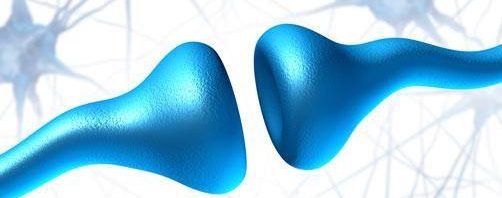
Neurexin molecules are located on the pre-synaptic neuron and it binds to neuroligin, found on the post-synaptic neuron.  When mutations occur in genes encoding for these molecules, it often partially inhibits the ability of neuroligin to leave the endoplasmic reticulum to be transported to it’s correct location in the post-synaptic neuron(http://www.researchgate.net/publication/49734973_Cell_Adhesion_Molecules_and_Their_Involvement_in_Autism_Spectrum_Disorder).  Another result of the mutation is a change is synaptic specificity of neuroligin molecules from glutamatergic neurons to GABAergic neurons(http://www.researchgate.net/publication/49734973_Cell_Adhesion_Molecules_and_Their_Involvement_in_Autism_Spectrum_Disorder).
These mutations cause an increase in the overall increase in inhibitory synaptic transmissions in the brain.  This problem could be at the source of the neurological and physical symptoms of autism.  Genetic modification of these certain genes could be a potential fix to the issue.  Other methods such as supplemental neuroligin and neurexin would likely prove ineffective. Thus, more research into potential solutions to the transsynaptic cell adhesion problem should be addressed in the future.
 

The story of nitric oxide: when does it become bad?

Nitric oxide is normally a part of the brain’s mechanisms. It functions as a neurotransmitter to either promote or block signals between neurons. However, damage to glial cells results in an uncontrolled increase in nitric oxide. Glial cells are the support system cells of the central nervous system. When they are damaged it can lead to damage to the neurons and dysfunction of cognitive processes, such as is present after traumatic brain injury through release of proinflammatory molecules including nitric oxide. Nitric oxide is involved in the process of inflammation which is usually a good thing when tissues are damaged; think of if you hurt your hand. In that instance, inflammation is good and helps promote healing. However, in your brain, there is not much room for the expansion of tissue due to increased blood flow and fluid associated with inflammation and the cells affected (neurons and glial cells) are very sensitive to the chemical changes following injury. Therefore, inflammation in the brain quickly leads to cell injury and death in populations of cells that are often difficult or impossible to replace. This type of inflammation can occur with near all neurological conditions from head injury to multiple sclerosis.
The damaged caused by nitric oxide in the brain is wide reaching and significant. It can include upregulation of reactive nitrogen species which further damage tissue and promote inflammation. It may also decrease mitochondrial function to decrease the ability of the cell to produce enough energy to live. Finally, nitric oxide can both lead to vasodilation (increasing the diameter of the blood vessels entering the brain) and disrupting the blood brain barrier. This results in a rush of unfiltered blood into the brain carrying with it more immune cells as well as possible toxins. In these ways, increased nitric oxide following injury or in a disease state can exacerbate the condition and symptoms.
Because of the beneficial signaling involving nitric oxide throughout the body, including the brain, it is not appropriate to try to completely eradicate nitric oxide, its precursors, or the enzymes that make it. Often times, genetically modified animals without these genes (called knockouts) do not survive long because important pathways that use nitric oxide, but unrelated to inflammation, also cannot happen. Therefore, to utilize the presence of nitric oxide in an injured environment to aid in diagnosis and/or treatment of neurological condition, it must be targeted specifically in the immune cells that cause the damage in the inflamed brain, especially glial cells.

Spam prevention powered by Akismet